Ba Be Lake Travel Guide: Vietnam’s Largest Natural Lake
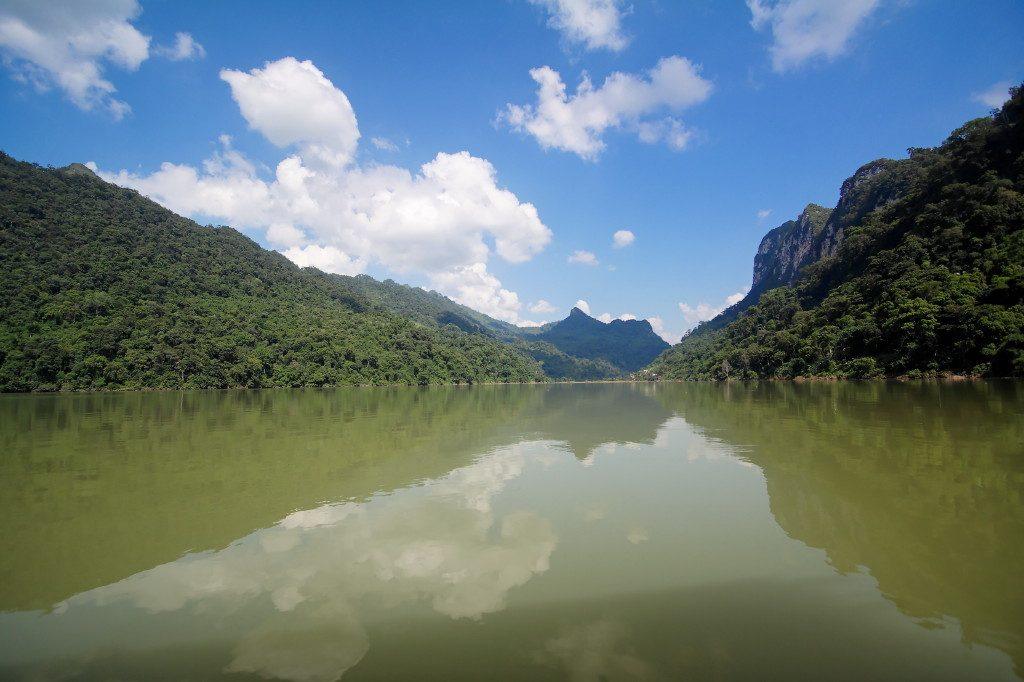
Ba Be Lake is Vietnam’s largest natural freshwater lake, a 8-kilometer stretch of jade-green water cupped between limestone karst mountains in remote Bac Kan Province, about 240 kilometers north of Hanoi. It sits inside Ba Be National Park, a Ramsar-listed wetland and ASEAN Heritage Park, and most visitors come for a boat trip past Puong Cave and Dau Dang Waterfall followed by a homestay night with the lakeside Tay ethnic community. Unlike Cao Bang or Ha Giang to the north, Ba Be does not border China, so there is no special foreigner permit required to visit.
What Makes Ba Be Lake Worth the Detour?
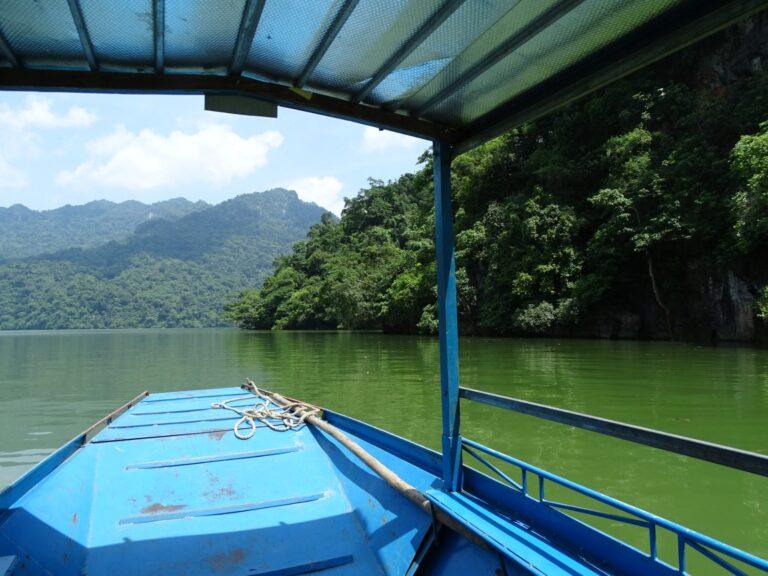
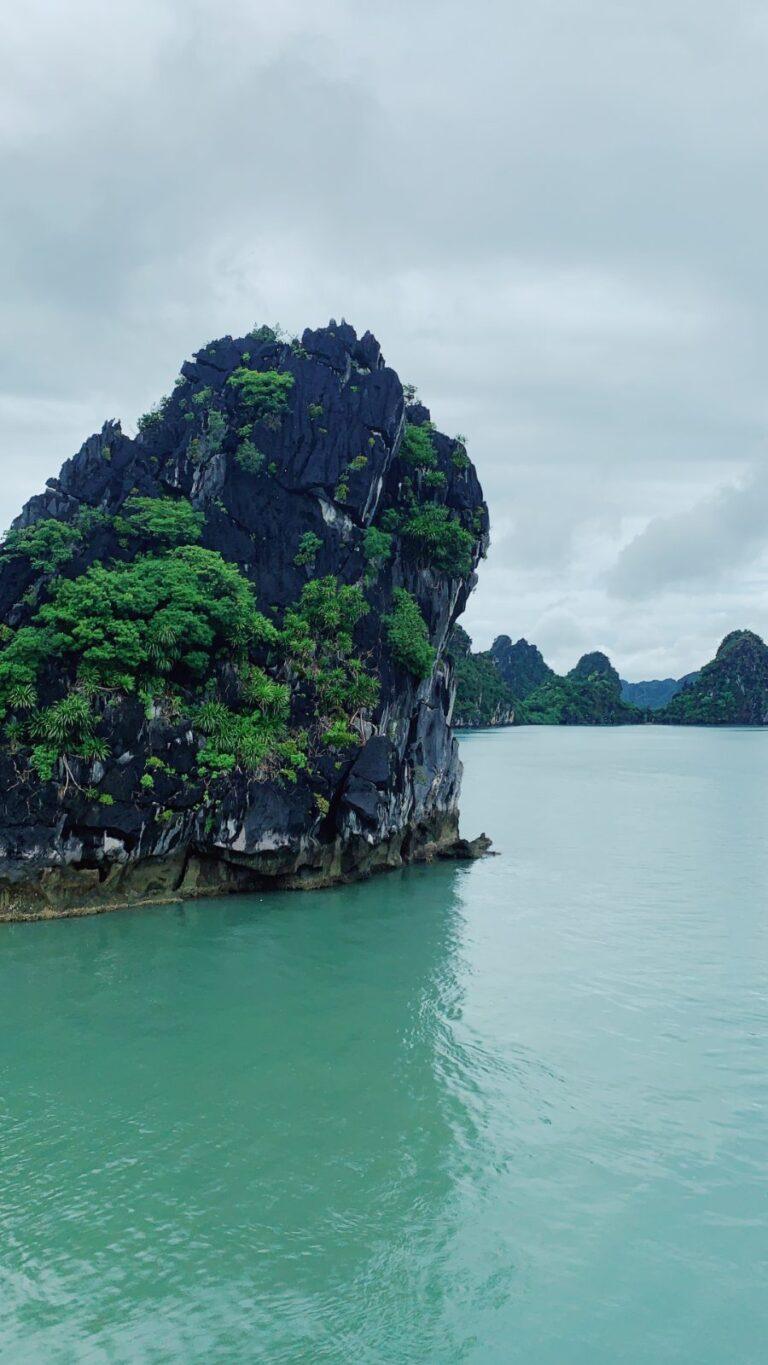
Ba Be Lake is Vietnam’s largest natural lake and, at roughly 150 meters above sea level, its highest — a striking contrast to the low-lying Mekong and Red River deltas most travelers associate with Vietnamese lakes. The lake actually comprises three connected sections the local Tay people call Pe Leng, Pe Lu, and Pe Lam (“Three Lakes,” the origin of the name Ba Be). Limestone peaks rising directly from the water, a boat trip through Puong Cave’s bat-filled tunnel, and overnight stays in Tay stilt houses give it a quieter, more intimate feel than the more heavily-toured Ha Long Bay or Ninh Binh.
| Destination | Best For | Signature Sight | Foreigner Permit? | Typical Trip Length |
|---|---|---|---|---|
| Ba Be Lake (Bac Kan) | Boat trips, homestays, a quieter pace | Ba Be Lake + Puong Cave | Not required | 1-2 days |
| Cao Bang | Ban Gioc Waterfall, dramatic border scenery | Ban Gioc Waterfall | Required | 3-4 days |
| Ha Giang Loop | Motorbiking, mountain passes | Ma Pi Leng Pass | Required | 3-4 days |
TTC Verdict: Ba Be Lake rewards travelers who want Vietnam’s northern-border scenery without the border-permit paperwork. If you are already planning a Ha Giang Loop or Cao Bang trip, it slots in naturally as a calmer 1-2 day add-on. If you are short on time and can only pick one northern lake-and-limestone destination, Ba Be is the easiest to reach from Hanoi.
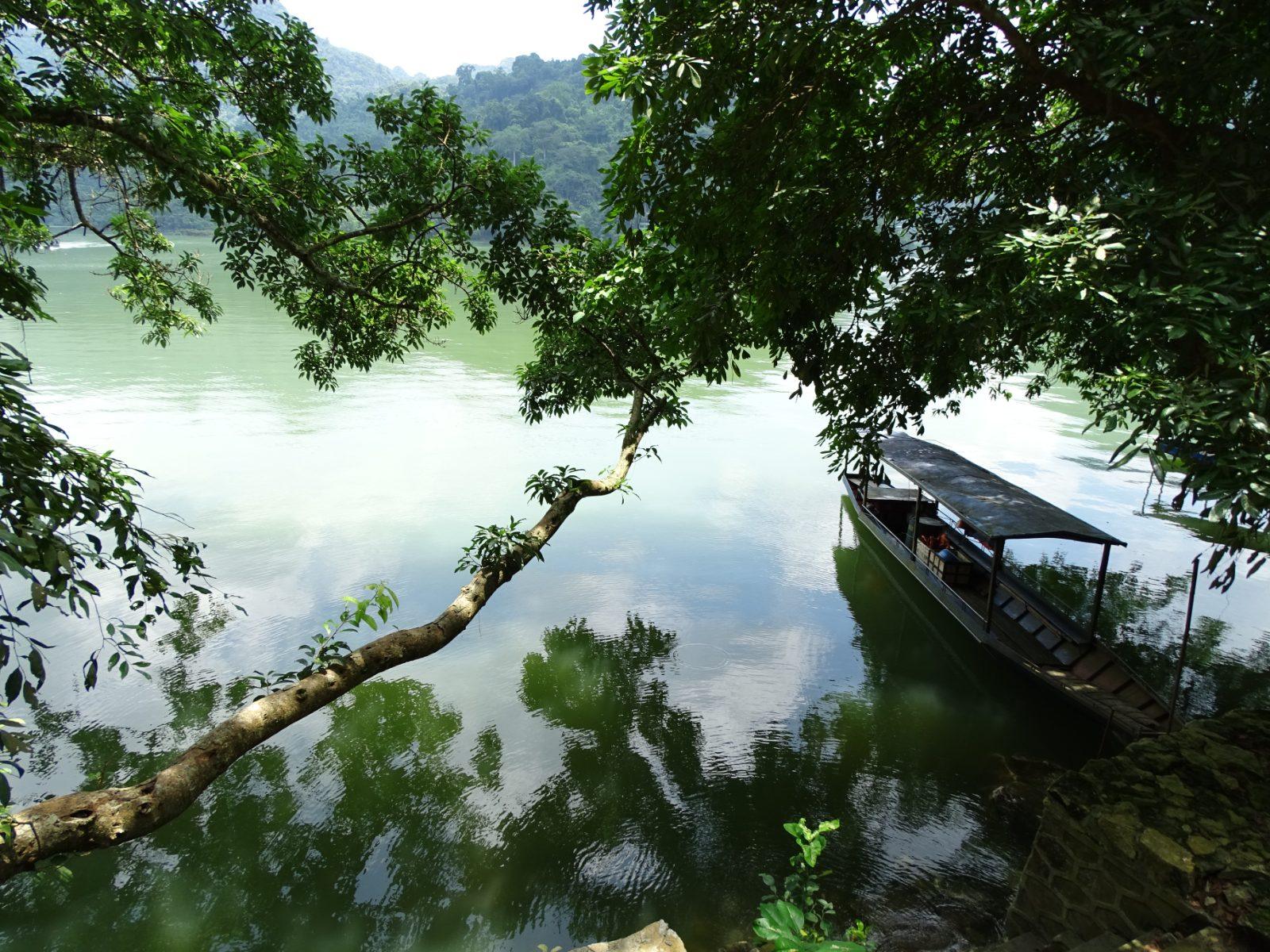
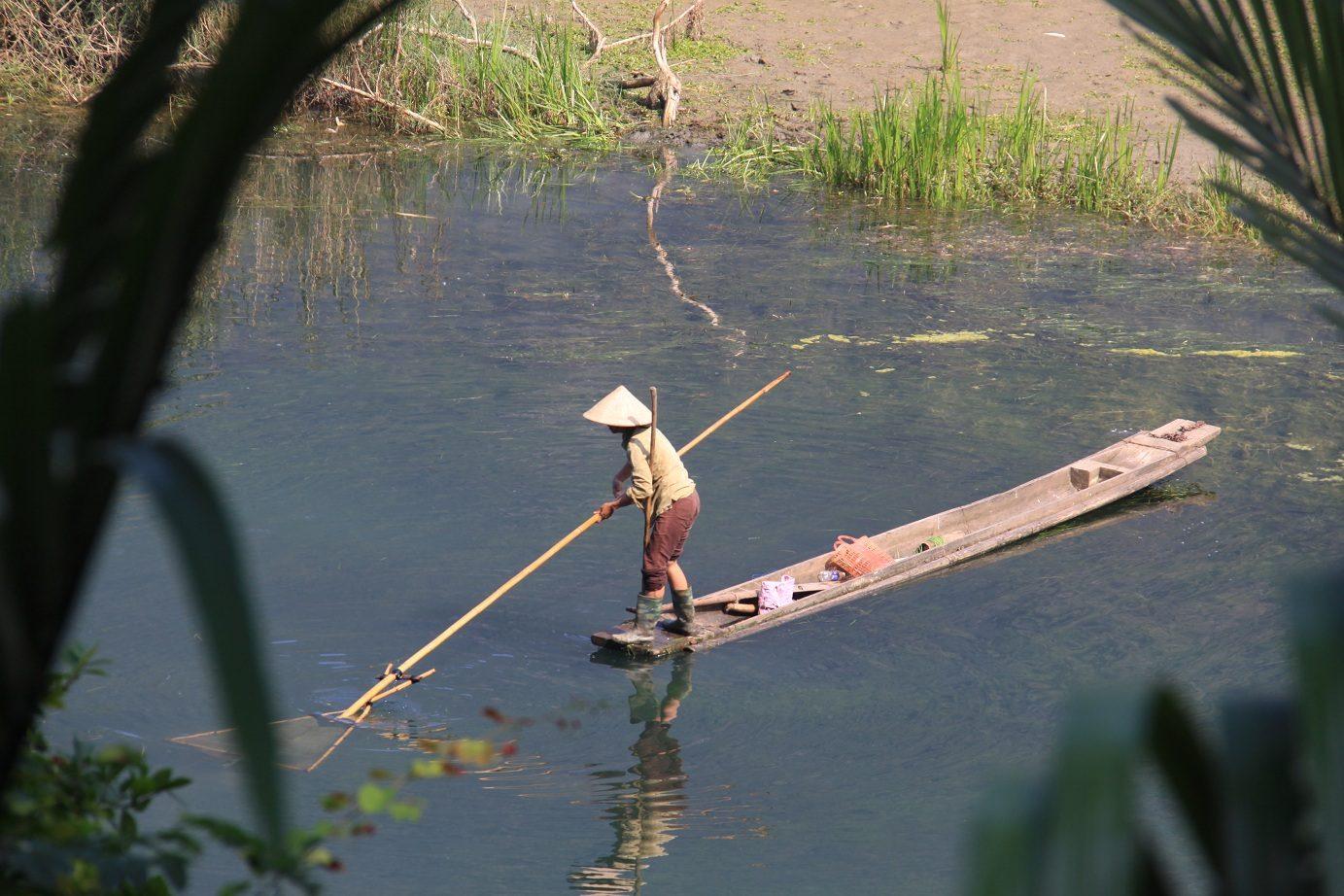
Ba Be Lake: Adam Jones / CC BY-SA 2.0 · Dugout boat: Ba Be National Park / CC BY-SA 3.0
How Do You Get to Ba Be Lake From Hanoi?
The most reliable option for foreign travelers is a direct shuttle or private transfer: a daily shuttle departs Hanoi’s Old Quarter around 7:00am and reaches Ba Be by roughly 11:00am, for about $15 USD per person one way Confirm current price and schedule.. A private car takes just over 5 hours and drops you directly at your homestay. Budget travelers can take a local bus from My Dinh Bus Station to Cho Ra town (6-7 hours) and arrange a short motorbike-taxi transfer for the final stretch into the park. If you are combining Ba Be with Cao Bang or Ha Giang, the connecting road runs via Phu Thong or Bac Me and is noticeably less direct than the Hanoi route — most travelers doing both treat Ba Be and Cao Bang as separate legs rather than a quick same-day hop.
When Is the Best Time to Visit Ba Be Lake?
October to April is the most comfortable window, with cooler, drier weather and temperatures between roughly 15-25°C (59-77°F). September to November and March to May bring the clearest skies for lake photography. The rainy season, June to August, swells Dau Dang Waterfall into a much more dramatic sight but also makes trekking trails muddy and slippery, so pack accordingly if you visit then.
What Should You Know Before You Go?
Bring cash — there are no ATMs inside the national park, and homestays, boat tours, and the park entrance fee (70,000 VND per person for foreign visitors) are all cash-only. Most travelers base themselves in a Tay stilt-house homestay in Pac Ngoi, Coc Toc, or Nam Mau village rather than a hotel (see our Ba Be Lake where-to-stay guide). A boat tour covering Puong Cave and Dau Dang Waterfall is the single most worthwhile way to spend a day here — see our full things-to-do guide for the details.
No. Ba Be Lake sits in Bac Kan Province, which does not border China, so the foreigner border-area permit required for Cao Bang and Ha Giang does not apply here. A standard Vietnam visa or e-visa is sufficient Confirm current entry requirements before travel..
Ba Be Lake is about 240 kilometers from Hanoi, roughly 5 hours by private car or direct shuttle, or 6-7 hours by local bus with a short transfer for the final stretch into the park Confirm exact current schedules and fares..
It is possible but not recommended — the round-trip drive alone takes most of a day. Most visitors stay at least one night in a lakeside homestay to allow time for the boat tour to Puong Cave and Dau Dang Waterfall without rushing.