

Vietnam Travel Guide: Everything to Know Before Your First Trip
Vietnam runs about 1,650 km from north to south, and the north, center, and south run on genuinely different climates, food traditions, and travel rhythms — there is no single answer to “when should I go” or “how many days do I need.” This guide covers what every long-haul traveler from the US, Canada, or Australia needs settled before landing: visas, money, getting around, and how to think about timing your trip. For the deep dives — city guides, day-by-day itineraries, and cost breakdowns — links throughout point to our full coverage.
Do US, Canada, and Australian Citizens Need a Visa for Vietnam?
Yes. Citizens of the United States, Canada, and Australia are not on Vietnam’s visa-exemption list and need an e-visa before arrival — there is no visa-free entry for these three passports. The e-visa costs $25 for a single entry or $50 for multiple entries, allows stays of up to 90 days per entry, and is applied for entirely online through the official government portal, not a third-party site.
| E-Visa | Digital Arrival Card | |
|---|---|---|
| What it is | Your actual visa — required to enter the country | A separate pre-arrival declaration (passenger, flight, and accommodation details) generating a QR code for immigration |
| Cost | $25 single entry / $50 multiple entry | Free |
| Where to apply | evisa.xuatnhapcanh.gov.vn (official portal) | prearrival.immigration.gov.vn |
| Processing time | About 3 working days | Typically same-day |
| Does one replace the other? | No — required regardless of the arrival card | No — required in addition to your visa, even for e-visa holders |
For the complete e-visa application walkthrough and step-by-step Digital Arrival Card guidance, see our Vietnam Visa Guide. It is also worth reading up on what travel insurance for Vietnam actually costs and covers and how safe Vietnam really is before you go.
How Do You Get Around Vietnam?
Most travelers combine two or three of four options: domestic flights for the long north-south hops, the Reunification Express train for a slower, scenic alternative, sleeper buses for shorter regional legs, and Grab (Southeast Asia’s ride-hailing app) for getting around within cities.
| Route / Option | Time | Typical Cost |
|---|---|---|
| Domestic flight, Hanoi–Da Nang | ~2 hrs | $15–$40 one-way |
| Domestic flight, Hanoi–Ho Chi Minh City | ~2 hrs | $20–$60 one-way |
| Reunification Express, Hanoi–Ho Chi Minh City | 30–34 hrs (sleeper berth) | $40–$70 for a 4-berth sleeper |
| Reunification Express, Hanoi–Da Nang | ~16 hrs | Included in above route pricing tier |
| Sleeper bus, regional routes | 5–7 hrs typical | $8–$14 |
| Grab (ride-hailing) within cities | Minutes | 15,000–120,000 VND (roughly $0.60–$5) per ride |
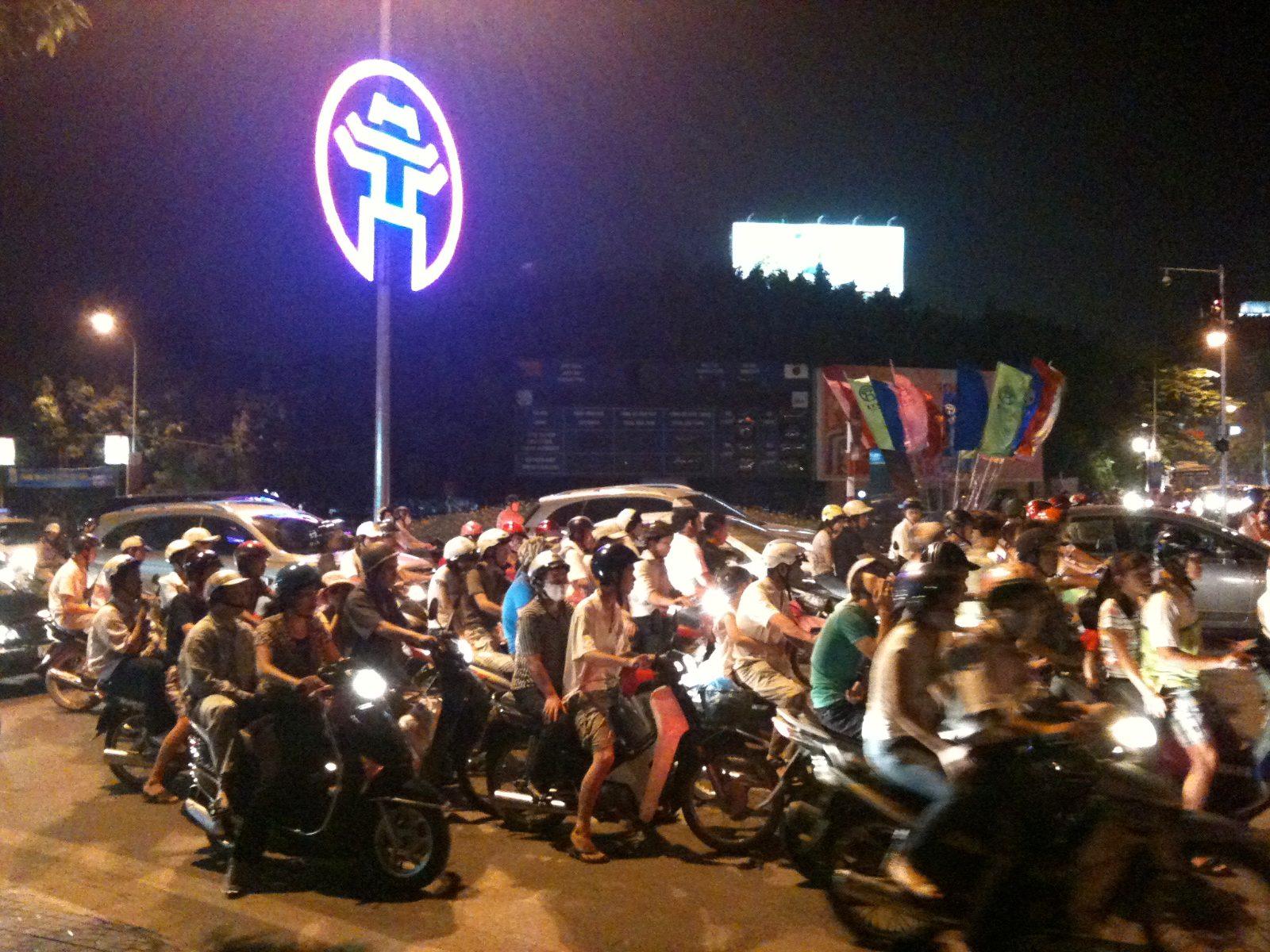
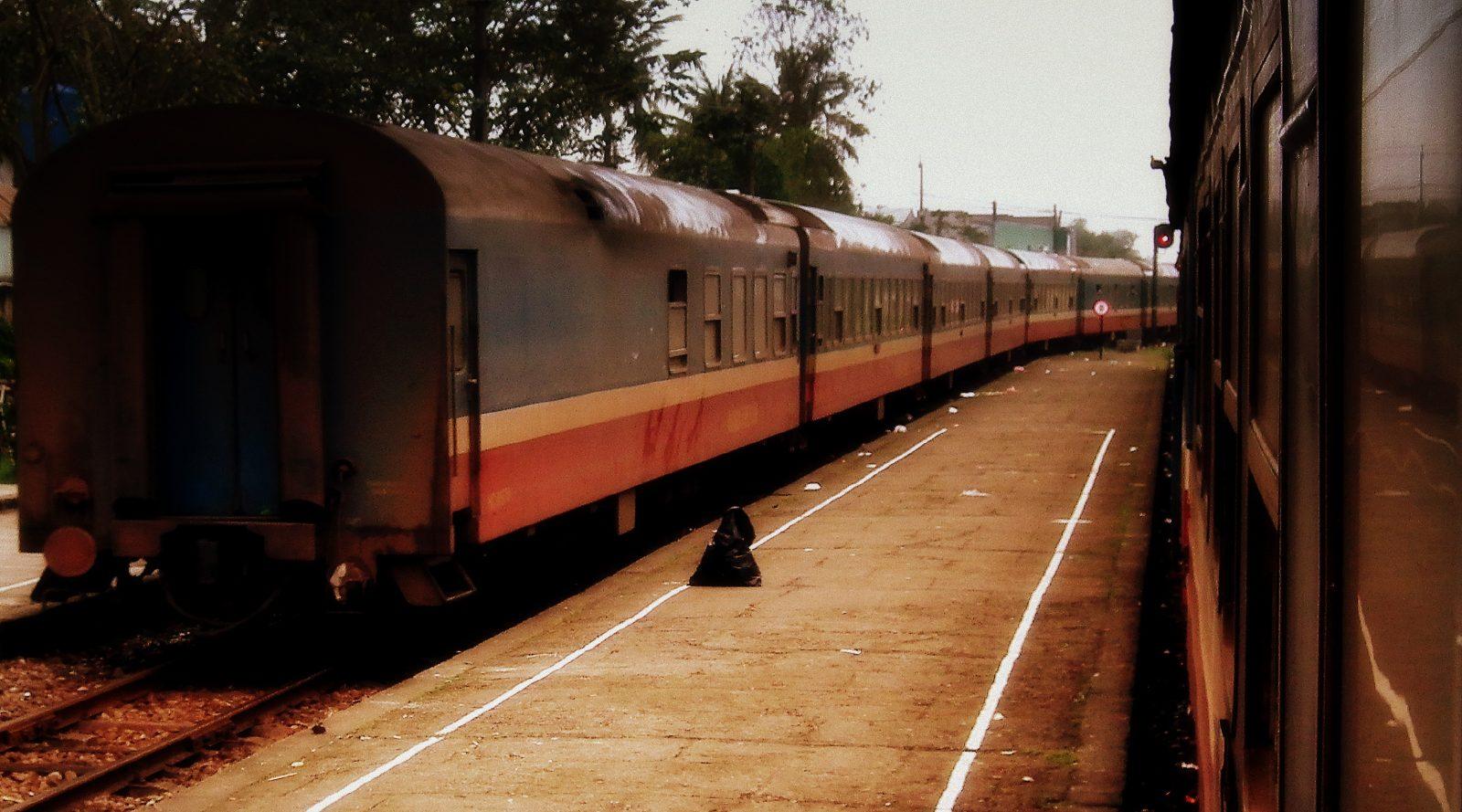
Hanoi traffic: Dragfyre / CC BY-SA 3.0 · Reunification Express: calflier001 / CC BY-SA 2.0
What Should You Know About Money, Connectivity, and Tipping?
Vietnam runs on cash for small purchases (street food, markets, motorbike taxis) and cards for hotels, restaurants, and larger shops — carry both. An eSIM or local SIM card is worth setting up on arrival for maps and translation apps, and tipping is appreciated but genuinely optional almost everywhere.
| Who | Typical Tip | Notes |
|---|---|---|
| Restaurants (mid-range/upscale) | 5–10% | Only if no service charge is already included |
| Street food & markets | Not expected | Rounding up 10,000–20,000 VND is a polite gesture, not required |
| Tour guides (full day) | 100,000–200,000 VND, or 10–15% of tour cost | — |
| Private drivers (full day) | 50,000–100,000 VND | — |
| Hotel bellhops / housekeeping | 20,000–50,000 VND | Per service or per day |
| Metered taxis & Grab | Not expected | Fares are fixed; rounding up is optional, not customary |
When Is the Best Time to Visit Vietnam?
Because the north, center, and south run on different weather patterns, “best time to visit Vietnam” does not have one answer — it depends which regions are on your route. The short version: March–April and October–November are the closest thing to a sweet spot that works reasonably well across most of the country, but see our full regional breakdown before you lock in dates, especially if your trip leans heavily north or south.
How Should You Plan Your Itinerary?
Most first-time trips run 7, 10, or 14 days and follow some version of the same north-to-south (or south-to-north) route: Hanoi and Ha Long Bay in the north, Da Nang and Hoi An in the center, and Ho Chi Minh City in the south, with the exact stops and pacing depending on how many days you have. If you are undecided on north versus south as a starting point, or how many days is realistically enough, the guides below walk through both.
Food is worth building into that route from day one — see our Vietnam food guide for what to eat city by city and which regional dishes are worth planning a stop around.
TTC Verdict: do not try to build a Vietnam itinerary before settling the basics — get your e-visa and Digital Arrival Card sorted, decide roughly how you will move between regions, and pick a season that fits your route, before you commit to specific cities and days. Once those are settled, our itinerary and city guides below do the rest of the planning for you.
Yes. Citizens of the US, Canada, and Australia are not visa-exempt and need to apply for an e-visa before traveling, which costs $25 (single entry) or $50 (multiple entry) and allows stays of up to 90 days. Apply only through the official portal, evisa.xuatnhapcanh.gov.vn.
Yes, you need both. The Digital Arrival Card is a separate, free pre-arrival declaration required in addition to your visa, not instead of it. It has been rolling out airport by airport through 2026, starting with Tan Son Nhat (Ho Chi Minh City) in April, and now covers most major airports and several land and sea border crossings.
Most first-time visitors spend 7 to 14 days, covering a north-to-south or south-to-north route through Hanoi, Ha Long Bay or Ninh Binh, Da Nang or Hoi An, and Ho Chi Minh City. See our 7-day, 10-day, and 14-day itineraries for exactly how that time gets allocated.






13 Comments
Comments are closed.