Singapore Travel Guide: Where to Go and What to Know Before You Visit
The short answer: Singapore is a compact, extremely easy-to-navigate city-state that works both as a standalone 3-4 day city break and as a natural stopover for travelers already doing Vietnam or Thailand — Changi Airport is one of the region’s best-connected hubs. The essentials: Marina Bay for the skyline and Gardens by the Bay, Chinatown and Little India for heritage and hawker food, Orchard Road for shopping, and Sentosa for a beach-and-theme-park day. Entry is visa-free for US, Canadian, and Australian passport holders, English is an official language, and the MRT subway covers nearly everywhere you’ll want to go.
Nate counts Singapore among his favorite destinations in Southeast Asia, specifically for a contrast that runs through this entire guide: five-star luxury a short walk from some of the best, most affordable food in the region at the city’s hawker centres. That tension — polish and tradition sitting side by side — is what makes Singapore worth more than a 24-hour layover.
The Essentials
- Best for: a short, easy add-on to a Vietnam or Thailand trip, or a standalone city break
- Visa: visa-free entry for US passports (up to 90 days), Canadian and Australian passports (up to 30 days) — an SG Arrival Card is still required for everyone
- Currency: Singapore Dollar (SGD)
- Language: English is an official language and the default for signage, menus, and transport
- Getting around: the MRT subway covers almost everywhere; Grab fills the rest
- Ideal trip length: 3 days minimum, 4-5 to add Sentosa and a slower pace
How many days do you need in Singapore?
Two days covers the headline sights — Marina Bay’s skyline and Gardens by the Bay on day one, the colonial core, Chinatown, and Little India on day two — but three days is where the trip starts to breathe, adding real time in the cultural neighborhoods plus a day on Sentosa Island for Universal Studios, the S.E.A. Aquarium, or simply the beaches. Four to five days lets you add the Mandai Wildlife Reserve (Singapore Zoo and Night Safari) and the Botanic Gardens without rushing anything else.
What are Singapore’s best neighborhoods?
| Neighborhood | Vibe | Best for | Landmarks |
|---|---|---|---|
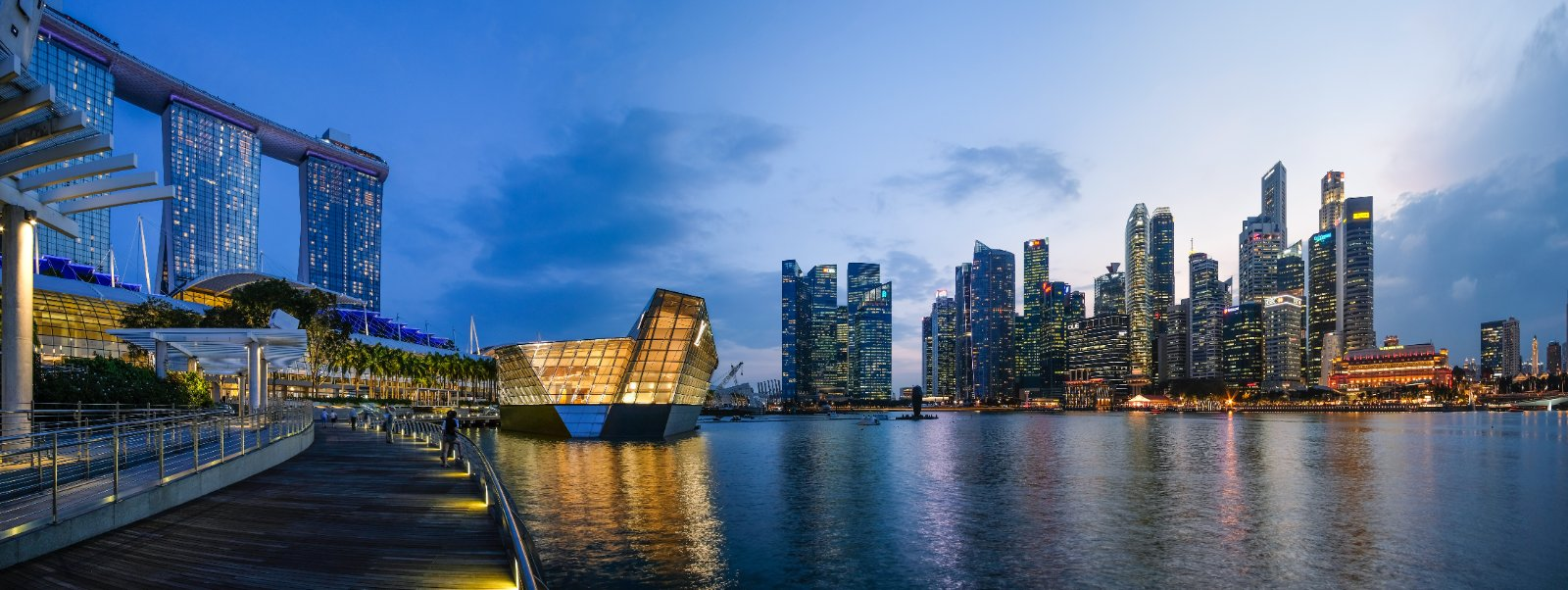
| Marina Bay | Sleek, upscale, spacious waterfront | Skyline views, luxury stays, museums | Marina Bay Sands, Gardens by the Bay, ArtScience Museum |
| Chinatown | Heritage shophouses mixed with modern cafes and bars | First-timers wanting a local feel, food lovers | Maxwell Food Centre, Chinatown Complex, Amoy Street |
| Orchard Road | Polished, commercial shopping strip | A central, convenient base and shopping | ION Orchard, Plaza Singapura, Isetan |
| Little India | Vibrant, loud, sensory, least polished | Travelers who love energy and immersion | Tekka Centre, temples, spice shops |
| Sentosa | Self-contained resort island | Families, a beach-and-theme-park day | Universal Studios, S.E.A. Aquarium, Siloso Beach |
| Tiong Bahru | Leafy, laid-back, Art Deco residential | Repeat visitors who want neighborhood atmosphere | Tiong Bahru Market, independent cafes |
A few smaller areas worth knowing: Kampong Glam and Bugis skew younger and more budget-friendly, with Haji Lane’s vintage shops and street art; Joo Chiat and Katong are quieter, Peranakan-heritage neighborhoods with some of the city’s best laksa, better suited to a second or third visit than a first.
Do US, Canadian, or Australian travelers need a visa for Singapore?
No visa is required for short tourist visits. US passport holders can stay up to 90 days visa-free; Canadian and Australian passport holders up to 30 days — the immigration officer sets your exact permitted stay at the checkpoint. Every traveler, regardless of nationality, still needs to submit a free SG Arrival Card through the official ICA portal or MyICA app within 3 days of arrival; be careful to use the official site, since unofficial look-alike sites charge unnecessary fees. Your passport needs at least 6 months of validity remaining from your arrival date, and vapes/e-cigarettes are illegal to bring in and will be confiscated.
What should you know about Singapore’s hawker food scene?
Hawker centres — open-air complexes of independent food stalls, many family-run for generations — are Singapore’s single best food value and arguably its most essential cultural experience, with some stalls holding Michelin recognition at street-food prices. Maxwell Food Centre and Chinatown Complex are the easiest first stops for a visitor based centrally; Lau Pa Sat’s Victorian ironwork building and Newton Food Centre’s late-night satay are both worth seeking out specifically. We cover this in full, stall by stall, in our dedicated What to Eat in Singapore guide.
| Hawker centre | Known for |
|---|---|
| Maxwell Food Centre | Hainanese chicken rice, Peranakan dishes |
| Lau Pa Sat | Historic Victorian ironwork building, satay street at night |
| Chinatown Complex | The city’s largest hawker centre, claypot rice, dim sum |
| Newton Food Centre | Tourist-friendly, carrot cake, oyster omelette, late-night zi char |
How do you get around Singapore?
The MRT subway is clean, frequent, air-conditioned, and covers nearly every neighborhood on this page directly — it’s the default way to move around, and an EZ-Link or contactless bank card gets you through every gate. Grab fills in the rest, especially late at night or with luggage, and fares are reasonable by long-haul-traveler standards. Walking is genuinely pleasant within neighborhoods like Marina Bay and Chinatown, thanks to covered walkways and consistently well-maintained sidewalks.
TTC Verdict
Treat Singapore as a 3-day minimum, not a 24-hour layover stretch — that’s the difference between seeing the skyline and actually understanding the city. Base yourself in Chinatown or Marina Bay for the easiest access to everything on this page, and build at least one meal around a hawker centre rather than a hotel restaurant; it’s both the better food and the better value.
Frequently asked questions
How many days do you need in Singapore?
Three days is the sweet spot for a first visit — enough for Marina Bay, the cultural neighborhoods, and a day on Sentosa without rushing. Two days works if you’re treating it as a stopover.
Is Singapore expensive to visit?
Hotels and fine dining can be genuinely expensive, but hawker centre meals, public transport, and many of the best sights (Gardens by the Bay’s outdoor areas, most temples, Marina Bay’s waterfront) are inexpensive or free — it’s a city where your daily budget is very much a choice.
Is Singapore worth visiting as a stopover from Vietnam or Thailand?
Yes — Changi Airport’s connections make it an easy add-on, and even 2-3 days is enough to get a real sense of the city rather than just its airport.
Do I need to speak another language in Singapore?
No. English is an official language and the default for signage, menus, and transport, alongside Mandarin, Malay, and Tamil.
Planning where to sleep? Our Singapore where-to-stay guide breaks down the best areas.