

Thailand Travel Guide: Where to Go and What to Know Before You Visit
Thailand is Southeast Asia most-visited country, and for a first-time visitor from the US, Canada, or Australia it usually means one of five places: Bangkok, Chiang Mai, Phuket, Krabi, or Koh Samui. This guide covers what changed for entry requirements in 2026, when to go, how to get between cities, and how to pick a starting point if you only have one trip to plan.
Do US, Canadian, or Australian Travelers Need a Visa for Thailand?
No, but the rules changed recently. As of September 15, 2026, Thailand cut its visa-free stay for passport holders from the US, Canada, and Australia from 60 days down to 30 days for tourism purposes, and travelers now also have to file a free Digital Arrival Card (TDAC) online before landing. Entry policy has changed more than once in recent years, so confirm the exact current rules before you book. We cover the full checklist, including the TDAC process and what immigration officers may ask for, in our dedicated Thailand Visa & Entry Requirements guide.
Where Should You Go First in Thailand?
Bangkok is the practical starting point for almost every first trip to Thailand. It has the most direct flights from North America and Australia, it is the countrys transportation hub for connecting onward to the other four destinations below, and it gives you a full sense of Thai food, temples, and city life in one stop. The table below is a working comparison as we build out full coverage of each destination.
| Destination | Best For | Vibe | Days to Budget |
|---|---|---|---|
| Bangkok | First-timers, food, temples, nightlife | Fast-paced capital where centuries-old temples sit beside modern skyscrapers | 3-4 days |
| Chiang Mai | Temples, mountains, a slower pace | Laid-back northern city ringed by hills and hill-tribe villages | 3-4 days |
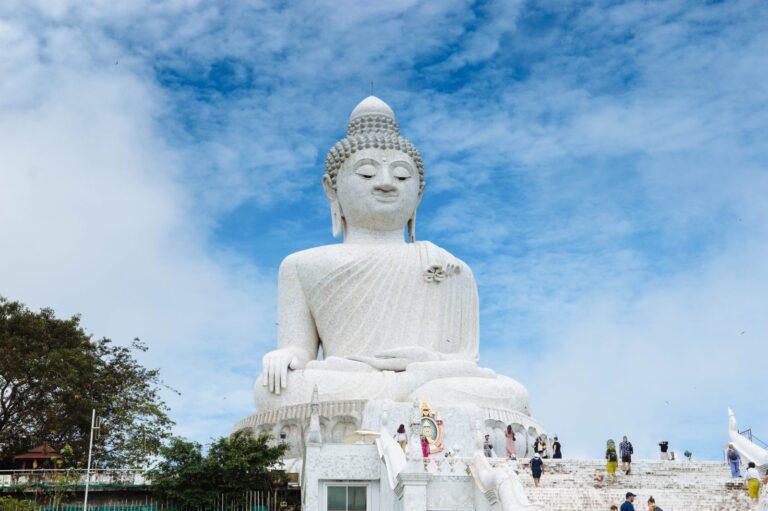
| Phuket | Beach resorts, island-hopping, nightlife | Thailand largest island, built around beach vacations | 3-5 days |
| Krabi | Dramatic limestone cliffs, quieter beaches | Karst towers rising straight out of turquoise water | 3-4 days |
| Koh Samui | Resort islands, easy beach time | Palm-lined island with its own international airport | 3-5 days |
TTC Verdict: Start in Bangkok if this is your first trip to Thailand. It has the easiest flight connections from the US, Canada, and Australia, and every other destination in this guide is a short domestic flight or a few hours overland from there.
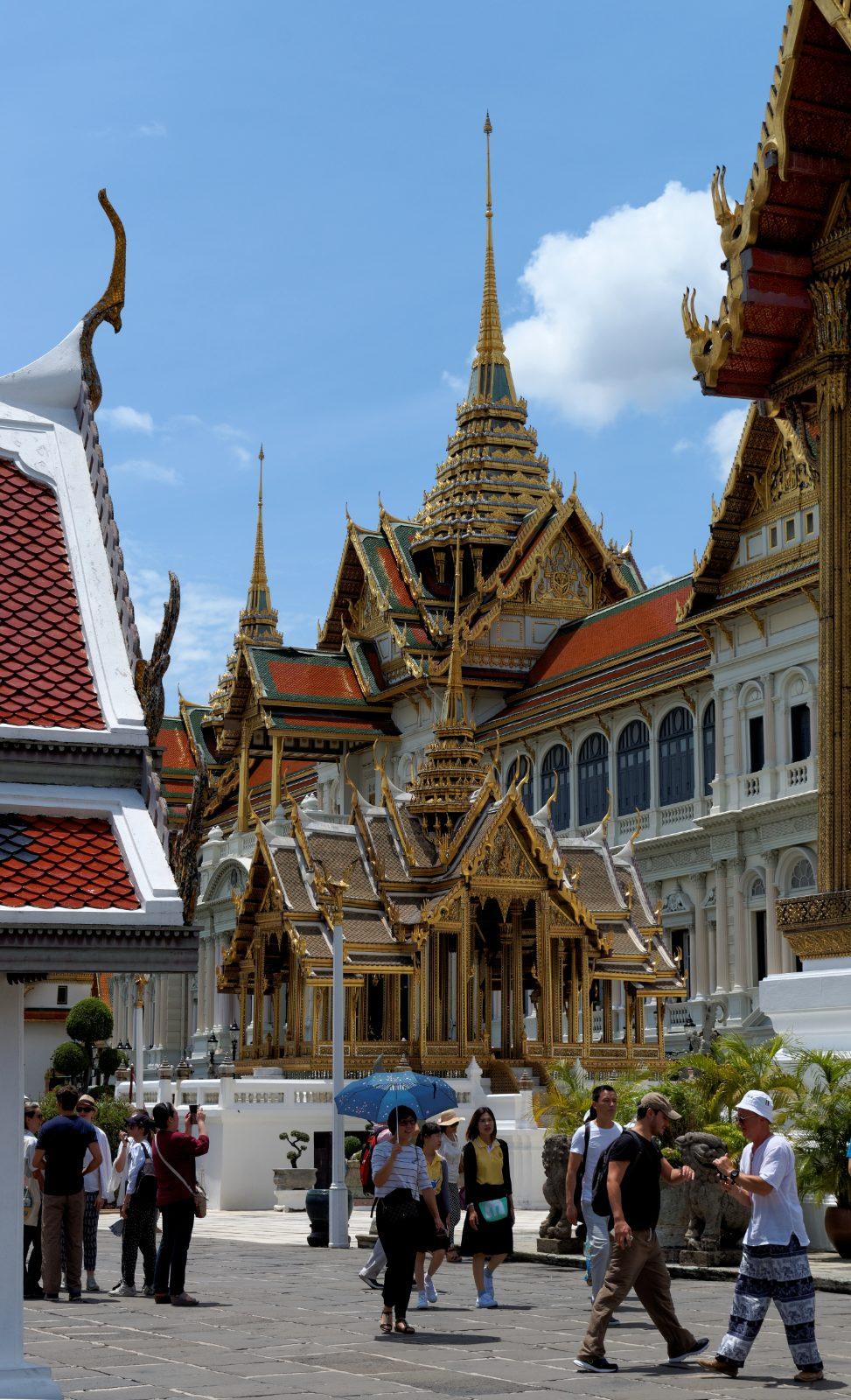
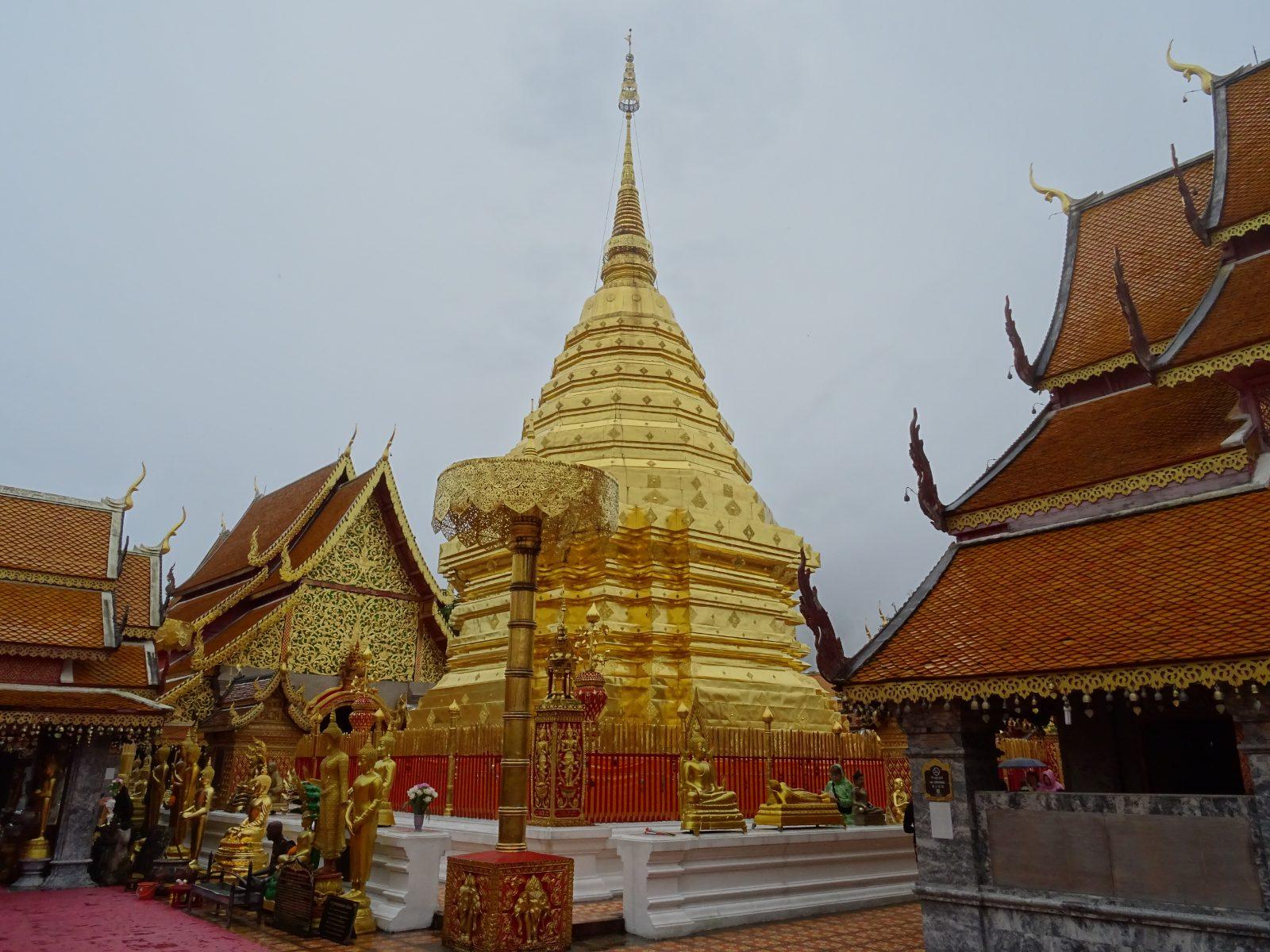
Grand Palace, Bangkok: Jakub Hałun / CC BY-SA 4.0 · Wat Phra That Doi Suthep, Chiang Mai: Christophe95 / CC BY-SA 4.0
When Is the Best Time to Visit Thailand?
November through February is generally considered the most comfortable stretch across most of Thailand, with lower humidity and less rain than the rest of the year., though seasons vary somewhat by region, so treat this as a general guide rather than an exact forecast for every area March through May runs hot and dry, and June through October is the rainy season in most of the country, though it rarely means rain all day and hotel rates tend to drop.
How Do You Get Around Thailand?
Domestic flights are the fastest way to connect Bangkok with Chiang Mai, Phuket, or Koh Samui, typically running 1-1.5 hours and operated by carriers like Thai Airways, AirAsia, Thai Lion Air, and Nok Air, though carriers and routes change over time, so confirm current options when you book. Krabi is reachable by air or by a longer overland and ferry combination from Phuket. Within Bangkok itself, the BTS Skytrain and MRT subway cover most tourist areas, supplemented by metered taxis and ride-hailing apps like Grab.
Money, Connectivity, and Other Planning Basics
Thailand currency is the Thai Baht (THB). ATMs are widely available in every city on this list, though most charge a foreign-transaction fee on top of whatever your home bank charges, though the exact fee is worth confirming with your own bank before you travel. Cards are accepted at hotels, malls, and most restaurants, but street food stalls, local markets, and small guesthouses are still cash-first. A local eSIM (available from Thai carriers like AIS, dtac, and True Move H, either at the airport or through an eSIM app) is the easiest way to get connected on arrival [affiliate link: eSIM provider — Thailand data plan].
No. As of September 15, 2026, US citizens can enter Thailand visa-free for up to 30 days for tourism, down from the previous 60-day allowance. You will also need to complete Thailand free Digital Arrival Card (TDAC) online within 72 hours of your arrival. This rule has changed more than once in recent years, so confirm the current policy before booking.
November through February is generally the most comfortable window across most of the country, with lower humidity and less rain than the hot season (March-May) or the rainy season (June-October)., though this can vary somewhat by region
Ten to fourteen days is a realistic minimum to see two or three of Bangkok, Chiang Mai, Phuket, Krabi, or Koh Samui without rushing between them, since most connections involve a short domestic flight. A single-city trip focused only on Bangkok can work well in 4-5 days.


3 Comments