
Vietnamese Coffee Culture: Egg Coffee, Ca Phe Sua Da & the Phin Filter
Vietnamese coffee culture is built around a small metal drip filter called a phin, strong dark-roast robusta beans, and a habit of pairing bitter coffee with sweetened condensed milk rather than fresh milk or sugar. It shows up as ca phe sua da (iced milk coffee) on nearly every street corner, as the richer, dessert-like egg coffee in Hanoi, and as a genuine social ritual — sitting on a tiny plastic stool watching the street go by is as much the point as the coffee itself. If you only associate Vietnam with strong iced coffee, there’s a lot more going on underneath that first sip.
Why does Vietnamese coffee taste different from coffee back home?
Vietnam is the world’s second-largest coffee producer, but most of what it grows is robusta rather than arabica — a bolder, more bitter, higher-caffeine bean that’s rarely the star of specialty coffee back in the US, Canada, or Australia [VERIFY current production ranking]. Combined with a slow drip through a phin filter and a heavy pour of sweetened condensed milk, the result is something closer to a dessert-strength espresso than the medium-roast drip coffee most Western travelers are used to. It’s worth trying with an open mind rather than expecting a familiar latte.
What is a phin filter and how does it work?
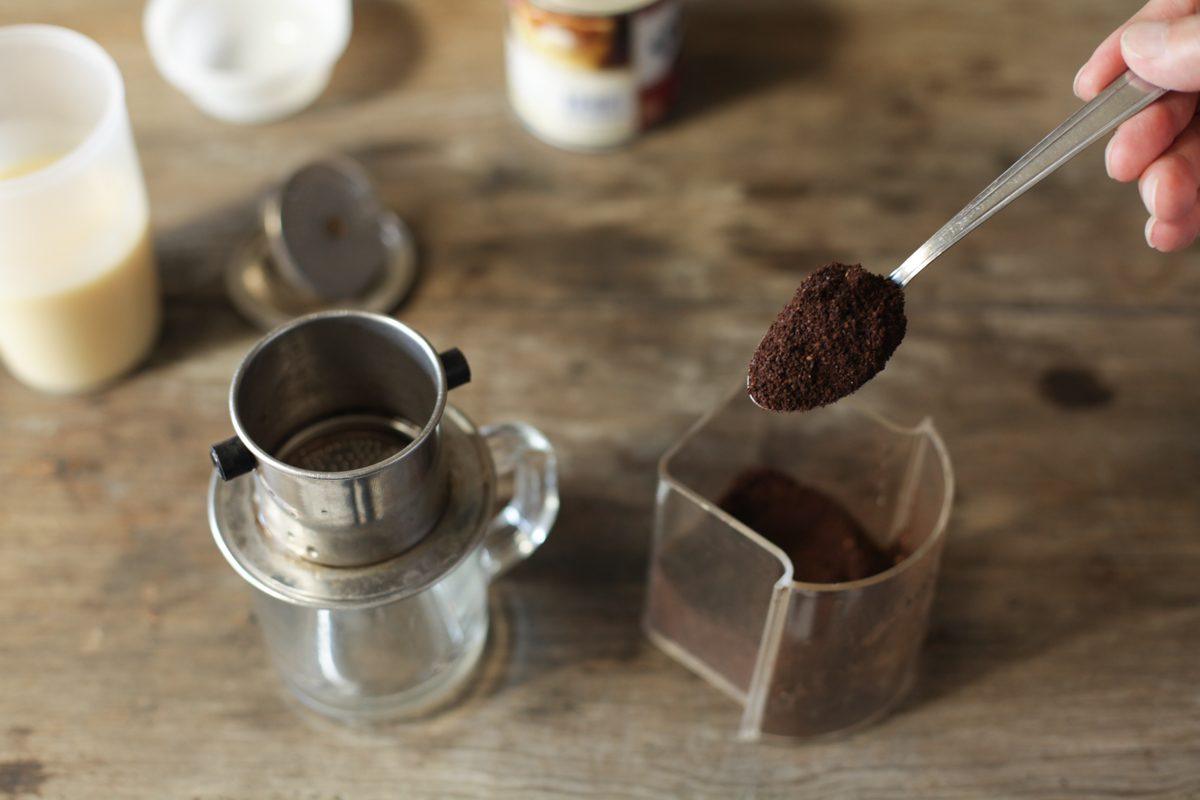
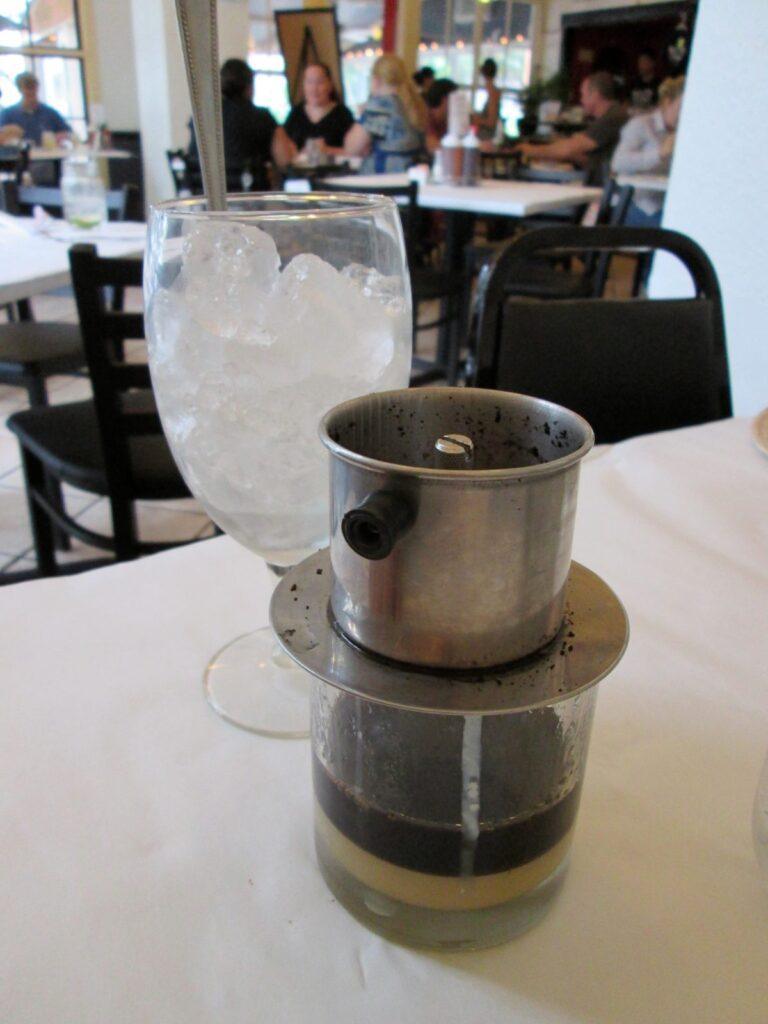
The phin is a small metal cup-and-filter set that sits directly on top of a glass, brewing one cup at a time through slow gravity drip rather than pressure like an espresso machine. Ground coffee sits in the metal chamber, hot water is poured over it, and the coffee drips through a perforated press plate over several minutes — it’s unhurried by design, and part of the appeal is watching it drip while you wait rather than rushing to drink it. Most cafes will bring you the phin still sitting on the glass so you can watch the final drips finish at the table.
TTC Verdict: Order your coffee den (black) or sua (with milk), and specify nong (hot) or da (iced) — those four words alone will get you through almost any coffee menu in Vietnam.
What is Vietnamese egg coffee?
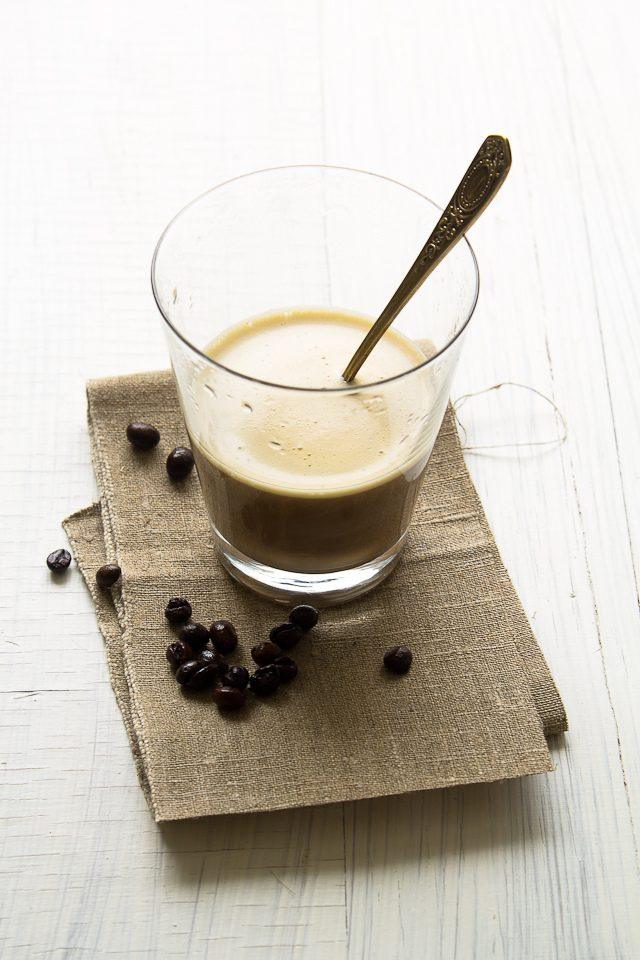
Egg coffee (ca phe trung) is a Hanoi specialty made by whipping egg yolk with condensed milk and sugar into a thick, meringue-like foam, then spooning it over hot black coffee — it tastes more like a warm tiramisu-style dessert than a typical coffee drink. It’s the single most distinctive drink to come out of Hanoi’s coffee scene, and it deserves its own deep dive: see our full guide, What Is Egg Coffee? Hanoi’s Strangest, Best Drink, Explained, for its origin story and where to try the original.
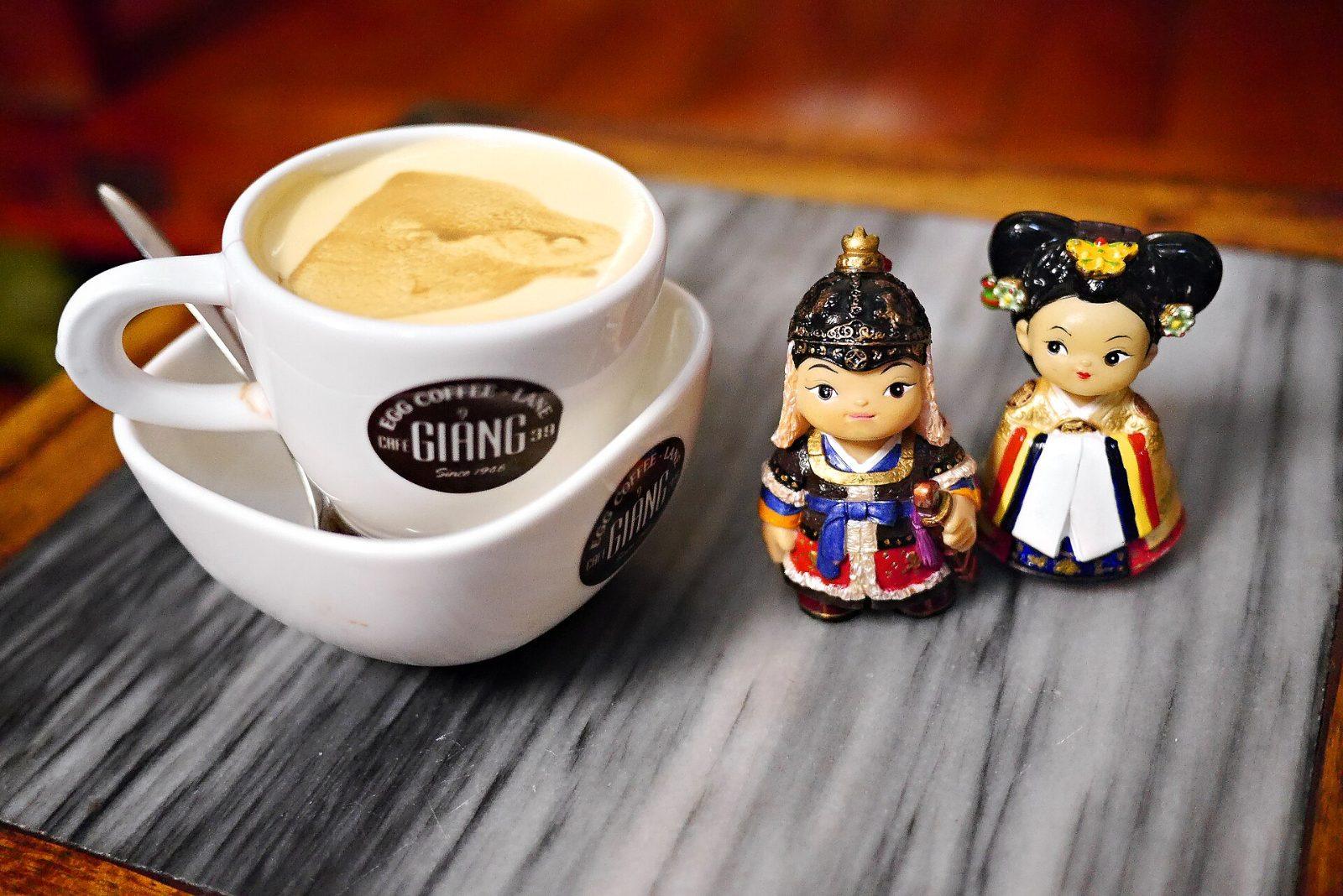
Egg coffee at Cafe Giang, Hanoi: travel oriented from Manila, Philippines / CC BY-SA 2.0
What is ca phe sua da, and how do I order Vietnamese coffee?
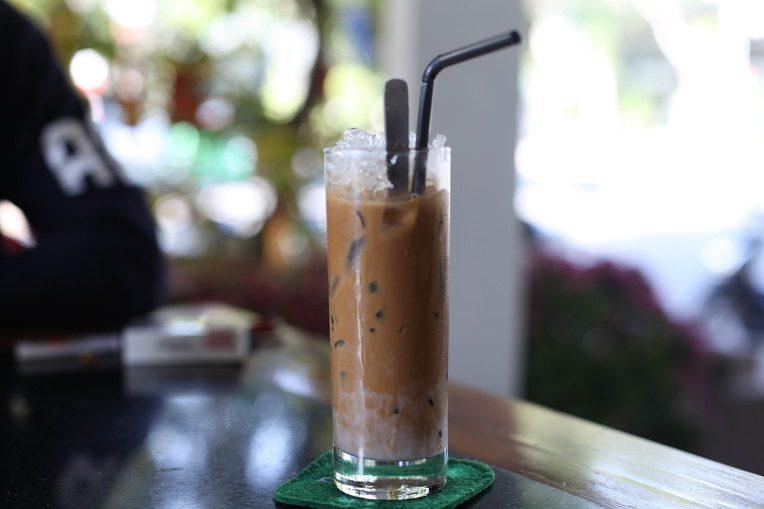
Ca phe sua da — hot black coffee dripped through a phin directly over sweetened condensed milk, then poured over ice — is the everyday Vietnamese coffee order, sold from breakfast street carts to sit-down cafes nationwide. It’s sweet, strong, and refreshing in the heat, and it’s the drink most travelers end up ordering on repeat. A quick vocabulary cheat sheet helps: ca phe means coffee, den means black, sua means with milk, nong means hot, and da means iced — so ca phe sua da literally translates to milk coffee ice.
Where should I drink coffee in Vietnam?
Skip the international chains if you want the real experience — small, plastic-stool sidewalk cafes and old-school sidewalk coffee spots are where Vietnamese coffee culture actually lives, and they’re everywhere in Hanoi’s Old Quarter and Ho Chi Minh City’s downtown districts. Hanoi in particular has a strong specialty scene beyond egg coffee too, including coconut coffee (ca phe cot dua) and yogurt coffee (sua chua ca phe) — both worth trying if the classic sweet iced coffee isn’t quite your thing [VERIFY specific shop recommendations].
It’s typically made from bold, high-caffeine robusta beans, brewed slowly through a metal phin filter, and paired with sweetened condensed milk rather than fresh milk or sugar — the result is stronger and sweeter than most Western coffee.
Whipped egg yolk, condensed milk, and sugar beaten into a thick foam and spooned over hot black coffee — it originated in Hanoi and tastes closer to a warm dessert than a typical coffee drink.
Ask for ca phe sua da for the classic iced coffee with condensed milk, or ca phe den da for iced black coffee without milk.
One Comment