
Phuket Food Guide: What to Eat on Thailand’s Largest Island
Phuket’s food scene is more distinctive than most visitors expect: the island’s long history as a tin-mining hub for Chinese immigrants gave it its own Peranakan (Baba) cuisine, a blend of Hokkien-Chinese cooking and Malay influence found nowhere else in Thailand in quite the same form. Old Phuket Town, not the beach resorts, is where to find it — think Hokkien mee noodles, braised moo hong pork, and the shaved-ice dessert o-aew.
What Makes Phuket Food Different From Other Thai Food?
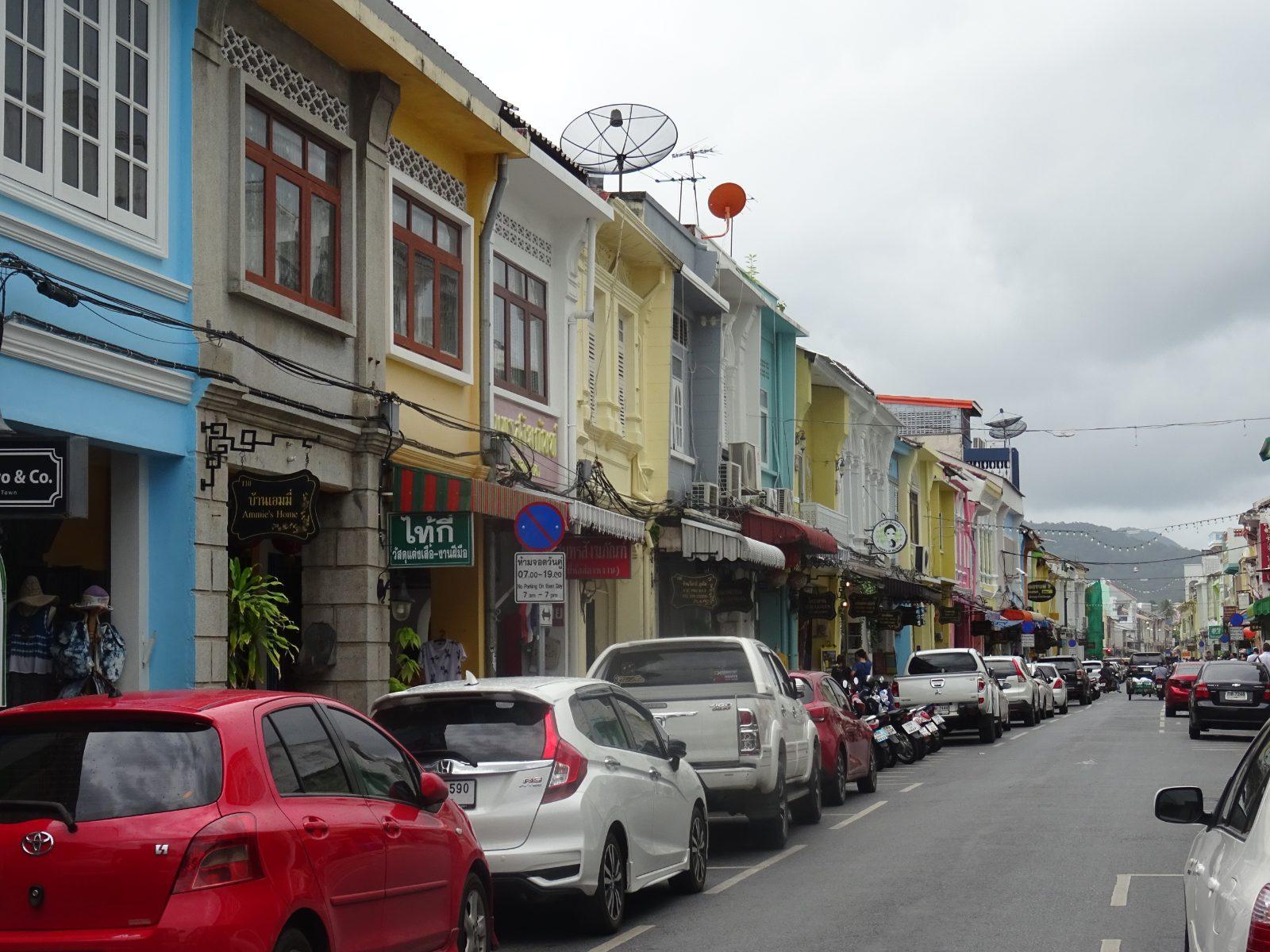
Phuket’s cuisine carries a genuinely distinct identity shaped by 19th-century Chinese (mostly Hokkien) tin-mining immigrants who intermarried with local Thai and Malay communities, creating a Peranakan (Baba) food culture closer to what you would find in Penang or Melaka than in Bangkok. The clearest place to taste it is Old Phuket Town’s Sino-Portuguese shophouse district, where family-run stalls — some operating since the 1940s — still serve the same dishes.
| Dish | What It Is | Where to Find It |
|---|---|---|
| Hokkien Mee | Wide yellow noodles stir-fried with barbecue pork and squid — Phuket’s own version, distinct from the Malaysian/Singaporean dishes of the same name | Old Town stalls, some operating since 1946 |
| Moo Hong | Pork belly slow-braised in soy sauce and warm spices until tender, reflecting the island’s Peranakan heritage | Old Town restaurants, rarely found at beach resorts |
| O-Tao | Taro, seafood, and egg cooked together on a hot griddle and finished with crispy pork crackling | Night market stalls — best eaten hot off the griddle |
| O-Aew | A shaved-ice dessert built on jelly from the o-aew plant’s seeds, topped with banana juice, kidney beans, and grass jelly | Old Town dessert stalls and the Sunday Walking Street Market |
| Roti | Flaky griddle-fried flatbread served with curry rather than the sweet, condensed-milk version tourists often expect | Roti Chaofa and Roti Taew Nam, both in Phuket Town |
| Grilled Seafood | Fresh-caught fish, prawns, and squid grilled to order at open-air market stalls | Thanin Market and the Rawai seafood market |
TTC Verdict: If you only eat in beach-resort restaurants, you will miss Phuket’s actual food identity entirely. Spend at least one meal in Old Phuket Town — Hokkien mee and moo hong are not available at most hotel restaurants, and they are the dishes that make Phuket’s food genuinely different from the rest of Thailand.
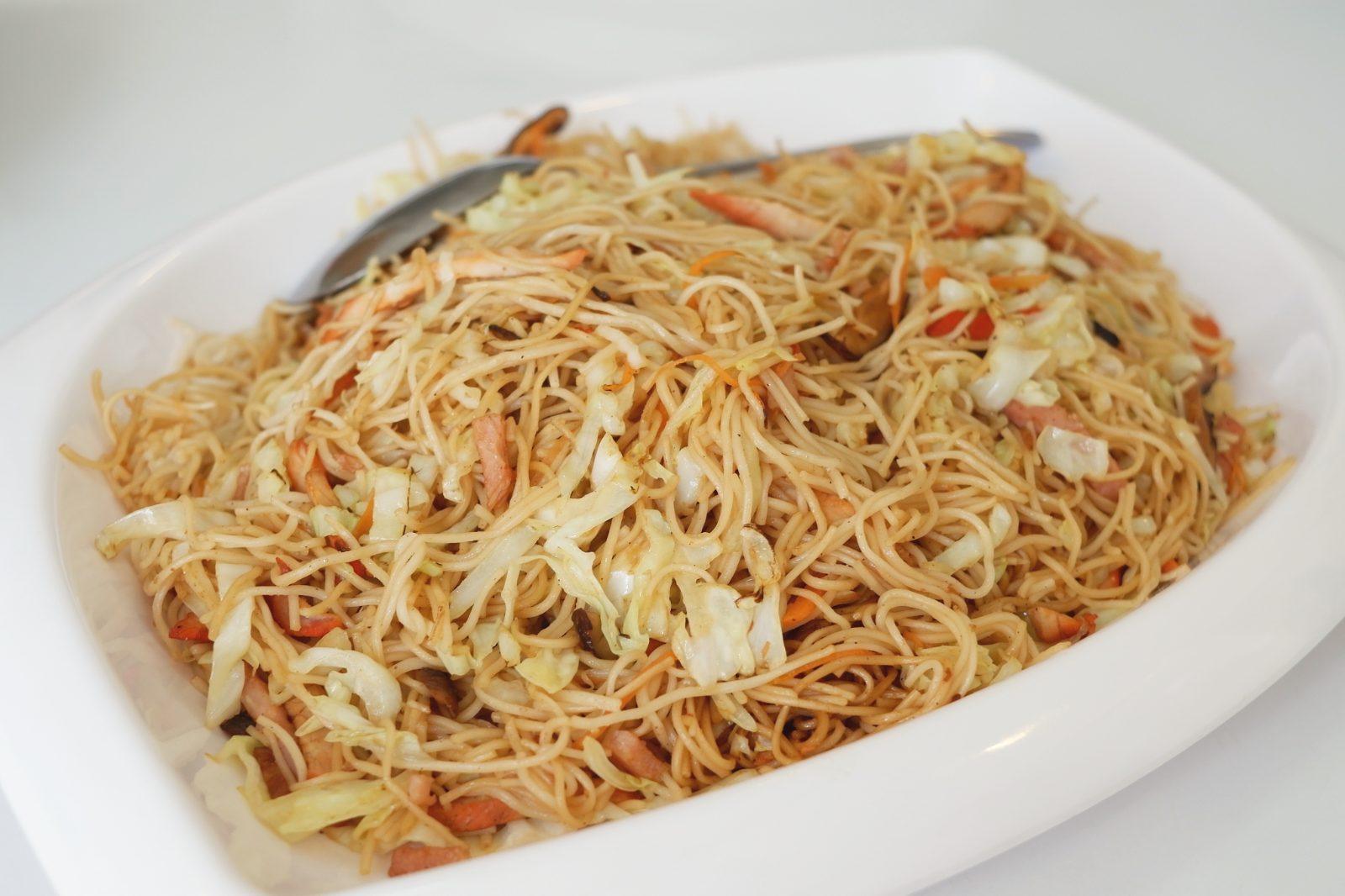
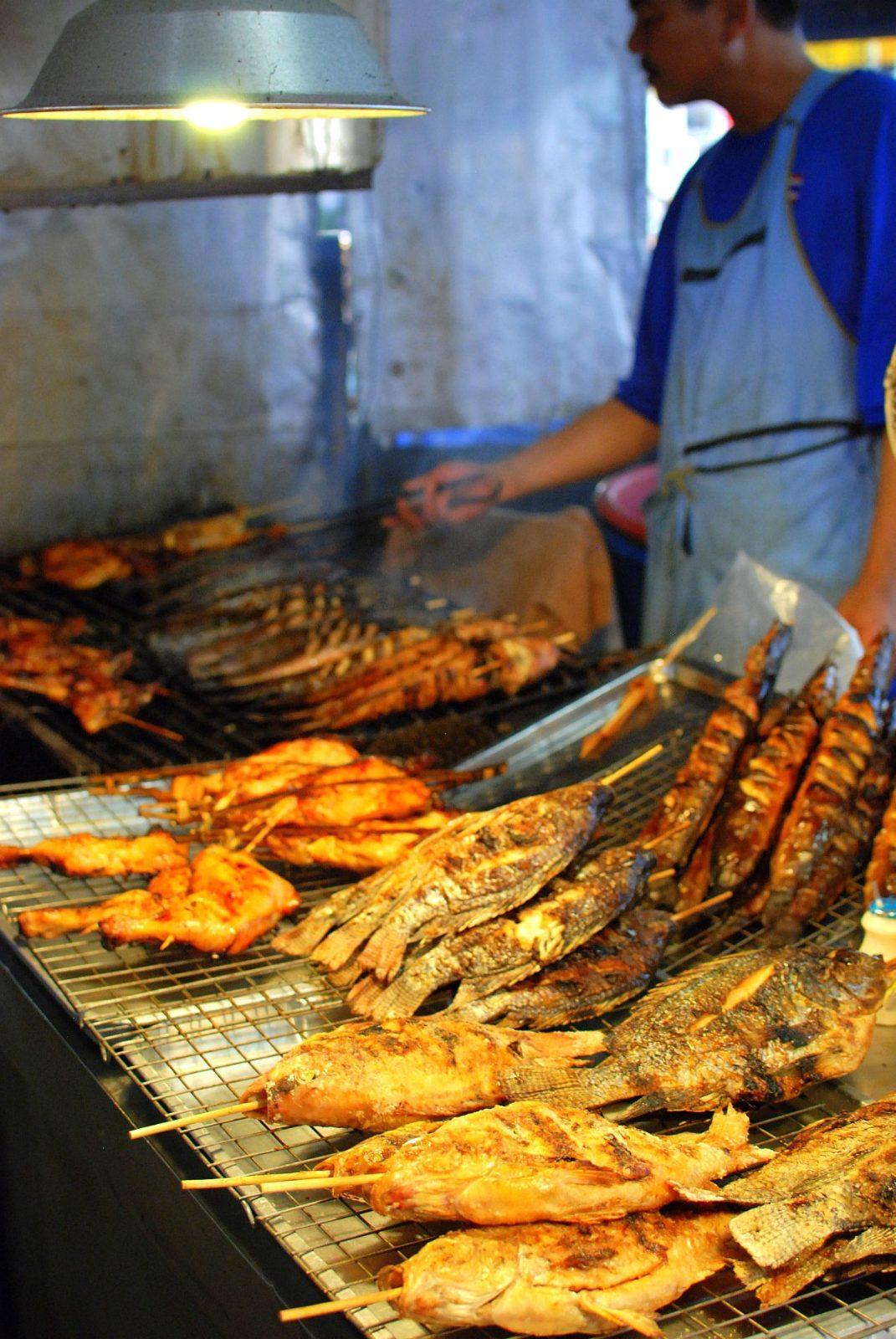
Hokkien mee: Vee Satayamas / CC BY 2.0 · Grilled seafood, Thanin Market: Takeaway / CC BY-SA 3.0
When Is the Sunday Walking Street Market?
Old Phuket Town’s Thalang Road closes to traffic every Sunday from roughly 4 to 9 pm for the Lard Yai Walking Street Market, the single best concentration of Peranakan street food on the island — o-aew, o-tao, roti, and grilled seafood stalls line the street alongside local handicrafts. It is busy and touristy by local standards, but it remains the easiest single stop for trying several Phuket specialties in one visit. Hours can shift seasonally, so it is worth confirming the market is running before you plan an evening around it.
What About Beach-Resort Seafood?
Phuket’s beach towns — Patong, Kata, Karon — are full of seafood restaurants with tanks of fresh catch out front, and the quality is generally good, though prices run higher than at markets and some tourist-area spots inflate prices for anyone who looks like a first-time visitor. Ask for a price before ordering anything sold by weight (lobster and crab especially), and consider Rawai’s seafood market for a more local, lower-priced alternative with a similar fresh-grilled result.
Vegetarian and Vegan Options
Phuket is unusually vegetarian-friendly for a seafood-heavy destination thanks to the island’s annual Vegetarian Festival (held in September or October, timing varies by the Chinese lunar calendar), which has normalized vegetarian stalls and menus year-round in Old Town. Look for yellow flags marking vegetarian stalls, and note that “jay” (เจ) food in Thailand typically excludes not just meat and seafood but also garlic and onion, stricter than a standard Western vegetarian diet.
Thalang Road, Old Phuket Town: Christophe95 / CC BY-SA 4.0
[affiliate link: GetYourGuide — Phuket Old Town food tour]
Phuket is best known for its Peranakan (Baba) cuisine — Hokkien mee noodles, braised moo hong pork, and the o-aew shaved-ice dessert — a blend of Hokkien-Chinese and Malay influences from the island’s 19th-century tin-mining immigrant history, found mainly in Old Phuket Town.
Old Phuket Town has the best concentration of genuinely local food, especially around the Sunday Walking Street Market on Thalang Road. Beach-town restaurants in Patong, Kata, and Karon are fine for fresh seafood but rarely serve Phuket’s signature Peranakan dishes.
Phuket and southern Thai food tend to run spicier on average than central Thai cooking. Ask for “mai phet” (not spicy) or “phet nit noy” (a little spicy) if you are sensitive to heat.
One Comment