Best Time to Visit Ha Long Bay: A Month-by-Month Guide
October and November give you the clearest skies and best visibility of Ha Long Bay’s karst islands, while July through early September carries the highest risk of storms disrupting or canceling your cruise. Winter is calm but often misty, and December–January is the most expensive stretch of the year due to holiday travel. There is no single universally best month — it depends whether you are optimizing for clear photos, low prices, or the lowest chance of a canceled sailing.
What Is the Weather Like in Ha Long Bay by Season?
Ha Long Bay has a genuine four-season pattern, unlike the more consistently tropical climate further south in Vietnam — the difference between visiting in January and visiting in July is significant, not marginal.
| Season | Months | Weather | What to Know |
|---|---|---|---|
| Spring | March–April | ~18–23°C, light drizzle mixed with sun | Generally calm seas; a comfortable, underrated window |
| Summer | May–September | ~28–32°C, rising humidity and rainfall | Storm risk peaks July–August; most cruise cancellations happen in this window |
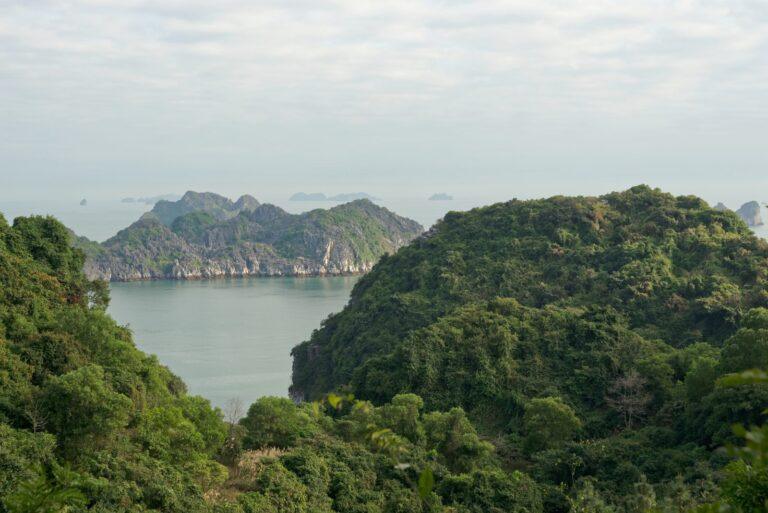
| Autumn | October–November | Mid-20s°C, falling humidity, clear skies | Widely considered the best window for photography and karst visibility |
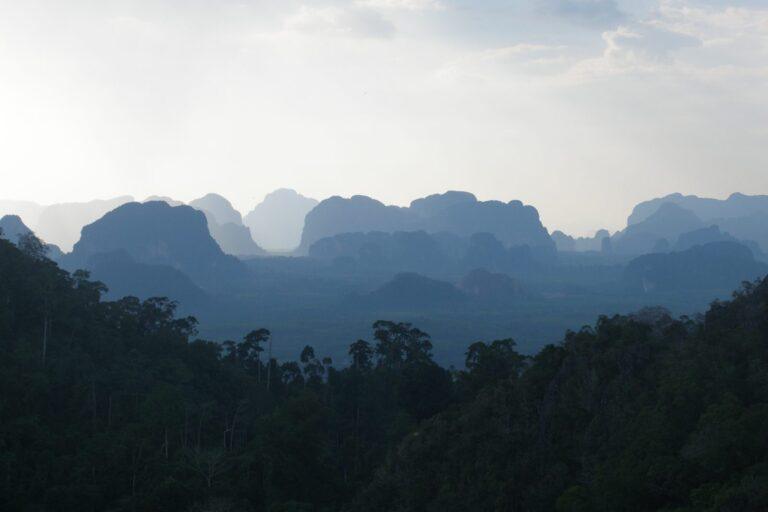
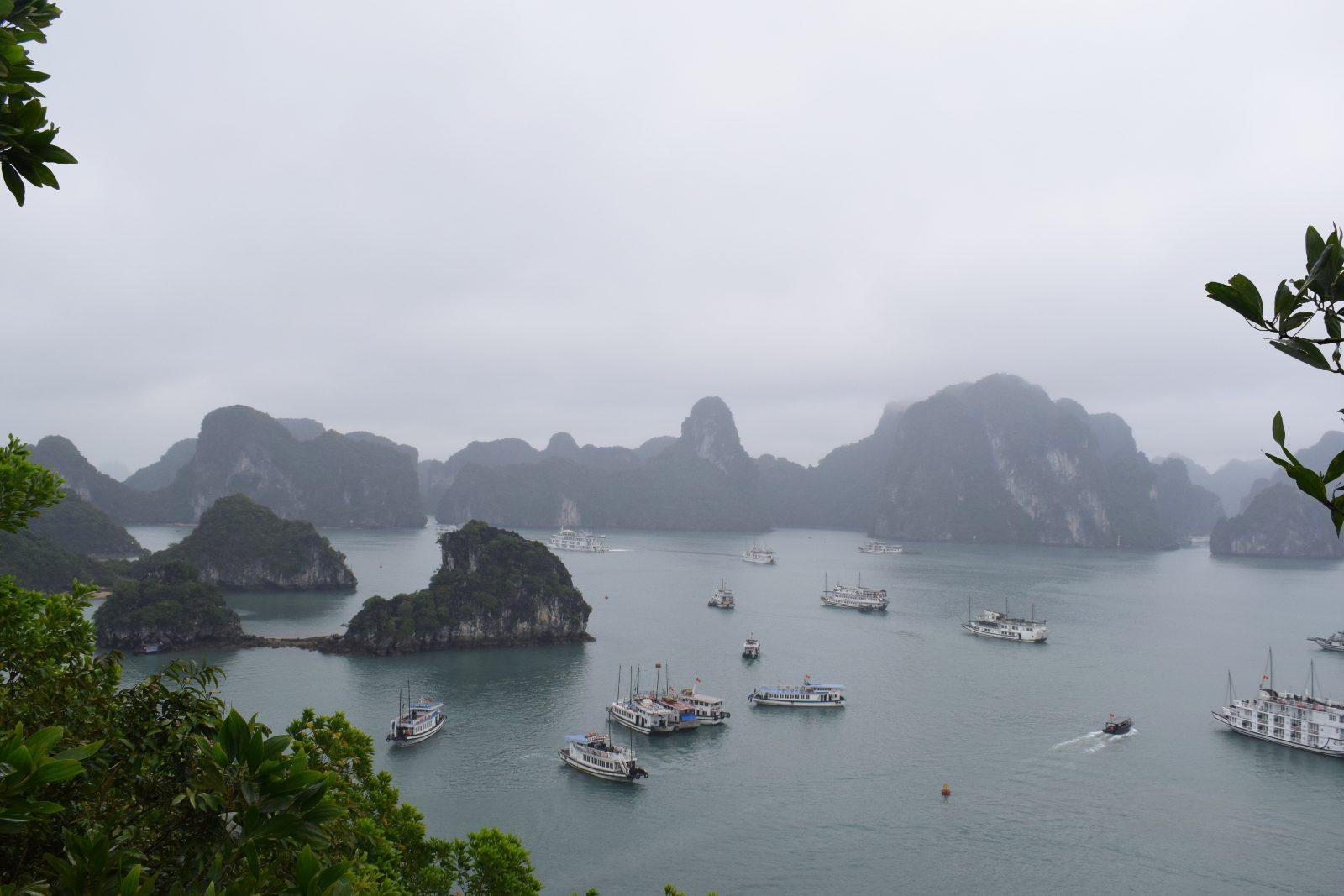
| Winter | December–February | ~16–18°C, low rainfall, calm seas | Frequent mist/fog can soften or fully obscure distant karst views |
TTC Verdict: Book October or November if clear, photogenic views of the karsts matter most to you. If you are chasing the lowest price and can tolerate a real chance of a weather-adjusted itinerary, May through early July (before peak storm season) is the better trade-off than the deep summer months.
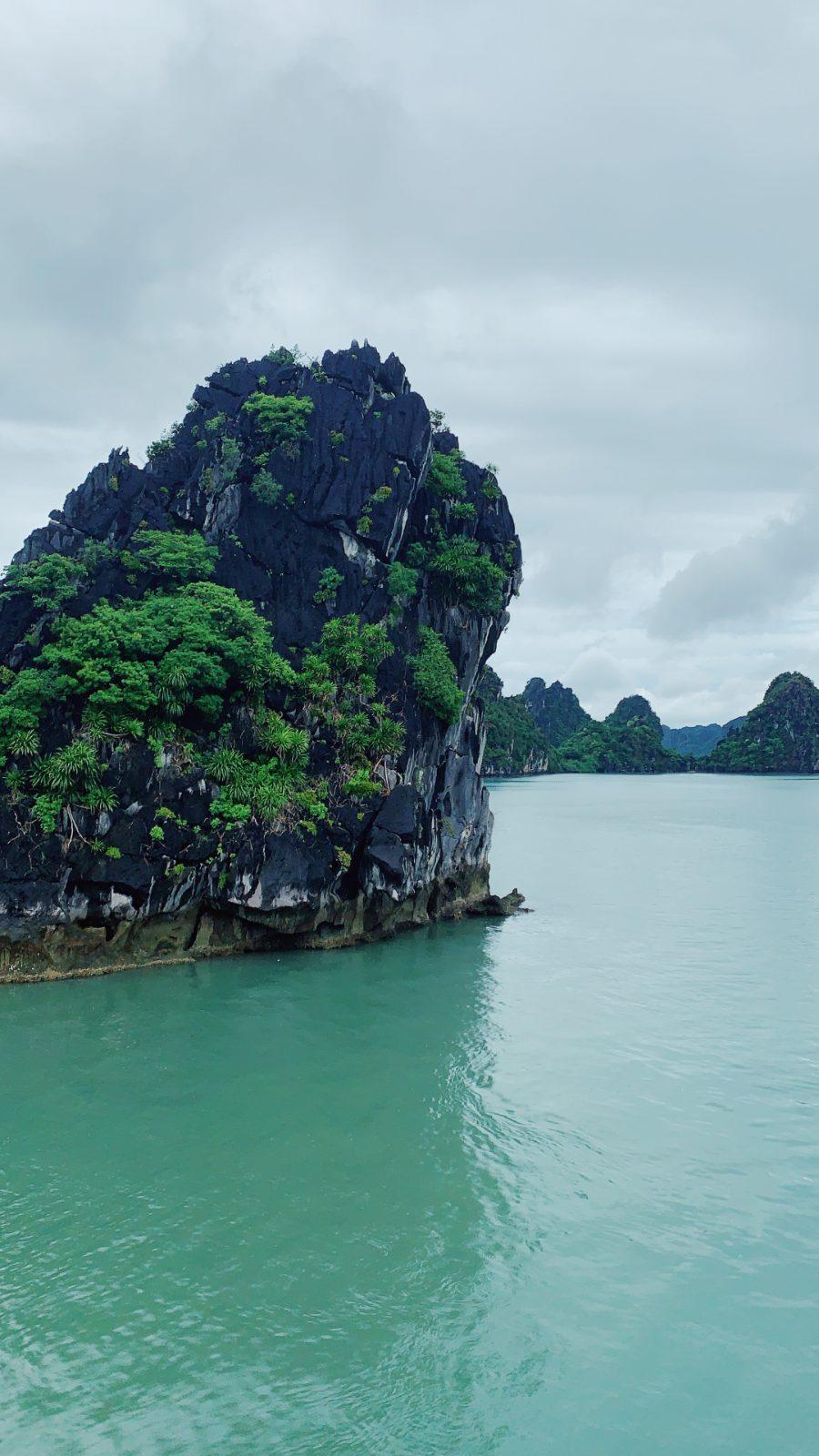
Titop Island view: Mig Gilbert from Brighton / CC BY-SA 2.0 · Karst islands: Graceac / CC BY-SA 4.0
When Are Crowds and Prices at Their Best and Worst?
Peak season for Ha Long Bay runs October through April, with December and January commanding the highest prices of the year due to holiday travel. May through September is shoulder-to-low season — cruise operators run more promotions, but this overlaps directly with the highest storm risk of the year, so the savings come with a real trade-off in reliability.
October and November are the most commonly recommended months, offering the clearest skies and best visibility of the karst islands without the peak-holiday pricing of December and January.
Summer (May–September) is Ha Long Bay’s rainy, storm-prone season, with risk peaking in July and August. Cruises still run, but itinerary changes and cancellations are more common in this window than any other time of year, so build flexibility into your schedule if you travel then.
Not necessarily — winter mist is common and does reduce long-distance visibility of the karsts, but many photographers specifically seek it out for its atmospheric quality. If a fully clear, far-reaching view matters more to you than mood, October or November is the safer bet.