
What to Eat in Quy Nhon: Jumping Shrimp Pancakes and Fresh Seafood
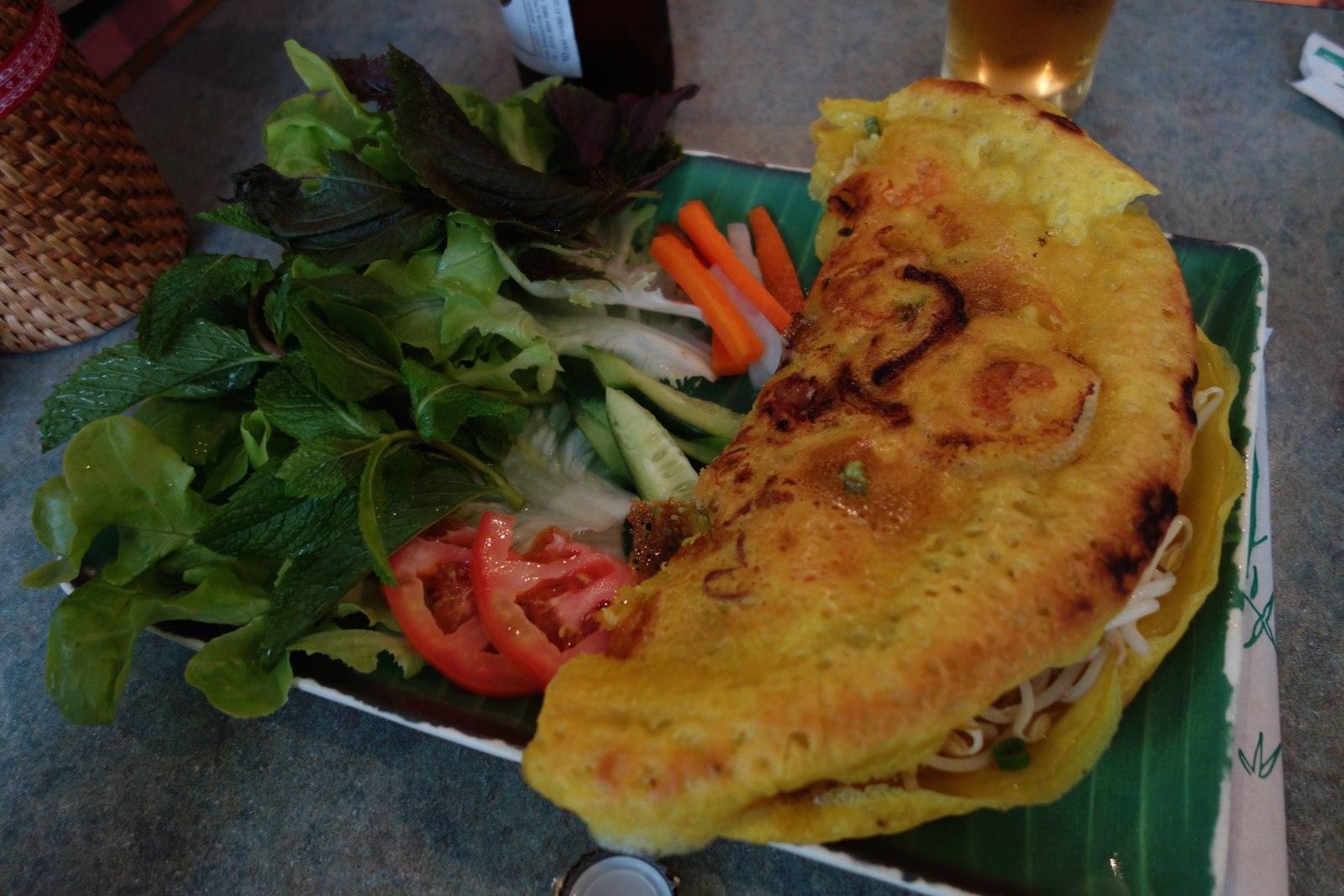
Quy Nhon’s food identity is built on fresh seafood and a handful of dishes genuinely unique to Binh Dinh province — most famously banh xeo tom nhay, made with shrimp so fresh they’re said to still be “jumping” when they hit the pan.
| Dish | What It Is | Where to Find It |
|---|---|---|
| Banh Xeo Tom Nhay | A smaller, open-top savory pancake filled with live-caught shrimp, rolled in rice paper with herbs | Banh Xeo Cay Me and Quan Ba Nam My Cang — both local institutions for the jumping-shrimp version |
| Bun Cha Ca | Fishcake noodle soup — ground fish reformed into cakes, served in a light, peppery broth | Bun Ca Ngoc Lien, 379A Nguyen Hue |
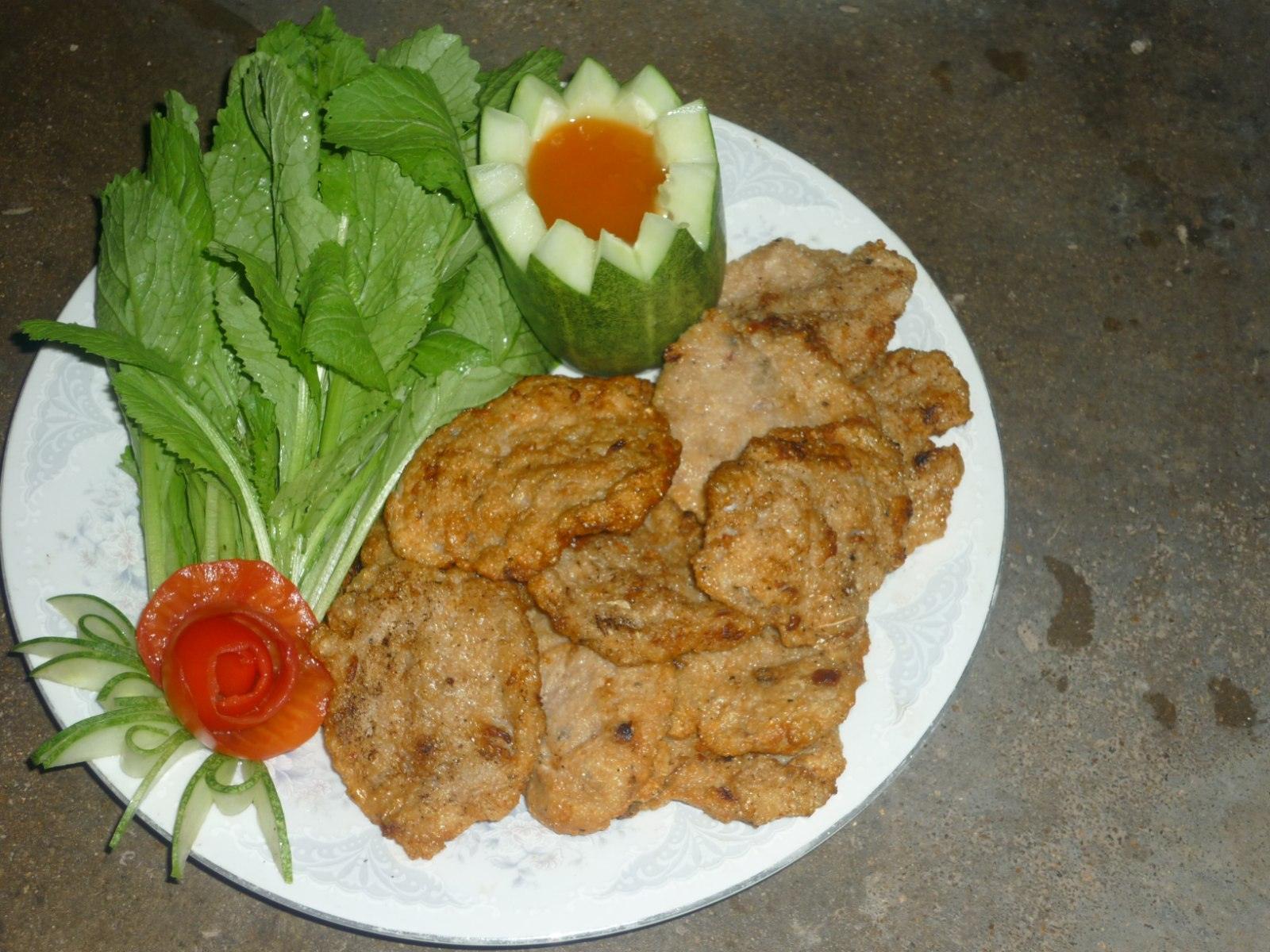
| Nem Nuong | Grilled or fried shrimp rolls, a Binh Dinh specialty usually served with sweet chili sauce | Nem Cho Huyen OLALA — a family-run spot outside the main tourist strip |
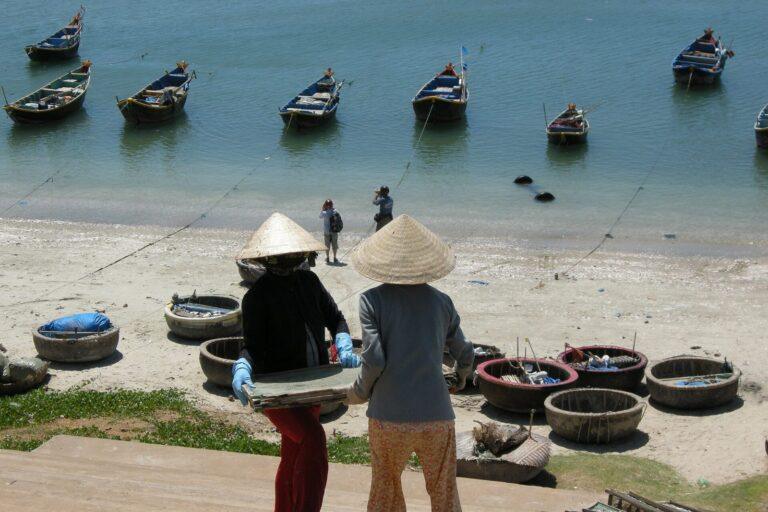
| Fresh Seafood | Steamed crab, grilled oysters, and tamarind crab straight off the morning boats | The seafood stalls along the city wharf and Nhon Ly fishing docks |
“Order banh xeo tom nhay at least once — it’s the one dish that genuinely sets Quy Nhon apart from every other beach city on this coast.”
Where Should You Actually Eat?
For banh xeo, seek out a stall that fries to order over a coal or gas burner rather than a pre-made stack sitting under a heat lamp — the batter should still be audibly crisp. For seafood, the wharf-side stalls near the city’s fishing docks sell at genuinely local prices; agree on a price per kilo before the vendor starts weighing anything, a normal and expected step here.
What Other Binh Dinh Specialties Are Worth Trying?
Beyond banh xeo tom nhay and bun cha ca, two more dishes are worth seeking out specifically because they’re regional Binh Dinh specialties you won’t find everywhere in Vietnam: banh it la gai, a dense sticky-rice cake wrapped in ramie leaf, and tre, a fermented pork specialty often sold wrapped like a small straw bundle.
| Dish | What It Is | Where to Find It |
|---|---|---|
| Banh It La Gai | A black, chewy sticky-rice cake made with ramie (gai) leaf and filled with sweetened mung bean or coconut, wrapped in banana leaf | Local bakeries and market stalls across the city; a common take-home souvenir food |
| Tre | Fermented pork (often ear or skin), seasoned with sesame, galangal, chili, and garlic, typically wrapped in straw or banana leaf | Market stalls and as a side dish alongside rice paper and fresh herbs |
| Nem Chua | Fermented pork roll, distinct from nem nuong, usually served on a platter with rice paper, cucumber, and fresh leaves | Ngo Van So street food stalls, especially in the evening |
Where Can You Find Quy Nhon’s Best Street Food?
Ngo Van So street is Quy Nhon’s closest equivalent to a dedicated food street — a cluster of stalls and small eateries that fills up from around 6pm onward, well after the daytime heat has passed. For a more market-driven experience earlier in the day, Quan Thanh Market is worth a visit for banh can (small sizzling rice-flour pancakes cooked in clay molds) and other street snacks that don’t always make it onto restaurant menus.
Eat banh xeo tom nhay and fresh wharf-side seafood at least once each — they’re the two dishes that define Quy Nhon’s food identity. Save Ngo Van So street for an evening when you want to graze across several small dishes (tre, nem chua, banh it la gai) rather than sit down for one big meal.
Is Street Food in Quy Nhon Safe, and How Do You Pay?
Quy Nhon’s street food scene is generally low-risk if you follow the same basics that apply across Vietnam: choose stalls with steady local turnover, drink bottled or boiled water rather than tap, and be cautious with ice at less busy stalls if you have a sensitive stomach. Cash is still the default for street food and markets — VND in small bills, since stalls rarely take cards or accept USD directly Some tourist-facing restaurants may take cards.. A basic phrasebook or translation app helps at stalls without English menus, and most dishes fall in a modest per-portion price range that makes this one of the cheaper parts of a Vietnam trip.
A Quy Nhon specialty version of banh xeo (Vietnamese savory pancake), made smaller and filled with extremely fresh, still-lively shrimp — the name literally means “jumping shrimp pancake.”
Fresh seafood (crab, oysters, squid) and banh xeo tom nhay are the two things most associated with Quy Nhon’s food scene, alongside bun cha ca (fishcake noodle soup), a Binh Dinh regional dish.
Not inherently — most dishes are served with fresh herbs, a light dipping sauce, and chili on the side rather than built-in heat, so you can control the spice level yourself.
Historically yes, and many menus, maps, and older sources still refer to “Binh Dinh province.” As of Vietnam’s mid-2025 provincial restructuring, Binh Dinh was merged into an expanded Gia Lai province, with Quy Nhon serving as its new administrative center — but on-the-ground usage of “Binh Dinh” as a regional and culinary identity has been slow to change, so you’ll see both names in circulation.
Ngo Van So street, best visited from around 6pm onward, plus the wharf-side seafood stalls near the city’s fishing docks earlier in the day.
2 Comments