
What to Eat in Da Lat: Artichoke Tea, Grilled Rice Paper & Highland Flavors
Da Lat sits at roughly 1,500 meters in the Central Highlands, and its cool climate grows food that does not exist anywhere else in Vietnam. Artichokes, strawberries, avocados, and Arabica coffee all thrive here instead of the tropical fruit and Robusta coffee that dominate the rest of the country — for the Robusta side of that story, see our Buon Ma Thuot Food & Coffee Guide. The food itself reflects that highland identity: warm street snacks built for cool evenings, and produce sold fresh at Da Lat Market by the people who grew it.
What Makes Da Lat Food Different From the Rest of Vietnam?
Most of Vietnam grows in a hot, humid, lowland climate. Da Lat does not. Its highland elevation and cooler year-round temperatures support crops that need a temperate climate, so the food culture here leans on vegetables, fresh produce, and warm street snacks rather than the tropical fruit and rice-paddy staples found in Hanoi or Ho Chi Minh City. Artichokes and strawberries in particular are treated almost as regional mascots, sold fresh at every market stall and turned into tea, jam, and syrup.
| Dish | What It Is | Where to Find It | Best Time |
|---|---|---|---|
| Bánh Tráng Nướng | Grilled rice paper topped with egg, scallions, minced meat, and cheese — often called “Vietnamese pizza” | Street stalls citywide, especially Nguyen Van Troi Street | Evening |
| Bánh Căn | Small rice-flour pancakes cooked in individual clay molds, crispy outside and soft inside | Tang Bat Ho Street stalls | Breakfast or dinner |
| Trà Atiso (Artichoke Tea) | Tea brewed from the artichoke flower and stem, a Da Lat specialty grown locally | Da Lat Market, most cafes and shops | Anytime, especially cool evenings |
| Sữa Đậu Nành | Warm, fresh soy milk sold by street vendors, a common breakfast drink | Street carts citywide | Early morning |
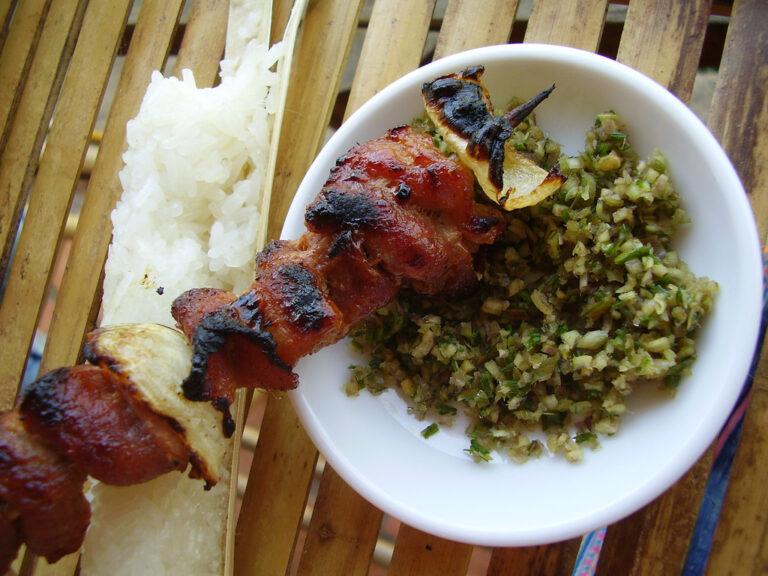
| Nem Nướng | Grilled pork sausage wrapped in rice paper with herbs and a sweet-and-sour dipping sauce | Night markets and the University Five-Way intersection area | Evening |
| Cơm Lam | Sticky rice cooked inside bamboo, served with grilled chicken — a Central Highlands tradition | Da Lat Market and the Hoa Binh area | Lunch or dinner |
TTC Verdict: Start with bánh tráng nướng fresh off the grill and a cup of hot artichoke tea — together they capture what makes Da Lat food different from the rest of Vietnam: warm, simple, built for a cool climate. Skip the trip if you are chasing bold, spicy southern flavors; Da Lat food is gentler than that by design.
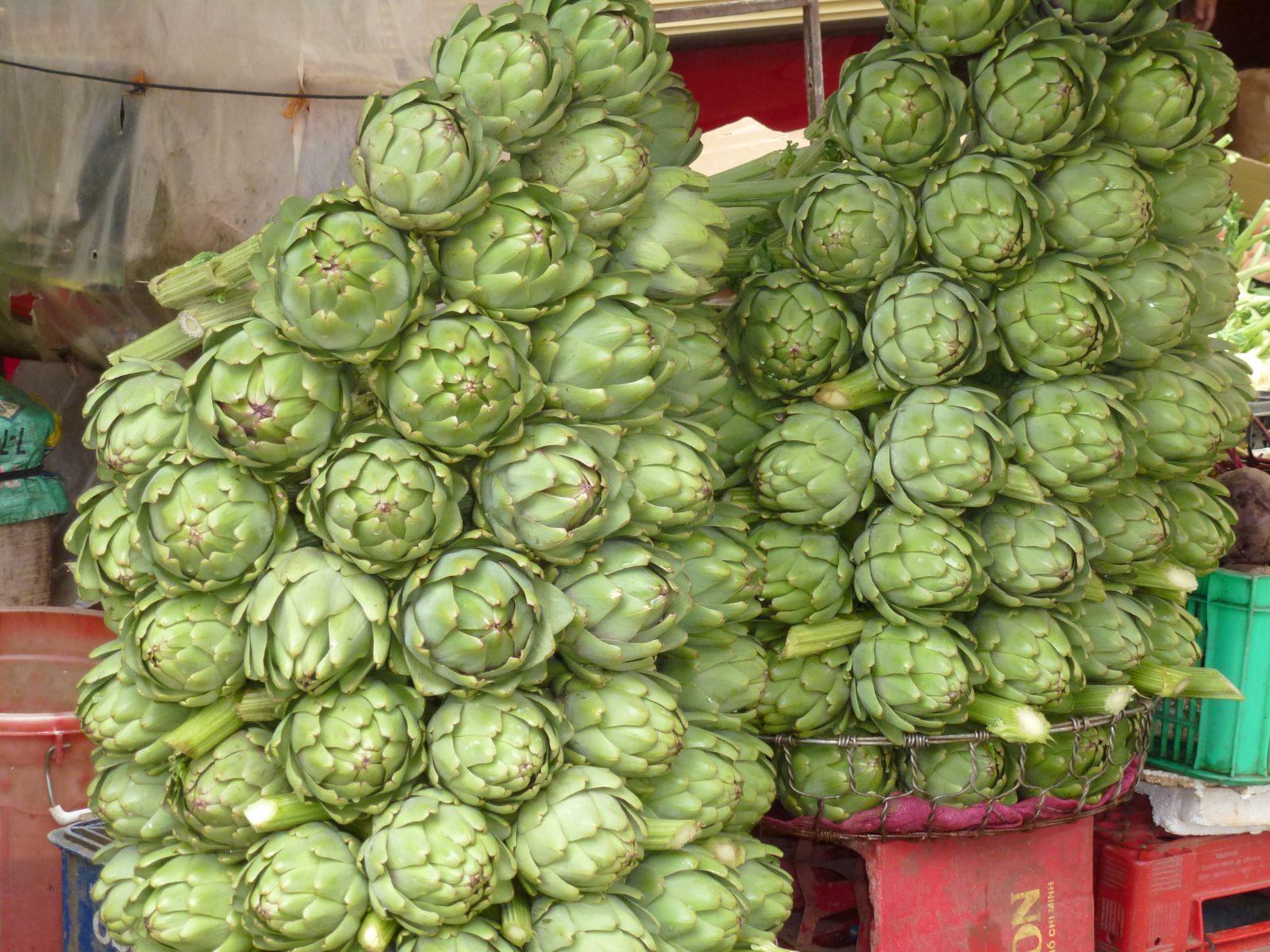
Artichokes at Da Lat Market: Hungda / CC BY-SA 3.0
Where Should You Actually Eat in Da Lat?
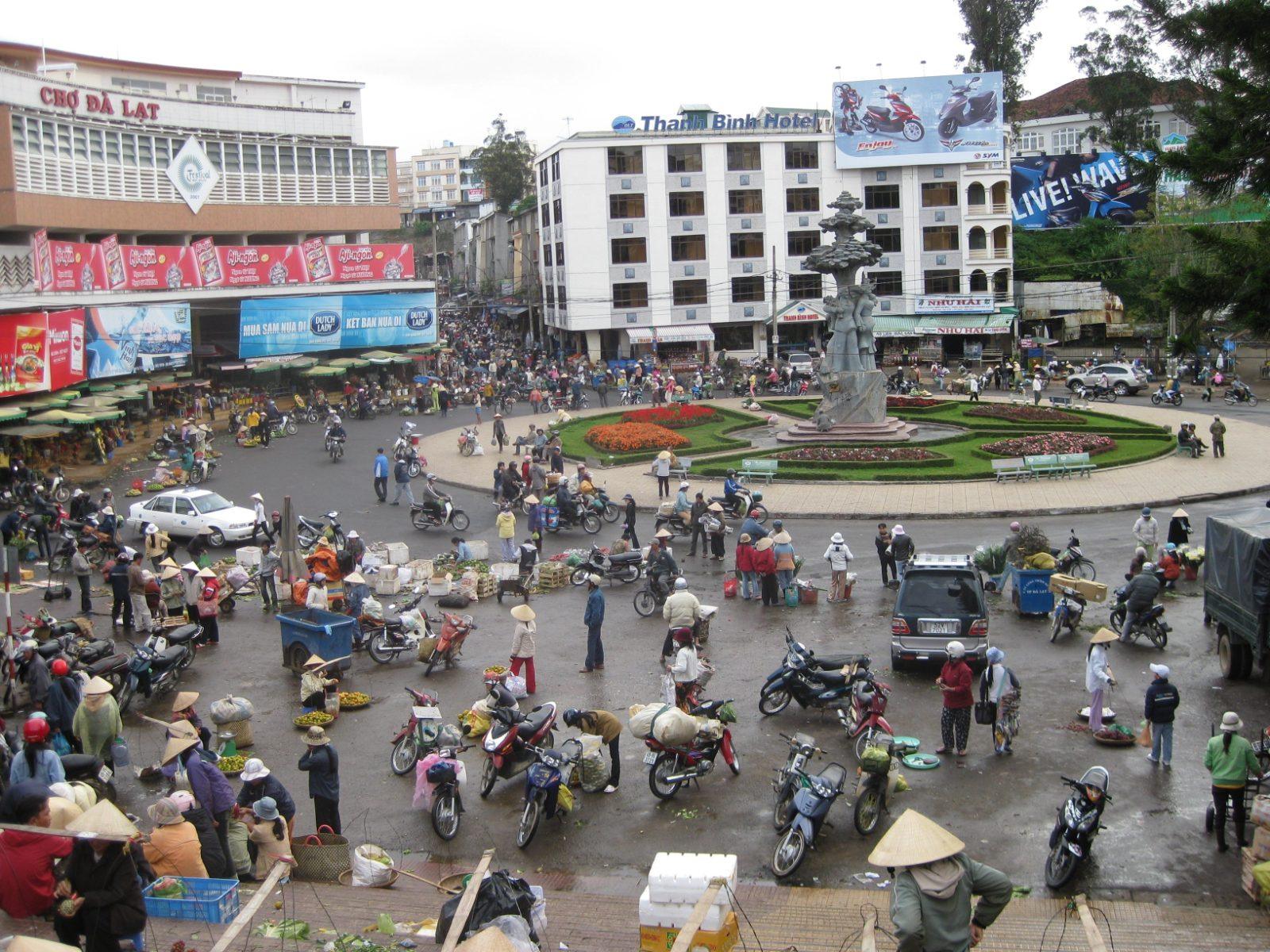
Da Lat Market (Chợ Đà Lạt) is the center of the city’s food scene by day, with fresh produce, artichoke tea vendors, and prepared-food stalls on the ground floor and surrounding streets. After dark, the same area becomes the Da Lat Night Market, with grilled skewers, nem nướng, and bánh tráng nướng stalls taking over. Neither requires a reservation or much planning — the approach that works best is simply walking the market streets and eating whatever looks freshest.
Is Da Lat Food Spicy?
Not especially. Da Lat’s food culture draws more from Central Highlands and northern-influenced cooking than from the bold chili-forward dishes associated with central Vietnam (Hue) or the sweeter profile of the south. Expect mild, herb-forward flavors rather than heat — a contrast worth knowing if you are coming from a spicier stretch of a Vietnam itinerary.
Bánh tráng nướng, a grilled rice paper snack topped with egg, scallions, and often cheese or minced meat, is the dish most associated with Da Lat, alongside artichoke tea made from locally grown artichokes.
Trà Atiso is tea brewed from the artichoke flower and stem, a specialty of Da Lat since the region’s cool climate is one of the few places in Vietnam where artichokes grow well. It is sold as loose tea, tea bags, and fresh bunches at Da Lat Market.
Yes. Da Lat’s highland climate supports produce that does not grow in the rest of Vietnam, including artichokes, strawberries, and Arabica coffee, and the food culture leans toward warm, mild street snacks suited to its cooler evenings rather than the tropical or heavily spiced dishes found elsewhere in the country.
3 Comments