
Is Vietnam Safe? Scams to Avoid and What Actually Matters
Vietnam is rated Level 1, “Exercise Normal Precautions,” by the US State Department — the same rating given to most of Western Europe — and violent crime against tourists is genuinely rare. The real, common risks are pickpocketing in crowded tourist areas, a long list of low-stakes tourist scams (tampered taxi meters, overcharging, fake monks), and road traffic, which is a bigger practical danger to most visitors than crime is. None of this should be read as a reason to avoid Vietnam; it is a reason to know the specific patterns ahead of time.
Is Vietnam Safe to Visit?
Yes, for the overwhelming majority of travelers. Vietnam’s current US State Department travel advisory sits at Level 1, “Exercise Normal Precautions” (last reissued June 2026), with no regions flagged as “do not travel.” The advisory’s own stated concerns are petty crime in tourist areas, romance and money-transfer scams, and road safety — not violent crime, which it explicitly describes as rare against foreign visitors. The main practical adjustment for a first-time visitor is less about danger and more about being scam-aware in a handful of very specific, well-documented situations.
| Risk Category | How Common | Typical Scenario | How Serious |
|---|---|---|---|
| Pickpocketing / bag-snatching | Common in tourist crowds | Crowded markets, walking streets, motorbike drive-by bag grabs | Low — financial loss, rarely violent |
| Tourist scams (taxis, vendors, tours) | Very common | Tampered meters, inflated menus, fake monks, forced photo-ops | Low — annoying and costly, not dangerous |
| Road traffic accidents | The most common serious risk | Chaotic traffic, night driving, motorbike accidents | Moderate to high — the leading cause of serious traveler injury in Vietnam |
| Violent crime against tourists | Rare | Isolated incidents, not a pattern | Low likelihood, but potentially serious if it occurs |
TTC Verdict: Treat Vietnam the way you would treat any major tourist destination with heavy crowds and chaotic traffic: watch your bag in crowded areas, agree on prices before you accept a service, and be far more careful about crossing streets and riding motorbikes than about crime. Road safety, not crime, is the risk most likely to actually affect your trip.
What Are the Most Common Scams in Vietnam?
Almost every documented Vietnam tourist scam falls into one of a few repeatable patterns — recognizing the pattern is usually enough to avoid it entirely:
- Taxi meter tampering or fake ride-app drivers — stick to official Grab/Be app rides or the reputable Mai Linh (green) and Vinasun (white) taxi fleets; avoid unmarked cars offering rides at the airport.
- Forced services (shoe shining, photo props) — a vendor starts polishing your shoe or places a bamboo yoke on your shoulders for a “free” photo, then demands payment. Decline firmly before any contact happens.
- Fake monks asking for donations — someone in monk’s robes hands over a “lucky” bracelet and asks for a large cash donation. Genuine monks in Vietnam do not solicit money on the street this way.
- Currency confusion — the 500,000 VND and 20,000 VND notes are both blue and easy to mix up when handing over cash quickly. Keep large and small bills in separate parts of your wallet.
- Inflated tourist menus — some restaurants near tourist areas show reasonable prices outside but hand foreign visitors a different, 2–3x-priced menu inside. Confirm prices before ordering if anything feels off.
- Hotel bait-and-switch — a taxi driver claims your booked hotel is “closed” or “fully booked” and redirects you to a different property that pays them a commission. Call your actual hotel directly if this happens, or ask to be dropped at the address regardless.
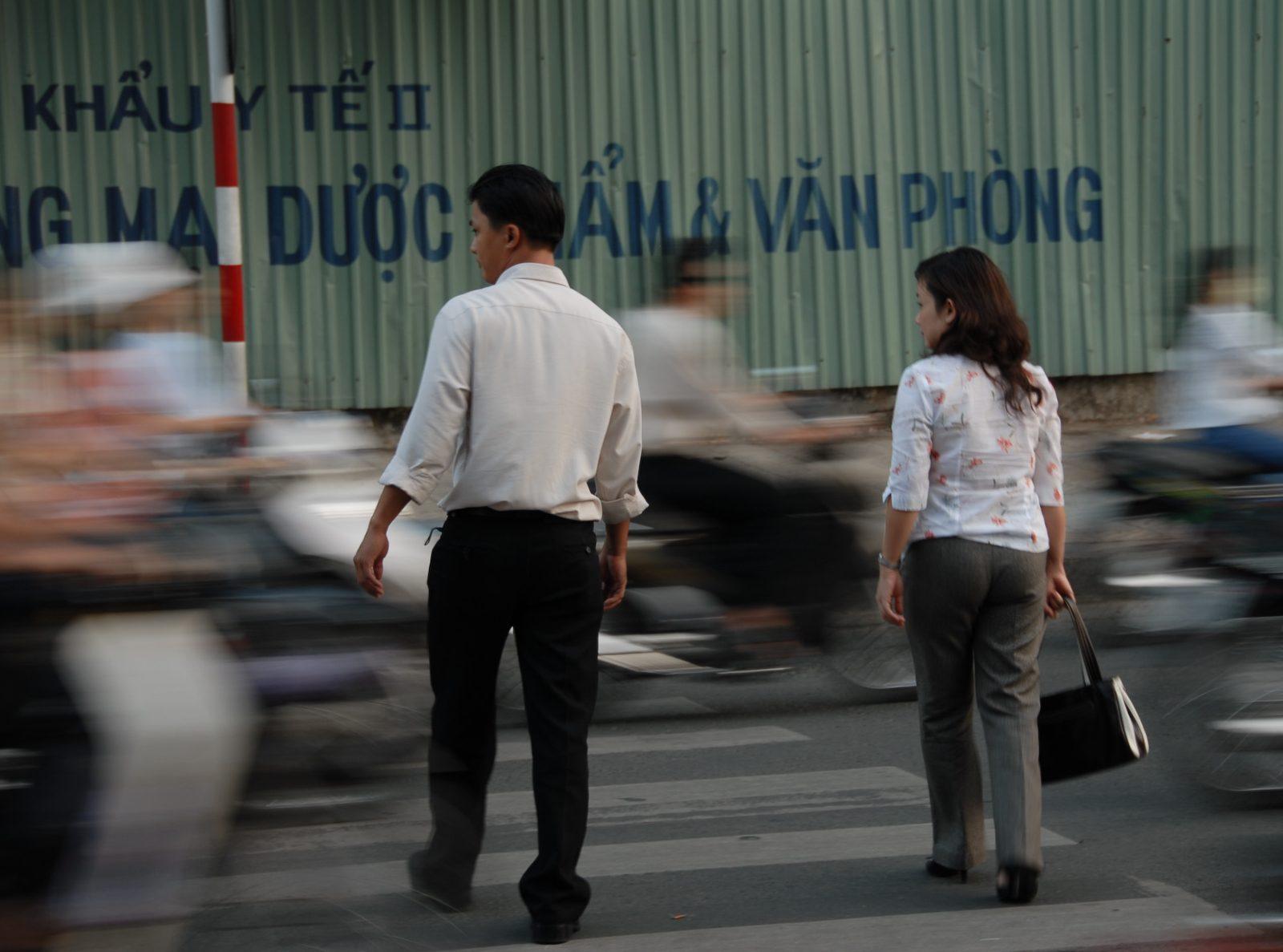
Crossing a Saigon Street
Is Vietnamese Traffic Actually Dangerous for Tourists?
This is the risk most travelers underestimate. Vietnam’s traffic is genuinely chaotic by Western standards — heavy motorbike volume, frequent lane changes, and near-constant horn use — and night driving on rural highways is specifically flagged as dangerous by the State Department. If you plan to ride a motorbike or scooter yourself, know that a Vietnamese-recognized license is legally required (a US, Canadian, or Australian license alone is generally not sufficient), and riding without one can also void your travel insurance — see our Vietnam travel insurance guide for how that exclusion works in practice.
What Should You Actually Do Before You Go?
Three practical steps cover most of what matters: buy travel insurance that includes a motorbike/scooter rider if you might ride one (see our insurance guide), sort your e-visa and Digital Arrival Card in advance so airport arrival is not the moment you are first dealing with either one (see our visa guide), and keep a mental list of the scam patterns above so you recognize them in the moment rather than after the fact.
Yes, generally — Vietnam is a common and popular solo female travel destination, and the same Level 1 advisory and scam-awareness advice on this page applies. As with any destination, the usual sensible practices (avoiding poorly-lit empty streets alone very late at night, keeping accommodations booked in well-reviewed areas) still apply.
Generally yes, at busy stalls with high turnover, where food is cooked fresh in front of you rather than sitting out. This is a food-safety question rather than a crime/scam one — see our dedicated Vietnam Food Guide for more detail on eating street food safely.
No specific regions are currently flagged as “do not travel” by the US State Department. The advisory’s only geographic-specific caution is around construction sites and some rural areas due to legacy landmines/unexploded ordnance from past conflicts — not a reason to avoid any of the destinations covered on this site.





One Comment