
What Is Bun Cha? Hanoi’s Most Famous Lunch, Explained
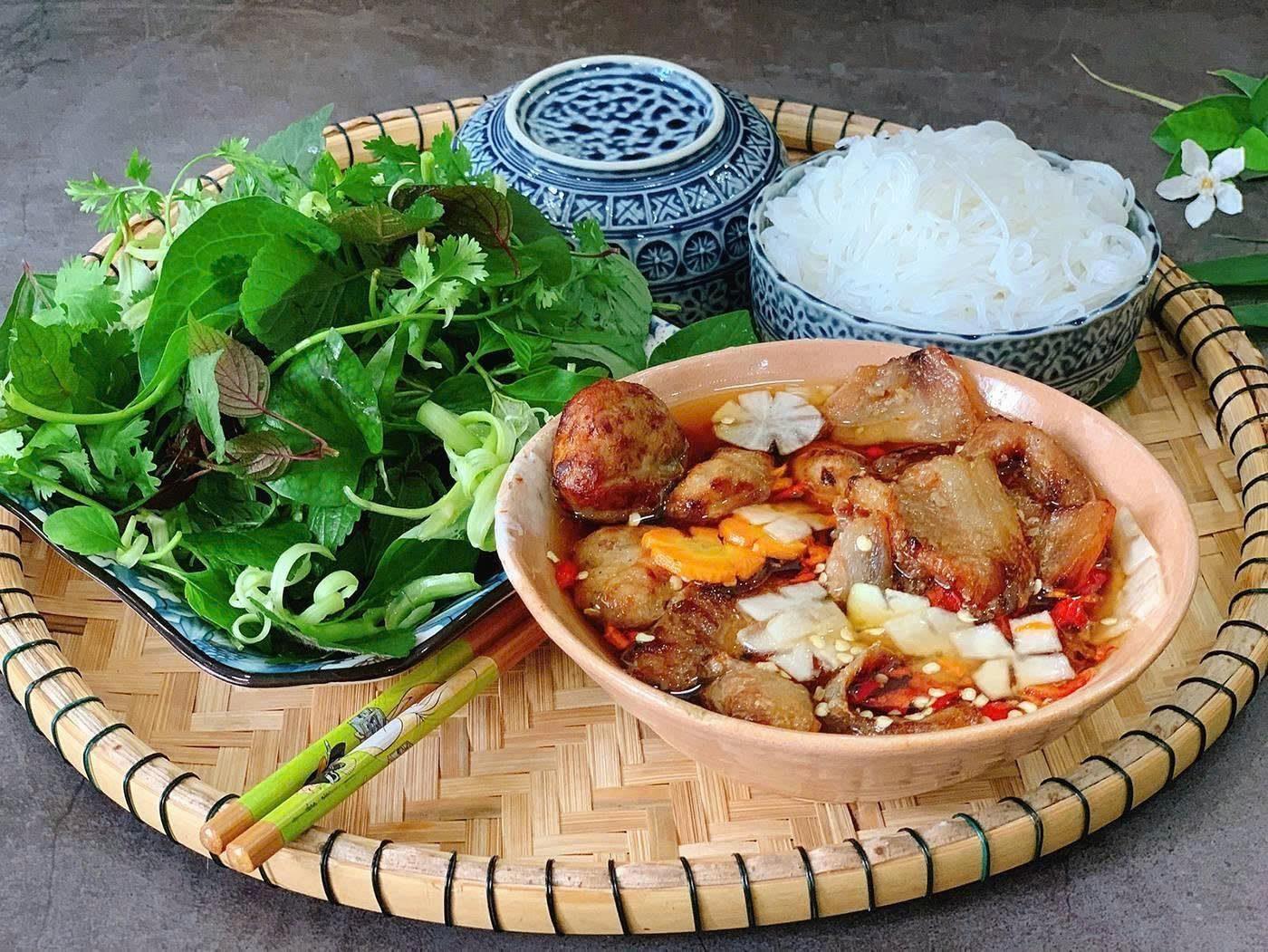
Bun cha is Hanoi’s signature lunch: smoky grilled pork patties and pork belly slices served in a warm, tangy-sweet fish sauce broth, alongside a stack of rice vermicelli (bun) and a plate of fresh herbs you dip in yourself. It is casual, cheap, and built around charcoal-grill smoke rather than a soup base, which sets it apart from pho as Hanoi’s other iconic noodle dish. Bun cha also went global in May 2016, when President Barack Obama ate it with the late Anthony Bourdain at a modest Hanoi restaurant, filmed for CNN’s Parts Unknown.
What Exactly Is in a Bowl of Bun Cha?
A proper bun cha order has three separate parts that you assemble yourself, not one mixed bowl. First, a small bowl of warm dipping broth (nuoc cham) made from fish sauce, vinegar, sugar, garlic, chili, and often slices of pickled green papaya or carrot, with grilled pork patties (cha vien) and grilled pork belly slices (cha mieng) sitting in it. Second, a plate of plain rice vermicelli (bun). Third, a plate of fresh herbs — usually perilla, mint, and lettuce — plus bean sprouts. You dip noodles and herbs into the broth bite by bite rather than pouring the broth over the noodles. Most orders also come with a side of fried spring rolls (nem ran).
Where Did Bun Cha Come From, and Why Did Obama Eat It?
Bun cha has been a Hanoi lunch staple for generations, built around charcoal-grilled pork rather than a broth-based soup, which is why locals traditionally eat it midday rather than for breakfast or dinner. It reached a global audience in May 2016, when President Barack Obama joined chef and TV host Anthony Bourdain for dinner at Bun Cha Huong Lien, a modest restaurant south of Hanoi’s French Quarter, filmed for CNN’s Parts Unknown. The pair ordered what the restaurant now calls the “Obama Combo” — a bowl of bun cha, fried spring rolls, and a bottle of Hanoi beer — for a bill reported at around six dollars, which Bourdain picked up.
| Dish | Best Time to Eat | Broth? | Protein | Vibe |
|---|---|---|---|---|
| Bun Cha | Lunch, traditionally | Small dipping bowl, not a soup | Grilled pork patties & belly | Smoky, sweet-tangy, assembled bite by bite |
| Pho | Any time, classic breakfast | Full soup bowl | Beef or chicken | Warm, brothy, one-bowl meal |
| Bun Bo Nam Bo | Lunch or dinner | No broth — tossed, not soupy | Stir-fried beef | Herbaceous, tangy, room-temperature noodle salad |
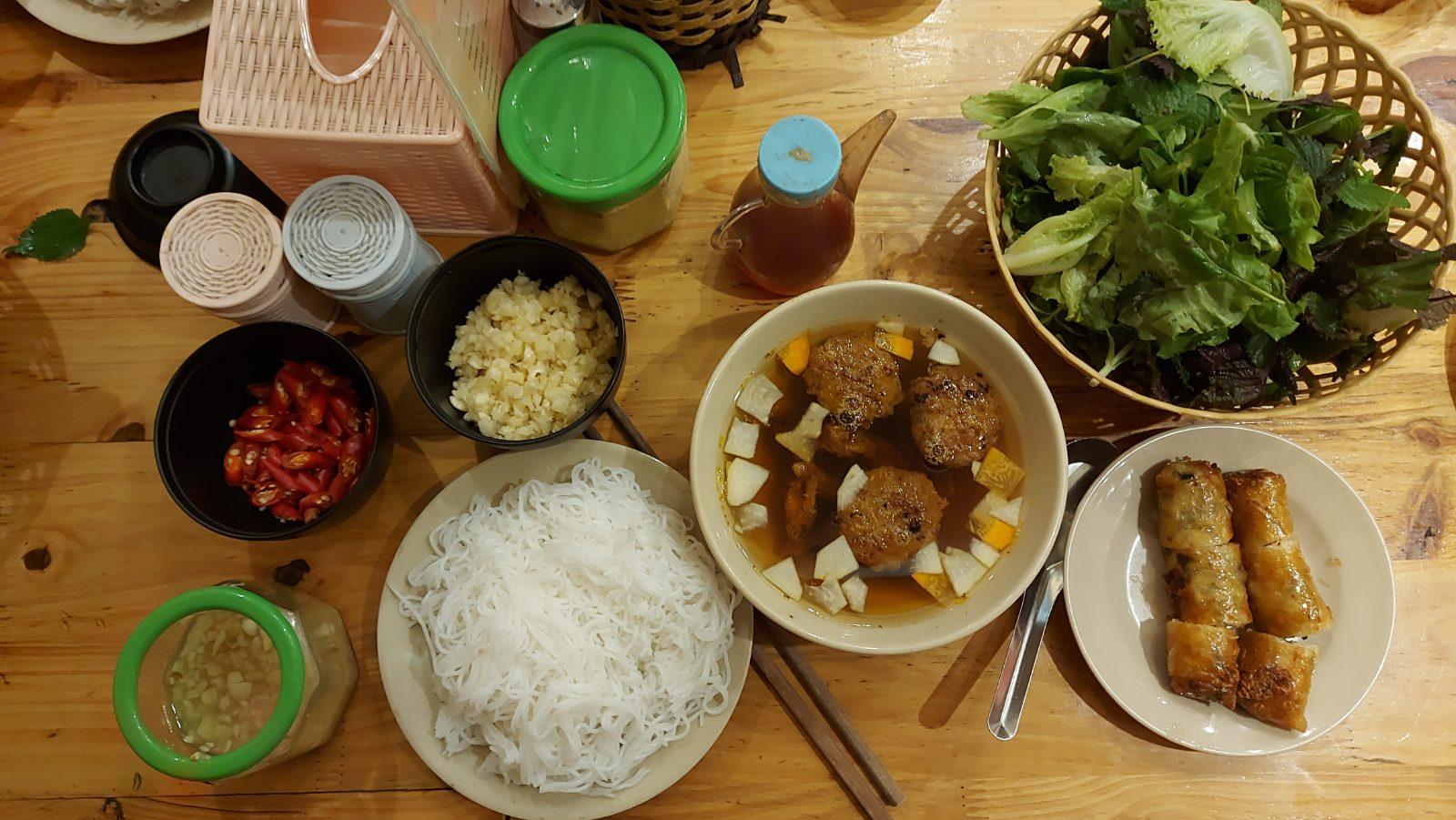
Bun Cha, Hanoi: Weetjesman / CC BY-SA 4.0
TTC Verdict: Bun cha is the dish that helped convince Anthony Bourdain that Hanoi belonged among the world’s great food cities, and it remains one of the most affordable, approachable lunches in Vietnam. Do not overthink the order — a plate of bun cha, an extra fried spring roll, and a cold Hanoi beer is exactly the move Obama made, and it still works.
Smoky and sweet-tangy rather than rich or spicy. The pork is grilled over charcoal, and the dipping broth balances fish sauce, sugar, vinegar, and garlic, so each bite of noodles and herbs picks up a warm, savory-sweet flavor rather than being submerged in a heavy soup.
They are related but not identical. Bun cha, a Hanoi dish, keeps the noodles, herbs, and grilled pork separate from a warm dipping broth you assemble yourself. Bun thit nuong, more common in southern Vietnam, tosses grilled pork directly on top of the noodles with a lighter sweet-sour sauce poured over everything.
Bun Cha Huong Lien, a modest restaurant south of Hanoi’s French Quarter, where he dined with Anthony Bourdain in May 2016 for an episode of CNN’s Parts Unknown. The restaurant now serves a set order called the “Obama Combo.”
It is a literal description rather than a place name or legend. Bun is the general Vietnamese word for the thin rice vermicelli noodles used in dozens of dishes, while cha refers to meat that has been ground, seasoned, and grilled or fried — the underlying Sino-Vietnamese root is also linked to the idea of grilling or frying seasoned meat. Put the two together and bun cha simply means noodles served with grilled meat, which is exactly what arrives at the table.

2 Comments
Comments are closed.