Koh Tao Travel Guide: Diving, Getting There, and Where to Stay
Koh Tao is the smallest and least developed of the three main Gulf of Thailand islands, and it has built its reputation almost entirely around one thing: it is one of the cheapest and most popular places in the world to learn to dive. Day-trippers come for the famous Koh Nang Yuan sandbar and a handful of excellent viewpoints, but most visitors who come to Koh Tao are here for a PADI or SSI certification course, not a beach holiday. If diving is not on your list, Koh Samui or Koh Phangan next door will likely suit you better.
Why Do So Many Travelers Learn to Dive on Koh Tao?
Koh Tao certifies more new divers each year than almost anywhere else on earth, thanks to warm, calm water (27–30°C), more than 100 dive schools competing on price, and a PADI or SSI Open Water course that typically runs 3 to 4 days for roughly $260–320. The island’s dive sites range from easy, current-free spots good for first-timers to Sail Rock, widely considered the best place in the Gulf of Thailand to see whale sharks on a guided trip. Chumphon Pinnacles and Southwest Pinnacles draw certified divers back for bigger pelagic life, while the wreck of the HTMS Sattakut is reserved for advanced or wreck-specialty divers. Best diving conditions run roughly March through September.
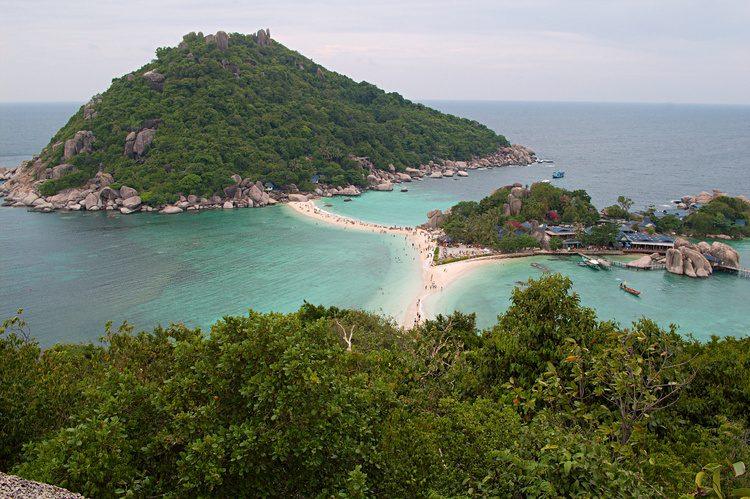
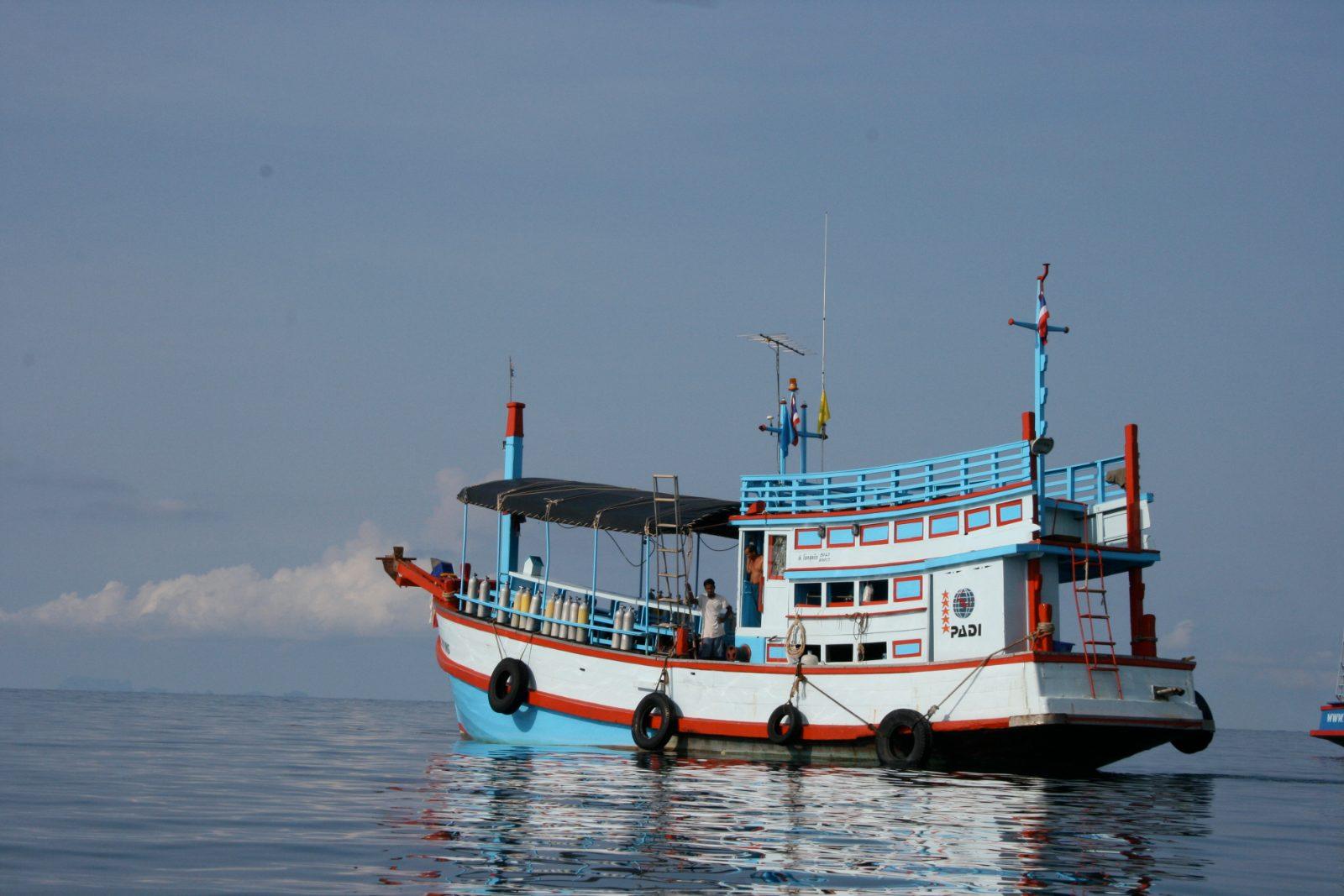
Koh Nang Yuan from the Koh Tao viewpoint: (WT-shared) Trsqr / CC BY-SA 4.0 · Dive boat off Koh Tao: Eli Duke / CC BY-SA 2.0
Where Should You Stay on Koh Tao?
Sairee Beach is the island’s longest stretch of sand and its main social hub, lined with dive schools, restaurants, and the bulk of the nightlife. Mae Haad, where the main pier sits, is a more practical base with most of the budget accommodation and easy access to ferries. Shark Bay, on the quieter southeast tip, is the pick for travelers who want to snorkel straight off the beach and skip the Sairee crowds. Most of the island is walkable or a short, cheap scooter ride away: Koh Tao covers only about 21 square kilometers. Scooter rental runs roughly 150–200 THB a day, though some inland roads are steep and narrow, so ride carefully.
| Gulf Island | Known For | Best For |
|---|---|---|
| Koh Tao | Diving certification and dive sites | Travelers prioritizing diving over nightlife or resorts |
| Koh Phangan | Full Moon Party plus quiet north-coast bays | Travelers who want either nightlife or total seclusion |
| Koh Samui | Developed beaches, resorts, and an international airport | Travelers who want comfort and easy access |
TTC Verdict: Koh Tao is a destination with a very specific purpose. If diving is the goal, there may be no better value anywhere in Southeast Asia to get certified. If diving is not the goal, the island’s beaches alone are not enough reason to detour from Koh Samui or Koh Phangan.
How Do You Get to Koh Tao?
Koh Tao has no airport, so every trip starts with a ferry. From Koh Phangan it is about an hour; from Koh Samui around 1.5 hours; from the mainland pier at Chumphon also about 1.5 hours, which makes Chumphon the fastest mainland gateway if you are coming directly from Bangkok. A slower option runs from Surat Thani, around 4.25 hours. If you are island-hopping the Gulf coast, Koh Tao pairs naturally as the quieter, dive-focused stop alongside Koh Phangan and Koh Samui on the same ferry network. Check routes and fares on 12Go.
Not strictly, but diving is the island’s main draw and most of its infrastructure is built around it. Non-divers can still snorkel at Shark Bay or Koh Nang Yuan and hike to the John Suwan viewpoint, but travelers who are not interested in diving at all are often happier basing themselves on Koh Samui or Koh Phangan instead.
By ferry only, since the island has no airport. The fastest mainland connection is via Chumphon (about 1.5 hours); Koh Phangan (about 1 hour) and Koh Samui (about 1.5 hours) are the most common island-hopping connections.
Yes. Koh Tao is one of the most popular places in the world to earn a PADI or SSI Open Water certification, with calm, warm water and more than 100 competing dive schools keeping course prices low. More experienced divers also have deeper sites like Chumphon Pinnacles and the HTMS Sattakut wreck to progress onto.