Pu Luong Nature Reserve Travel Guide: Vietnam’s Quieter Rice Terraces
Pu Luong Nature Reserve is a protected valley in Thanh Hoa province, about 160 kilometers southwest of Hanoi, known for rice terraces that climb the hillsides between limestone peaks, a network of trekking trails linking Thai and Muong villages, and homestays and ecolodges built into the hillside itself. It sits just past Mai Chau and is widely considered the more dramatic, less-developed of the two — most travelers who make the trip out this far spend at least 2-3 days here rather than passing through.
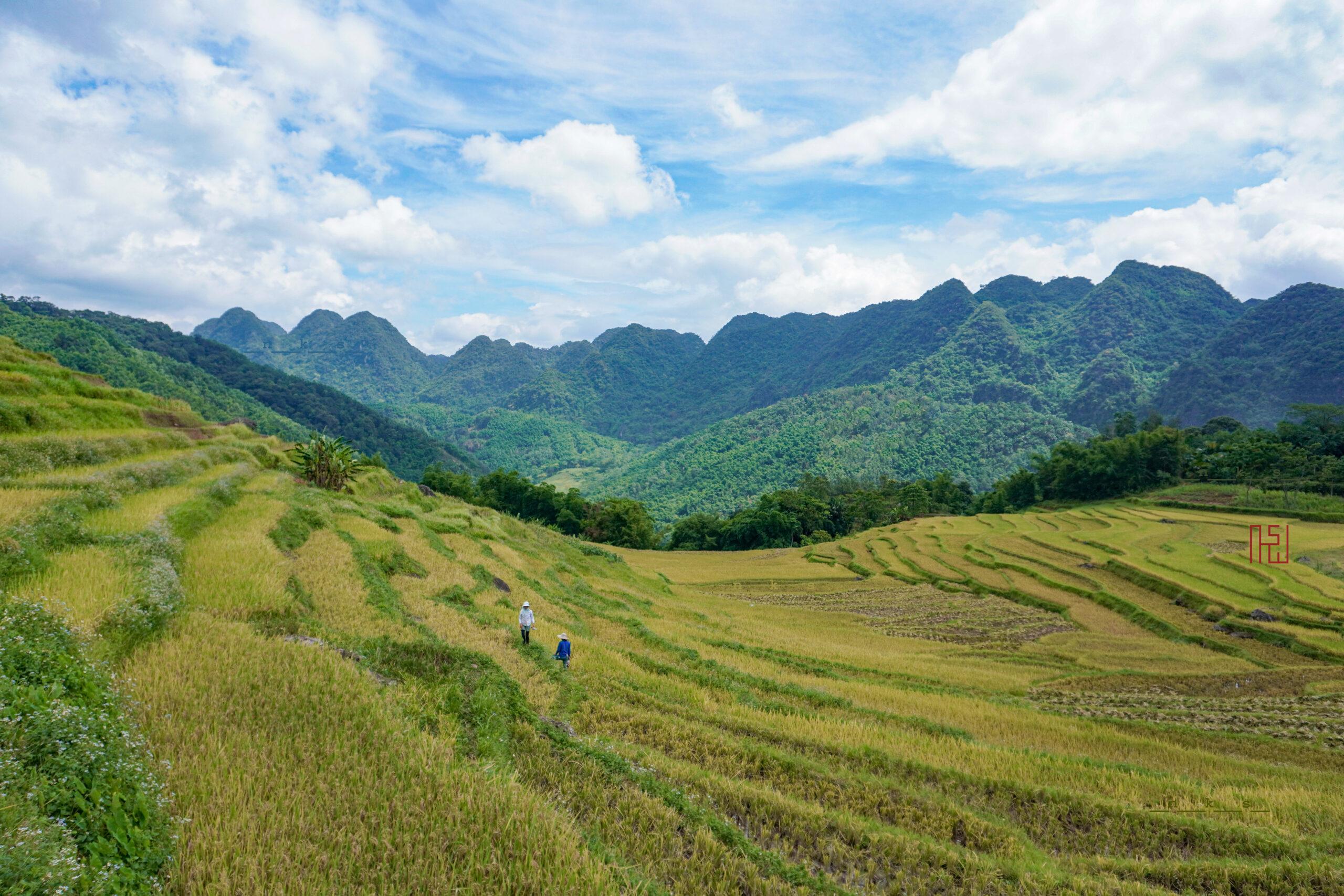
Hikers crossing golden-season rice terraces in Pu Luong Nature Reserve
How Do You Get to Pu Luong From Hanoi?
Pu Luong takes 3-5 hours from Hanoi depending on your route and how many stops you make — there’s no train or airport anywhere near the reserve, so road transport is the only option.
| Option | Travel Time | Approx. Cost | Best For |
|---|---|---|---|
| Minibus/limousine van from the Old Quarter | ~3-4 hours | Around 300,000 VND | Most travelers — book through your homestay or a site like Baolau |
| Private car with driver | ~3.5-4 hours | Higher, shared across group | Families, flexible stops, arriving with energy left for trekking |
| Self-drive motorbike via the Limestone Loop | ~4-5 hours | Fuel only | Experienced riders who want the scenic route as part of the trip |
Fares above are approximate and change seasonally — confirm current prices before booking.
When Is the Best Time to Visit Pu Luong?
April through September brings the most reliable weather and the greenest, most vivid landscape colors, with spring (March-May) generally considered the sweet spot: warm but not oppressive, and ahead of the busier summer season. Rice fields here follow their own two-season cycle rather than a single dramatic harvest window like Mu Cang Chai’s, so expect green, growing terraces for much of the year rather than one fixed “golden” month — check closer to your travel dates if catching a specific field color is a priority. Autumn brings post-harvest field burning in places, and winter is colder and greyer with less trekking appeal.
Where Should You Stay: Homestay or Ecolodge?
Pu Luong spans several villages, each with a different mix of budget homestays and boutique ecolodges — Ban Don is the most developed and has the widest choice, while quieter villages like Kho Muong offer a more rustic, authentic stay with far fewer other travelers around. See our Where to Stay in Mai Chau & Pu Luong guide for a full comparison, including real ecolodge options with online booking.
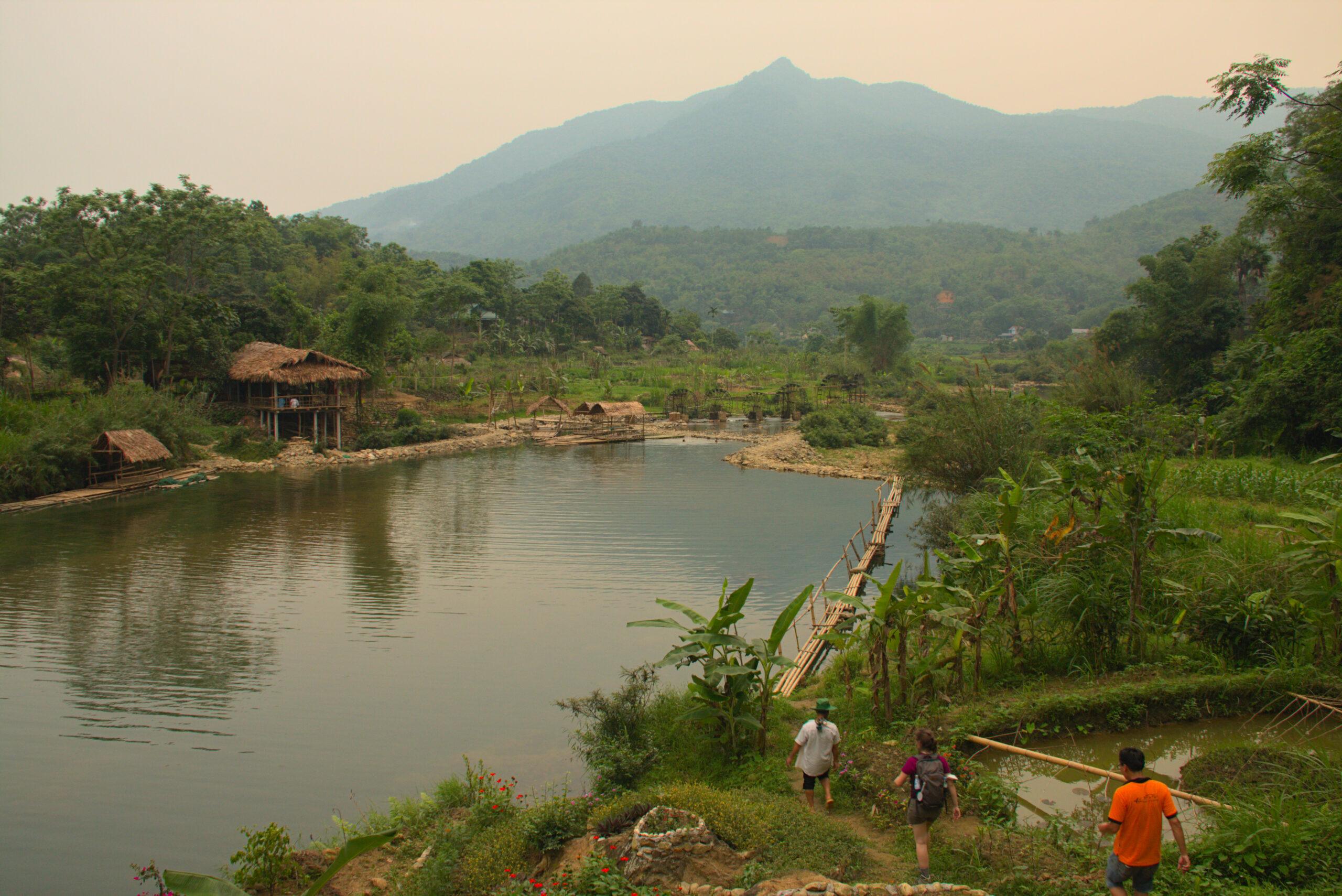
Trekkers following the river toward a homestay in Pu Luong
Should You Visit Pu Luong and Mai Chau Together?
Most travelers do — Pu Luong is only 50-60 kilometers further southwest of Mai Chau, about 1.5-3 hours depending on the route, so it’s a natural extension rather than a separate trip. A common pattern is Mai Chau first (an easy stopover, gentler roads) and Pu Luong second, where you spend the bulk of your time trekking and photographing the terraces. See our Mai Chau travel guide and combined 3-day itinerary for how to link the two.
What Are the Main Things to Do in Pu Luong?
The reserve’s signature activity is trekking — the “Pu Luong Loop,” a figure-eight circuit starting and ending in Ban Don, is the most popular route and is manageable independently with an offline map. Beyond trekking, most visitors also try bamboo-raft rides and water-wheel viewing near Lang Tom village, visit Hang Doi (Bat Cave) near Kho Muong, and hike or drive up to the Lung Van plateau before sunrise for “cloud hunting” — photographing the valley mist from above. See our full things-to-do guide for the complete list, timing, and how it pairs with Mai Chau’s cycling routes.
TTC Verdict: Give Pu Luong at least 2-3 full days if trekking and photography are the priority. Skip it, or keep it to a single day trip from Mai Chau, if you’re short on time and mainly want the general rice-terrace experience.
Frequently Asked Questions About Pu Luong Nature Reserve
No. Pu Luong is in Thanh Hoa province, which does not border China, so no foreigner border-area permit is required. A standard Vietnam visa or e-visa is sufficient.
About 160 kilometers, typically a 3-5 hour trip by minibus, private car, or motorbike, depending on the route and stops along the way.
At least 2-3 days if trekking is a priority. Some travelers stay 5-6 days to explore multiple villages and trekking routes without rushing.
Yes, for the main road-based routes like the Pu Luong Loop, which are well-marked and manageable with an offline map. A local guide is recommended for more remote village-to-village treks.
They’re complementary rather than competing — Pu Luong has more dramatic terraces and better trekking, while Mai Chau is closer to Hanoi and easier for a short stopover. Most travelers who have time visit both.