Mai Chau Travel Guide: Vietnam’s Easiest Stilt-House Valley
Mai Chau is a quiet valley in Hoa Binh province, about 150 kilometers southwest of Hanoi, where White Thai stilt-house villages sit among rice paddies ringed by limestone mountains. Unlike Sapa or Ha Giang, it does not border China, so there’s no special border-area permit to arrange — just a standard Vietnam visa or e-visa. Most travelers spend 1-2 nights here, staying in a stilt-house homestay, cycling the valley floor, and using it as a gentler, closer-to-Hanoi alternative (or a warm-up) to the deeper mountain routes further north.
How Do You Get to Mai Chau From Hanoi?
Mai Chau is about a 4-hour trip from Hanoi along Highway 6, climbing over Thung Khe Pass before dropping into the valley. Most travelers take a direct tourist bus rather than stringing together local transport.
| Option | Travel Time | Approx. Cost | Best For |
|---|---|---|---|
| Direct tourist bus (e.g. Hoang Kien Limousine) | ~4 hours | $8–12 USD per person | Most travelers — door-to-door, no transfers |
| Local bus from My Dinh station | ~4-5 hours | 100,000–150,000 VND | Budget travelers comfortable without English signage |
| Private car with driver | ~3.5 hours | Roughly $90–100 per car, one-way | Families, flexible stops, arriving comfortably |
| Self-drive motorbike | ~4-5 hours | Fuel only | Experienced riders — Thung Khe Pass is scenic but has real drop-offs |
Fares above are approximate and change seasonally — confirm current prices before booking.
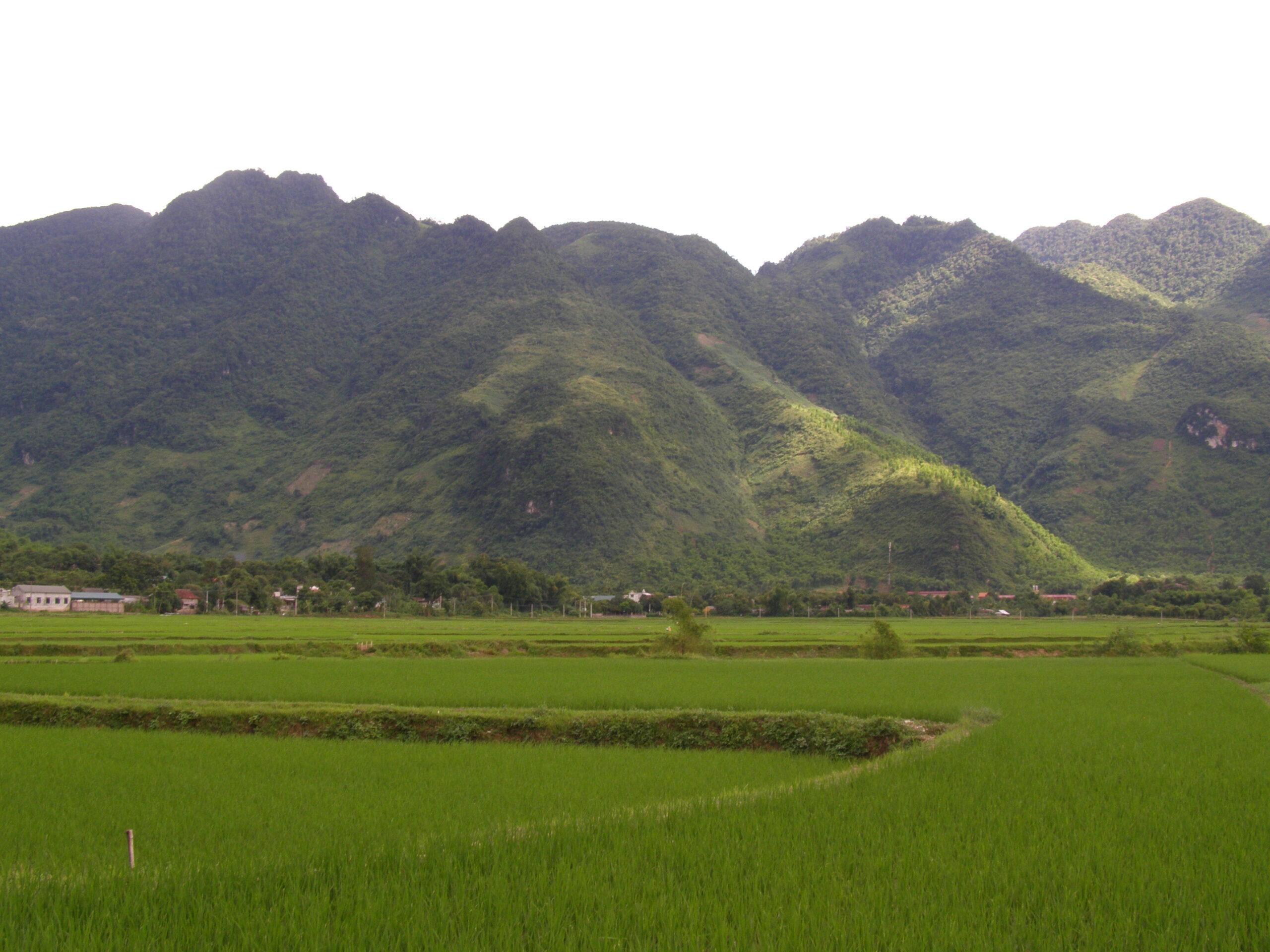
Rice fields below the limestone mountains that ring the Mai Chau valley
When Is the Best Time to Visit Mai Chau?
October–November and March–April bring the most comfortable weather: mild days, low rain, and clear valley views. If you want the rice paddies at their most photogenic, aim for the harvest windows instead — late May to early June and again in late September to early October, when the fields turn a deep gold shortly before cutting.
Which Village Should You Stay In: Lac, Pom Coong, or Mai Hich?
All three are White Thai stilt-house villages within a few kilometers of each other, but they differ in how touristy they feel.
| Village | Feel | Best For |
|---|---|---|
| Lac Village (Ban Lac) | Busiest — souvenir stalls, bamboo rafting launch point, easiest to reach | First-timers who want everything within walking distance |
| Pom Coong | A short walk from Lac, noticeably quieter, same stilt-house style | Travelers who want the same convenience with fewer souvenir stalls |
| Mai Hich | About 12 km further out, minimal tourism infrastructure | Travelers prioritizing an authentic, low-traffic homestay over convenience |
TTC Verdict: Stay in Lac or Pom Coong if this is your first stilt-house homestay and you want an easy, walkable base. Go to Mai Hich if you’ve already done the “touristy” version elsewhere and want something quieter.
Should You Combine Mai Chau With Pu Luong?
Yes, if you have three or more days — Pu Luong Nature Reserve is only 50-60 kilometers further southwest, about 1.5-3 hours depending on the route, and its rice terraces and trekking trails are more dramatic than Mai Chau’s valley floor. Many travelers use Mai Chau as an easy first night (closer to Hanoi, gentler roads) before continuing on to Pu Luong for the more active second half of the trip. See our Pu Luong Nature Reserve travel guide and our combined Mai Chau & Pu Luong 3-day itinerary for how to link the two.
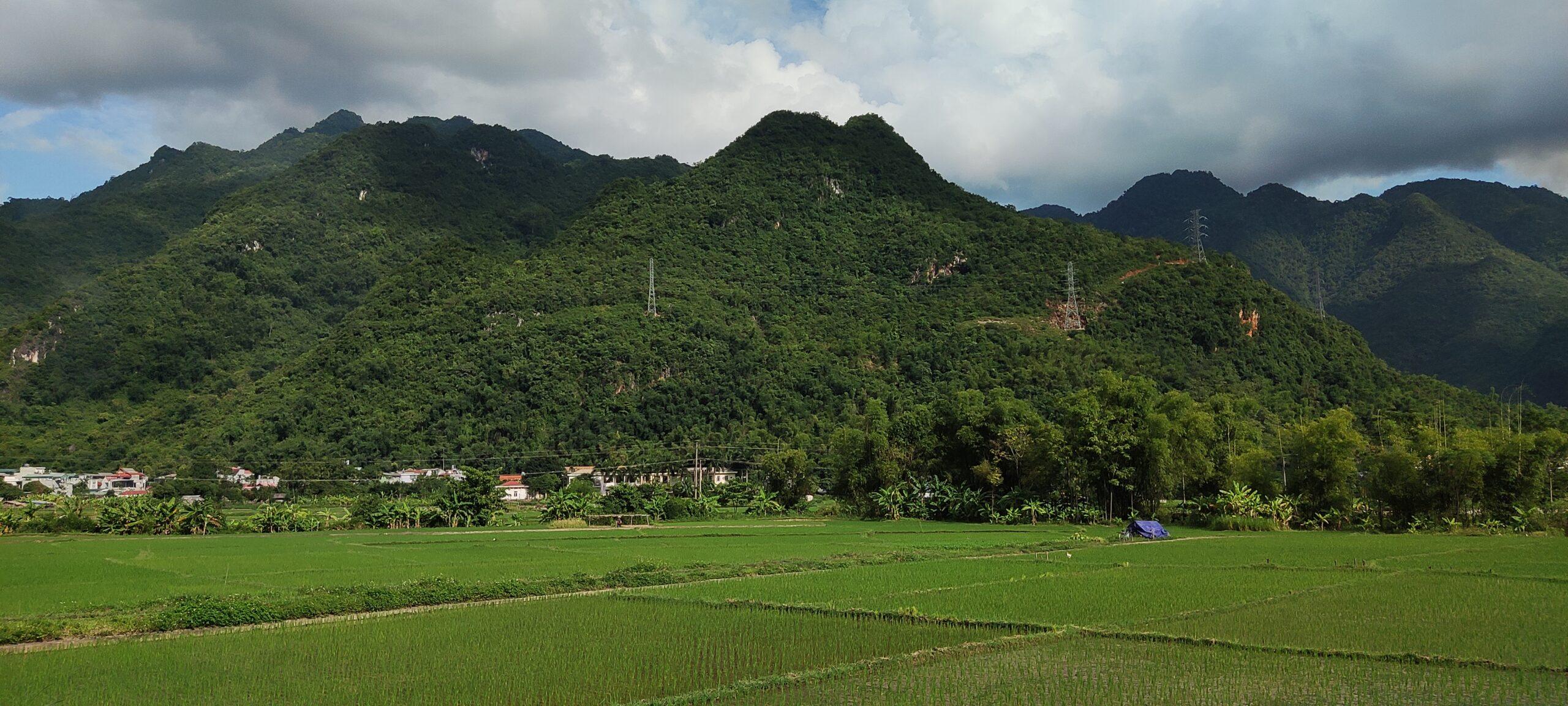
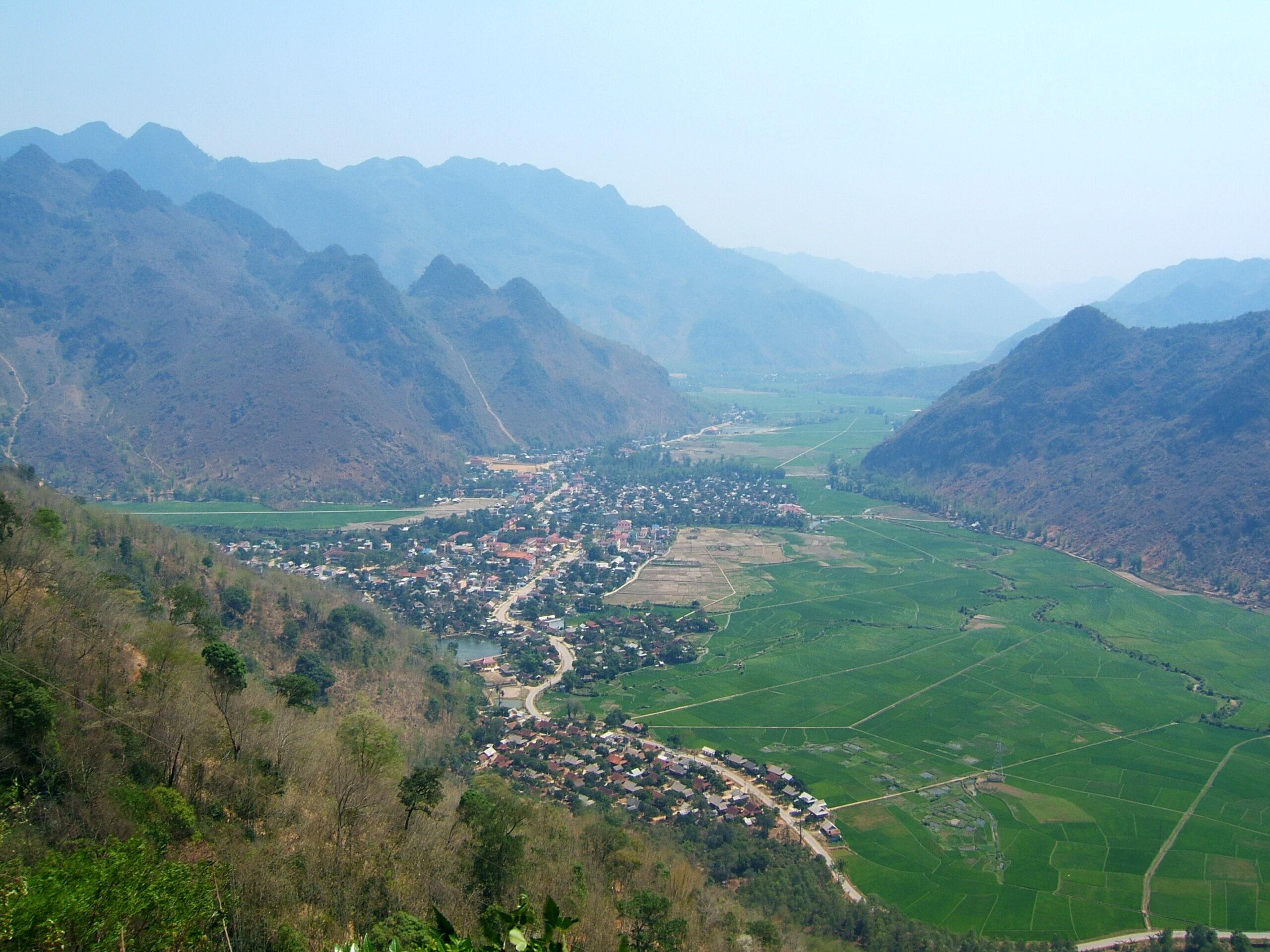
A Mai Chau village seen from above, framed by rice fields and mountains
What Else Is There to Do in Mai Chau?
Beyond the villages, most visitors spend a half-day cycling the flat valley roads between rice paddies, take a short bamboo-raft trip on the Song Ma river from Lac Village, and trek to Mo Luong Cave or the nearby Chieu (Afternoon) Cave. Many homestays also host an evening of traditional Thai dance and rice wine (ruou can) for groups. See our Things to Do in Mai Chau & Pu Luong guide for the full list, including how these pair with Pu Luong’s trekking routes.
Frequently Asked Questions About Mai Chau
No. Mai Chau is in Hoa Binh province, which does not border China, so no foreigner border-area permit applies. A standard Vietnam visa or e-visa is all you need.
About 150 kilometers, typically a 4-hour drive along Highway 6 over Thung Khe Pass. Direct tourist buses run daily from Hanoi’s Old Quarter.
A day trip is possible but rushed given the drive time. Staying at least one night in a stilt-house homestay is what most travelers recommend to make the trip worthwhile.
Yes. The two are only 50-60 kilometers apart, about 1.5-3 hours by road, and are commonly combined into a 2-4 day loop from Hanoi. See our combined itinerary for a suggested route.
Late May to early June and again in late September to early October, shortly before each harvest, when the fields turn gold. October-November and March-April offer the most comfortable weather overall.