
Vietnam Visa Guide: What US, Canadian, and Australian Travelers Need
US, Canadian, and Australian citizens all need a visa to enter Vietnam — none of these three countries are on Vietnam’s short visa-exemption list. The standard option is a 90-day e-visa, which costs $25 for single entry or $50 for multiple entry and is applied for entirely online before you fly. Since April 2026, most arrivals at Tan Son Nhat International Airport (Ho Chi Minh City) also must complete a separate, free Digital Arrival Card up to 72 hours before landing.
Do US, Canadian, and Australian Citizens Need a Visa for Vietnam?
Yes. Vietnam’s visa-exemption list covers about two dozen countries, mostly in Europe, plus a handful of others such as Japan and South Korea — the US, Canada, and Australia are not on it. Travelers from all three countries need to arrange an e-visa before arrival; there is no visa-on-arrival option available to independent tourists from these countries in the way some other Southeast Asian destinations offer.
| Step | Where | Cost | Timing |
|---|---|---|---|
| Apply for the e-visa | Official portal: thithucdientu.gov.vn | $25 single-entry / $50 multiple-entry | Apply at least 4–5 business days before departure |
| Upload passport scan + photo | Same portal, as part of the application | Included in the e-visa fee | A few minutes, done alongside the application |
| Receive approved e-visa (PDF) | Emailed / downloadable from the portal | No extra cost | Standard processing is about 3 business days |
| Complete the Digital Arrival Card | prearrival.immigration.gov.vn | Free | Up to 72 hours before your flight lands |
TTC Verdict: Apply for the e-visa on the official government portal (thithucdientu.gov.vn) directly — third-party “visa expediting” sites that charge well above the $25/$50 government fee are a documented scam pattern in Vietnam, and the official portal is not meaningfully slower.
What Is the Vietnam Digital Arrival Card, and Do I Need One?
The Digital Arrival Card is a separate, free pre-arrival form that consolidates customs declaration, a basic health questionnaire, and immigration pre-screening into one online submission, completed at prearrival.immigration.gov.vn up to 72 hours before your flight lands. As of 2026 it is mandatory for arrivals at Tan Son Nhat International Airport in Ho Chi Minh City, with officials signaling plans to expand it to Hanoi’s Noi Bai and Da Nang International Airport if the rollout goes well Current airport coverage closer to your travel dates, since this is a newly-expanding requirement.. You will need your passport details, your approved e-visa information, your flight number and arrival time, and your Vietnam accommodation address on hand to complete it; on submission you receive a QR code to show immigration on arrival.
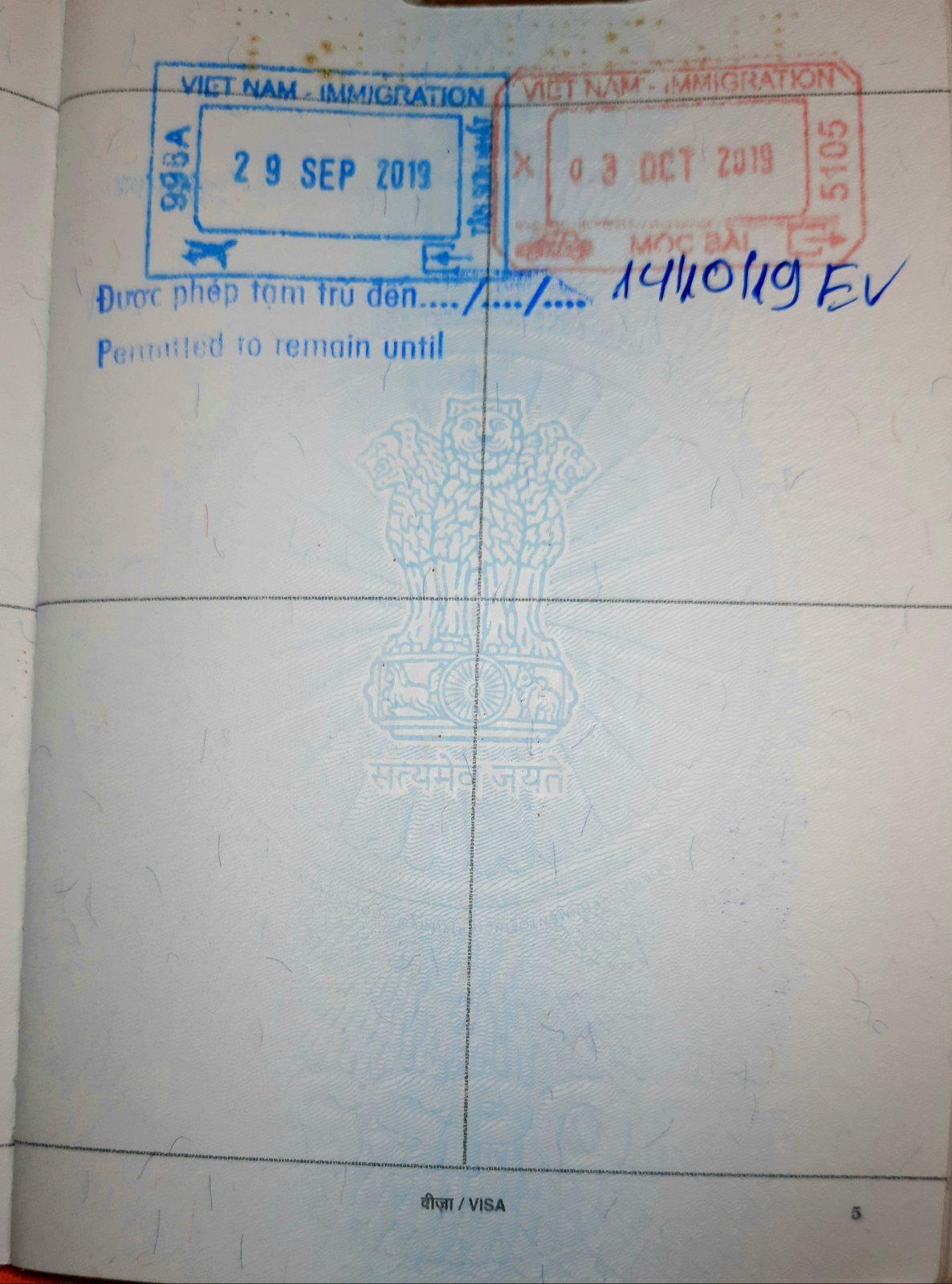
Vietnam E-Visa Stamp: Rajadas330 / CC BY-SA 4.0
How Long Can You Stay in Vietnam on an E-Visa?
The standard tourist e-visa is valid for up to 90 days from the date you enter, and can be issued as single-entry or multiple-entry. Ninety days is more than enough for the vast majority of first-time or even fairly extensive Vietnam itineraries — our own longest itinerary guide covers 10 days — but if your trip also involves crossing into Cambodia or Laos and returning to Vietnam, the multiple-entry option ($50 instead of $25) is worth the extra cost so you are not caught needing a fresh visa mid-trip.
What Other Entry Documents Do You Need?
Beyond the e-visa and Digital Arrival Card, keep these on hand for entry: a passport valid for at least six months beyond your arrival date This exact requirement before travel, since validity rules can change., proof of onward or return travel (some airlines check this at check-in even if immigration does not always ask), and your accommodation address for the first night or two, which the Digital Arrival Card now asks for directly. None of this replaces standard travel-insurance coverage — see our dedicated Vietnam travel insurance guide for what a policy should cover.
The standard 90-day e-visa costs $25 for a single-entry visa or $50 for a multiple-entry visa, applied for directly through the official government portal (thithucdientu.gov.vn).
No, they are two separate steps. The e-visa is your actual authorization to enter Vietnam and must be arranged before you fly; the Digital Arrival Card is a free pre-arrival declaration (customs, health, immigration pre-screening) completed within 72 hours of landing, currently mandatory at Tan Son Nhat International Airport in Ho Chi Minh City.
Apply at least 4 to 5 business days before your flight. Standard processing takes about 3 business days, and building in a buffer protects you if the portal is slow or your application needs a correction.





2 Comments