3 Weeks in Vietnam: The Complete Itinerary
Three weeks is enough time to cover the same north-to-south route as our 10 and 14-day itineraries and still add real depth most shorter trips have to skip: mountain trekking in Sapa, cave exploration in Phong Nha, an overnight in the old imperial capital of Hue, and a beach finale in Phu Quoc before flying home. This itinerary keeps the proven core of our shorter guides intact and builds outward from it, so it is easy to trim back down if your actual trip ends up shorter than three weeks.
Is 3 Weeks Enough Time for Vietnam?
Yes — three weeks covers all three regions of Vietnam at a genuinely unhurried pace, with room for three additions a 7, 10, or 14-day trip typically cannot fit: Sapa’s rice-terrace trekking, Phong Nha’s cave systems, and a proper overnight in Hue’s imperial citadel instead of a rushed day trip. It is the itinerary length where you stop optimizing purely for efficiency and start adding stops because you actually want to see them.
| Duration | Best For | What You Cover | Pace |
|---|---|---|---|
| 7 Days | First-timers with limited vacation time | Hanoi + Ha Long Bay, Da Nang + Hoi An, Ho Chi Minh City | Fast — one region per feel, no rest days |
| 10 Days | Most first-time travelers | Adds Nha Trang beach time to the 7-day route | Comfortable, still tightly scheduled |
| 14 Days | Travelers who want breathing room | Adds a Ninh Binh overnight and a Mekong Delta day trip | Relaxed — no back-to-back travel days |
| 21 Days | Travelers who want real depth, not just more nights | Adds Sapa, Phong Nha, an overnight in Hue, and a Phu Quoc beach finale to the 14-day route | Unhurried — every stop earns a rest day |
The Full 3-Week Route, Region by Region
This route follows the same north-to-south logic as our shorter itineraries, with three extensions worked in at the points where they fit most naturally: Sapa as a loop out of Hanoi before heading south, Phong Nha and Hue filling the long overland stretch through central Vietnam, and Phu Quoc added at the very end as a decompression stop before an international flight home.
| Region | Stops | Nights | Transport |
|---|---|---|---|
| North | Hanoi + Ha Long Bay | 4 | Overnight cruise on nights 3–4 |
| North (extension) | Sapa | 3 | Overnight train from Hanoi to Lao Cai (~8 hrs), then a short shuttle into Sapa town |
| North (add-on) | Ninh Binh | 2 | 1.5–2 hr drive or train from Hanoi |
| Central (extension) | Phong Nha | 2 | ~7–9 hr bus or train from the Ninh Binh area |
| Central (add-on) | Hue | 1 | ~3–4 hr bus or car from Phong Nha |
| Central | Da Nang + Hoi An | 3 | ~2.5–3 hr drive from Hue over the Hai Van Pass |
| Central Coast | Nha Trang | 2 | Flight from Da Nang |
| South | Ho Chi Minh City + Mekong Delta day trip | 2 | Flight from Nha Trang |
| South (extension) | Phu Quoc | 2 | Flight from Ho Chi Minh City |
TTC Verdict: Three weeks only works if you resist the urge to add a tenth stop. This route already asks for 3 domestic flights and two long overland legs through central Vietnam — treat Sapa, Phong Nha, and Phu Quoc as the fixed additions worth the extra travel time, and spend any remaining flexibility on an extra rest day in Hoi An or Nha Trang rather than another new city.
Where Your 21 Nights Go
Even with three extensions added, the nights still split roughly evenly across the country, with the north carrying slightly more weight now that it includes both Ha Long Bay and Sapa.
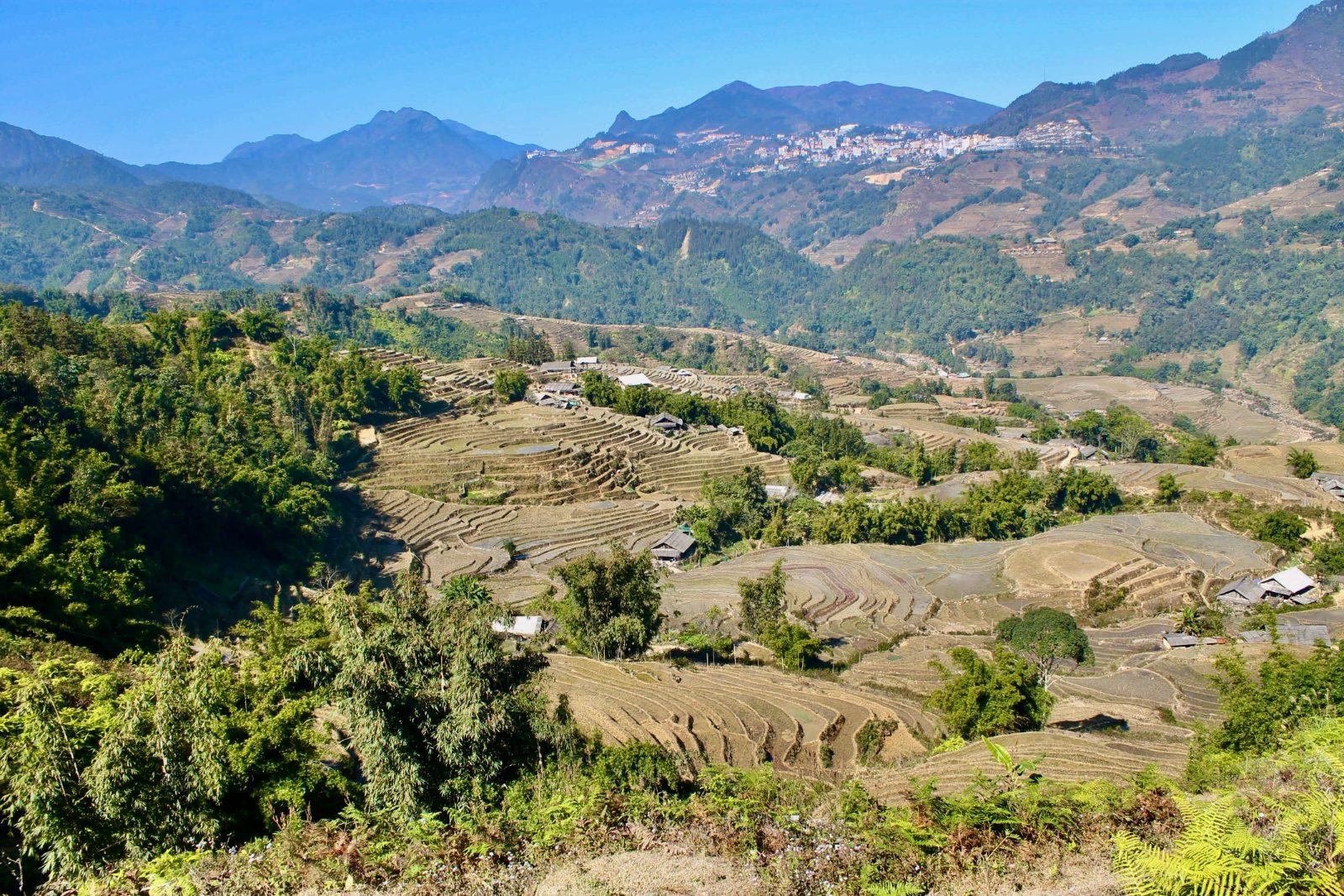

Rice terraces near Sapa: Eerin25 / CC0 · Kem Beach, Phu Quoc: Vivu Vietnam / CC BY-SA 4.0
Why Add Sapa, Phong Nha, and Hue to the Classic Route?
These three additions round out the parts of Vietnam a shorter trip has to skip entirely: Sapa adds mountain scenery and multi-day trekking the coast and cities do not have, Phong Nha adds a completely different landscape of limestone caves and underground rivers, and an overnight in Hue adds imperial history and citadel architecture that most itineraries reduce to a rushed day trip or skip outright.
Sapa: Mountains and Rice Terraces
Sapa is reached by an overnight train from Hanoi to Lao Cai, followed by a short shuttle into town — book through 12Go or directly with Vietnam Railways for a soft-sleeper cabin. Three nights is enough to justify the travel time: one day to settle in and walk the town, one full day trekking to H’mong and Dao villages through the rice terraces, and a buffer day in case weather closes in on the mountains. See our full Sapa Travel Guide for where to stay and how to plan the trek.
Phong Nha: Caves and Underground Rivers
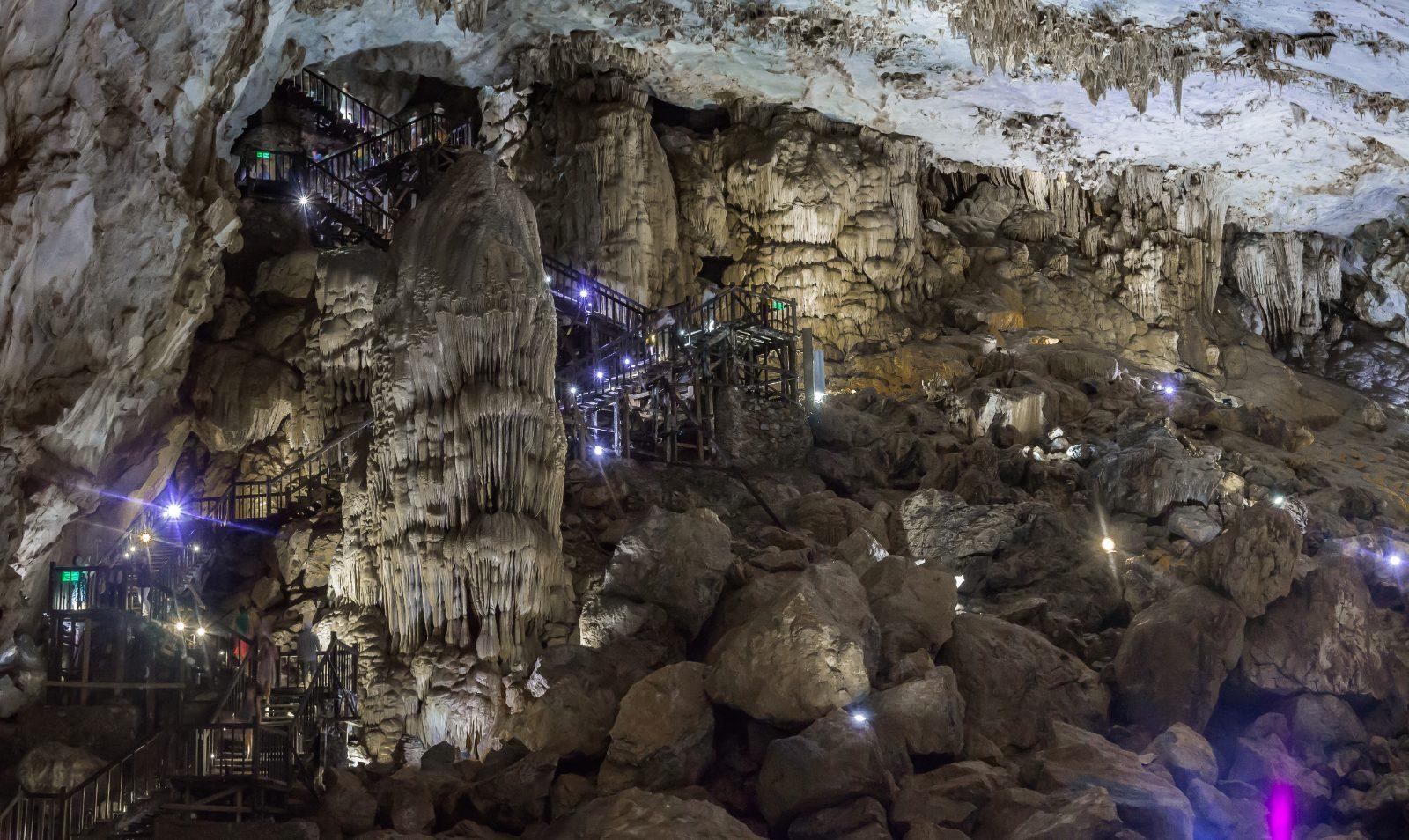
Paradise Cave: Edgardo W. Olivera / CC BY 2.0
Phong Nha-Ke Bang National Park is built around its cave systems, and two nights gives you time for both Paradise Cave’s cathedral-scale walkway and a boat tour through the Phong Nha Cave’s underground river — book both together through a combined tour like this one on Klook, which covers Paradise Cave in the morning and the Phong Nha Cave boat ride in the afternoon. See our Phong Nha Travel Guide and things to do for the full activity breakdown.
Hue: An Overnight in the Imperial Capital
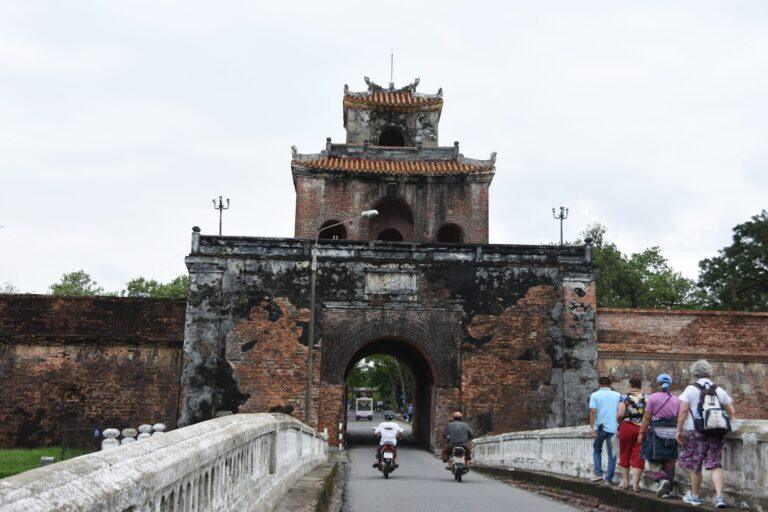
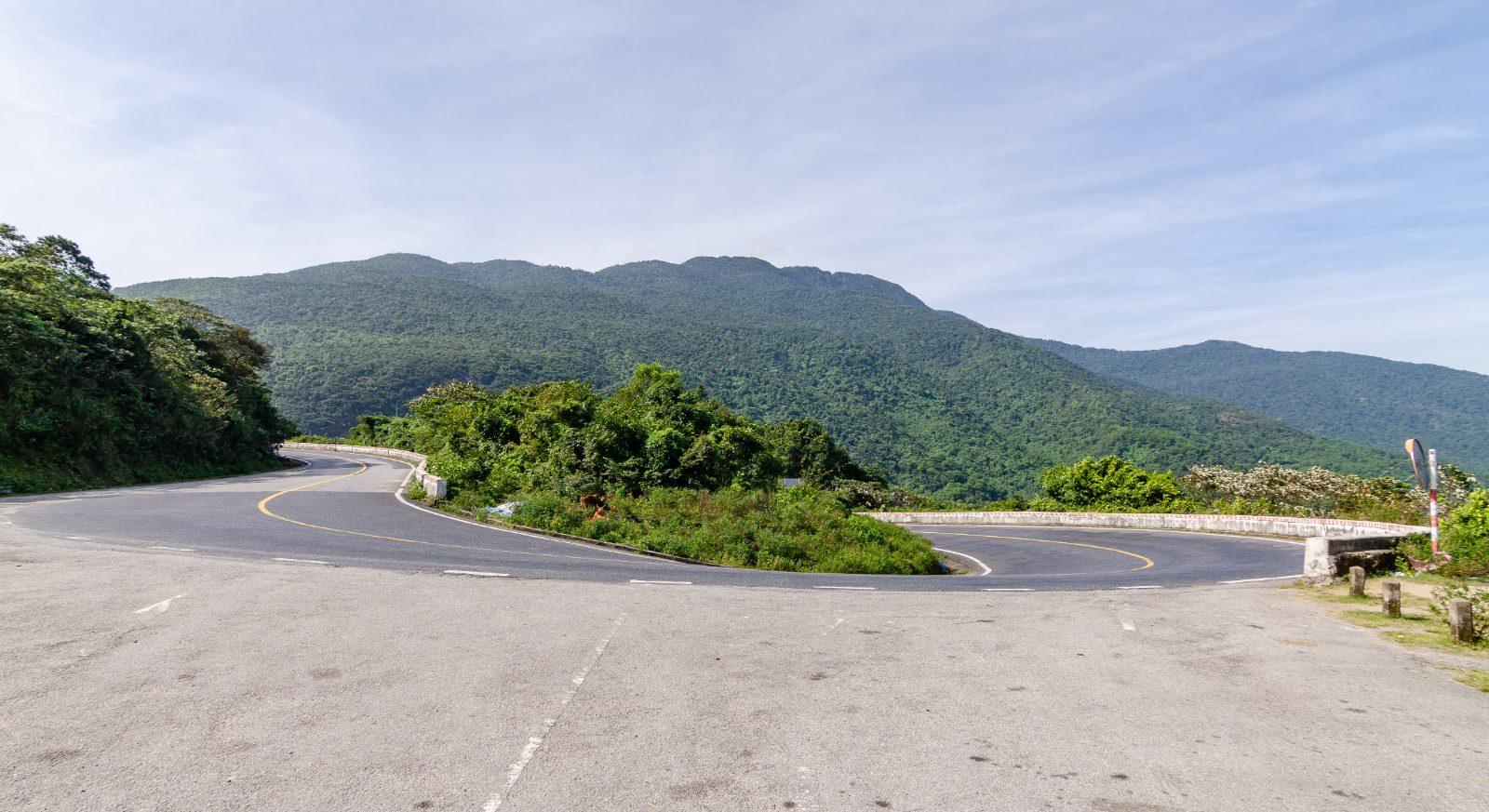
Most shorter Vietnam itineraries treat Hue as an optional day trip from Hoi An or Da Nang — workable, but rushed for a city built around a walled Imperial Citadel and a string of royal tombs along the Perfume River. A three-week trip has room for a proper overnight instead: arrive from Phong Nha, spend a full day at the Citadel and one or two tombs, then continue on to Da Nang and Hoi An the next morning along the Hai Van Pass, one of Vietnam’s most scenic coastal drives and the featured photo at the top of this guide.
Should You Do This Route in One Trip or Split It in Two?
For most long-haul travelers coming from the US, Canada, or Australia, one trip is the better use of the flight time — you have already absorbed the jet lag and the 20+ hour journey once, and splitting the route means paying that cost twice. The standard Vietnam e-visa is valid for 90 days, which comfortably covers a 21-day trip with room to spare if your plans shift. Keep your first morning in Hanoi deliberately light regardless of route length — a walk around the Old Quarter, an early dinner — rather than scheduling Ha Long Bay or a big walking tour on the day you land. See our Vietnam Visa Guide for the full e-visa process and our Vietnam Trip Cost guide for a detailed budget breakdown across accommodation, food, transport, and activities.
Yes. Three weeks covers all of Vietnam’s regions at a relaxed pace and leaves room for three additions a shorter trip has to skip: Sapa’s mountain trekking, Phong Nha’s cave systems, and a Phu Quoc beach finale before flying home.
A north-to-south route works best: Hanoi and Ha Long Bay (4 nights), Sapa (3 nights), Ninh Binh (2 nights), Phong Nha (2 nights), Hue (1 night), Da Nang and Hoi An (3 nights), Nha Trang (2 nights), Ho Chi Minh City with a Mekong Delta day trip (2 nights), and Phu Quoc (2 nights), connected by 3 domestic flights and two overland legs through central Vietnam.
Yes, and the standard Vietnam e-visa is valid for 90 days, which comfortably covers a 21-day trip — apply through the official e-visa portal at least a few weeks before you fly.