

Da Nang Travel Guide: Everything to Know Before Your First Trip
Da Nang is the easiest central-Vietnam base for a first trip: a beach city with a manageable size, genuinely good food, and Hoi An and Hue both within day-trip range. The best time to visit is March through May, when the weather is warm but not yet peak-summer hot and seas are calm. This guide covers exactly how to get there, when to go, what US, Canadian, and Australian travelers need to know before landing, and how Da Nang fits into a wider Vietnam itinerary.
When Should You Visit Da Nang?
Da Nang has four loose seasons, and picking the right one matters more here than in most of Vietnam because it directly affects beach and boat-tour access.
| Season | Months | Weather | Good For |
|---|---|---|---|
| Dry & Mild | March–May | ~24–31°C / 75–88°F, calm seas | The best all-around window — fewer crowds, comfortable heat |
| Peak Summer | June–August | ~33–35°C / 91–95°F, clear skies, calm water | Clearest beach days, but the busiest and priciest — overlaps US/CA/AU school holidays |
| Rainy Season | September–November | Wettest month typically October; elevated storm risk | Lowest prices, fewest tourists — but boat tours can be cancelled and seas roughen |
| Cool & Dry | December–February | ~18–23°C / 64–73°F | Low season, low prices, occasional clear stretches |
TTC Verdict: Aim for March through May if your dates are flexible — you get warm, calm-sea weather without June–August’s crowds and prices. If you can only travel in the rainy season, Da Nang is still workable, just build in flexibility around boat tours and beach days.

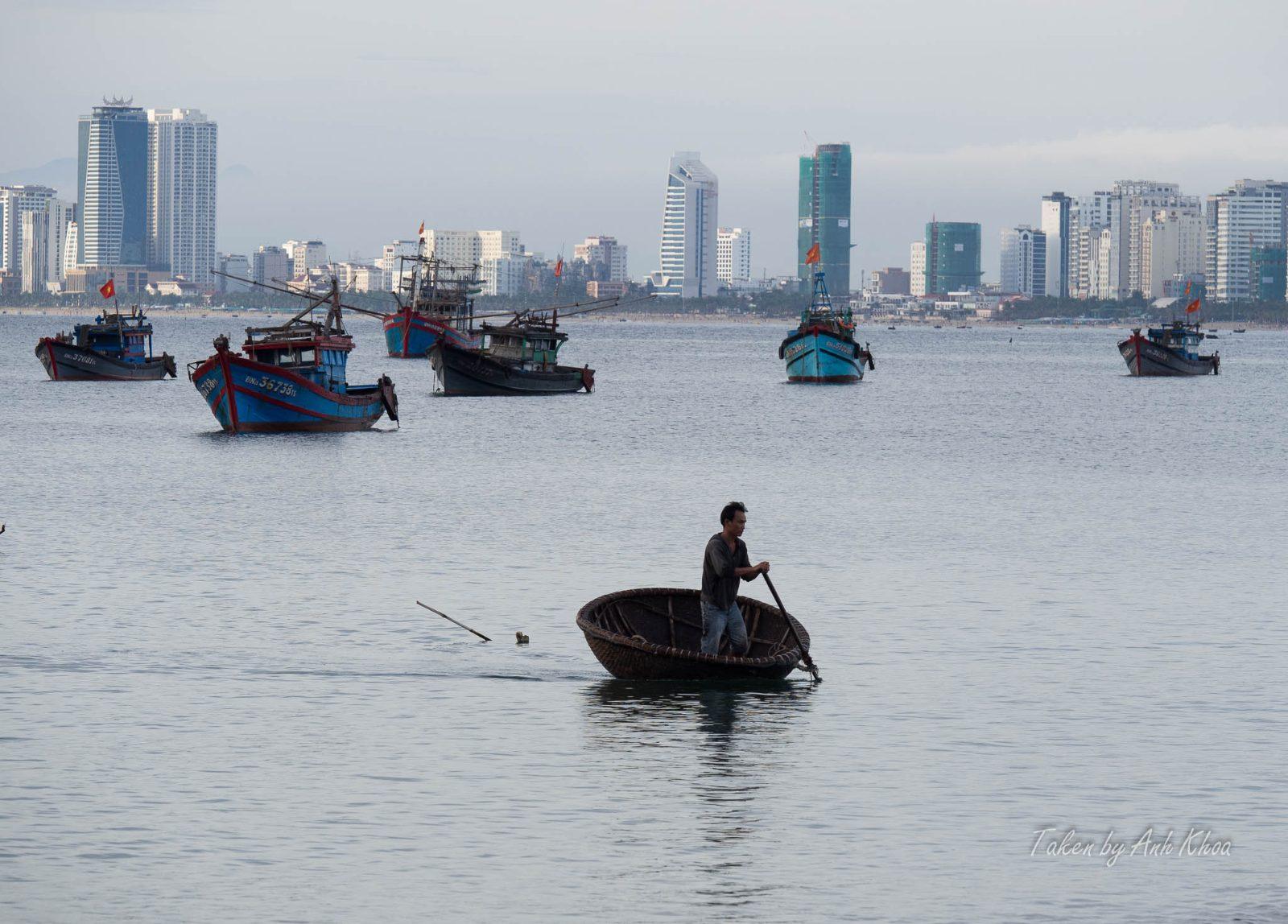
Marble Mountains: Wikimedia Commons, CC license · Da Nang skyline: Wikimedia Commons, CC license
Getting There & Entry Requirements
Da Nang International Airport (DAD) has no direct flights from the US, Canada, or Australia. Most long-haul travelers either connect through a major Asian hub — Seoul, Singapore, Bangkok, Hong Kong, and similar — straight into DAD, or fly into Hanoi or Ho Chi Minh City internationally and take a short domestic flight the rest of the way. Direct-flight routes shift with the seasons, so it’s worth double-checking options closer to your travel dates.
US, Canadian, and Australian citizens all need a Vietnam e-visa before arrival — none of these three nationalities currently have visa-free entry. Apply through the official government e-visa portal well before your trip. Vietnam has also been rolling out a mandatory Digital Arrival Card (a separate pre-arrival online declaration, not a replacement for the e-visa) airport by airport since April 2026, starting in Ho Chi Minh City. Check the current requirement for Da Nang specifically on the official portal before you fly, since this rule is still expanding.
Fitting Da Nang Into Your Vietnam Trip
Da Nang is the natural base for the classic central-Vietnam loop. Hoi An’s Old Town is about 30 km away, roughly 45–60 minutes by taxi or Grab, and worth the trip for its lantern-lit Ancient Town alone — plus cao lau, the noodle dish locals say cannot be made anywhere else, with a budget public bus option as well — many travelers day-trip it, though splitting a few nights between both cities also works well. Hue is farther, about 100 km, and the train ride over the Hai Van Pass is one of the most scenic rail journeys in Vietnam — sit on the right side heading north for the coastal views. Train schedules and fares can shift seasonally, so confirm both before booking.
What to Do in Da Nang
Beyond the beach, Da Nang’s biggest draws are the Marble Mountains (a cluster of marble and limestone peaks with cave pagodas, pictured above), the Golden Bridge and Ba Na Hills hill station above the city, and the Dragon Bridge’s weekend fire show. For where to stay, the best beaches, and where to go after dark, see the linked guides below — this overview focuses on logistics and trip planning rather than repeating that detail.
Explore More of Da Nang
Frequently Asked Questions
March through May is the sweet spot — warm, calm seas, and fewer crowds than peak summer. June through August is hottest and busiest, while September through November brings rain and rougher seas.
Yes. All three nationalities need a Vietnam e-visa before arrival, and Vietnam has also been rolling out a separate mandatory Digital Arrival Card since April 2026. Check the official government portals for the current requirement before you fly, since this is actively changing.
Three to four days is a comfortable amount of time to cover the beach, Marble Mountains, and a night out, with an easy day trip to Hoi An added on. Extend to five or more days if you also want to fit in Hue or a slower pace.
Da Nang generally wins on culture, food variety, and day-trip access to Hoi An and Hue, while Phu Quoc wins on beach quality and resort ease. See our full Phu Quoc vs. Da Nang comparison for the complete breakdown.


5 Comments
Comments are closed.