
Moc Chau Travel Guide: Tea Hills, Dairy Farms, and a Weekend from Hanoi
Moc Chau is a highland plateau in Son La province, about 208 kilometers southwest of Hanoi, known for rolling tea plantations, dairy farms, and a flower season that draws visitors from across Vietnam each spring. It works well as a weekend escape from Hanoi, a scenic stop on the way to Dien Bien Phu or Son La, or a slower-paced counterpart to the more touristed hill stations further north.
Is Moc Chau Worth Visiting?
Moc Chau is worth visiting if you want a genuine slice of northwest Vietnam without committing to a multi-day trek. It suits a two-day weekend trip from Hanoi particularly well, though a single long day trip and a longer three-to-four day stop on a bigger northwest loop both work depending on how much time you have.
| Trip Length | Best For | What You Will See |
|---|---|---|
| Day trip (long) | Travelers short on time who still want tea-hill photos | Tea hills, one waterfall or the glass bridge — a rushed but doable taste of the plateau |
| Weekend (2 days, 1 night) | Most first-time visitors from Hanoi | Tea hills, Bach Long Glass Bridge, a waterfall, dairy-farm tasting, and a proper night in the cool highland air |
| 3–4 days, as part of a northwest loop | Travelers continuing on to Son La, Dien Bien Phu, or looping back via Mai Chau | Everything above plus ethnic villages, Pa Phach Peak, and a slower pace with less driving each day |
TTC Verdict: Give Moc Chau a full weekend, not a rushed day trip, if you can. The plateau rewards a slow morning at the tea hills before the tour buses arrive and an evening in the cool mountain air that a same-day return from Hanoi cannot offer.
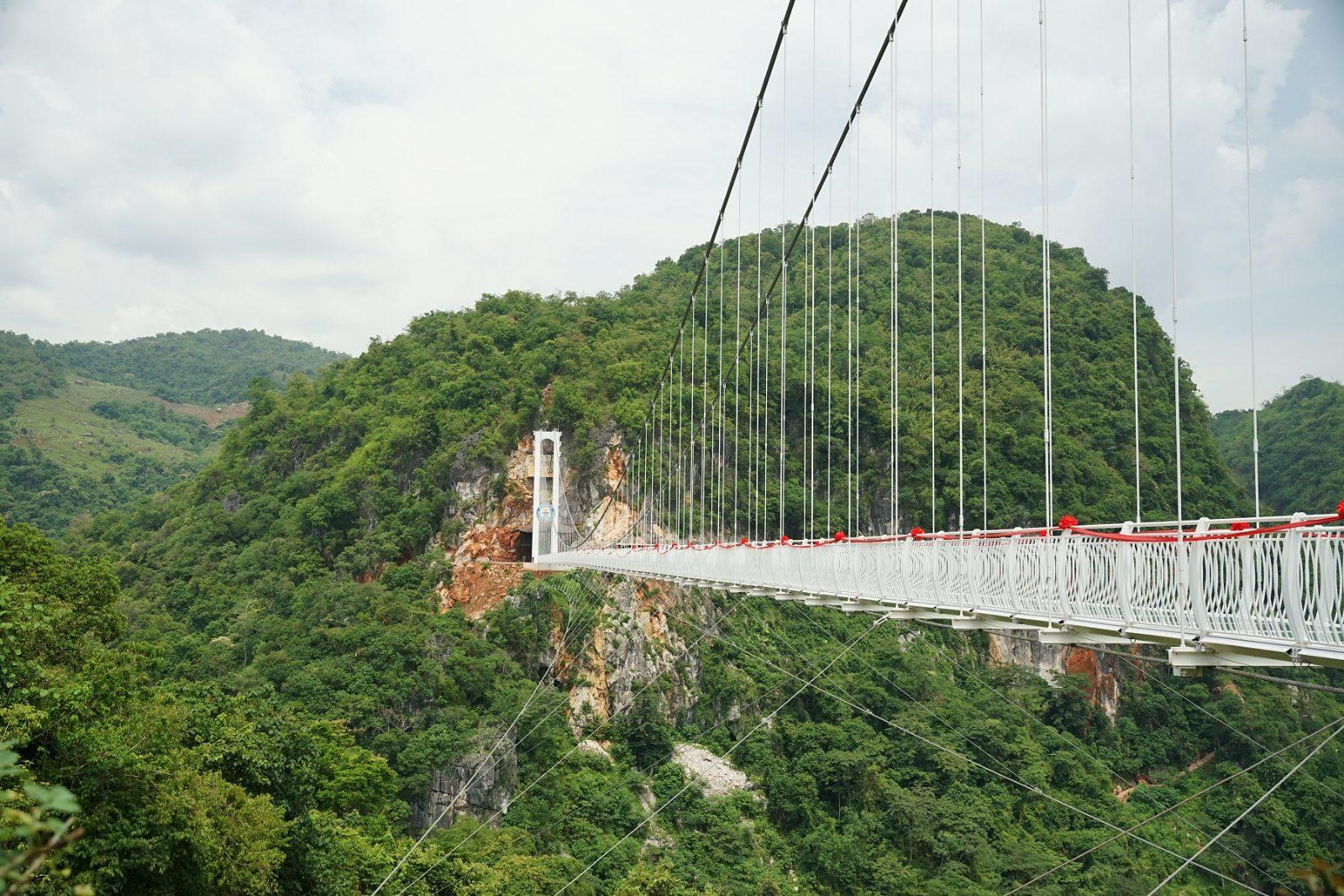
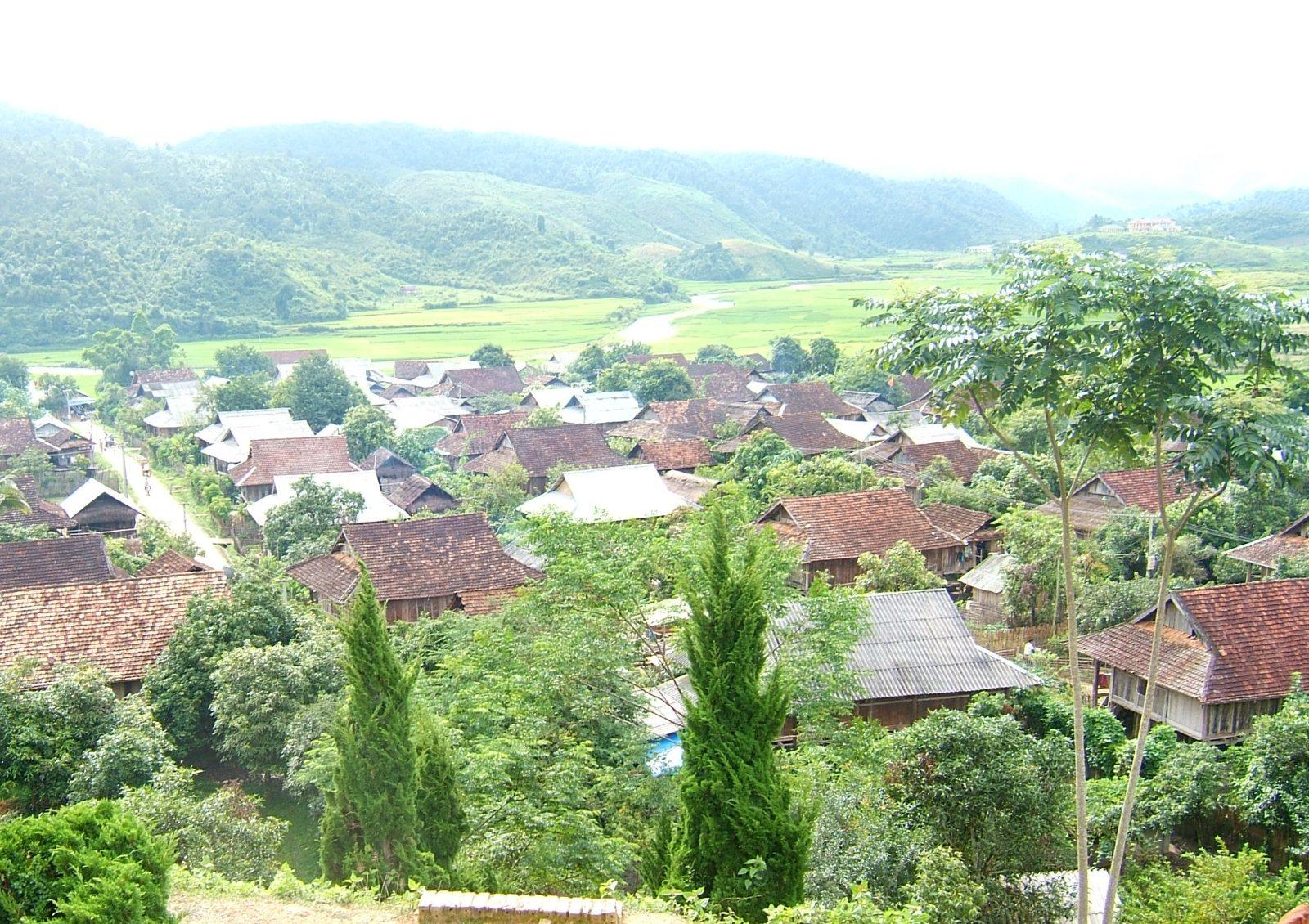
Bach Long Glass Bridge: DangTungDuong / CC BY-SA 4.0 · Stilt house village: Viethavvh at vi.wikipedia / Public domain
What Is There to See and Do in Moc Chau?
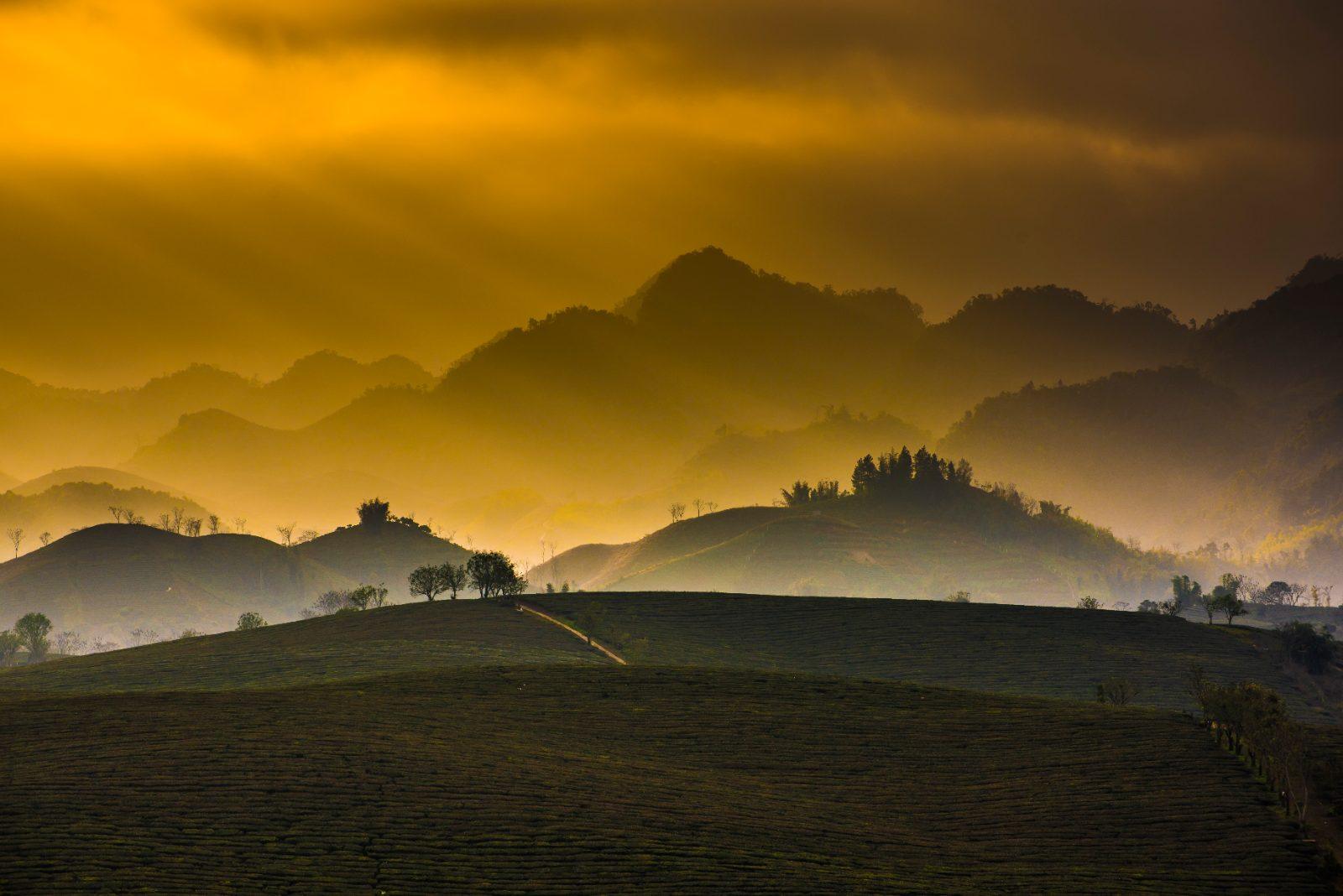
The tea plantations are the plateau’s signature image, including the heart-shaped Heart Tea Hill and the Moc Suong oolong plantation, both easiest to visit early morning before the light flattens and the crowds arrive. The 632-meter Bach Long Glass Bridge, one of the longest glass-bottomed pedestrian bridges of its kind, spans a forest valley with a see-through walkway plus ziplining and go-karts nearby for anyone who wants more than a photo stop. Waterfalls worth a detour include Dai Yem Waterfall, with layered cascades and clear pools, and the multi-tiered Chieng Khoa and Tat Nang falls further out. Dairy farms are a genuine local specialty — Moc Chau’s cool climate supports Vietnam’s best-known domestic dairy industry, and several farms offer fresh milk, yogurt tastings, and photo-friendly pastures. H’Mong, Thai, Dao, and Muong villages dot the plateau, including Pa Phach, a H’Mong village surrounded by plum trees, and Ban Ang, a Thai village of traditional stilt houses.
Timing matters more in Moc Chau than in most Vietnam destinations. Plum and peach blossoms bloom February through March, the single most popular window to visit; late September into early October brings golden rice fields; and November brings wild sunflowers and canola blooms. Outside these windows the plateau is still pleasant — just greener and less dramatically photogenic.
How Do You Get to Moc Chau?
Moc Chau has no train station or airport, so every route from Hanoi is by road via the CT03/CT02 expressways and QL6, a distance of about 208 kilometers. A public bus from Hanoi’s My Dinh station takes five to six hours with rest stops and costs roughly USD 5–8 per seat. A limousine van (9–11 seats, with hotel pickup) takes four and a half to five hours and runs from about USD 16 per seat — the best value for most travelers. A private car takes four to four and a half hours and starts around USD 105 per vehicle, which works out to roughly USD 26 per person for a group of four sharing scenic stops along the way. Confirm current prices and schedules before booking, since northwest Vietnam bus and limousine pricing changes seasonally.
A weekend of two days and one night is the sweet spot for most first-time visitors, enough time for the tea hills, the glass bridge, and one waterfall without rushing. A long day trip works if time is tight, and three to four days suits travelers combining Moc Chau with a longer northwest Vietnam loop.
February through March, during plum and peach blossom season, is the most popular and most photogenic window. Late September through early October brings golden rice-terrace color, and November brings wild sunflower and canola blooms — each season gives the plateau a genuinely different look.
Moc Chau is closer to Hanoi and easier to fit into a single weekend, while Sapa involves a longer journey but offers higher mountains and multi-day trekking. See our dedicated Moc Chau vs. Sapa comparison for a full breakdown of which suits your trip better.

One Comment