The Perfect 2-Day Pai Itinerary: What to Do, Eat, and See
Two days is enough time to experience the best viewpoints, hot springs, waterfalls, and night market in Pai, as long as you pair the sunrise-and-sunset sights with the attractions that need full daylight. This itinerary assumes you are arriving from Chiang Mai, roughly 3.5 to 4.5 hours away by minivan on the mountain road locals call the 762 curves, and gives you a realistic two-day loop rather than a rushed highlight reel.
How do you get from Chiang Mai to Pai?
Most travelers reach Pai by shared minivan from the Arcade Bus Station in Chiang Mai, a roughly 3.5 to 4.5-hour ride along Route 1095, a mountain road famous for its curves. Self-driving a rental motorbike and booking a private transfer are the other two realistic options. There is currently no scheduled flight between Chiang Mai and Pai, so plan for a road transfer either way.
| Option | Duration | Approx. Cost | Best For |
|---|---|---|---|
| Shared minivan | 3.5–4.5 hours | Roughly 150–250 THB one-way | First-time visitors and anyone prone to motion sickness who would rather let someone else drive |
| Self-drive motorbike | 3–8 hours depending on stops | Scooter rental roughly 150–250 THB per day plus fuel | Confident riders with a valid International Driving Permit who want to stop at viewpoints along the way |
| Private car or driver | 3–4 hours | Roughly 1,500–3,000 THB one-way | Travelers who want door-to-door convenience, or are traveling with kids or a lot of luggage |
A regional airline trialed short flights between Chiang Mai and Pai in 2026, but the route was suspended before it became a regular scheduled service. Budget for a road transfer rather than counting on flying, and check current status closer to your trip in case a flight resumes.
If navigating hundreds of mountain curves yourself does not sound appealing, a private driver takes the decision-making out of it. Klook lists Chiang Mai to Pai transfers and day tours with an English-speaking driver and set pickup times: browse Chiang Mai to Pai transfers on Klook. Travelers who would rather book the shared minivan directly can do that through 12Go.
How much time should you budget for the top sights in Pai?
Attractions in Pai are spread across town and the surrounding countryside, so the fastest way to plan two days is to know roughly how long each stop deserves. Treat the Walking Street night market and the canyon as the two unmissable anchors, and fit the rest around them.
Day 1 in Pai: Sunrise viewpoint, canyon sunset, and the night market
Front-load day one with the sights that depend on the light, then let the afternoon flex around lunch and a rest.
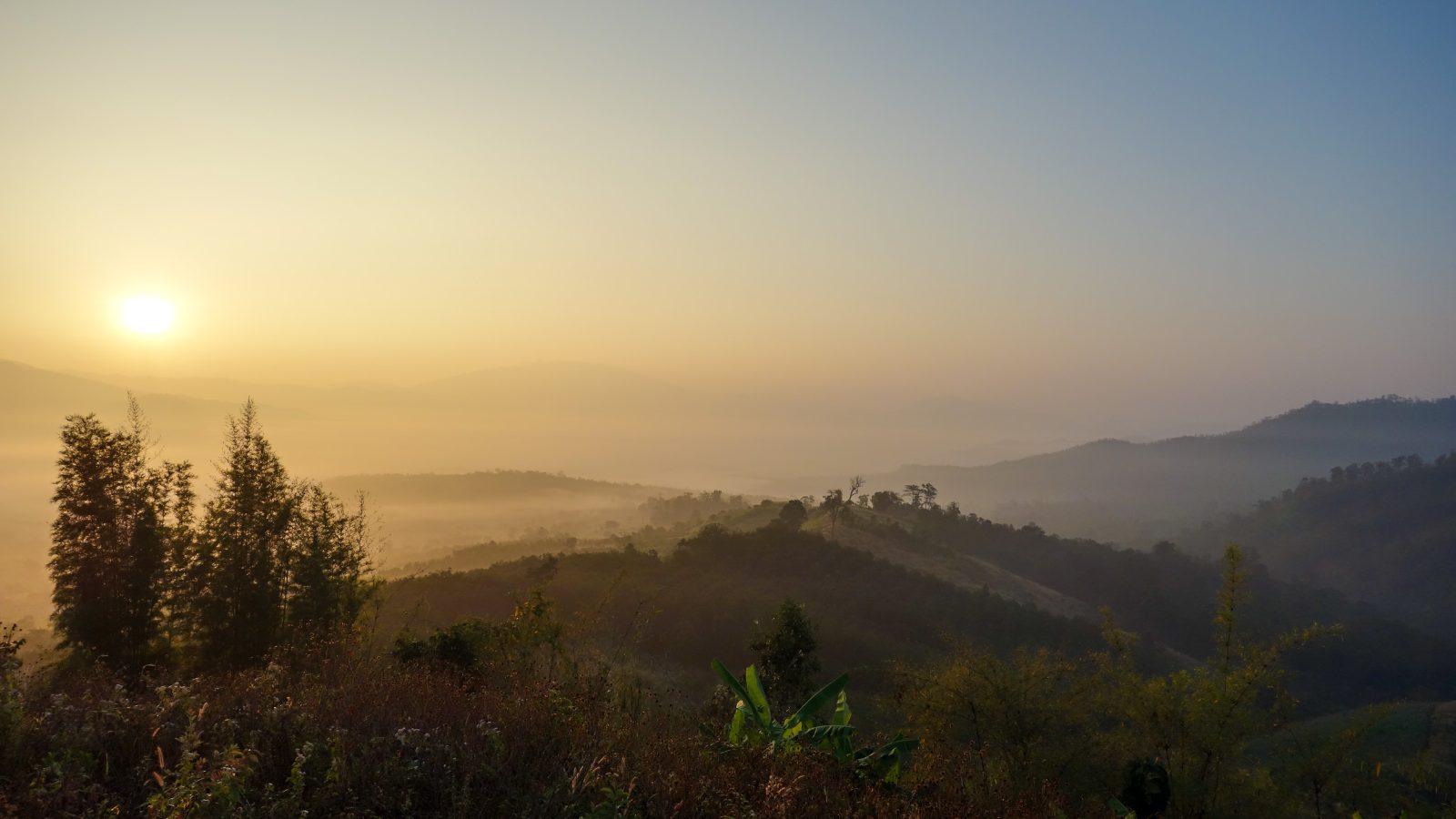
Morning: Start before sunrise at Yun Lai Viewpoint, which looks out over the Chinese village of Santichon and the surrounding hills. Afterward, head down into Santichon itself for Yunnanese tea and a Chinese-style breakfast.
Midday: Stop at Pai Land Split, a small farm split in two by a 2008 earthquake, where the owners traditionally hand out fruit and drinks grown on the property. It is donation-based and takes about 30 minutes. Have lunch in town afterward.
Afternoon: Climb the 353 steps to Wat Phra That Mae Yen, known locally as the White Buddha, for panoramic views over the Pai valley. Go in the late afternoon rather than right at sunset, since sunset is reserved for the canyon.
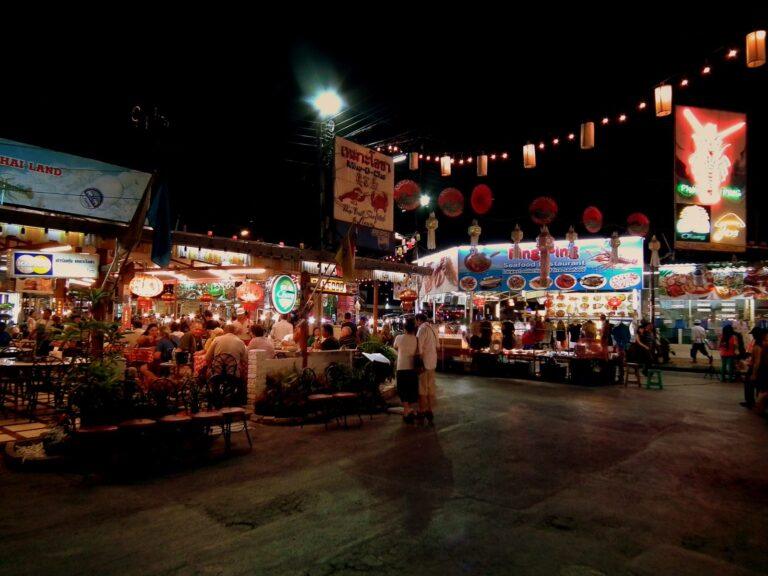
Evening: Head to Pai Canyon for sunset, Pai’s most popular golden-hour spot. The first viewpoint is an easy five-minute climb; beyond it, the trails narrow into dusty ridges with real drops, so wear closed-toe shoes if you plan to go further. Finish the night grazing your way down the Walking Street night market, which closes to traffic each evening for food carts and stalls.
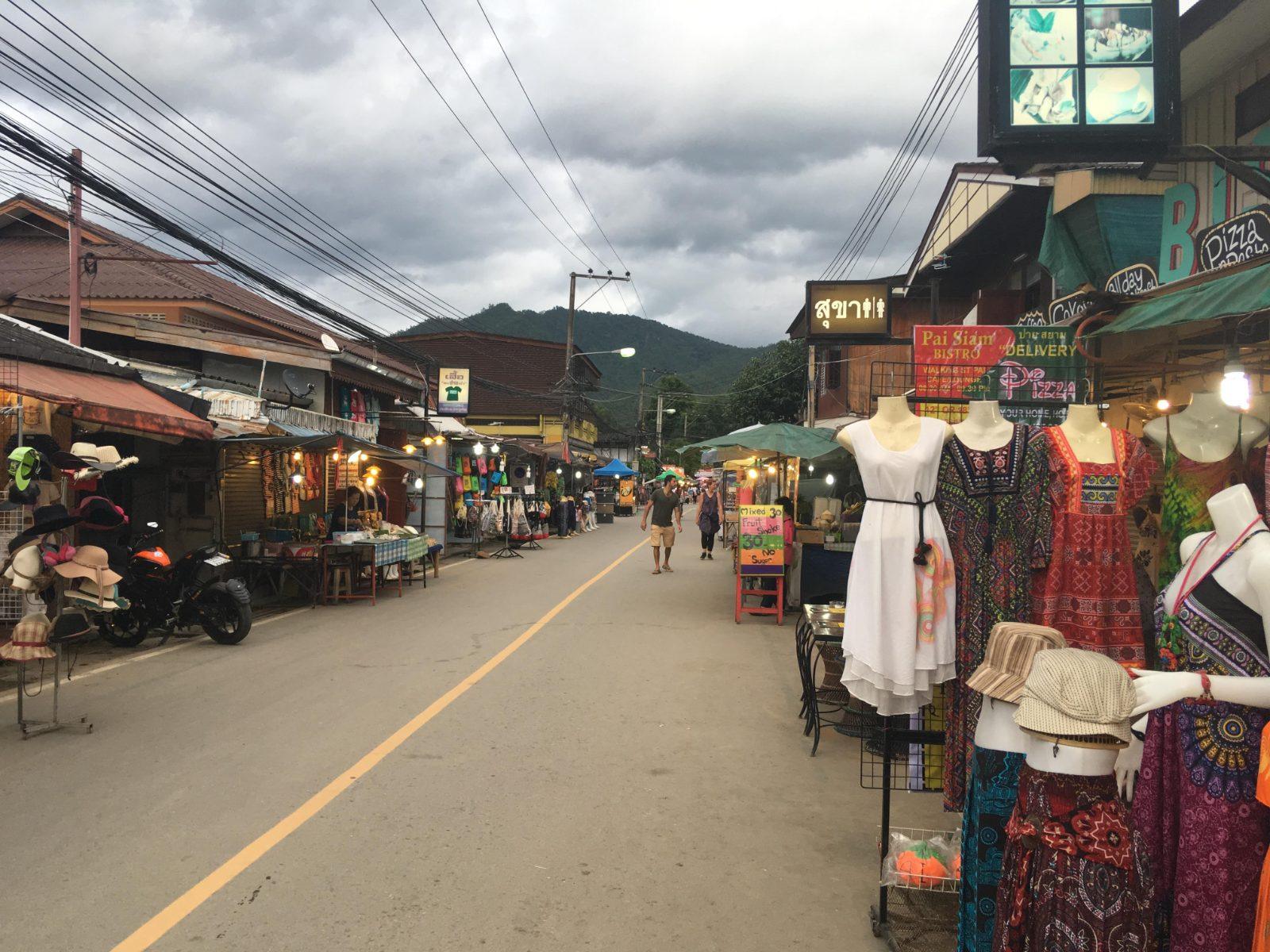
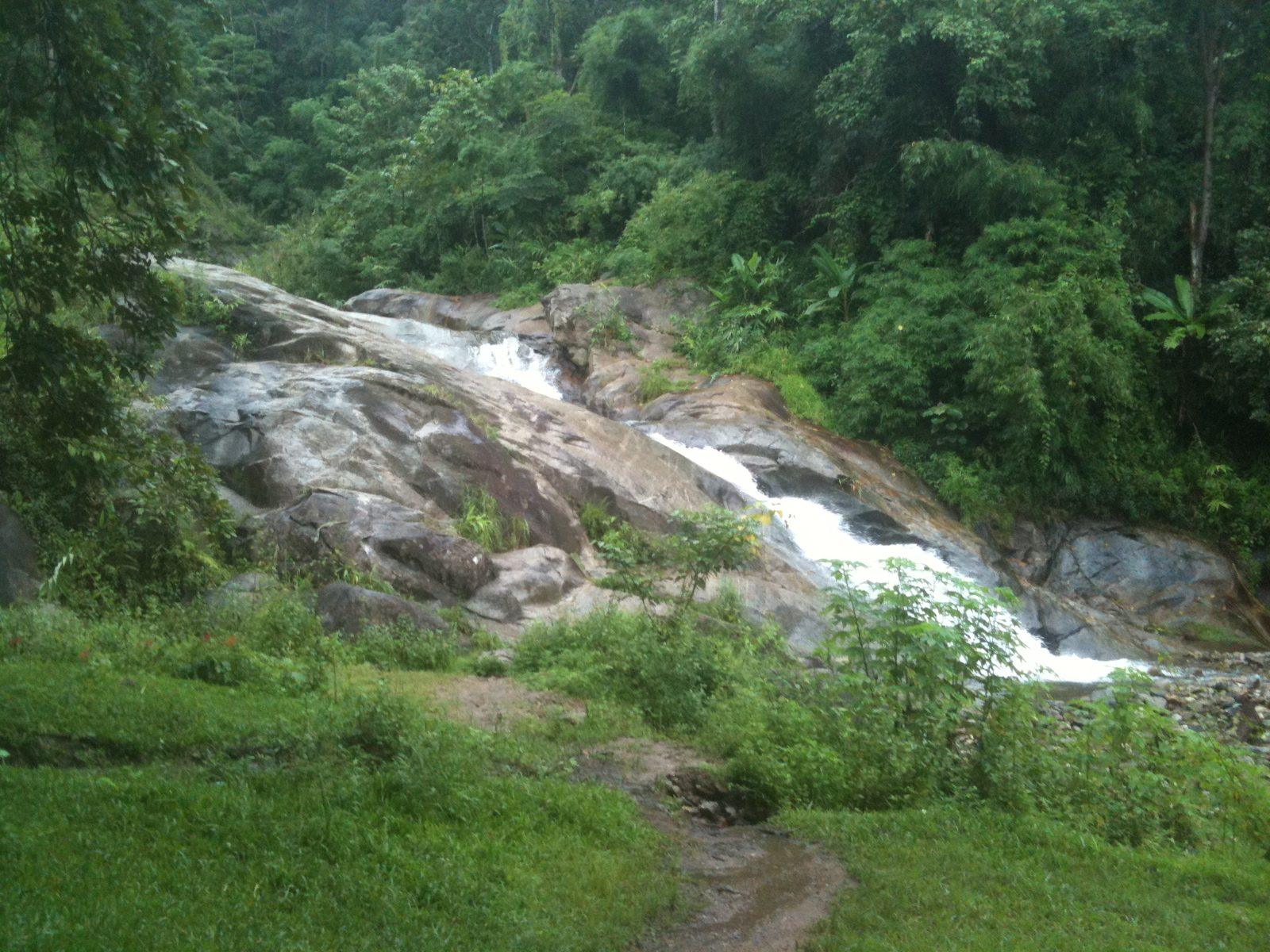
Pai Walking Street: Christophe95 / CC BY-SA 4.0 · Mo Paeng Waterfall: -1g / CC BY-SA 3.0
Day 2 in Pai: Waterfalls, hot springs, and the Memorial Bridge
Save the water-based attractions for day two, and go early to beat both the crowds and the heat.
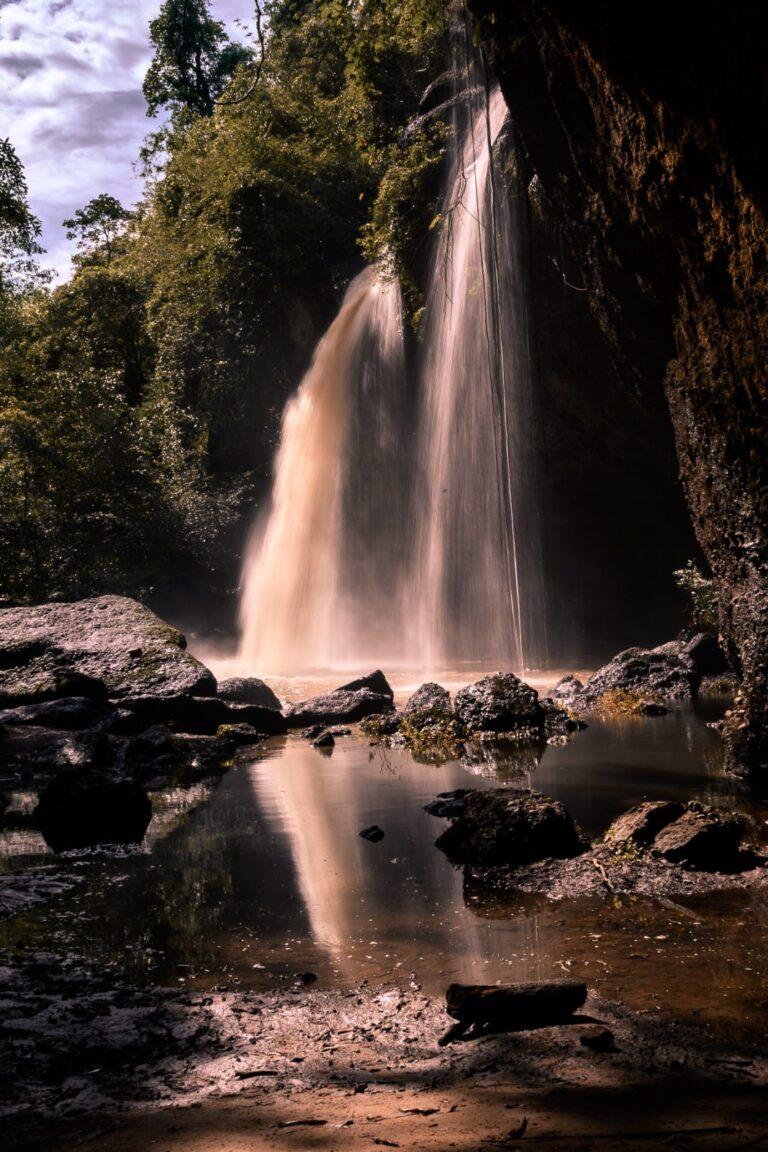
Morning: Choose one waterfall and go first thing: Pam Bok is quieter and about a 20-minute drive from town, while Mo Paeng has more swimming pools and a natural water slide. Both flow strongest from July through November and can slow to a trickle in the dry season between February and May.
Midday: Soak at Sai Ngam Hot Spring, a natural river hot spring with a series of cascading pools, or Tha Pai Hot Springs, where visitors buy eggs at the gate and boil them in the hottest channel near the source. Both charge a small entrance fee.
Afternoon: Stop at the Pai Memorial Bridge, a World War Two-era bridge on the road back toward Chiang Mai, for a quick photo. Travelers who want quieter scenery can rent a bicycle in town (roughly 50 to 150 THB per day) and ride the flat countryside loop toward Ban Wiang Nua, past rice paddies and small villages.
Evening: Have a sit-down dinner at a restaurant with valley views, then end the trip at a reggae bar or live-music venue rather than another night at the market, if you want a change of pace.
TTC Verdict: Two days covers the essential sights in Pai comfortably if you accept that you will be choosing between some options, such as Pam Bok or Mo Paeng, rather than doing everything. If you have a third day, add it for the countryside bicycle loop and a second hot spring, rather than trying to cram a third full day of sightseeing into two.
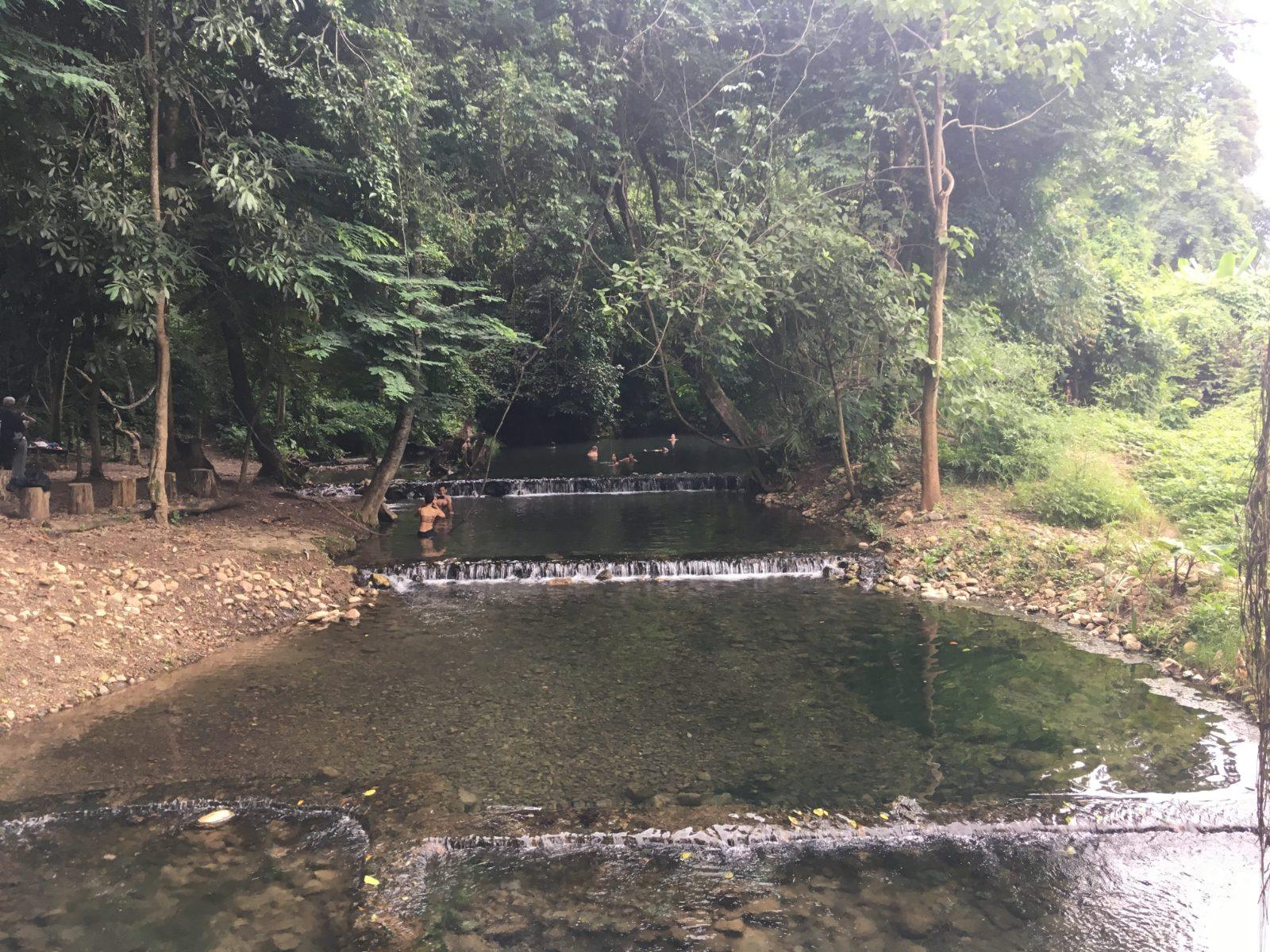
Sai Ngam Hot Spring, Pai: Christophe95 / CC BY-SA 4.0
Where should you eat in Pai?
Pai punches above its weight for a small mountain town, with a mix of Thai, Yunnanese, and international options built around its backpacker and digital-nomad crowd.
For breakfast or coffee, Carrot On The Moon is known for its cakes and inventive drinks, Lemon Thyme Cafe has a greenhouse-style dining room with eggs Benedict and bruschetta, and Om Garden Cafe is a hidden bamboo cottage with a broad Thai and international menu. For dinner, Oasis Restaurant and Silhouette both serve mountain and valley views alongside their menus, Cafecito is the spot for Mexican food and house-roasted coffee, and Bigs Little Cafe does an all-day English breakfast for anyone craving something familiar. The Walking Street night market is the most atmospheric option of all: grazing across several stalls for grilled meats, pad thai, mango sticky rice, and fruit shakes beats filling up at just one.
What is the nightlife like in Pai?
Pai leans toward chill, backpacker-friendly bars by default, with a couple of genuinely livelier venues concentrated in specific spots rather than spread across town. Yellow Sun Pai is the main reggae bar, with live bands and a balcony over Walking Street, while Jazz House offers open-air jazz, blues, and open-mic nights in a garden setting. For a full-on party, head specifically to Boom Bar or Don’t Cry Bar, both known for DJs and late closing times, rather than expecting that energy townwide.
What does a two-day trip to Pai cost?
As a rough guide, budget travelers can expect to spend somewhere around 20 to 35 USD per day in Pai, covering a hostel dorm or basic guesthouse, street food and market meals, and a scooter or minivan transfer. Mid-range travelers who want a private guesthouse, sit-down restaurant meals, and paid attractions like the hot springs should budget closer to 40 to 70 USD per day. Small guesthouses, food stalls, and shops in Pai are overwhelmingly cash-based, so carry enough Thai baht for your stay and withdraw larger sums at once to avoid repeated ATM fees.
If you are staying overnight, guesthouses and boutique stays in Pai fill up fast in high season from November to February. Browse places to stay in Pai on Agoda before you commit to the drive.
Yes. Two days is enough to cover the main viewpoints, one waterfall, one hot spring, and the night market, as long as you accept choosing between a few similar options, such as Pam Bok versus Mo Paeng waterfall, rather than visiting every attraction.
No. While many of the viewpoints, waterfalls, and hot springs are easiest to reach by scooter, you can also rent a bicycle for nearby stops, book day tours and private transfers through Klook, or hire a driver for the day if you would rather not ride yourself.
Not currently. A regional airline trialed short flights between Chiang Mai and Pai in 2026, but the route was suspended before becoming a regular scheduled service. A shared minivan, private transfer, or self-drive motorbike are the only practical options for now.