
Mu Cang Chai Travel Guide
Mu Cang Chai is a mountain district in Yen Bai province, about 300 kilometers northwest of Hanoi, famous for the H’mong-built rice terraces that cascade down its hillsides and turn a deep gold during the late-September-to-October harvest. Unlike Ha Giang or Cao Bang to the north, it does not border China, so foreigners need no special border-area permit to visit — just a standard Vietnam visa or e-visa. Most travelers base themselves here for 2-3 days to catch the terraces at La Pan Tan, Mam Xoi, and Khau Pha Pass, trek between H’mong villages, and eat highland dishes like com lam and thang co.
What Makes Mu Cang Chai Worth the Journey?
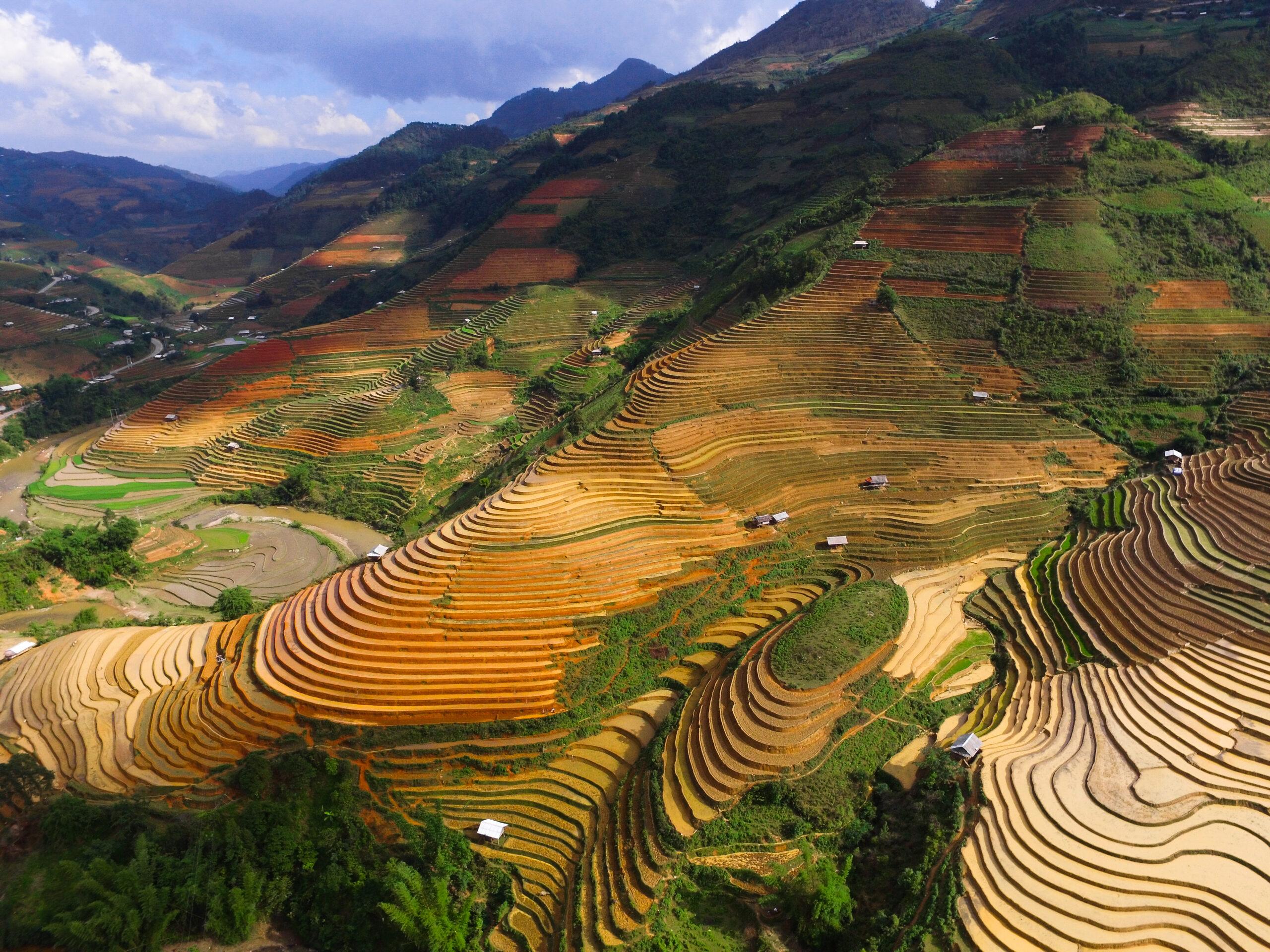
Mu Cang Chai holds some of the most dramatic terraced rice fields in Vietnam, built over generations by H’mong farmers across the steep slopes of three communes: La Pan Tan, Che Cu Nha, and De Xu Phinh, all now recognized as a national scenic landscape. The terraces change character through the year — mirror-flat and water-filled from May to June, deep green through summer, and burnished gold at harvest from roughly mid-September to mid-October — and the H’mong villages, markets, and highland cooking around them give the district a cultural depth that goes well beyond photo-ops.
Terraces in Che Cu Nha commune during harvest season
When Should You Visit Mu Cang Chai?
Late September through mid-October is the single best window: this is when the terraces turn gold for harvest, skies are typically clear, and temperatures are cool and comfortable. May and June bring a different but equally photogenic look, when the terraces are flooded ahead of planting and reflect the sky like mirrors. Outside these two windows the terraces are simply green farmland, which is still scenic but not the reason most travelers make the trip.
| Season | Months | What You See |
|---|---|---|
| Water season | May–June | Flooded terraces reflecting the sky, just before planting |
| Green season | July–August | Lush green rice, fewer visitors, higher chance of rain |
| Golden harvest | Mid-Sep–mid-Oct | Peak season: gold terraces, clearest skies, busiest roads and homestays |
| Winter | Nov–Feb | Bare fields, cool and misty, H’mong New Year festivities |
How Do You Get to Mu Cang Chai From Hanoi?
Mu Cang Chai is about a 6-8 hour trip from Hanoi, and the journey itself — particularly the final stretch over Khau Pha Pass — is part of the experience. There is no airport or train station in the district, so every route ends with a road journey.
| Method | Time | Cost (per person) | Best For |
|---|---|---|---|
| Sleeper/seat bus from My Dinh station | 6–7 hours | 300,000–600,000 VND | Budget travelers, no driving experience needed |
| Private car with driver | 6 hours | Higher, shared across group | Families, comfort, flexible stops |
| Self-drive motorbike | 7–8 hours | Fuel only | Experienced riders only — mountain curves, no guardrails in places |
| Overnight train + taxi | 4 hrs train + ~2.5 hrs road | 340,000–540,000 VND train fare | Travelers who prefer sleeping through the overnight leg |
Fares above are approximate and change seasonally — confirm current prices before booking.
Whichever way you go, National Road 32 climbs through Nghia Lo and Tu Le before crossing Khau Pha Pass — one of Vietnam’s four great mountain passes and, at roughly 30 kilometers of switchbacks at up to 1,200 meters elevation, worth a photo stop in its own right. Roads are paved but narrow and winding; during the rainy season (roughly May–September) sections can be prone to landslides and fog, so budget extra time and avoid night travel.
Where Should You Stay in Mu Cang Chai?
Accommodation ranges from simple H’mong family homestays to a handful of design-forward ecolodges, and where you stay matters more here than in most destinations because road access to the best viewpoints is limited after dark. Our full where-to-stay guide breaks down homestays, ecolodges, and one luxury option by which viewpoints they put you closest to.
What Should You Eat in Mu Cang Chai?
Highland H’mong and Thai cooking here leans on sticky rice, bamboo, and smoked or slow-cooked meat — think com lam (rice steamed in bamboo tubes), grilled stream fish, and the H’mong stew thang co. See our full food guide for where to try each dish and what to expect.
What Are the Best Things to Do in Mu Cang Chai?
Beyond the four signature viewpoints (La Pan Tan, Mam Xoi, Mui Giay, and Mong Ngua), trekking between H’mong villages, paragliding off Khau Pha Pass, and market visits round out most itineraries. Our full things-to-do guide covers each in detail, including which are free and which require a small entry fee.
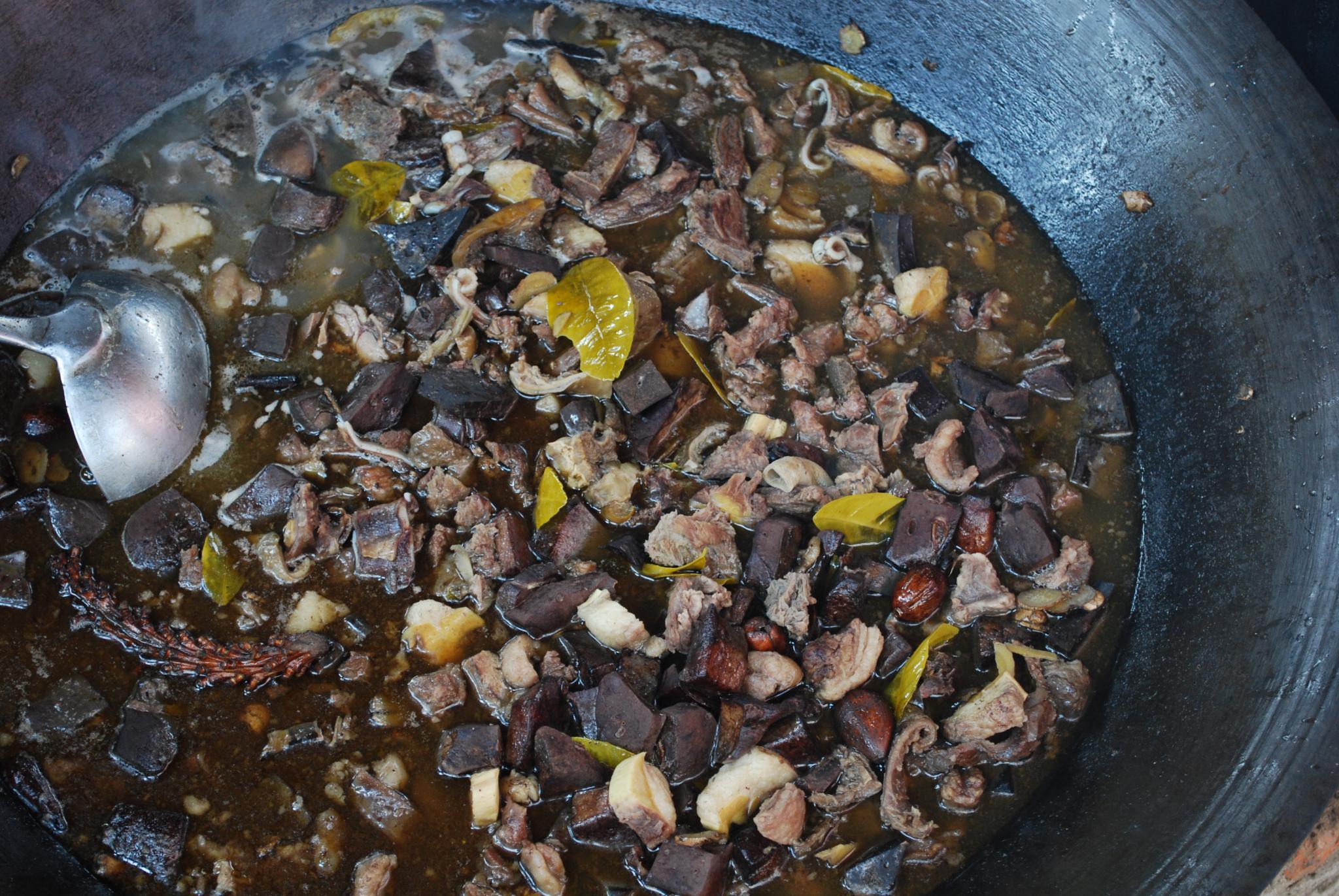
Thang co, a traditional H’mong stew, simmering in a communal pot
Frequently Asked Questions About Mu Cang Chai
No. Mu Cang Chai is in Yen Bai province, which does not border China, so the foreigner border-area permit required for Ha Giang and Cao Bang does not apply here. A standard Vietnam visa or e-visa is sufficient. Confirm current entry requirements before travel.
Late September through mid-October, during the golden harvest season, is the most popular and photogenic window. Late May to June, when the terraces are flooded ahead of planting, is a strong second choice for a different, mirror-like look.
About 300 kilometers, typically a 6-8 hour journey by bus, private car, or motorbike along National Road 32 through Nghia Lo and over Khau Pha Pass. There is no airport or train station in the district itself.
Yes — the terrace landscapes are arguably more dramatic and the area sees far fewer tourists than Sapa, though it also has fewer creature comforts and a longer drive from Hanoi.
Most travelers find 2-3 days enough to see the main viewpoints, do one trek, and try the local food, though photographers chasing golden-hour light at multiple viewpoints often stay 3-4 days.
One Comment