
Com Tam: Saigon’s Broken Rice, Explained
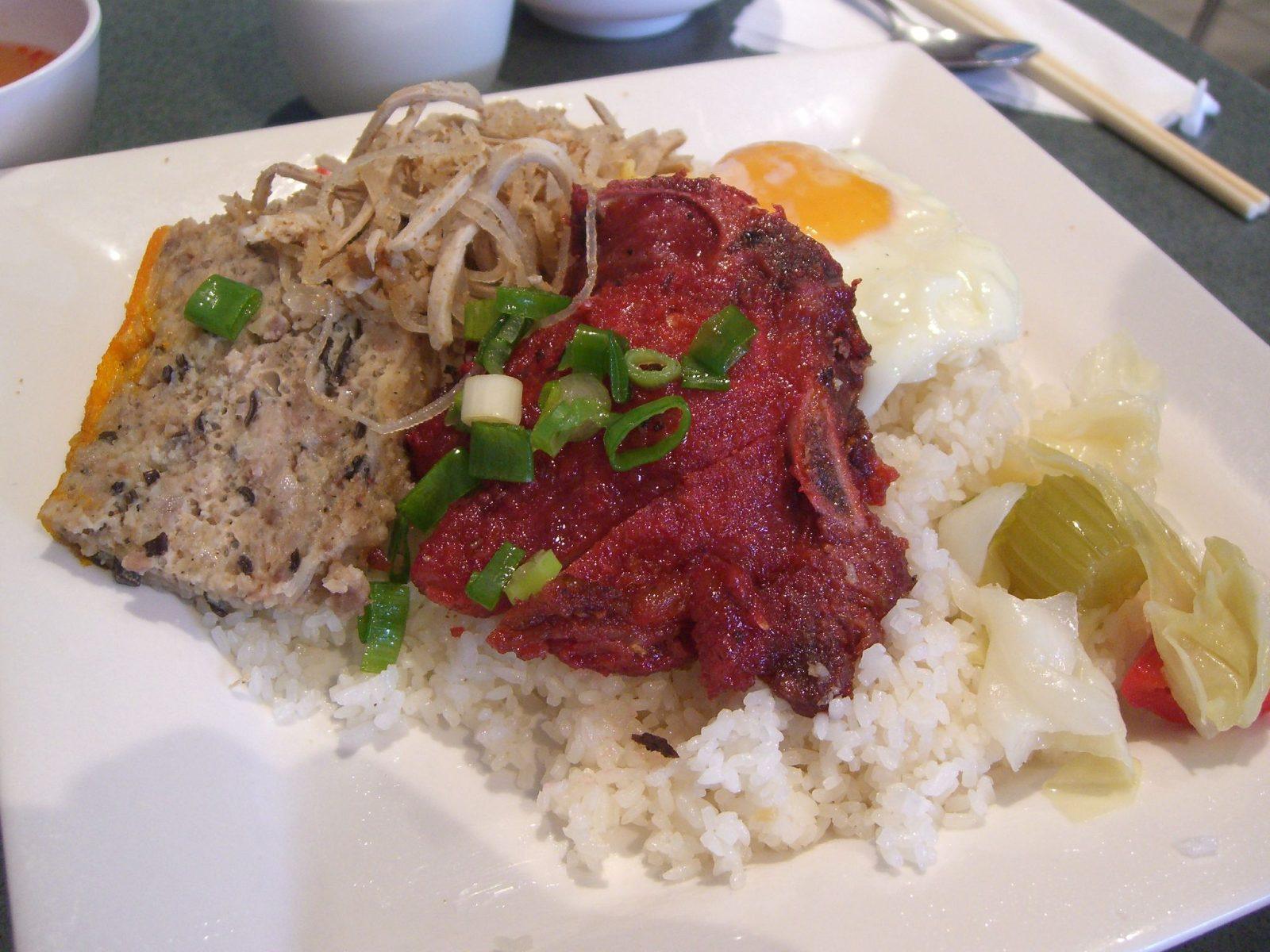
Com tam, or “broken rice,” is Ho Chi Minh City’s everyday classic: fractured rice grains served with a chargrilled pork chop, shredded pork skin tossed in roasted rice powder, a steamed egg-and-pork meatloaf, and often a fried egg, finished with scallion oil and a side of fish sauce. What began in 1930s Saigon as cheap food made from rice too broken to sell whole has become one of the most ordered lunches in the city, eaten by dock workers and office workers alike.
Why Is It Called “Broken” Rice, and Why Did Poor Workers Eat It?
Every rice harvest and milling process produces some fractured grains alongside whole ones. Historically, that broken rice was considered a lower-grade byproduct — cheaper than whole-grain rice, and at times sold mainly as animal feed or eaten by workers who could not afford better. The grain itself is not a different variety or lower quality in flavor, just physically fractured, which is why a food born from thrift eventually became something people order by choice rather than necessity.
Where Did Com Tam Come From, and How Did It Become a Saigon Classic?
Com tam is generally traced to 1930s Saigon, during a period of French colonial expansion when the city was growing as a major harbor. A street vendor remembered as Ma Hai is often credited with the dish’s rise: she cooked broken rice with pandan leaves and paired it with inexpensive toppings like crispy pork fat and fish sauce to feed manual laborers cheaply. As French engineers and other higher-income customers began ordering from her stall, she is said to have added a chargrilled pork chop, a Western-influenced addition that also shifted the dish toward being eaten with a fork and spoon rather than chopsticks. That combination — broken rice, grilled pork, and a handful of savory toppings — is essentially the com tam still served across the city today.
| Topping | Vietnamese Name | What It Is |
|---|---|---|
| Grilled pork chop | Suon | A marinated, chargrilled pork chop — usually the centerpiece of the plate |
| Shredded pork skin | Bi | Julienned pork skin tossed with roasted rice powder for a light crunch |
| Steamed egg meatloaf | Cha (cha trung) | A dense, savory egg-and-pork custard steamed in a mold, then sliced |
| Fried egg | Trung op la | An optional sunny-side-up egg, common at casual stalls |
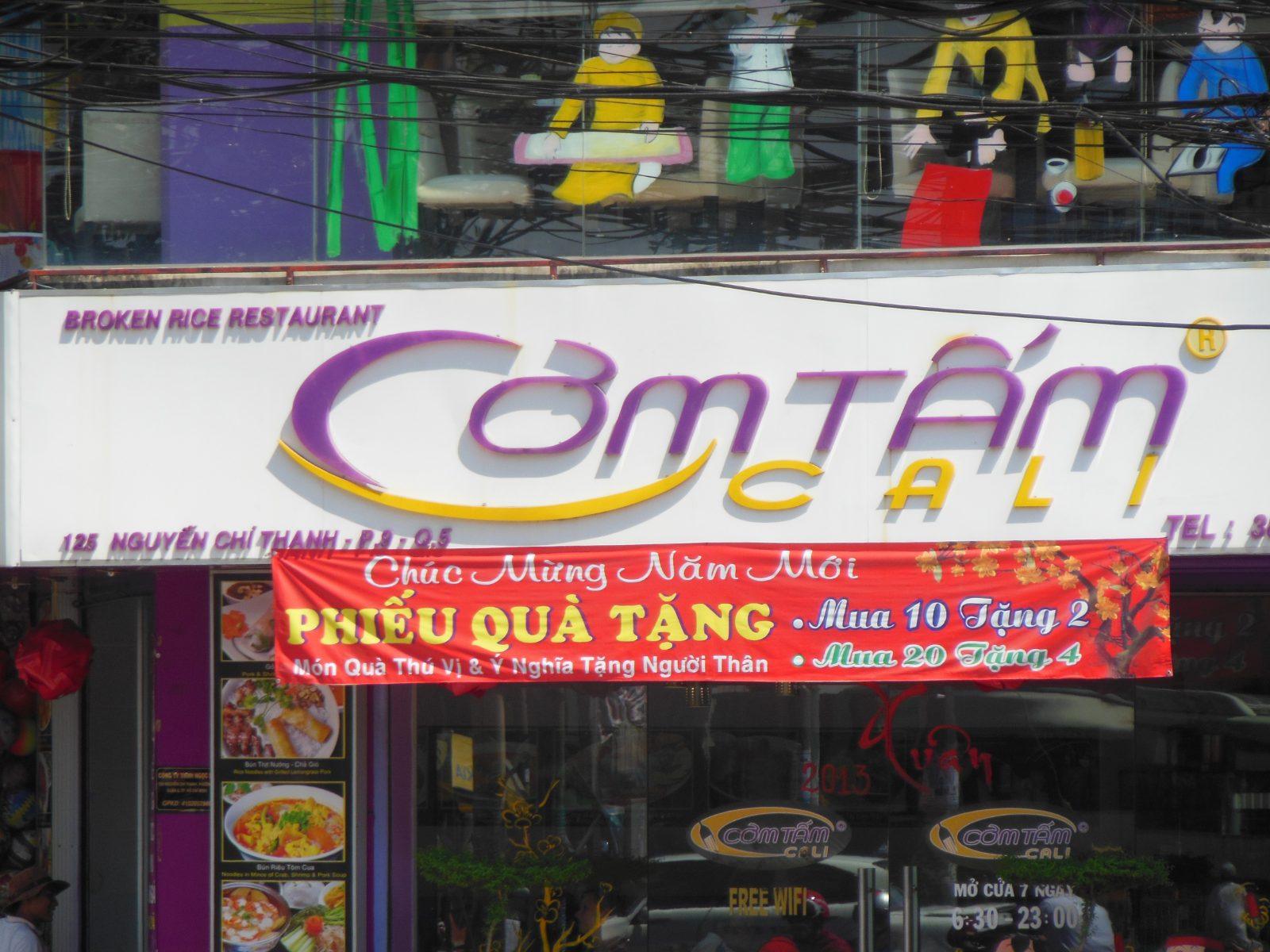
Broken Rice Restaurant, Saigon: Peter Kauffner / CC BY-SA 3.0
TTC Verdict: Com tam is proof that Saigon’s best food was rarely designed to impress — it was designed to feed people cheaply and well. A century after fractured rice grains were considered a waste product, com tam is now one of the dishes most closely associated with Ho Chi Minh City itself.
Not meaningfully. Broken grains cook up slightly softer and less separate than whole grains, but the flavor difference is minimal — the dish’s character comes mostly from its toppings and sauces, not the rice itself.
It refers to the three most common toppings ordered together: suon (grilled pork chop), bi (shredded pork skin), and cha (steamed egg meatloaf). Ordering “com tam suon bi cha” gets you the classic full combo.
All three, though it is most associated with lunch. It is sold from early-morning street stalls through to late-night rice-and-grill spots across Ho Chi Minh City.
2 Comments
Comments are closed.