Tom Yum Soup Explained: Thailand’s Iconic Hot-and-Sour Dish
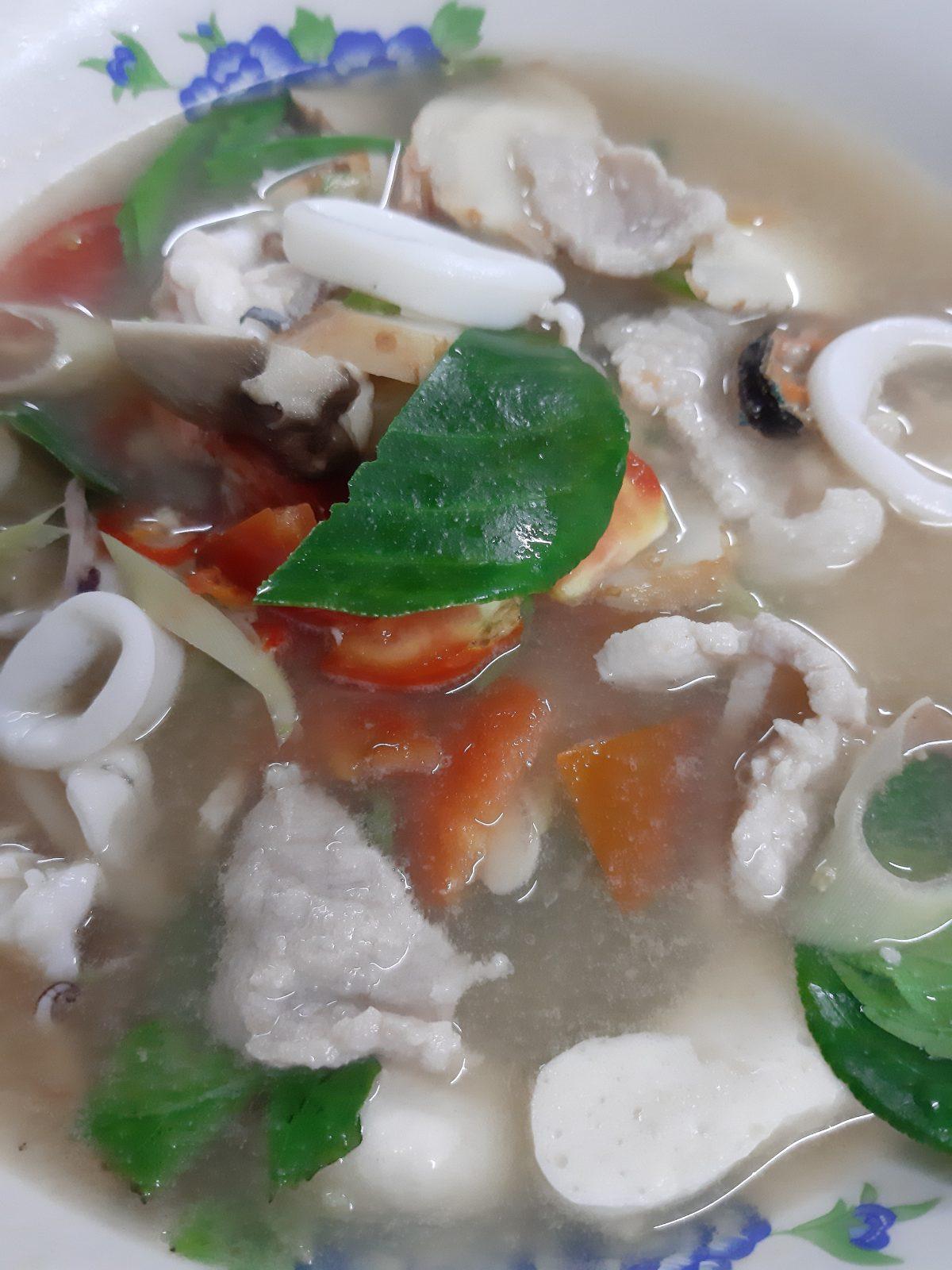
Tom yum — most often served as tom yum goong, with shrimp — is Thailand’s most internationally famous dish, a hot-and-sour soup built on lemongrass, galangal, kaffir lime leaf, fresh chilies, and lime juice. It comes in two distinct styles: a clear, sharp-flavored “nam sai” broth, and a richer, creamier “nam khon” version enriched with roasted chili paste and coconut or evaporated milk. In December 2024, UNESCO formally inscribed tom yum kung on its Representative List of the Intangible Cultural Heritage of Humanity, making it one of the few Thai dishes with that level of international recognition.
What Does “Tom Yum” Actually Mean?
“Tom” is an old Tai word meaning “to boil,” and “yum” (yam) describes the sour-spicy-savory, salad-style mixing of flavors found across many Thai dishes — so “tom yum” literally describes a boiled, salad-style soup, and “goong” simply means shrimp. The dish is generally traced to riverside communities along Thailand’s Central Plains, in the Chao Phraya River basin, where freshwater shrimp were abundant going back to the Ayutthaya period.
Exactly when today’s version took shape is genuinely debated — written recipes from the late 1800s describe a tom yum made with snakehead fish rather than shrimp, and the now-essential combination of galangal, lemongrass, and kaffir lime leaf appears to have been added gradually over subsequent decades rather than present from the start [VERIFY exact dating — sources place the earliest written recipes anywhere between 1888 and 1898]. Thai food historians note that similar hot-and-sour soups turn up across the wider Mekong region, so it is worth thinking of tom yum as the most famous expression of a shared Southeast Asian tradition, not a dish invented in isolation.
Nam Sai or Nam Khon: Which Should You Order?
If you only try tom yum once, nam khon is the easier, more forgiving introduction — but nam sai is the version with the sharper, more traditional flavor. Nam khon emerged later, during the early 20th century, as a creamier variation on the original clear broth. Neither is “more authentic” in a strict sense — both are long-established, widely served styles — but nam sai is generally considered closer to the dish’s historical roots, while nam khon’s richer profile is the one more commonly encountered at tourist-facing restaurants.
| Style | Broth | Flavor Profile | Best For |
|---|---|---|---|
| Nam Sai (clear) | Clear broth, lightly enriched with shrimp-head fat | Sharp, intensely sour-spicy — the older, more traditional style | Travelers who want the dish most Thai diners consider the real deal |
| Nam Khon (creamy) | Thickened with roasted chili paste and coconut or evaporated milk | Rounder, richer, and a touch milder on the chili burn | First-timers easing into Thai spice levels |
TTC Verdict: Order nam sai if you want the dish Thai diners consider the real deal: sharp, sour, and unapologetically spicy. Order nam khon if you are new to Thai heat and want a gentler, creamier introduction. Either way, do not hesitate to ask for “mai phet” (not spicy) — no restaurant in Thailand will think twice about a milder bowl.
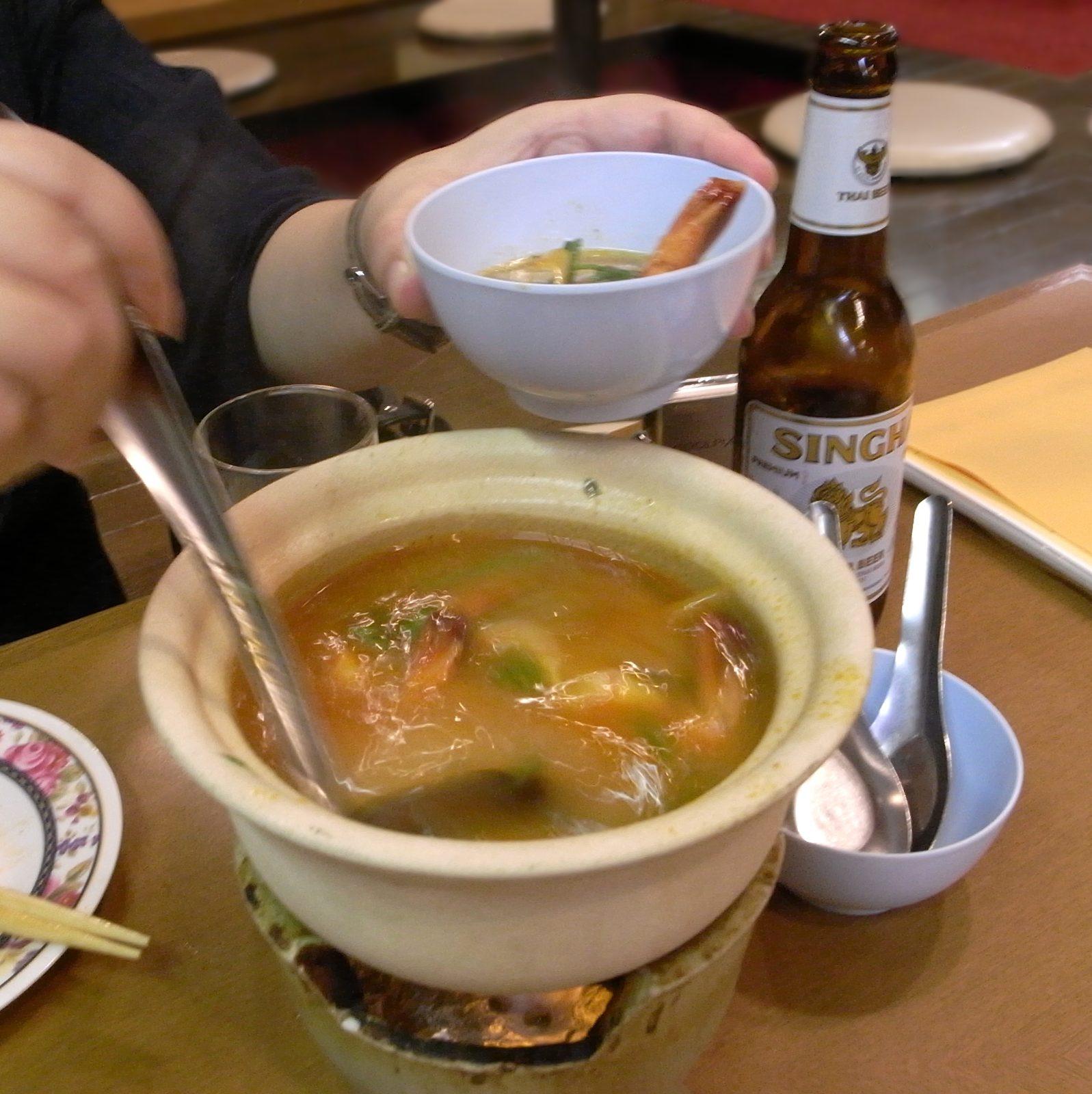
Tom Yum Goong: kisocci / CC BY-SA 2.0
Where Can You Try Tom Yum Well in Bangkok?
You do not need to hunt for a single “best” bowl — tom yum is served everywhere in Bangkok, from street carts to fine dining — but a handful of spots have real, verifiable credentials worth seeking out. Jay Fai, the famous street-food stall that became the first street vendor in Bangkok to earn a Michelin star, lists tom yum goong among its signature dishes — a clear broth built on galangal, kaffir lime leaf, and lemongrass with jumbo prawns, fish, squid, and mushrooms [VERIFY current Michelin status and operating hours before visiting, since both can change year to year]. Beyond named restaurants, tom yum is a genuinely safe order anywhere in the city: it is one of the dishes Thai cooks take the most pride in getting right, and most restaurants, from humble to high-end, serve a version worth trying.
Street-stall and casual-restaurant tom yum generally runs modestly priced by US/Canada/Australia standards, though exact prices shift with ingredient costs [VERIFY current pricing at the specific spot you visit — this moves too often to cite a reliable figure here]. Either way, it pairs naturally with a plate of jasmine rice on the side, Thai-style, rather than being eaten as a standalone bowl.
Traditional tom yum is genuinely spicy, built on fresh Thai chilies and roasted chili paste. If you are new to Thai heat, order nam khon (the creamier style, which is a little milder) or simply ask for “mai phet” (not spicy) — this is a completely normal request and every restaurant will accommodate it.
Tom yum goong uses shrimp (the most iconic and widely recognized version), while tom yum gai swaps in chicken. Seafood mixes and mushroom or vegetarian versions are also common. The aromatic base — lemongrass, galangal, kaffir lime leaf, chili, lime juice — stays the same across all of them; only the protein changes.
Tom yum is traditionally believed in Thai culture to promote energy and wellness, particularly during the rainy season, and some of its core aromatics (especially galangal) have shown antimicrobial properties in laboratory studies. That said, this is traditional/folk framing rather than a clinically proven health benefit from eating the soup — think of it as a genuinely flavorful, relatively light broth-based dish rather than a medicinal cure.