Mango Sticky Rice Explained: Thailand’s Favorite Dessert
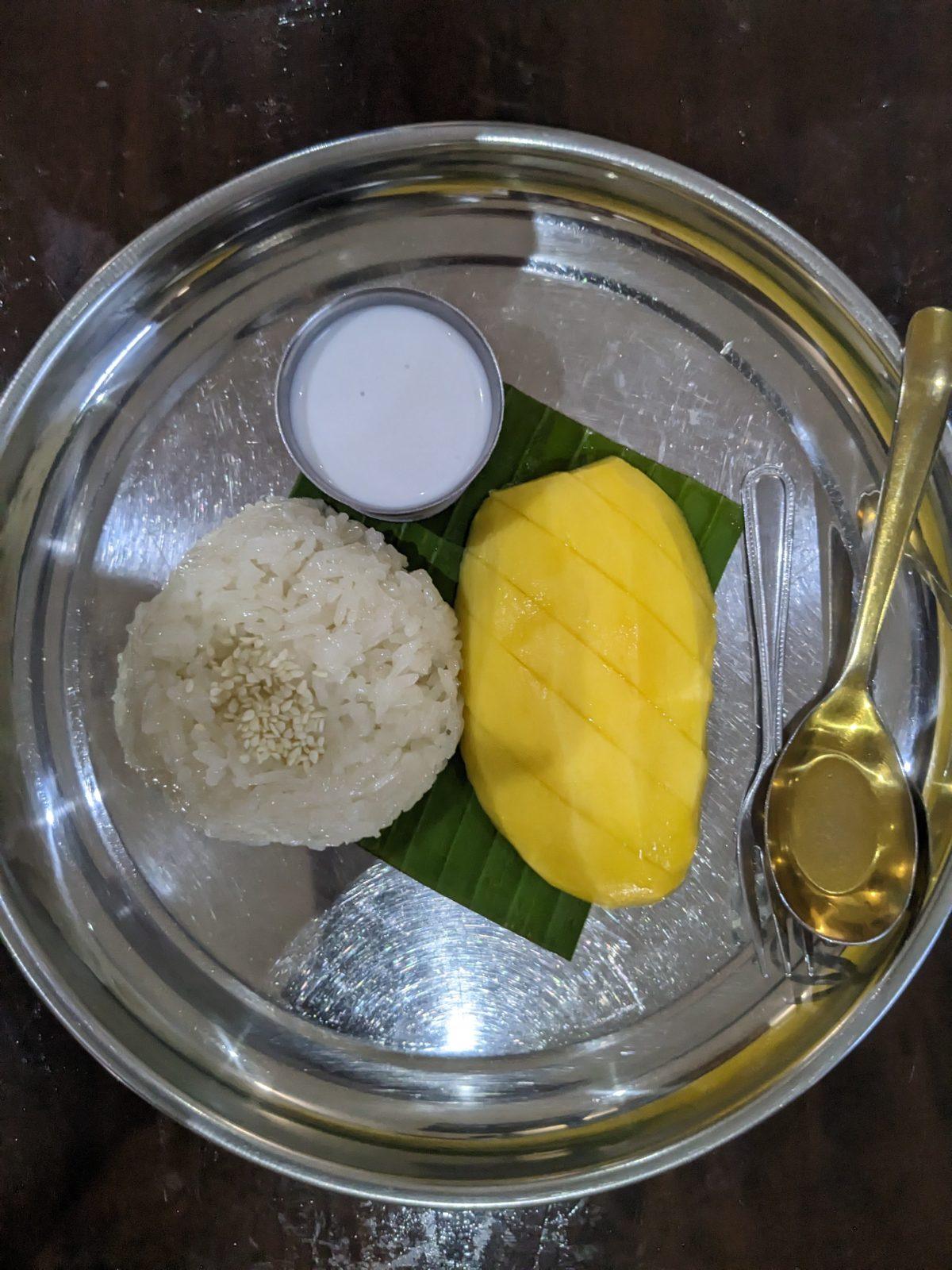
Mango sticky rice — khao niao mamuang — pairs warm glutinous rice soaked in sweetened coconut milk with fresh ripe mango, finished with a drizzle of coconut cream and a scatter of crispy mung beans. It is Thailand’s best-known dessert internationally, likely taking its current form sometime between the late Ayutthaya period and the reign of King Chulalongkorn (Rama V, 1868–1910), as a Central Thai refinement of a much older Northern and Northeastern Thai tradition of eating sticky rice daily. The dish is best eaten during Thai mango season, roughly March through June, when the fruit is at its sweetest and cheapest.
Where Did Mango Sticky Rice Come From?
Sticky rice itself has deep roots as a daily staple in Northern and Northeastern Thailand, eaten plain by hand alongside savory dishes like larb — the sweetened, mango-paired dessert version is a separate, later Central Thai tradition, not the same food. In the North and Isaan, glutinous rice has long been a staple food eaten three meals a day, often used as an edible utensil to scoop up savory dishes. In Central Thailand, where coconut palms grow more readily, cooks developed “khao niao moon” — glutinous rice steamed and mixed with sweetened coconut milk — as a dessert, typically served with fruit. Recipes referencing this sweetened preparation date at least to the reign of Rama V, with some culinary historians tracing fondness for the pairing back further, into the late Ayutthaya period [VERIFY exact dating — direct documentary evidence is thinner before Rama V].
Thailand is far from alone in pairing sticky rice with mango. Laos has its own long-standing version tied closely to cultural and religious tradition, and Cambodia has a similar dish eaten during mango season. Rather than one country inventing the pairing, it makes more sense to think of mango sticky rice as a shared Southeast Asian tradition that Thailand’s version has simply become the most internationally famous expression of.
| Element | What to Look For | Why It Matters |
|---|---|---|
| Mango variety | Nam Dok Mai (buttery, very sweet) or Ok-Rong — the two classic varieties | These are the mangoes Thai cooks consider correct for the dish; other varieties are seen as a shortcut |
| Rice | Glutinous rice steamed, then soaked in warm sweetened coconut milk until fully absorbed | Properly soaked rice should taste sweetened and lightly salted all the way through, not just on the surface |
| Topping | Crispy or baked mung beans, sometimes sesame seeds, plus an extra drizzle of coconut cream | Adds crunch and richness against the soft rice and mango |
What Makes a Great Bowl of Mango Sticky Rice?
The mango matters as much as the rice. Nam Dok Mai — prized for its buttery texture and intense sweetness — is the variety most commonly cited as the gold standard, traditionally paired with Ok-Rong, a second classic variety with a shorter, more limited season. Outside Thailand, Ataulfo (Manila) mango is usually the closest substitute if you are trying to recreate the dish at home.
TTC Verdict: Go for mango sticky rice between March and June, when Nam Dok Mai mangoes are at their sweetest and cheapest. It is available close to year-round now thanks to staggered regional harvests, but peak season is genuinely when it earns its reputation — worth timing a Bangkok trip around if you can.
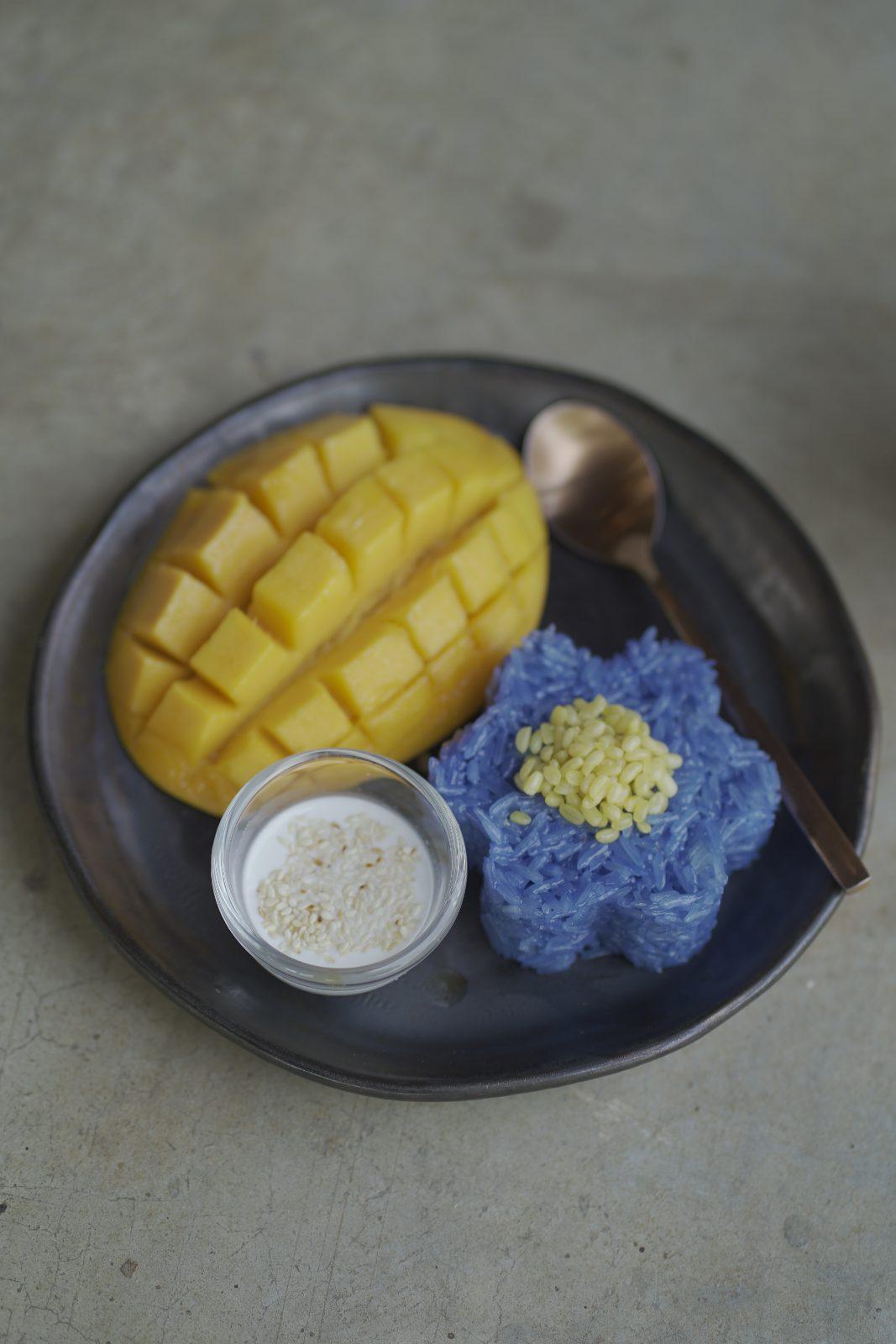
Butterfly Pea Mango Sticky Rice: Kenamparo / CC BY-SA 4.0
Where Can You Try Mango Sticky Rice Well in Bangkok?
A handful of Bangkok spots have real, verifiable credentials worth seeking out, though the dish is genuinely good almost anywhere mangoes are in season. K Panich, a shophouse near the Grand Palace that has sold mango sticky rice since the early 1930s by family recipe, holds a Michelin Guide Bib Gourmand award for its rich, coconut-forward version — cash only [VERIFY current operating hours before visiting]. Mae Varee, a long-running Thonglor institution known for long lines, is frequently cited in food press for sourcing its mango specifically for the dish. For a more modern, elevated take, some fine-dining kitchens in Bangkok now serve mango sticky rice reimagined as a plated dessert, with the rice reworked into a parfait or ice cream alongside fresh mango.
Street-stall and market-stall mango sticky rice generally runs modestly priced by US/Canada/Australia standards, with a noticeably higher cost at sit-down dessert cafes [VERIFY current pricing before you go — this shifts with mango season and general cost inflation]. Prices also tend to rise outside peak mango season, when the best varieties become harder to source.
Nam Dok Mai is the variety most often cited as the gold standard, prized for its buttery texture and intense sweetness. It is traditionally paired with a second classic variety, Ok-Rong, which has a shorter season. Using other mango varieties is generally seen by Thai cooks as a shortcut rather than the correct choice.
Yes, increasingly — improved cultivation and staggered regional harvests across Thailand mean mango is available close to year-round now. That said, quality and price are genuinely best during peak season, roughly March through June, when mangoes are at their sweetest and cheapest.
A classic bowl is naturally dairy-free and plant-based: glutinous rice, coconut milk, sugar, salt, and mango, with no animal products in the traditional recipe. It is one of the easiest Thai desserts to order with confidence if you are traveling vegan or vegetarian.