
Bangkok Food Guide: What to Eat in Thailand’s Capital
Bangkok’s food scene runs from one-dollar noodle carts to Michelin-listed street stalls, and the best meals in the city are almost never in a restaurant with a menu in English. The dishes worth prioritizing are Pad Thai, Pad Kra Pao, Som Tam, Tom Yum Goong, Moo Ping, and Mango Sticky Rice, and the best place to eat most of them is standing at a plastic stool on the street, not sitting in a hotel restaurant.
What Are the Must-Try Dishes in Bangkok?
Six dishes cover most of what makes Thai street food famous, and all six are easy to find at almost any street-food area in the city. Pad Thai and Pad Kra Pao are the safest starting points if you are new to Thai spice levels; Som Tam and Tom Yum Goong are where the heat and funk really show up.
| Dish | What It Is | Where To Find It | Typical Price |
|---|---|---|---|
| Pad Thai | Stir-fried rice noodles with egg, shrimp or chicken, tamarind, and peanuts | Anywhere; Thip Samai is the famous 24-hour version | 60–150 THB |
| Pad Kra Pao | Minced pork or chicken stir-fried with Thai basil and chili, served over rice with a fried egg | Any street stall or local diner | 50–80 THB |
| Som Tam | Shredded green papaya salad with chili, lime, garlic, and fish sauce | Street stalls, especially near Isan food areas | 40–70 THB |
| Tom Yum Goong | Hot and sour shrimp soup with lemongrass, galangal, and chili | Sit-down street restaurants more than carts | 80–150 THB |
| Moo Ping | Grilled marinated pork skewers, often eaten with sticky rice | Morning and evening street carts citywide | 10–15 THB per skewer |
| Boat Noodles | Small, intensely flavored noodle soup bowls with pork or beef | Victory Monument area has several dedicated boat-noodle stalls | 15–25 THB per bowl |
| Mango Sticky Rice | Sliced mango over coconut-milk sticky rice | Dessert carts and Chinatown stalls, seasonal on mango quality | 60–100 THB |
Where Should You Actually Eat Street Food in Bangkok?
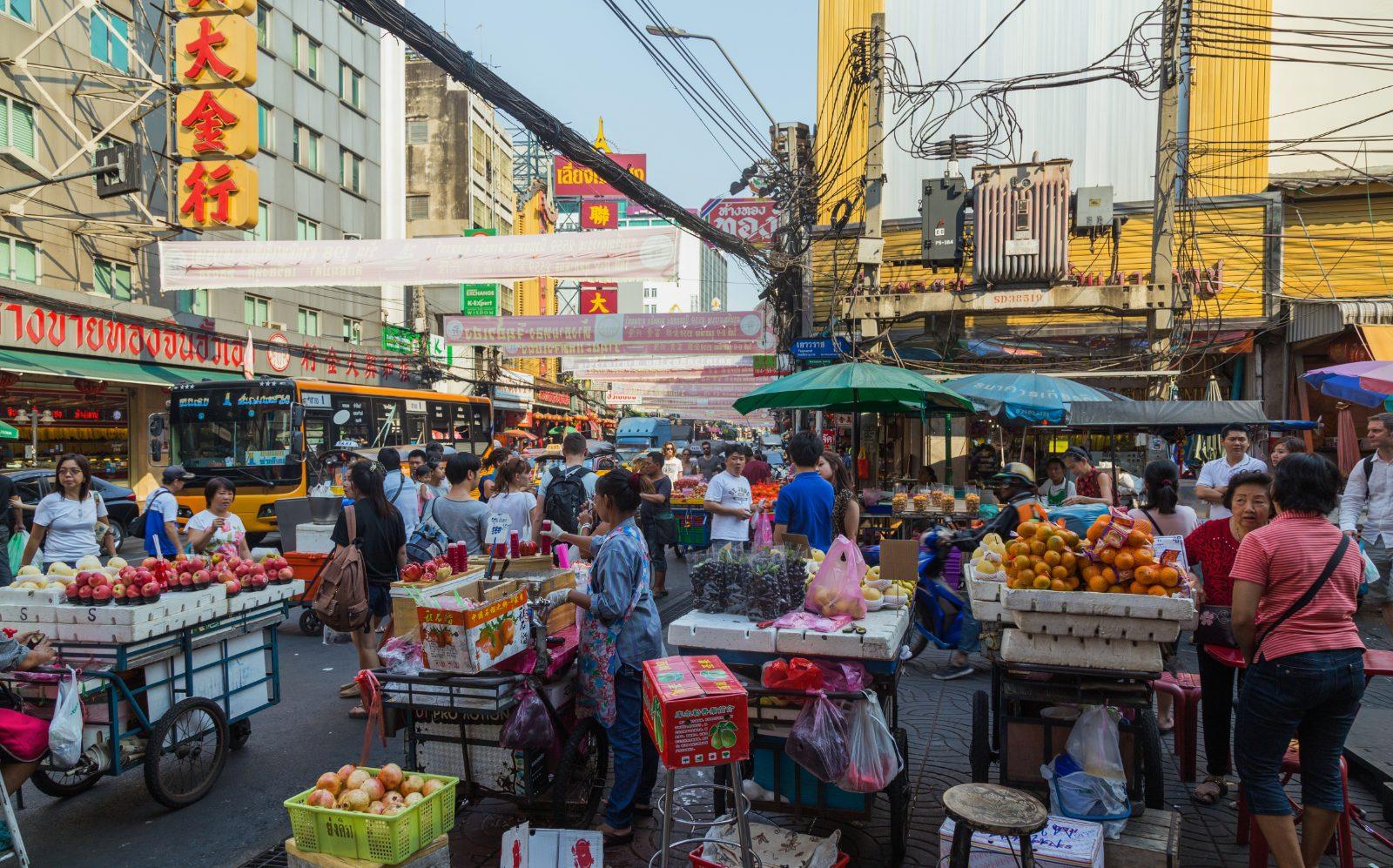
Yaowarat Road in Chinatown is the single best area to eat in Bangkok, blending Chinese and Thai food traditions along one long, chaotic strip that gets busiest after dark. Banthat Thong Road and Or Tor Kor Market are the other two areas worth building a meal around.
| Area | Best For | When To Go |
|---|---|---|
| Yaowarat (Chinatown) | The widest variety in one place: noodles, seafood, dim sum, dessert carts | After dark, when most stalls open and the street lights up |
| Banthat Thong Road | A more local, less touristy strip popular with students and regional visitors | Evening, weekdays are quieter than weekends |
| Or Tor Kor Market | A cleaner, market-hall format with high-quality fruit and prepared food | Daytime; pairs well with a Chatuchak Weekend Market visit next door |
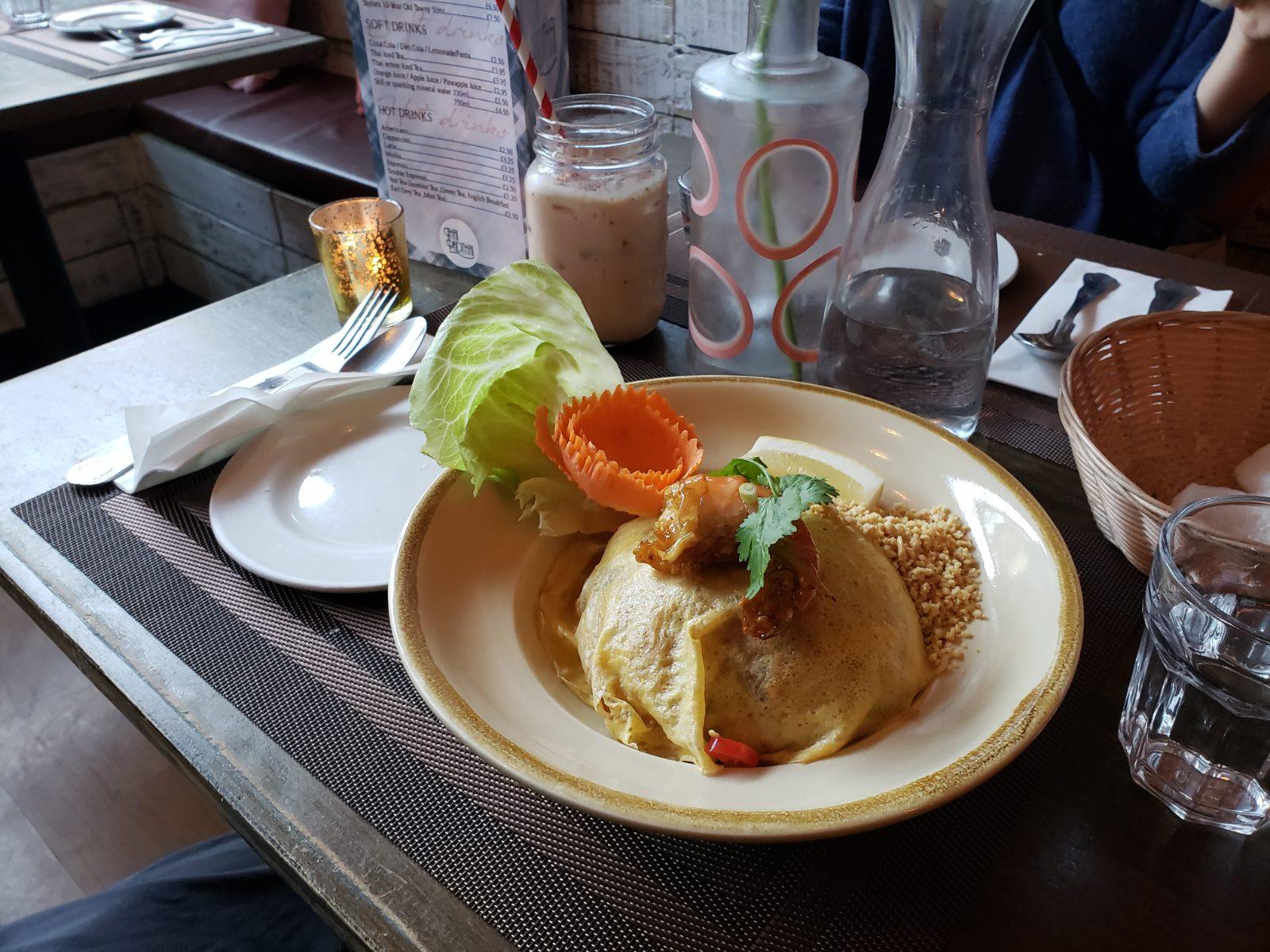
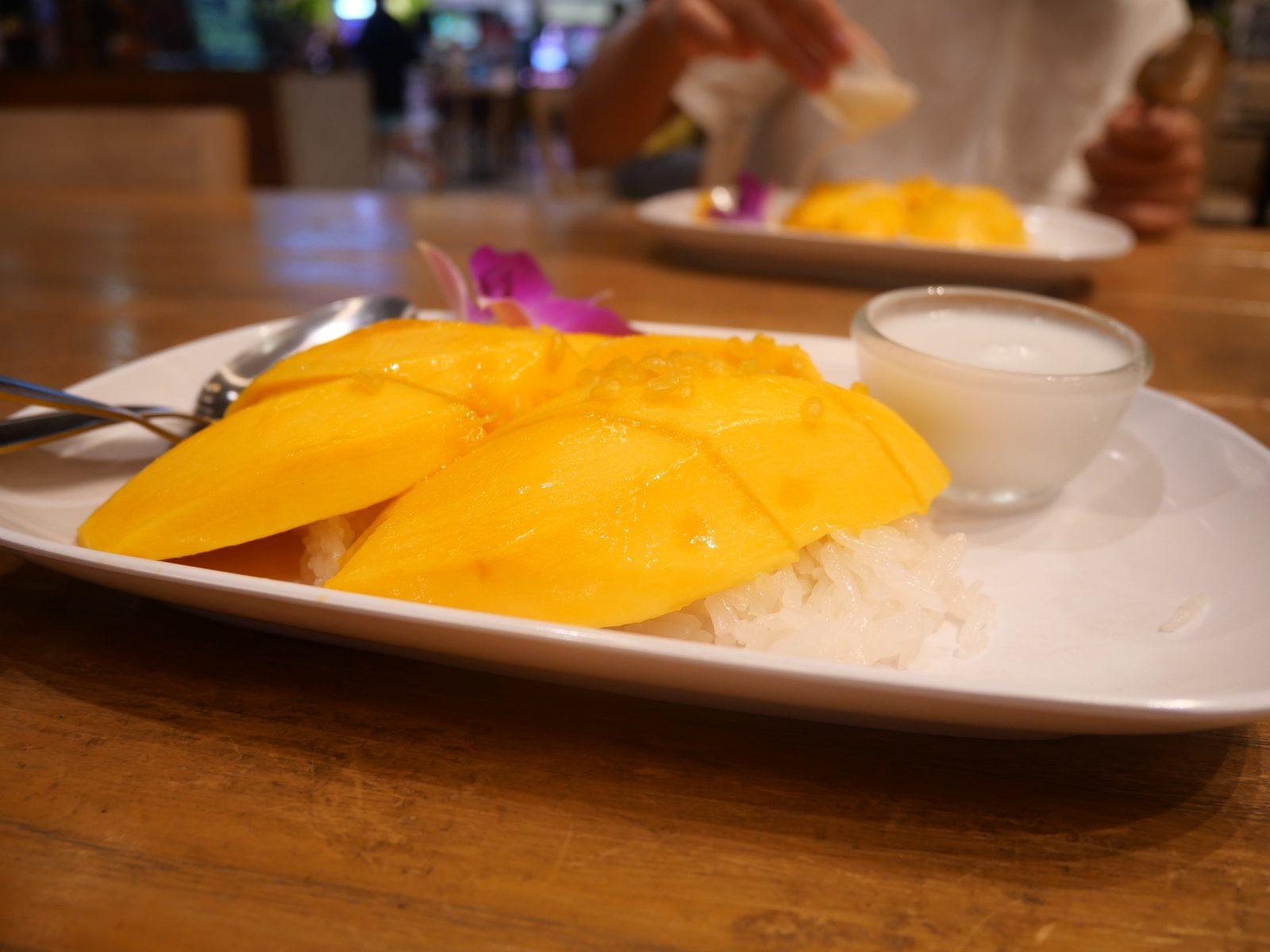
Pad Thai: Andy Li / CC0 · Mango Sticky Rice: Arthur Taksin / CC BY 4.0
Is Bangkok’s Michelin-Listed Street Food Worth Seeking Out?
Yes, if you are prepared to wait. Jay Fai, the crab omelette stall famous for its single Michelin star, and Thip Samai’s 24-hour Pad Thai are the two most talked-about names, and both come with genuine lines and prices noticeably higher than a normal street stall. Treat one Michelin-listed meal as a planned event rather than a spontaneous stop, and confirm current opening days and wait times before making a special trip, since both have changed their hours before.
Can You Eat Vegetarian or Vegan Food in Bangkok?
Yes, though it takes a little more effort than in a Western city. Many Thai dishes are built around fish sauce or shrimp paste even when they look vegetarian, so specify “no fish sauce” (mai sai nam pla) if you are strict about it. Dedicated vegetarian stalls are easiest to find during the annual Vegetarian Festival in October, marked citywide by yellow flags, but a growing number of Bangkok restaurants now carry plant-based menus year-round.
TTC Verdict: Eat confidently at busy street stalls in Yaowarat or Banthat Thong for most meals, and budget one sit-down splurge at a Michelin-listed stall like Jay Fai if you are willing to wait in line for it.
Generally yes, especially at stalls with a high, steady turnover of customers. Stick to food cooked fresh in front of you, avoid pre-cut fruit that has been sitting out, and drink bottled or filtered water rather than tap water.
Pad Thai is the dish most visitors associate with the city, though Thip Samai’s 24-hour version and Jay Fai’s Michelin-starred crab omelette are the two specific stalls that show up most often in recommendations.
A street-food meal typically runs 40–150 THB (roughly $1–$4 USD) per dish, while a Michelin-listed stall or a sit-down restaurant meal can run several times that.
One Comment