Satay Explained: Singapore’s Grilled Skewers With Peanut Sauce
Satay is skewered, charcoal-grilled meat marinated in a turmeric-based spice paste and served with a thick, crushed-peanut dipping sauce. In Singapore it is hawker food through and through — ordered by the stick, eaten outdoors, and most associated with institutions like Lau Pa Sat’s nightly Satay Street. It is a shared regional dish rather than a Singapore invention, and this guide covers where it really comes from, what is actually in it, and the one allergy warning every traveler needs before ordering.
What Is Satay, Exactly?
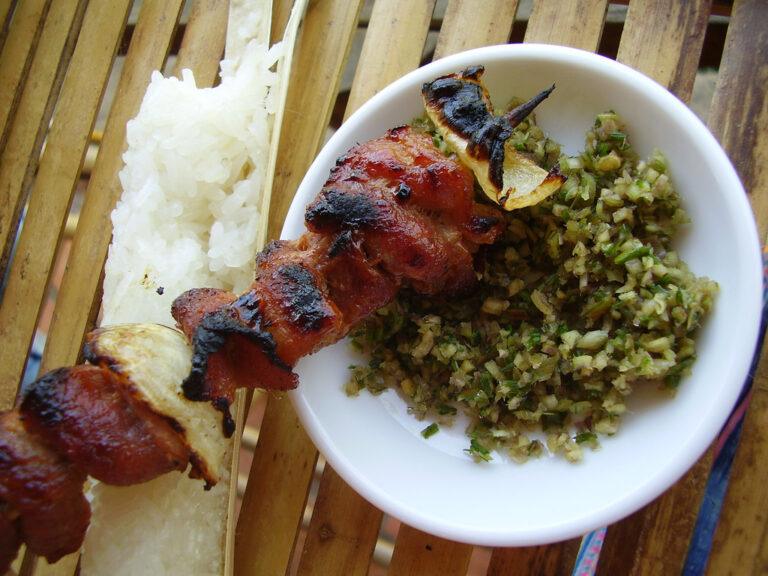
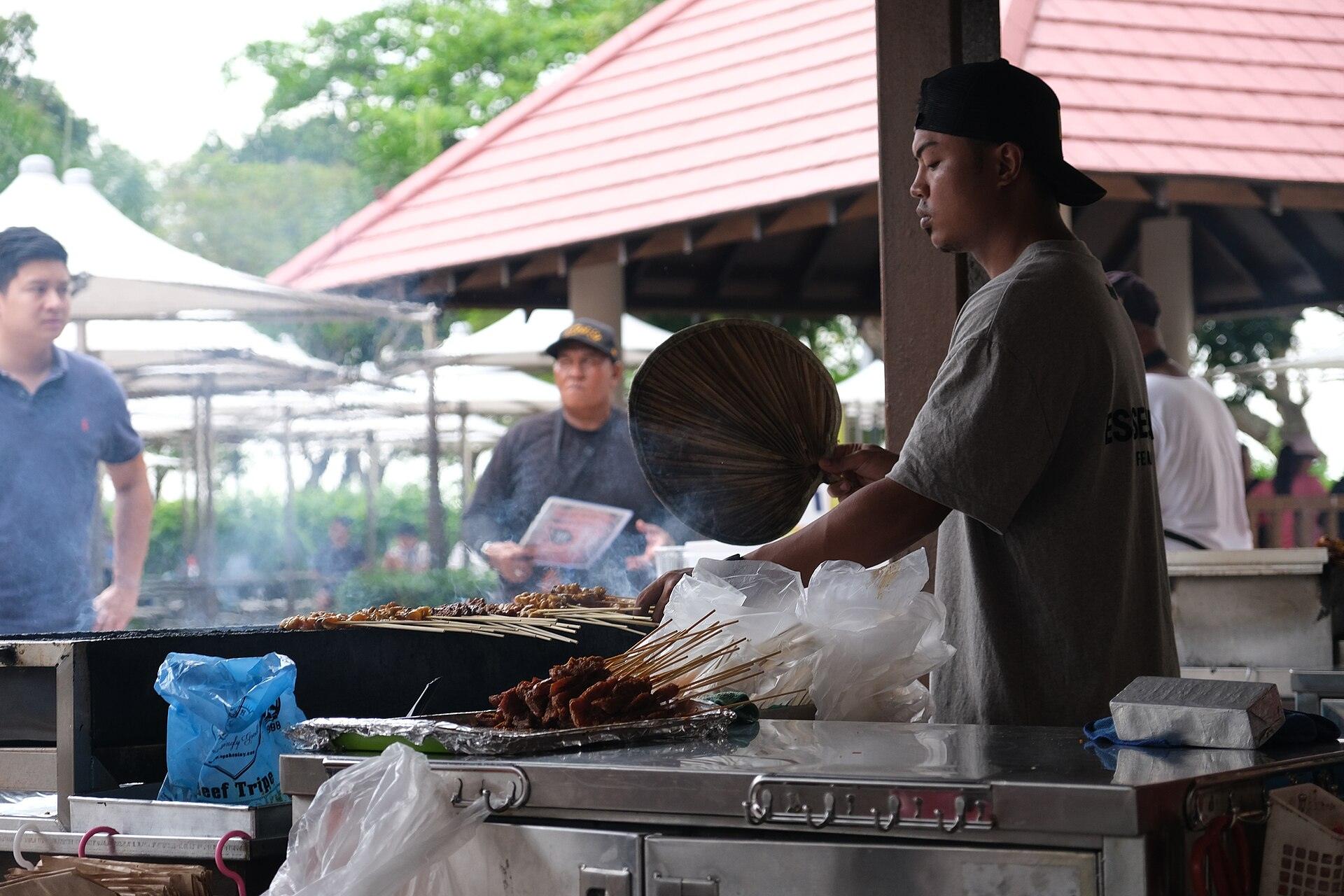
Satay is small pieces of meat threaded onto skewers, marinated, and grilled over charcoal — traditionally hand-fanned to keep the coals hot — then served with a peanut-based dipping sauce alongside compressed rice cakes, raw onion, and cucumber.
| Component | What It Is | Why It Matters |
|---|---|---|
| Meat | Chicken most common; beef and mutton standard; pork exists at a minority of Chinese-run stalls | Determines whether a stall is halal — see below |
| Marinade | Turmeric, lemongrass, galangal, coriander | Gives the meat its characteristic yellow color and aroma |
| Peanut sauce | Toasted, crushed (not smooth) peanuts with chili, palm sugar, galangal, and tamarind | The defining allergen — see the note below |
| Accompaniments | Ketupat (compressed rice cakes), raw onion, cucumber | Cuts the richness of the sauce |
Did Satay Originate in Singapore?
No single country invented satay, and this site will not claim otherwise. Most food historians trace its roots to the multicultural port towns of Java and Sumatra, shaped by Middle Eastern grilled-meat traditions carried by Arab and Indian Muslim traders and adapted locally over time. Singapore’s own National Heritage Board account is explicit about this: it credits satay to “the Javanese community that settled in Singapore in the early 19th century,” framing the dish as inherited rather than invented here. Malaysia’s well-known Kajang satay tradition is a specific regional style, not a competing origin claim. A popular but false etymology — that the word comes from a Hokkien phrase for “three pieces of meat” — has been debunked by linguists; the real root is Malay/Indonesian “satai,” ultimately from Tamil.
Satay itself carries no UNESCO recognition, specific or general. Only two broader, separate listings touch it in passing: UNESCO’s December 2020 inscription of “Hawker Culture in Singapore” (which names no specific dishes at all) and Singapore’s own national — not UNESCO — “Malay Cuisine in Singapore” heritage inventory listing from 2019. Treat any claim that satay itself is UNESCO-recognized as incorrect.
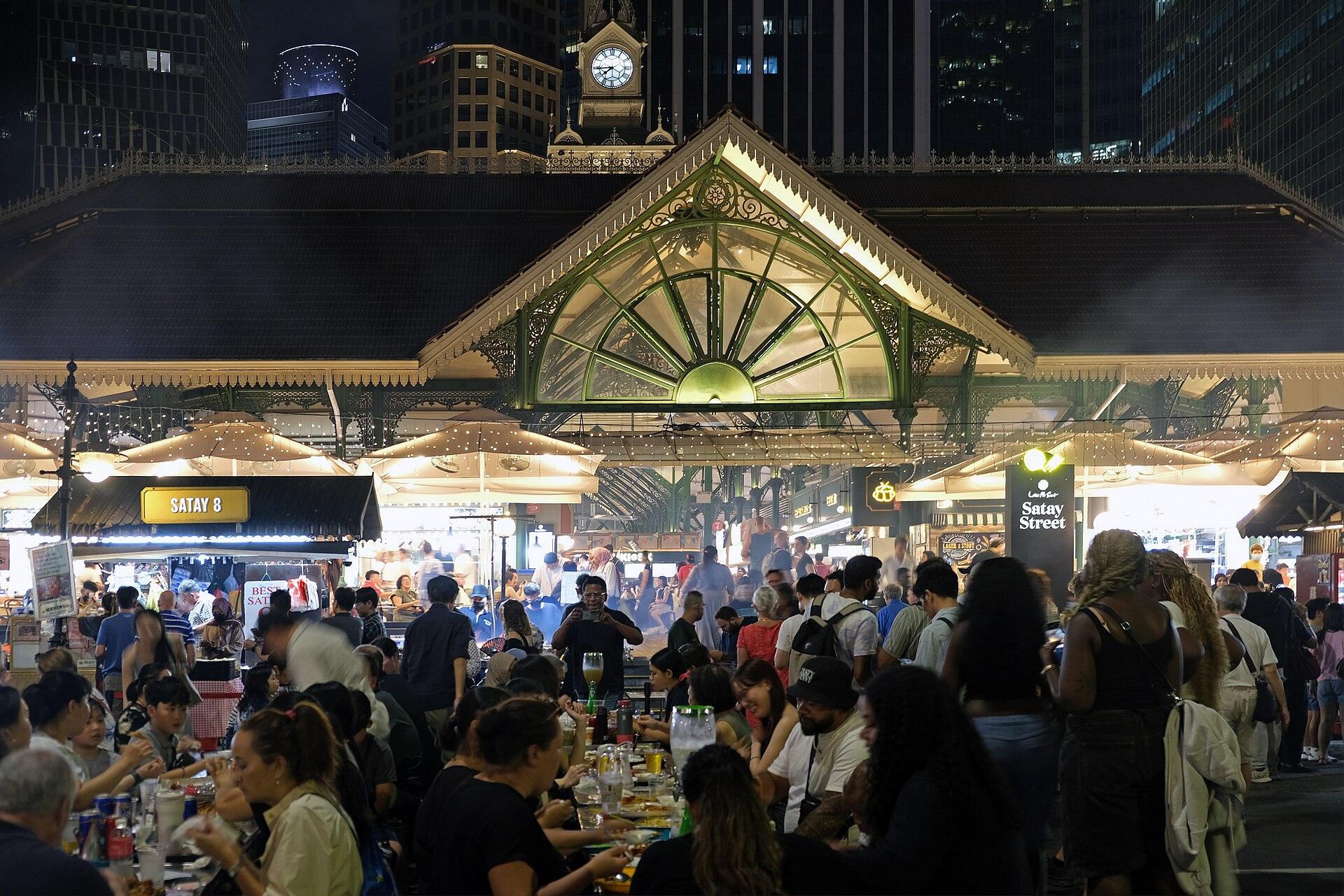
Satay Street, Lau Pa Sat: kallerna / CC BY-SA 4.0
Where Should You Eat Satay in Singapore?
Lau Pa Sat’s “Satay Street” is the city’s best-known satay destination: Boon Tat Street behind the historic market hall closes to traffic nightly from around 7pm, and roughly nine or ten outdoor hawkers set up tables and charcoal grills, a tradition running since 1996. A mixed platter for two typically runs S$30–40, and the stalls here serve no pork, making them a reliably halal-friendly option. Chomp Chomp Food Centre in Serangoon Gardens is the other well-known option, with satay as one of its signature offerings — it closed for routine NEA maintenance from late October 2025 through late January 2026, so check its current stall roster before making a special trip.
Is Satay Halal, and What About Pork Satay?
Satay is generally halal-friendly and closely tied to Singapore’s Malay and Muslim hawker tradition — the common meats (chicken, beef, mutton) line up with Muslim dietary norms, and most Satay Street stalls serve no pork at all. But a real, if minority, Chinese-Singaporean tradition does include pork satay at specific stalls (Kwong Satay in Geylang is a well-known example) — these are not halal, and a traveler should never assume a given stall is halal-certified just because satay is usually a Muslim-friendly dish. Check before you order if it matters to you.
Is Satay Michelin-Recognized?
Not currently, as far as this guide could confirm. A few Singapore satay stalls picked up the Michelin Guide’s lower-tier “Plate” distinction between 2017 and 2019, but none appears on the current (2025) Singapore Bib Gourmand list under a satay listing. Check current status directly on the Michelin Guide’s site before repeating any specific stall’s Michelin claim as current — unlike chicken rice or laksa, satay does not currently carry an active, well-documented Michelin distinction of its own.
TTC Verdict: Order a mixed plate of 10 chicken and mutton sticks at Lau Pa Sat’s Satay Street after 7pm for the classic outdoor experience. Skip it entirely if you have a peanut allergy, and never assume a stall is halal just because satay usually is.
Most food historians trace satay’s roots to Java and Sumatra in Indonesia, shaped by Arab and Indian Muslim trading communities, then adapted regionally across Malaysia and Singapore. Singapore’s own heritage board credits the dish to 19th-century Javanese settlers rather than claiming it as a local invention.
No. The dipping sauce is peanut-based by definition, and there is no standard peanut-free substitute at a typical hawker stall. Travelers with a serious peanut allergy should avoid satay entirely rather than assume a substitute is available.
No. While satay is generally halal-friendly and most stalls serve no pork, a minority of Chinese-Singaporean stalls do serve pork satay and are not halal. Always check at the specific stall rather than assuming.