Laksa Explained: Singapore’s Coconut Curry Noodle Soup
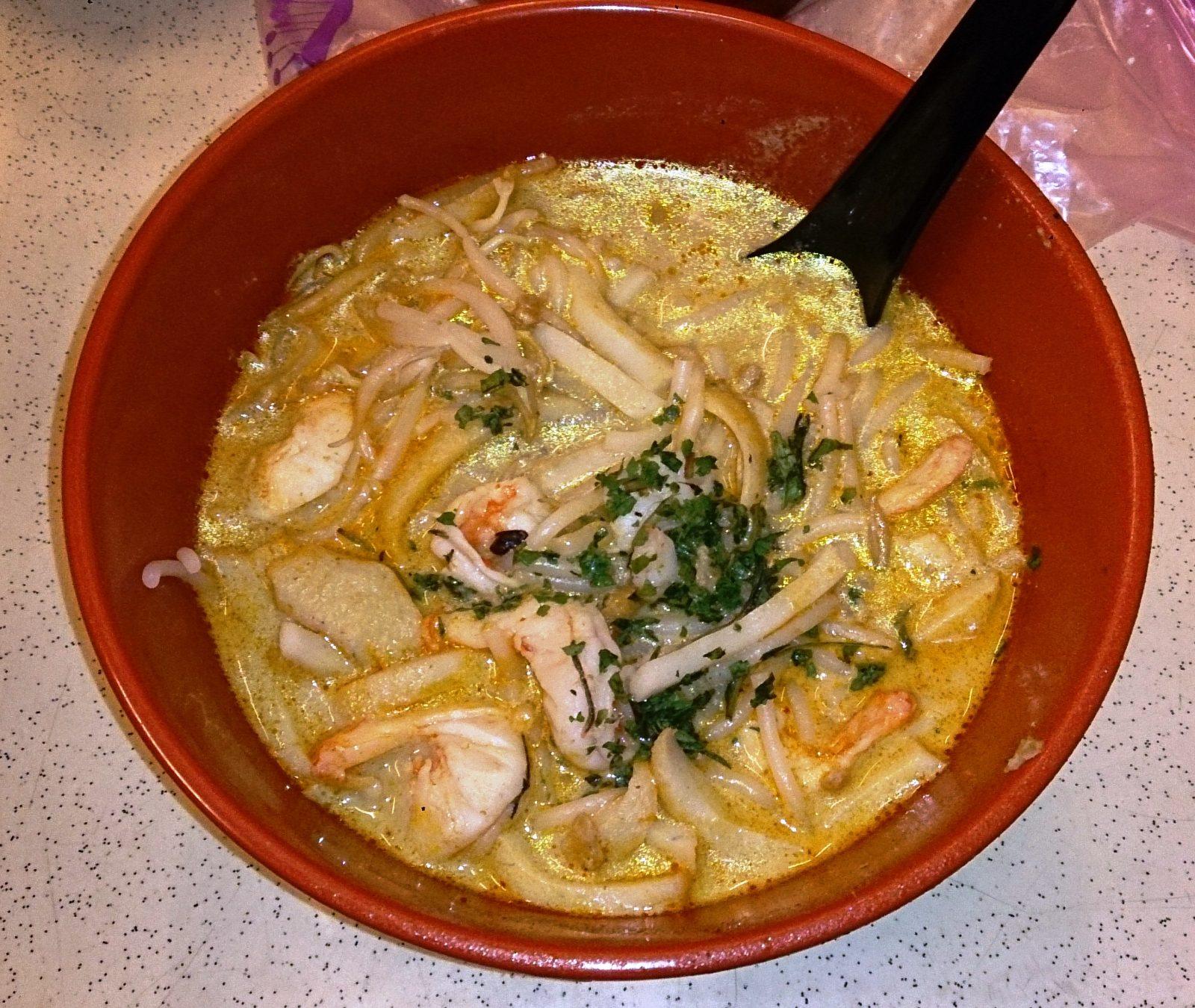
Singapore laksa, also called Katong laksa, is a coconut curry noodle soup built on a dried-shrimp and spice broth, short-cut rice vermicelli, cockles, prawns, and fried tofu puffs. It is a Peranakan (Straits Chinese) dish born from the intermarriage of Chinese immigrants and local Malay communities centuries ago, and it is traditionally eaten with a spoon alone, no chopsticks. “Laksa” is also an umbrella term for several genuinely different regional dishes, so this guide focuses specifically on the Singapore and Katong style.
What Is Singapore Laksa?
Singapore, or Katong, laksa is a rich coconut-milk curry soup made with a dried-shrimp and sambal (rempah) base, poured over rice vermicelli that is cut into short lengths so it can be eaten with a spoon alone. It is topped with cockles, prawns, fishcake, bean sprouts, fried tofu puffs (tau pok), and laksa leaf (daun kesum, also called Vietnamese mint). The “spoon-only” custom is a well-documented local tradition in Katong, though its exact origin story is not clearly recorded.
Laksa Is Not One Dish — Here Is How the Regional Styles Differ
“Laksa” covers several distinct noodle soups across Malaysia and Singapore that share a name but little else. Do not assume a laksa you had elsewhere will taste like the Singapore version.
| Style | Region | Broth Base | Noodles | Signature Trait |
|---|---|---|---|---|
| Singapore / Katong | Singapore | Coconut milk, dried shrimp, sambal | Rice vermicelli, cut short | Eaten with a spoon only, no chopsticks |
| Penang / Asam | Penang, Malaysia | Sour tamarind-based fish broth, no coconut milk | Thick rice noodles | Tangy and fish-forward, not creamy |
| Sarawak | Sarawak, Malaysia | Coconut-sambal broth with a distinct spice blend | Rice vermicelli | Often served with chicken shreds and omelet strips |
| Johor | Johor, Malaysia | Thick, spiced gravy | Spaghetti (yes, Italian-style noodles) | A 19th-century Peranakan royal-kitchen fusion dish |
Where Did Laksa Come From?
Laksa emerged from Peranakan, or Straits Chinese, culture around the 15th to 16th century in Malacca and the wider Straits Settlements, as Chinese immigrants intermarried with local Malay women and blended their cooking traditions. The name itself is genuinely disputed: some trace it to the Hindi or Sanskrit word for “many,” others to a Persian word for “slippery” that entered Malay, and others to a Cantonese phrase meaning “spicy sand,” referring to the ground dried shrimp in the broth. No single theory is settled, so treat laksa’s etymology as an open question rather than a fixed fact.
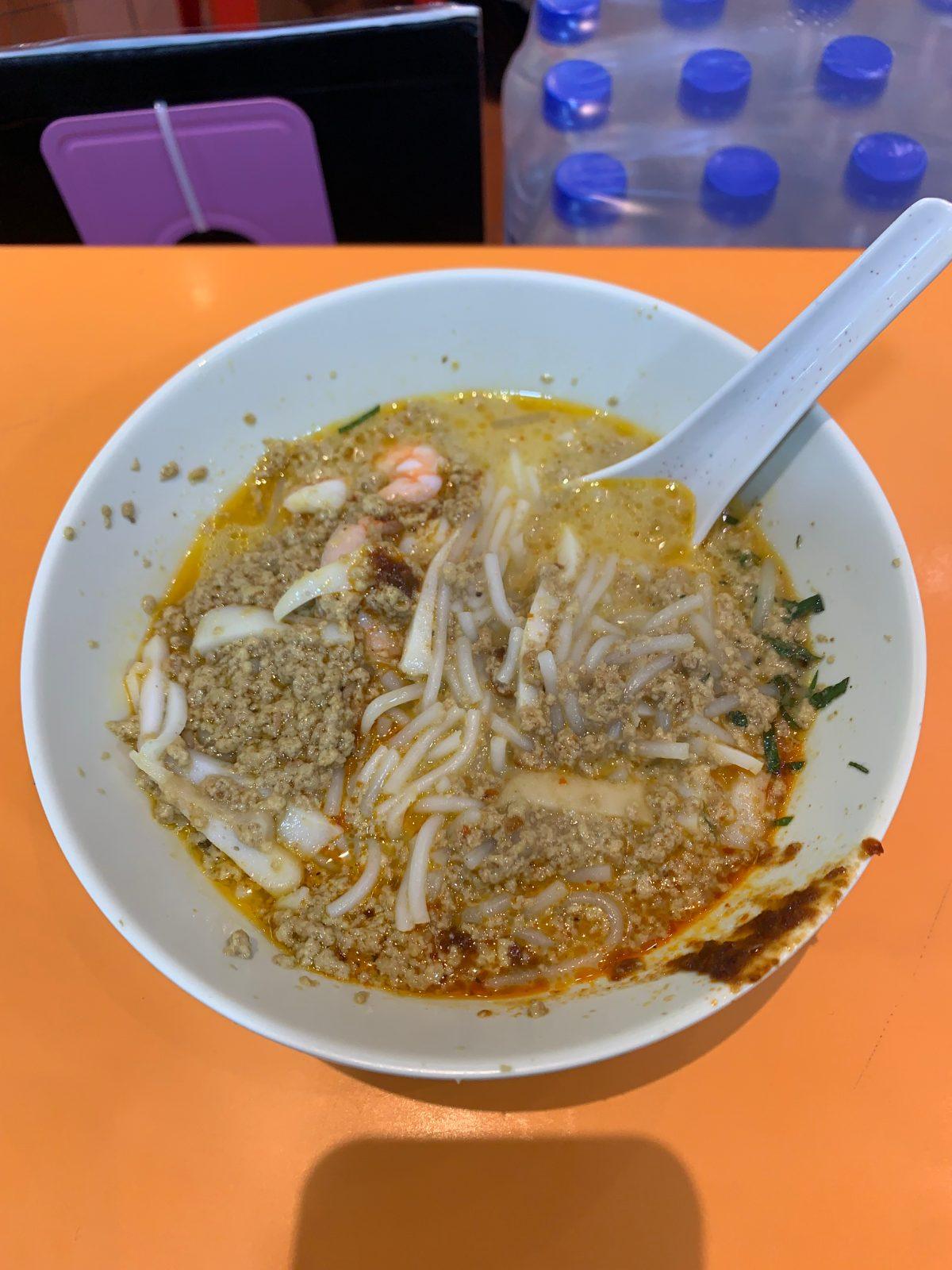
Janggut Laksa, Katong: Chainwit. / CC BY 4.0
The Katong Laksa Rivalry: 328, Famous, and Janggut
Katong is home to a long-running, good-natured rivalry among laksa stalls, several of which trace their lineage back to a single 1940s street-hawker family, often referred to by the nickname “Janggut” (Malay for “beard”). Stalls including 328 Katong Laksa, Famous Laksa, and Janggut Laksa all claim descent from that same original hawker, and the debate over whose bowl is the “true” original is a genuine local institution, not just marketing.
TTC Verdict: Order the Singapore or Katong style here, not a Penang laksa you remember from elsewhere — they are different dishes with the same name. 328 Katong Laksa and Sungei Road Laksa are two well-regarded places to start, though stall accolades change often enough that it is worth checking current reviews before you go.
Singapore (Katong) laksa is a creamy coconut-milk curry soup, while Penang (Asam) laksa is a sour, tamarind-based fish broth with no coconut milk at all. They share a name and noodle-soup format but are otherwise different dishes.
In Katong, laksa noodles are traditionally cut short specifically so the dish can be eaten with a spoon alone. It is a well-documented local custom, though the exact story behind why it started is not clearly recorded.
Yes — Singapore laksa is typically topped with cockles and prawns, and these are considered core ingredients rather than optional add-ons, so travelers with shellfish allergies should ask before ordering.