Hainanese Chicken Rice Explained: Singapore’s National Dish
Hainanese chicken rice is Singapore’s most iconic everyday dish: poached chicken served over rice cooked in the bird’s own fat and stock, plated with chili-ginger sauce, dark soy, and sliced cucumber. It traces its roots to Hainanese immigrants who adapted a dish from Hainan Island, and today it is sold everywhere from S$3.50 hawker stalls to Michelin-recognized counters.
What Is Hainanese Chicken Rice?
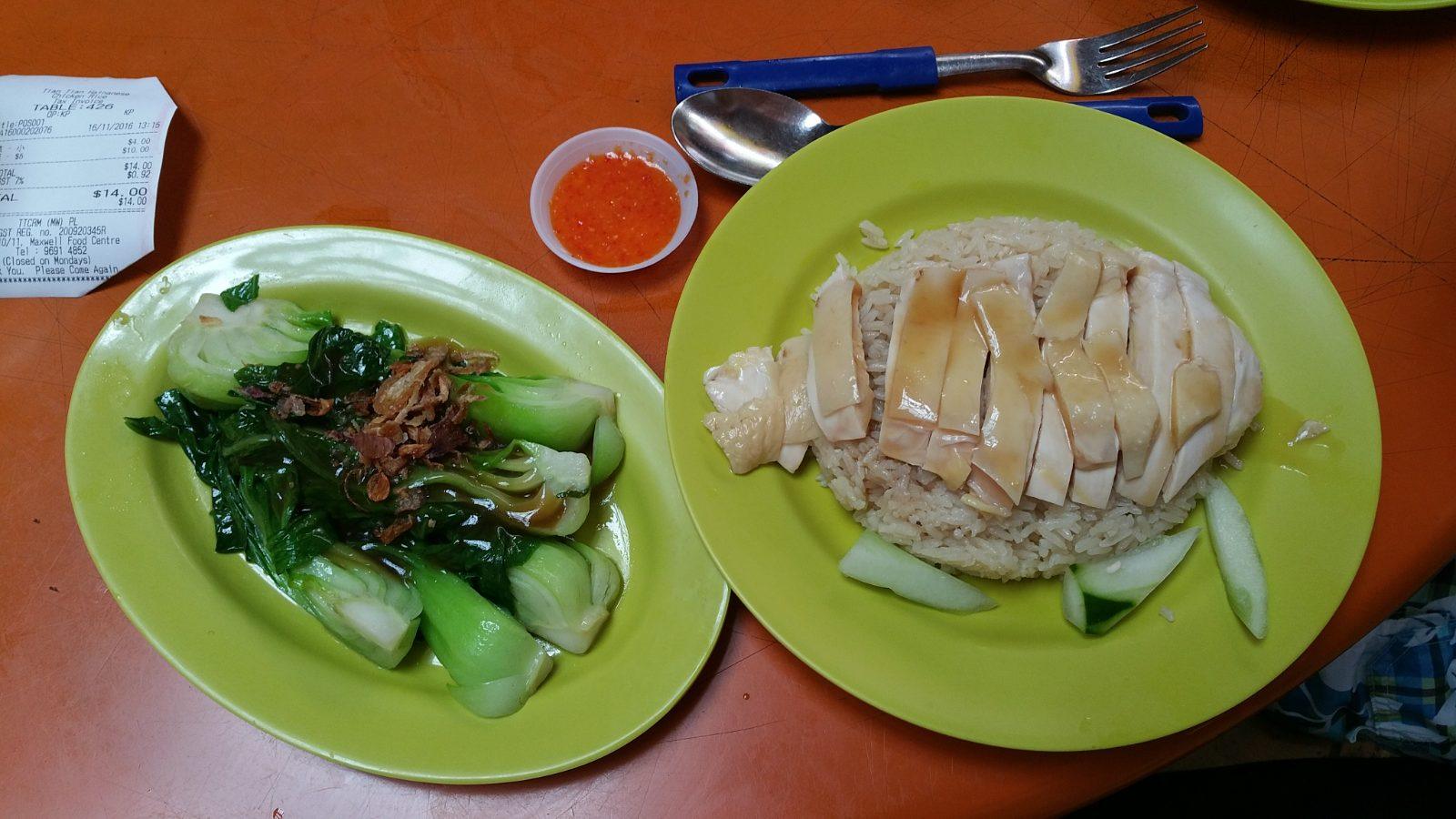
Hainanese chicken rice is a plate of whole poached chicken, rice cooked in chicken fat and aromatics, and a trio of condiments: chili-ginger sauce, dark soy sauce, and sliced cucumber. The rice, often called “oil rice,” is cooked with chicken fat, ginger, garlic, and pandan, and many Singaporeans consider it the real star of the dish, not the chicken itself.
Most stalls sell two versions side by side: a “white” or poached chicken, which is the original Hainanese style, and a roasted or soy-marinated version that reflects later Cantonese influence layered onto the Hainanese base.
Where Did Hainanese Chicken Rice Come From?
The dish descends from Wenchang chicken, a poached-chicken specialty from Hainan Island in southern China. Hainanese immigrants brought the technique to Singapore and Malaysia, where it was adapted using local ingredients and eventually became a hawker-stall staple. Sources differ on exactly when it arrived, placing it anywhere from the 19th century to the early 20th century, but its popularization as a named hawker dish is generally dated to the 1940s and 1950s, with early stalls like Swee Kee (1947–1997) and Yet Con credited with shaping the version Singaporeans eat today.
| Style | How It Is Made | Flavor Profile | Best For |
|---|---|---|---|
| White (Poached) | Whole chicken gently poached in stock, then plunged in an ice bath for taut, silky skin | Delicate, clean, savory | Purists and first-timers — the original Hainanese style |
| Roasted / Soy Sauce | Chicken roasted or marinated in dark soy after poaching | Richer, saltier, slightly smoky | Travelers who want a bolder, more familiar flavor |
How Is Hainanese Chicken Rice Made?
The chicken is poached whole, not fried or roasted, in a simmering pot of stock infused with ginger and spring onion, then immediately plunged into an ice bath. That ice-bath shock is what gives the skin its signature taut, jelly-like texture. The poaching liquid and reserved chicken fat then go into the rice pot along with ginger, garlic, and pandan leaf, so every grain of rice carries the flavor of the chicken itself.
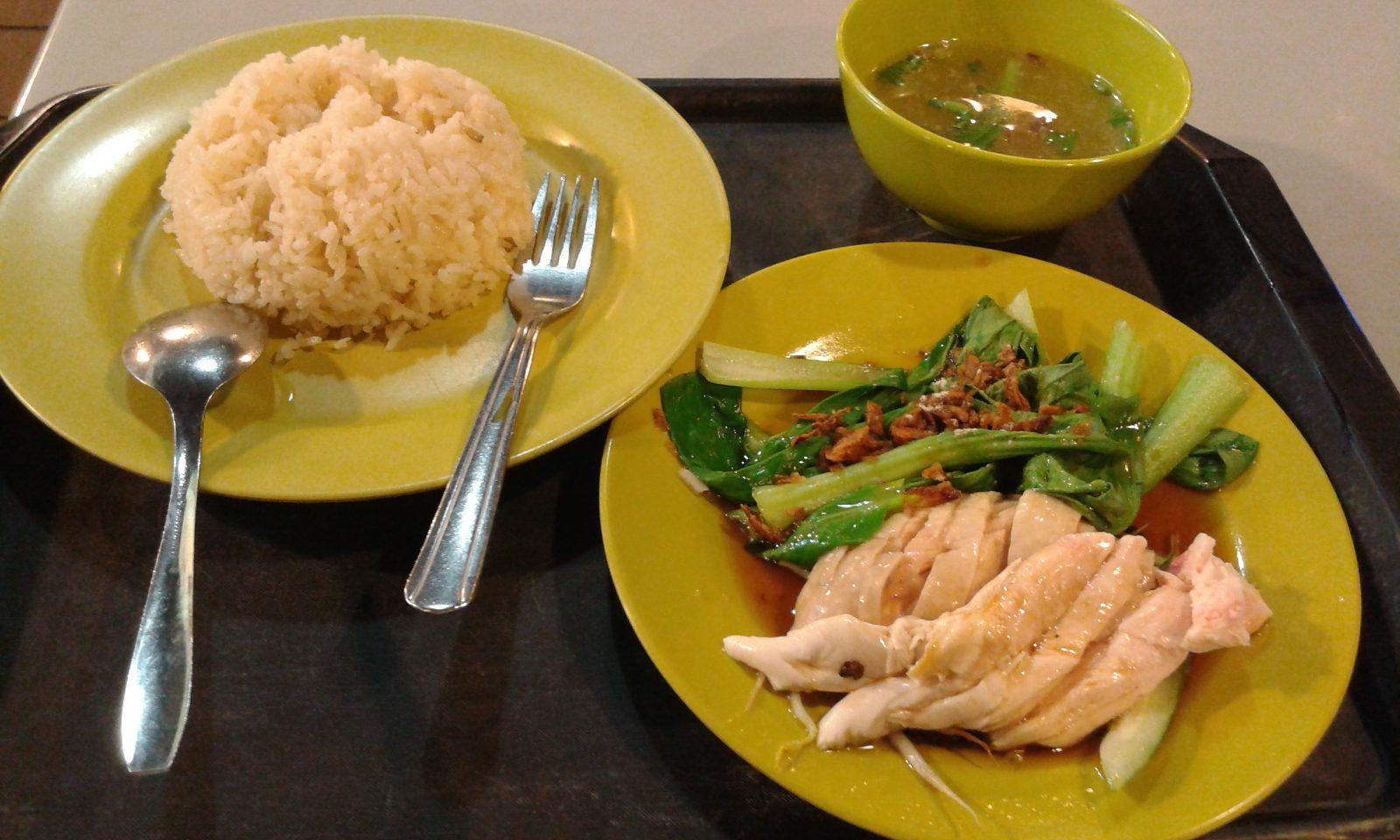
Hainanese chicken rice: Pauloleong2002 / CC BY-SA 4.0
Is Hainanese Chicken Rice Singaporean or Malaysian?
Both countries claim the dish, and it has sparked genuine, if good-natured, back-and-forth over the years — most notably in 2009, when a Malaysian tourism minister publicly called chicken rice “uniquely Malaysian” and said Singapore had “hijacked” it. In practice, the dish evolved along closely related lines in both countries after Hainanese immigrants settled across the region, so it is best understood as a shared Peranakan-era heritage dish rather than one with a single national owner.
One distinction worth knowing: Singapore’s broader hawker culture, not chicken rice specifically, was inscribed on UNESCO’s Intangible Cultural Heritage list in 2020. Chicken rice itself holds its own, separate heritage recognition from Singapore’s National Heritage Board, added to its intangible cultural heritage inventory in 2019.
Where Should You Try Hainanese Chicken Rice in Singapore?
Tian Tian Hainanese Chicken Rice at Maxwell Food Centre is the safest first stop: it has held a Michelin Bib Gourmand and been operating since 1987, though it is cash-only and closed on Mondays, so plan accordingly. Liao Fan Hawker Chan made headlines in 2016 as the first hawker stall anywhere to win a Michelin star, though its star status has changed since, so treat any “currently Michelin-starred” claim with caution and check the latest guide before making a special trip.
TTC Verdict: Start with Tian Tian at Maxwell Food Centre for the benchmark version, then branch out — the “best” stall is genuinely contested among locals, and that debate is half the fun of eating your way through it.
Yes, in origin. It descends from Wenchang chicken, a poached-chicken dish from Hainan Island in China, which Hainanese immigrants adapted after settling in Singapore and Malaysia in the 19th and early 20th centuries.
A hawker-stall plate typically runs about S$3.50 to S$5.50, though prices vary by stall and portion size, so treat this as a general guide rather than a fixed price.
Halal status varies by stall — look for certification signage rather than assuming. The dish’s dark soy sauce contains soy and gluten, and there is no standardized hawker allergen-labeling system in Singapore, so it is best to ask the stall directly if you have a food allergy.