Ban Gioc Waterfall & Nguom Ngao Cave: Complete Guide
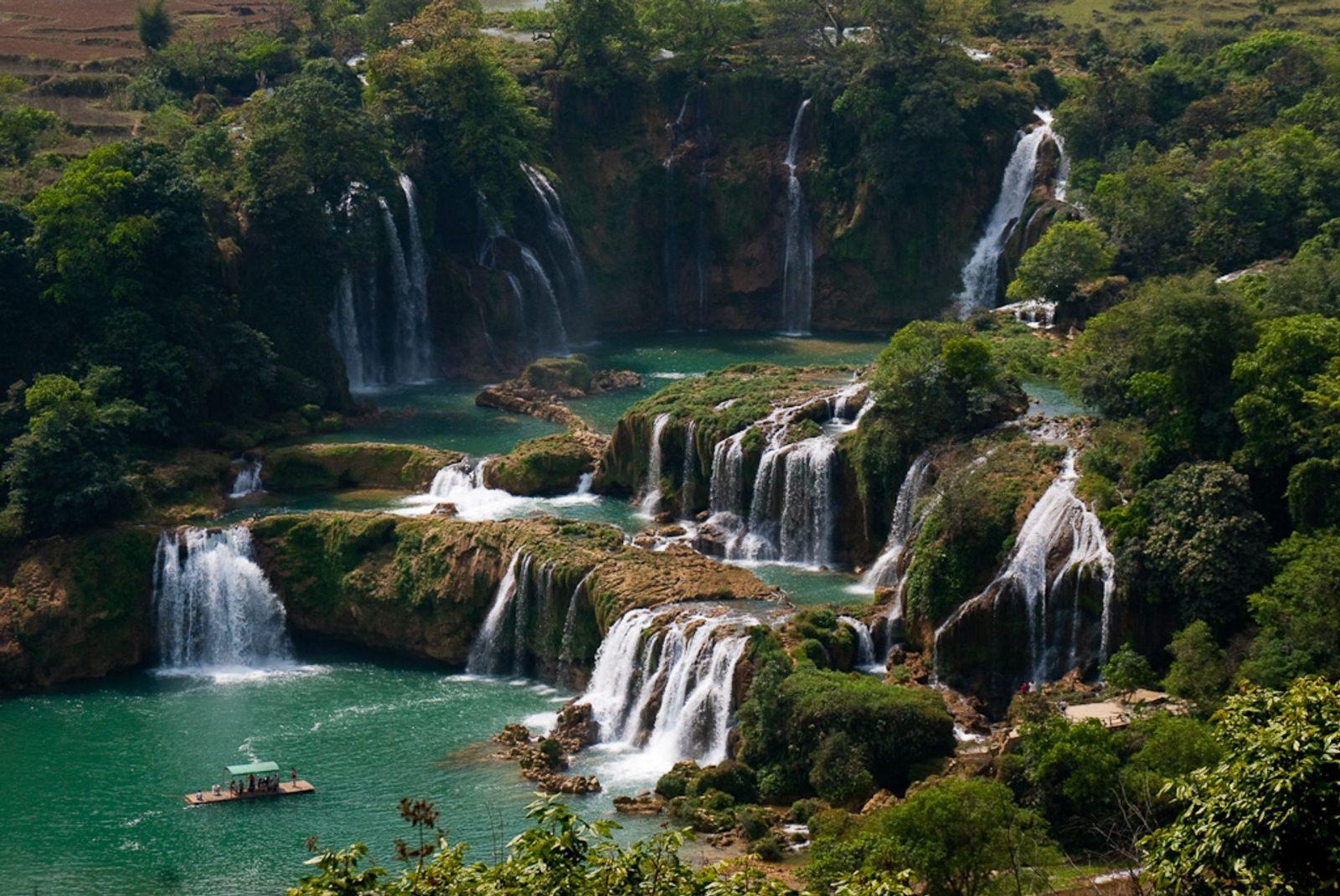
Ban Gioc Waterfall is a wide, multi-tiered waterfall on the Quay Son River that forms part of the natural border between Vietnam and China, and it is one of the largest transnational waterfalls in the world. Nguom Ngao Cave sits just a few kilometers away and is almost always visited on the same day. This guide covers hours, fees, what each site actually involves, and the one thing most first-time visitors get wrong: assuming they can just show up without sorting a border-area permit first.
What Should You Know Before Visiting Ban Gioc Waterfall?
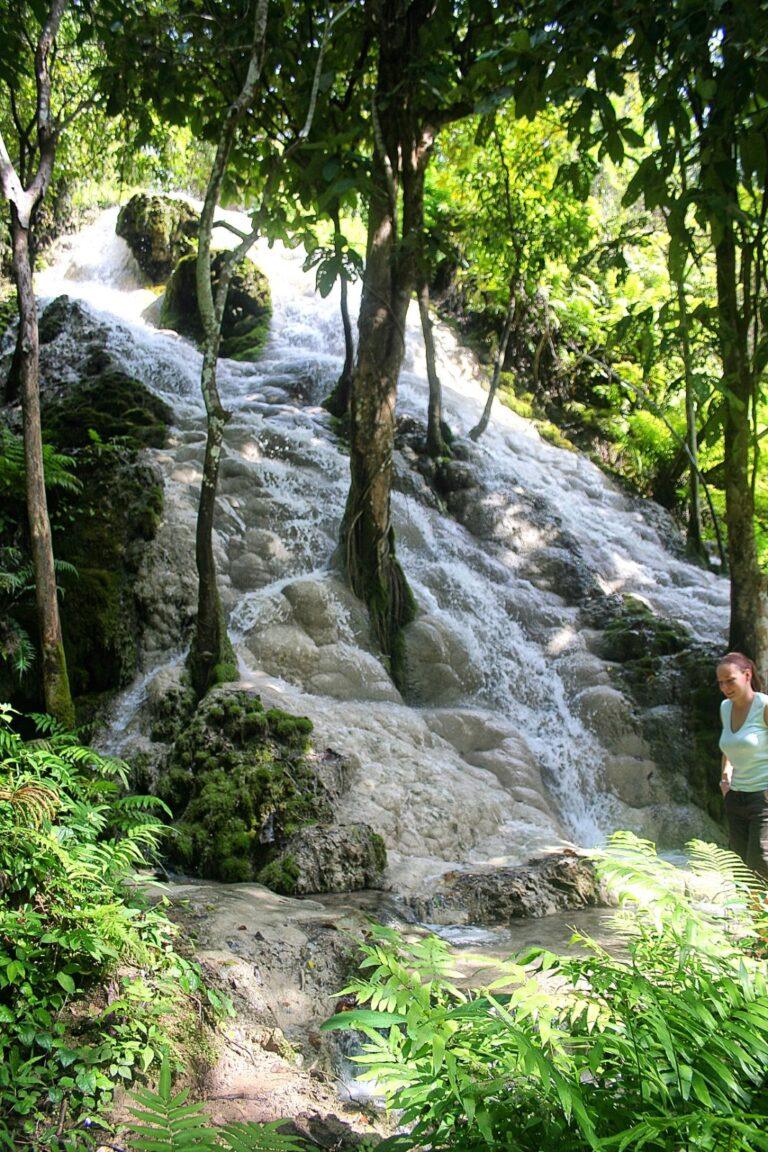
Ban Gioc Waterfall is open daily from 7:30am to 5:00pm, with entry costing around 45,000 VND (about $2 USD), payable in cash — there are no ATMs nearby, so bring enough cash for the day. Once inside, an optional bamboo raft ride (about 50,000 VND, roughly 10 minutes) takes you close enough to the base of the falls to get wet from the spray, right along the stretch of river that marks the border with China. The falls sit in Trung Khanh District, and the water is genuinely a shared, transboundary feature: Vietnam and China each have their own viewing area and their own name for it, which is worth knowing before you search for photos online (see the Ban Gioc vs Detian section below).
| Season | Water Flow | Water Color | Verdict |
|---|---|---|---|
| May-September (rainy season) | Highest | Often muddy early in the season | Dramatic but less photogenic in June-July |
| August-October | Strong | Clear, blue-green | The recommended window — best of both |
| November-January | Moderate, declining | Clearer | Still worthwhile, thinner flow |
| February-April (dry season) | Weak | Clear but a trickle by comparison | Skip if the waterfall is your priority |
What Is Inside Nguom Ngao Cave?
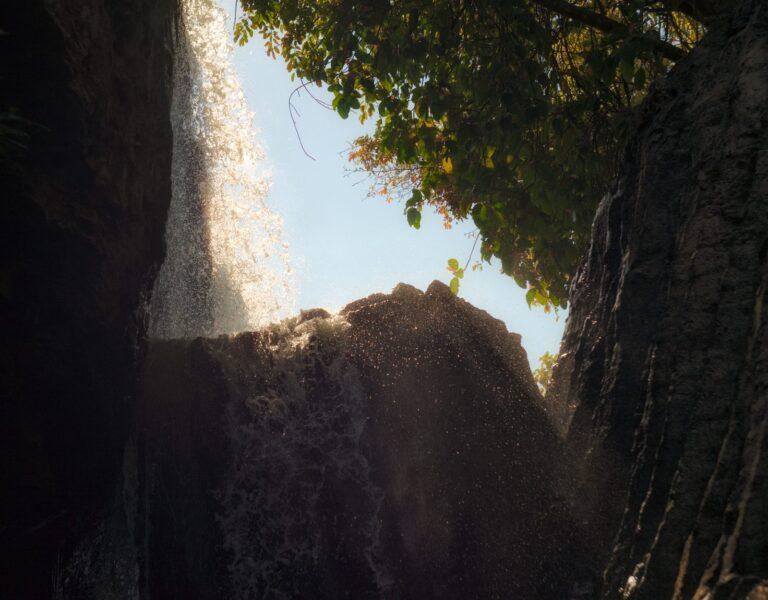
Nguom Ngao Cave is roughly 5km from Ban Gioc Waterfall (some sources put it as close as 3km) and is almost always paired with it as a single day out. Entry runs 30,000-45,000 VND, with the same 7:30am-5:00pm hours as the waterfall. Inside, a well-maintained 1-kilometer walking path winds through illuminated limestone chambers formed by slow mineral erosion over a very long, geologically-estimated timeframe — the cave does not publish a precise age, so treat any specific number you see elsewhere with some skepticism. English-speaking guides are available and worth arranging a day ahead if you want more than a self-guided walk-through.
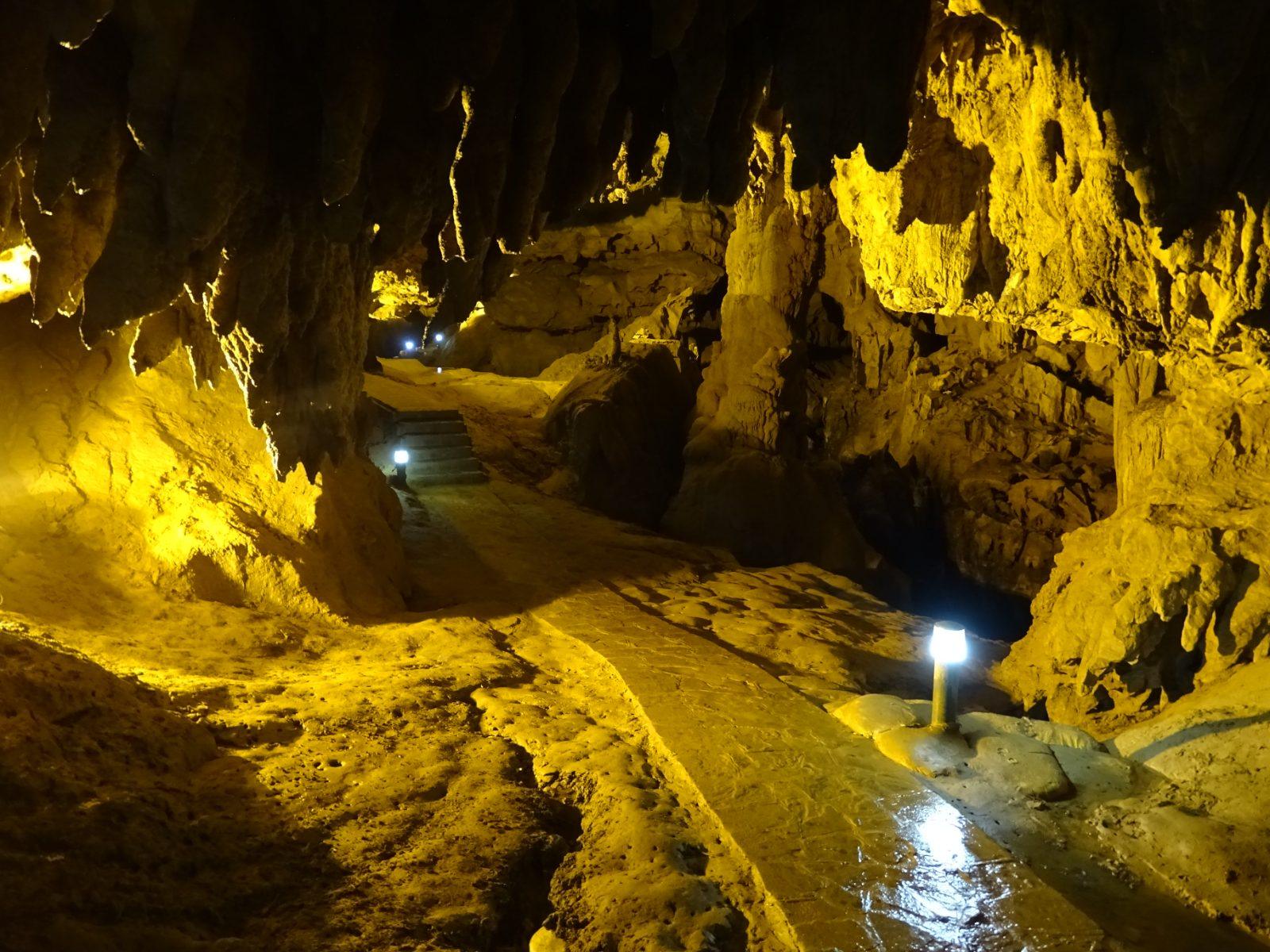
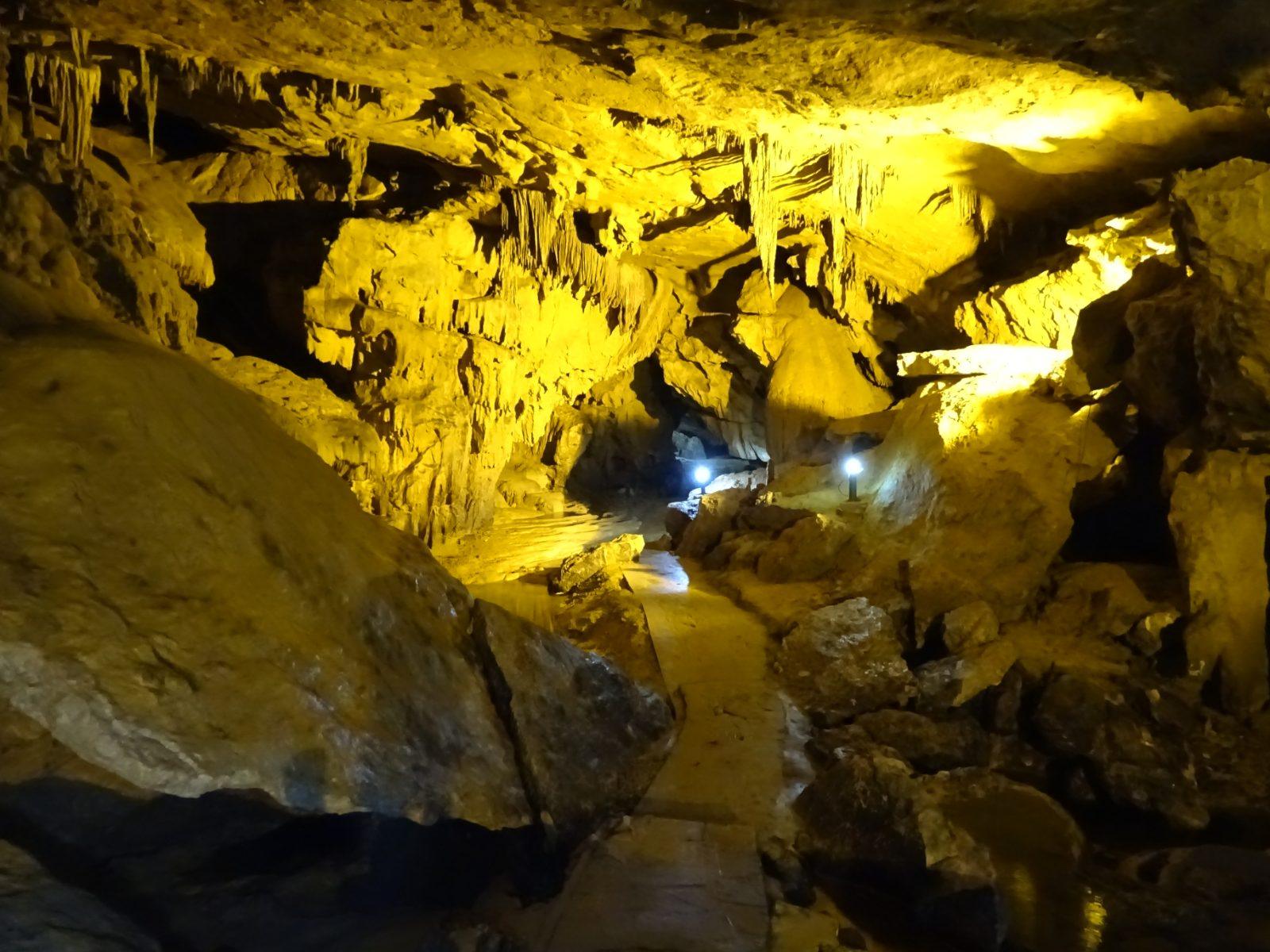
Nguom Ngao Cave: Adam Jones / CC BY-SA 2.0 · Nguom Ngao Cave: Adam Jones / CC BY-SA 2.0
Ban Gioc vs Detian: Vietnamese Side or Chinese Side?
Ban Gioc and Detian Falls are the same waterfall system viewed from opposite riverbanks — Vietnam calls it Ban Gioc, China calls it Detian, and each country has built its own viewing infrastructure on its own side of the Quay Son River. From the Vietnamese side, you get a closer, more intimate view and the option of the bamboo raft ride toward the base; the Chinese side, reached separately through China’s own entry requirements, offers broader panoramic viewpoints and a larger tourism complex. For a typical trip based in Cao Bang, the Vietnamese side is the only practical option — crossing to the Chinese viewpoint requires a separate Chinese visa and border crossing, not a same-day add-on.
TTC Verdict: Visit Ban Gioc and Nguom Ngao together as a single full day, ideally August through October when the falls are running strong and clear. Skip the Chinese-side viewpoint unless you already have a China visa and are building a separate cross-border leg into your trip — for a standard Vietnam itinerary, the Vietnamese side gives you the better, closer experience anyway.
Getting There and the Border Permit
Ban Gioc sits in a designated border area, which means foreign travelers need a Cao Bang border-area permit to enter — see our Cao Bang travel guide for the full permit process, cost, and timeline. The short version: guided tours handle this for you, independent travelers need to apply a few days ahead, and checkpoints near the falls do check for it.
If you would rather not deal with permit paperwork or transport logistics yourself, this Ban Gioc Waterfall day tour by motorbike or car departing from Cao Bang city covers both Ban Gioc and Nguom Ngao Cave in a single roughly 10-hour day with a local guide who handles the border logistics as part of the booking.
Entry to Ban Gioc Waterfall is around 45,000 VND (about $2 USD), payable in cash. The optional bamboo raft ride toward the base of the falls costs roughly an additional 50,000 VND. Nguom Ngao Cave, usually visited the same day, charges a separate entry of 30,000-45,000 VND.
Yes, but only with a separate China visa and border crossing — the Chinese side of the same waterfall is called Detian Falls and is not a same-day add-on to a Vietnam-based visit. For most travelers on a Vietnam itinerary, the Vietnamese side is the practical and recommended option.
They sit close together — estimates range from roughly 3 to 5 kilometers apart depending on the source — and are almost always visited as a single full-day trip, whether self-driven or on a guided tour.