Thailand Money Guide: ATMs, Cash vs Card, and Tipping
Thailand runs on cash more than most US, Canadian, or Australian travelers expect — street food, markets, tuk-tuks, and many small guesthouses are cash-only, while hotels, malls, and larger restaurants accept cards. Bring a debit card with low or no foreign transaction fees for ATM withdrawals, and carry enough small baht notes for daily cash purchases, since few vendors can break a 1,000-baht note.
Should You Use Cash or Card in Thailand?
Use cash for street food, markets, tuk-tuks, songthaews, and smaller family-run guesthouses or restaurants — these rarely take cards. Use a card for hotels, malls, chain restaurants, and larger tours, where card payment is standard and often preferred. Most travelers end up carrying both and switching based on where they are.
| Payment Method | Works Well For | Typical Fee | Note |
|---|---|---|---|
| Cash (THB) | Street food, markets, tuk-tuks, small guesthouses | ATM withdrawal fee only | Keep a mix of small notes (20–100 THB) — vendors often cannot break 1,000 THB |
| Debit card at ATM | Withdrawing cash as you go | ~220 THB per withdrawal plus your bank’s foreign transaction fee | Look for a debit card with no foreign transaction fee before you travel |
| Credit card | Hotels, malls, larger restaurants, tours | Usually no extra fee from Thai merchants | Convenient and often required as a deposit hold at hotels |
| Currency exchange counters | Converting cash on arrival | Variable, often worse rates than ATMs | Airport counters tend to have the worst rates — withdraw from an ATM instead if possible |

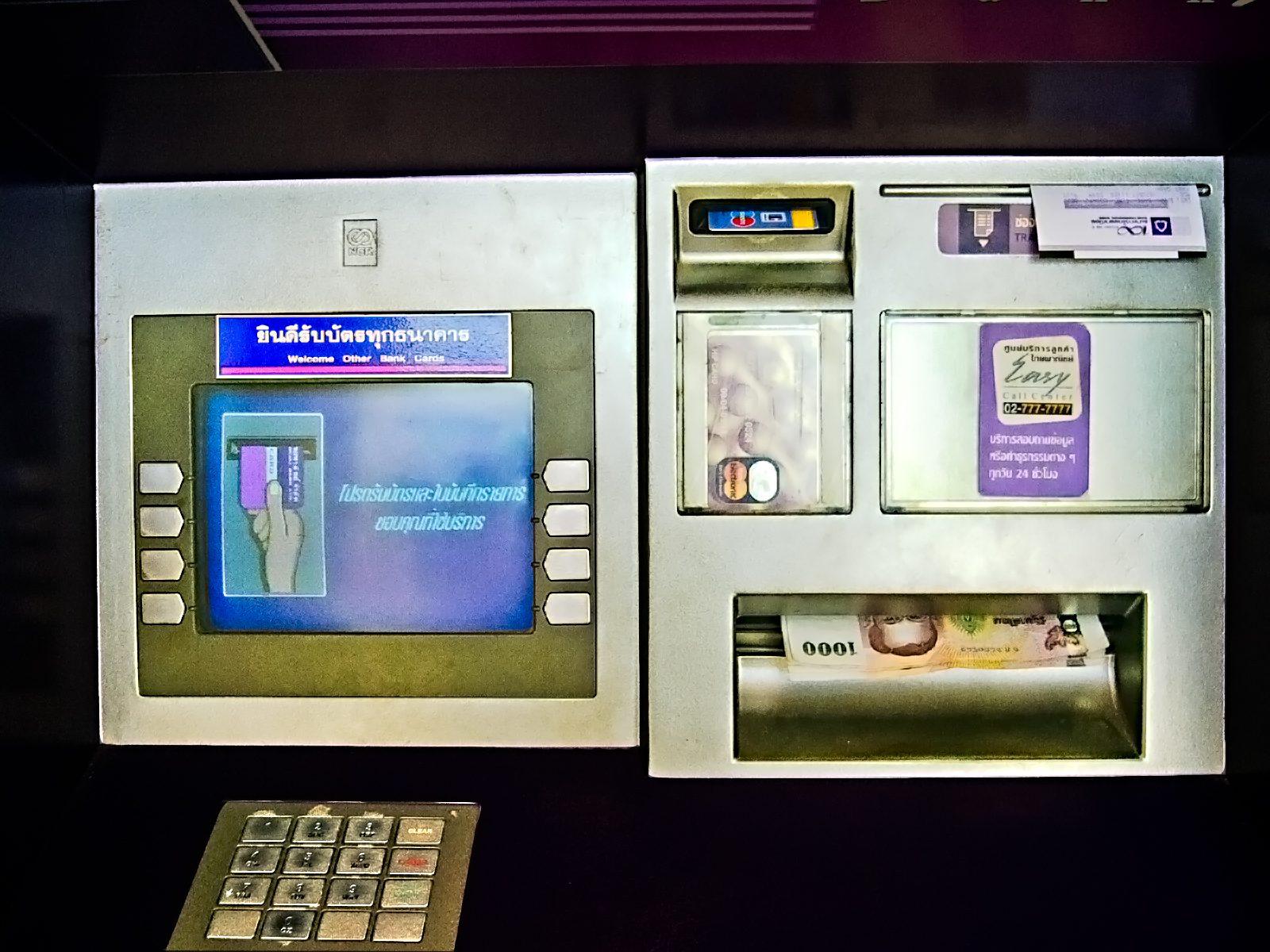
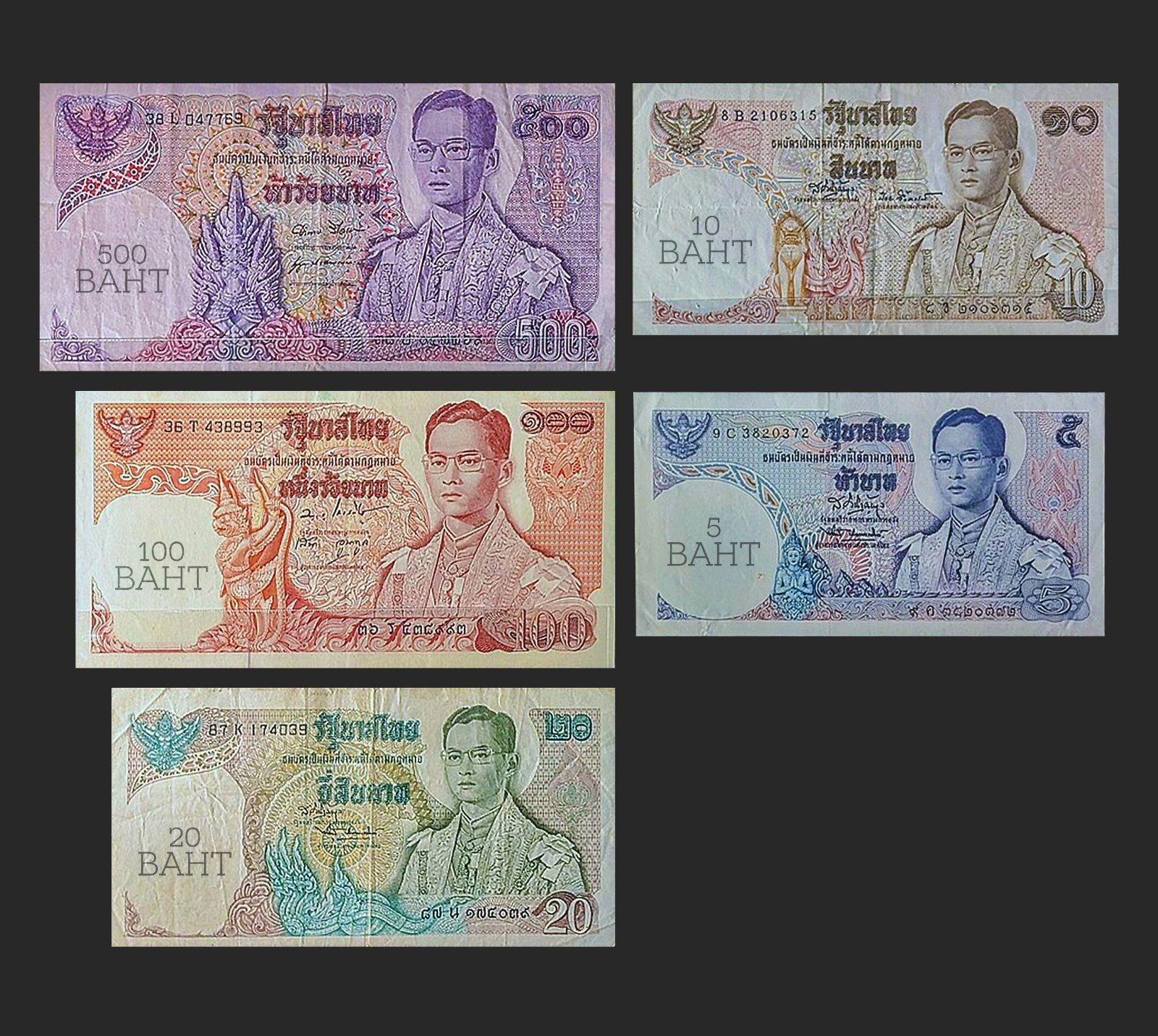
Thai baht banknotes: Bank of Thailand / CC BY-SA 4.0 · ATM in Thailand: Wikimedia Commons, public domain
TTC Verdict: Withdraw from ATMs rather than exchanging cash at airport counters — airport exchange rates are consistently among the worst in the country, while a debit card with low foreign fees at a standard bank ATM usually comes out ahead even after the per-withdrawal charge.
Is Tipping Expected in Thailand?
Tipping is not deeply embedded in Thai culture the way it is in the US, but it has become increasingly common in tourist-facing restaurants, hotels, and tours. Rounding up a restaurant bill or leaving small change is appreciated but not obligatory; for tour guides and drivers who go out of their way, a modest tip (roughly 100–200 THB per day ) is a common and welcome gesture.
A Wise multi-currency card is worth setting up before you go — it lets you hold and spend Thai baht at the real interbank rate, which sidesteps both the ATM withdrawal fee and most foreign transaction fees your home bank would otherwise charge.
Not for everyday purchases — Thailand uses the Thai baht (THB), and you will need to exchange or withdraw baht for cash transactions. Some tourist-heavy hotels and tour operators may quote prices in USD, but payment is still typically processed in baht.
Withdrawing from a Thai ATM with a low-fee debit card is usually cheaper than exchanging cash at your home airport or bank, which tend to offer worse rates. Avoid airport currency exchange counters in Thailand specifically, since they consistently offer some of the worst rates in the country.
Tipping is not mandatory but is increasingly common in tourist-facing settings. Rounding up a restaurant bill, and a modest daily tip for a tour guide or driver, is a welcome gesture rather than an expectation.