
Getting Around Thailand: Flights, Trains, Buses, and Grab Explained
Getting around Thailand usually means a mix of domestic flights between regions, trains or buses for overland legs, and Grab or tuk-tuks for getting around within a city. For most first-time trips covering Bangkok, Chiang Mai, and an island, domestic flights between those three are faster and often cheaper than you would expect, while Grab (not metered taxis) is the easiest way to move around any single city without language barriers or haggling.
How Should You Get Between Cities in Thailand?
Fly for anything over about 4–5 hours by road or across water — domestic routes between Bangkok, Chiang Mai, Phuket, and Krabi are frequent and inexpensive on budget carriers. Trains and buses make sense for shorter, scenic routes (Bangkok to Ayutthaya or Kanchanaburi, for example) or when you want to see the countryside rather than fly over it.
| Transport | Best For | Typical Cost | Why Choose It |
|---|---|---|---|
| Domestic flights | Bangkok ↔ Chiang Mai / Phuket / Krabi / Koh Samui | $30–$110 one-way (Koh Samui runs higher, $70–$145, due to Bangkok Airways’ near-monopoly on that route) | Fast and often cheaper than overland options for long distances |
| Overnight trains | Bangkok ↔ Chiang Mai scenic route | $15–$40 | Saves a hotel night and is a genuinely enjoyable way to see the countryside |
| Buses & minivans | Short hops between nearby towns | $3–$15 | Cheapest overland option, frequent departures from most tourist hubs |
| Grab (ride-hailing) | Getting around within any city | Metered in-app pricing, no haggling | No language barrier, upfront pricing, works like Uber in most Thai cities |
| Tuk-tuks | Short, novelty rides | Negotiated before you get in | Fun for a short ride, but always agree the price first — there is no meter |
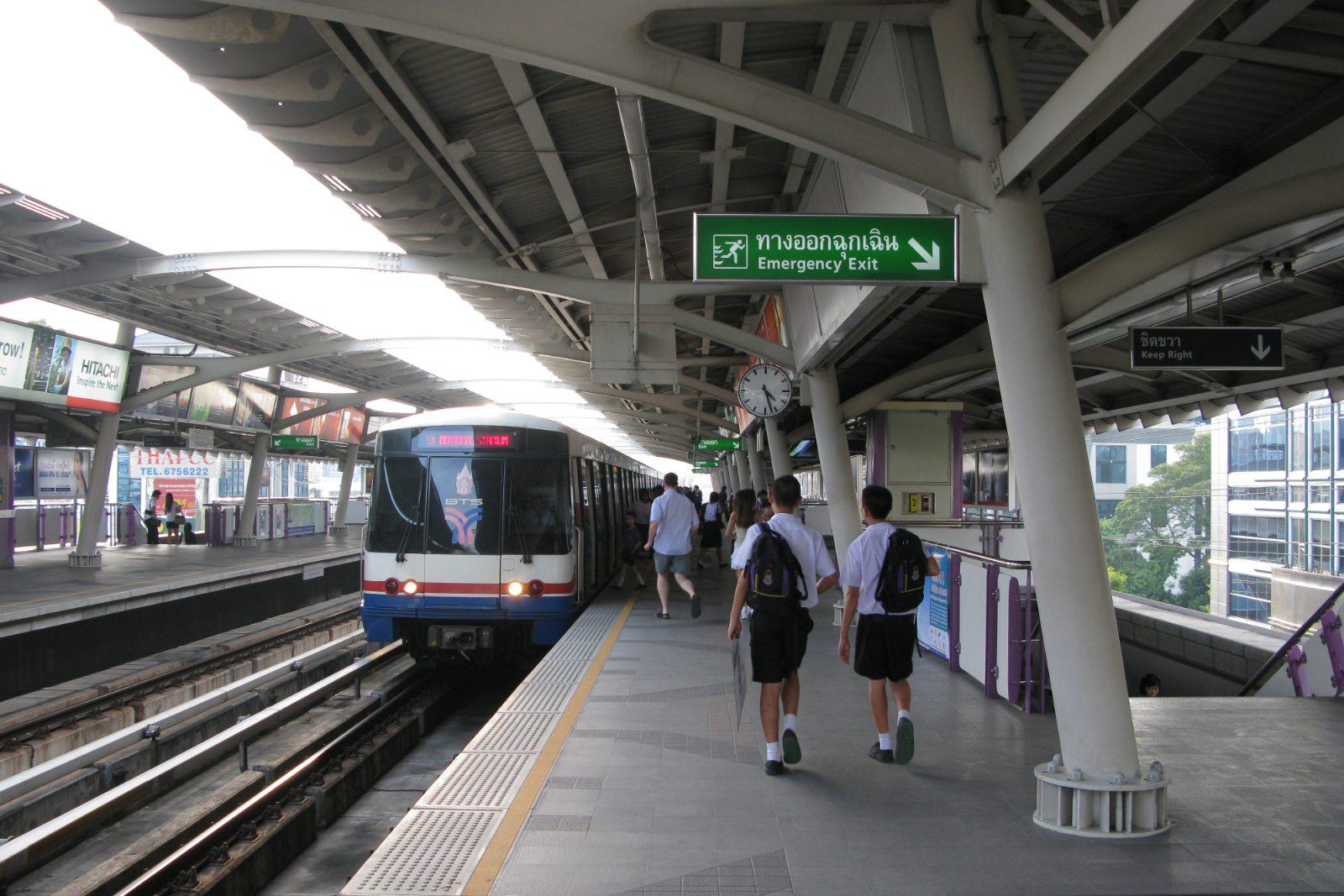
| BTS Skytrain / MRT subway | Bangkok specifically | $0.50–$2 per ride depending on distance | Avoids Bangkok traffic entirely for trips along the main lines |
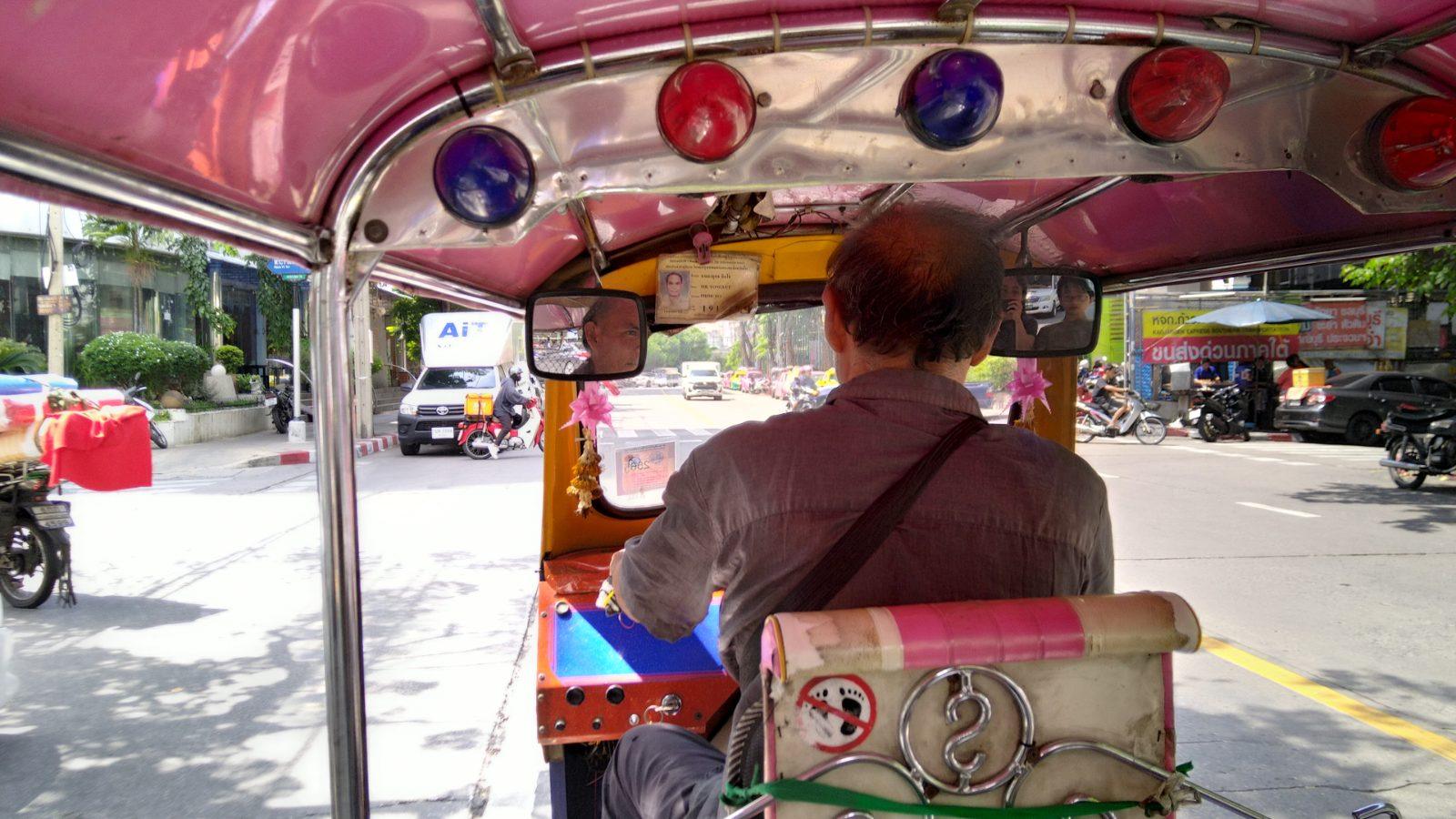

Tuk-tuk in Bangkok: Jonashtand / CC BY-SA 4.0 · Hua Lamphong Railway Station: Diego Delso / CC BY-SA 3.0
TTC Verdict: Default to Grab for anything inside a city and domestic flights for anything between regions. Tuk-tuks and metered taxis both have their place, but neither beats Grab for predictable pricing, and neither beats a 1–2 hour flight for getting from Bangkok to an island without burning a full day of your trip on the road.
Is It Worth Renting a Scooter or Car in Thailand?
A scooter can be worth it on an island like Koh Samui or Koh Phangan where distances are short and traffic is light, but it is generally not worth it in Bangkok or Chiang Mai, where traffic is heavy and an international driving permit plus local insurance requirements add friction most visitors skip. If you do rent a scooter, wear a helmet every time — traffic accidents are a leading cause of travel injury in Thailand for tourists on two wheels.
Grab operates in Bangkok, Chiang Mai, Phuket, and most major Thai cities and tourist areas, though coverage and wait times are more limited on smaller islands and remote areas, where tuk-tuks or hotel-arranged transport are more common.
Fly if you want to save time — domestic flights take about an hour, versus roughly 12–15 hours by overnight train. Take the train if the overnight journey itself is part of the experience you want, since it is a scenic and comfortable way to see rural Thailand.
Technically yes — Thai law and most rental shops require a valid driving license plus an International Driving Permit to legally rent and insure a scooter.