

The Ha Giang Loop: A Complete Guide to Vietnam’s Best Motorbike Route
The Ha Giang Loop is a 3 to 4-day motorbike route through Vietnam’s far northern mountains, and it is widely considered the single most dramatic drive in the country — sheer limestone peaks, hairpin switchbacks, and H’mong villages that most Vietnam itineraries never reach. It is not a beginner-friendly joyride: the roads are narrow, the weather turns fast, and most riders either go pillion behind an experienced local driver or commit to real self-drive experience before attempting it. This guide covers how to choose between those two approaches, the standard route, and what to know before you book.
Is the Ha Giang Loop Worth It?
Yes — for most travelers who make it this far north, the Ha Giang Loop is the highlight of their entire Vietnam trip. The Dong Van Karst Plateau Geopark (a UNESCO Global Geopark) delivers scenery unlike anywhere else in the country: jagged limestone mountains, terraced fields carved into near-vertical slopes, and a string of small towns that still feel genuinely remote. The tradeoff is real commitment — several long riding days, patchy phone signal, and basic accommodation — so it rewards travelers who want an active, physical few days more than a relaxed sightseeing stop.
| Option | Best For | Cost | What’s Included |
|---|---|---|---|
| Easy Rider (ride pillion) | First-time riders, solo travelers, or anyone without real motorbike experience | ~$120–220 for 3–4 days | An experienced local driver, fuel, some meals, and usually a shared support vehicle for luggage |
| Self-drive (rent your own bike) | Confident, experienced riders comfortable with mountain switchbacks and gravel | ~$8–15/day for the bike alone | Just the bike — you plan the route, book your own homestays, and carry your own gear |
| Guided group tour (convoy) | Travelers who want structure and safety in numbers without riding pillion | ~$150–250 for 3–4 days | A support vehicle, a lead guide, and set overnight stops, while each rider drives their own bike |
How Many Days Do You Need?
Four days is the more comfortable, less rushed version of the loop; three days is doable but turns at least one day into a long ride with little time to stop. Both versions follow the same core route — the difference is mainly how much time you get in Dong Van and around the Ma Pi Leng Pass, the single most photographed stretch of the whole trip.
| Day | Route | Distance | Highlights |
|---|---|---|---|
| Day 1 | Ha Giang City → Quan Ba → Yen Minh | ~150 km | Quan Ba’s “Heaven’s Gate” viewpoint and the Twin Mountains |
| Day 2 | Yen Minh → Dong Van | ~50–60 km | Lung Cu Flag Tower side trip (Vietnam’s northernmost point) and Dong Van’s old quarter |
| Day 3 | Dong Van → Meo Vac via Ma Pi Leng Pass | ~25 km (slow) | The loop’s signature stretch — a cliffside road cut into the Nho Que River canyon |
| Day 4 (4-day version) | Meo Vac → back to Ha Giang City | ~150 km | A long final ride back, or an extension onward toward Bao Lac and Ba Be Lake |
TTC Verdict: Do not try to save a day by rushing the Ma Pi Leng Pass stretch — it is short in distance but slow by design, and it is the whole reason most people do this loop in the first place. If you only have three days, cut time from the first or last riding day instead, not from Dong Van or the pass.
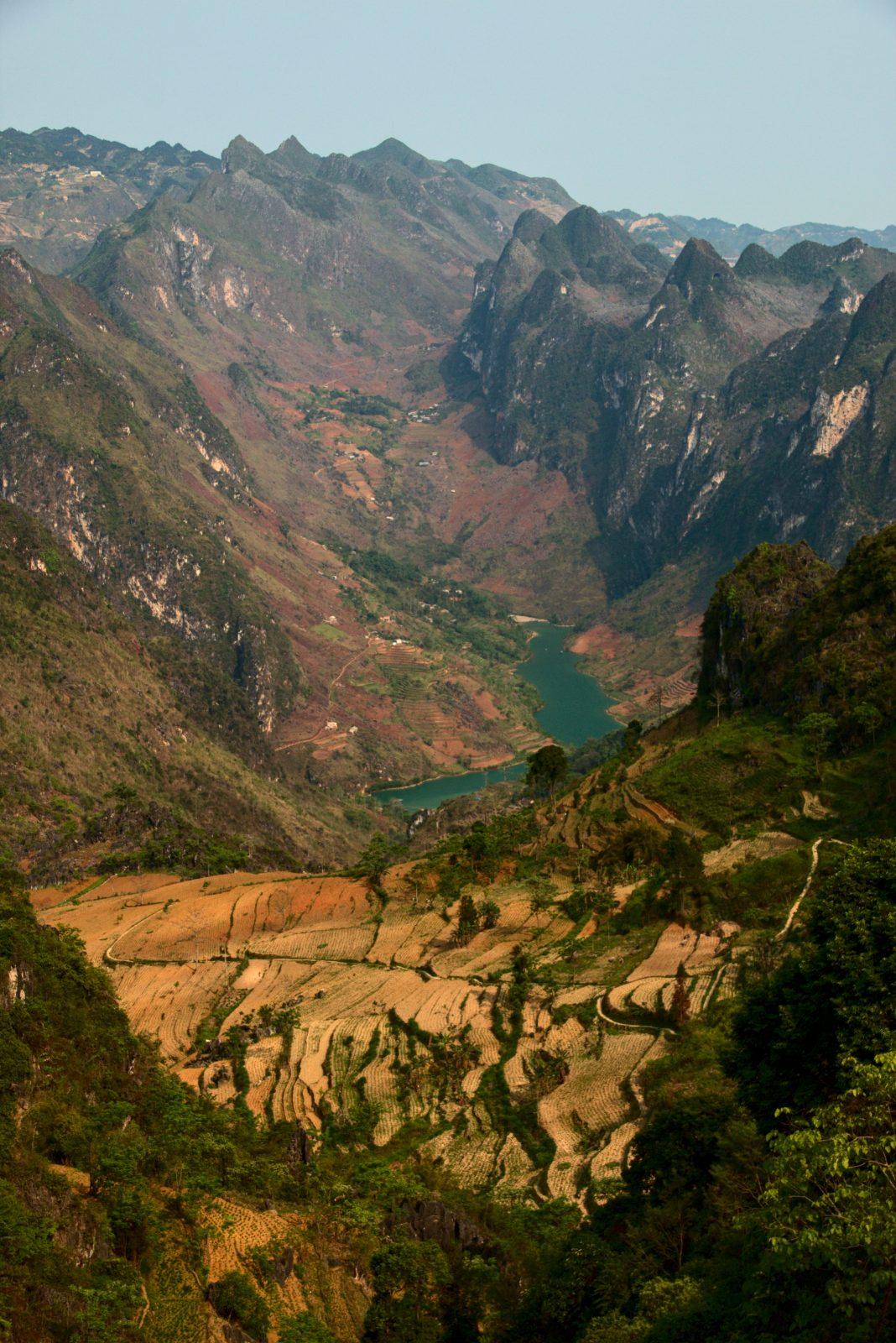
Dong Van, Ha Giang: Benjamin Smith / CC BY-SA 4.0
Is It Legal to Ride the Loop Without a License?
Technically no, and this matters more than most rental shops let on. Riding a motorbike over 50cc in Vietnam legally requires a Vietnamese driving license or an International Driving Permit issued under the 1968 Vienna Convention (the US, Canada, and Australia are not signatories to that specific convention, so a standard IDP from those countries is not recognized for motorbikes here). Rental shops in Ha Giang routinely rent to tourists without checking for either, but riding without valid documentation means you are personally liable in an accident and your travel insurance can refuse to pay out. (If your route extends into neighboring Cao Bang province for Ban Gioc Waterfall, note that Cao Bang requires its own separate foreigner border-area permit — a Ha Giang permit does not carry over, so budget a few extra days to apply before you cross provinces. See our Cao Bang travel guide for the full process.) If you are not confident about your paperwork, the Easy Rider option removes the issue entirely — you are a passenger, not the licensed operator.
Getting to Ha Giang from Hanoi
There is no train or airport serving Ha Giang, so the trip starts with an overnight or day bus from Hanoi, typically around 6–7 hours each way. Most travelers take an overnight sleeper bus up, start the loop the next morning, and take a day bus back to Hanoi at the end — book the return bus a day or two in advance during peak season (spring and autumn), since seats sell out. See our Vietnam Packing List for what to bring for the colder mountain nights, and our Vietnam eSIM Guide for staying connected before signal drops out in the mountains.
Most riders do the Ha Giang Loop in 3 or 4 days. Four days is more comfortable and gives more time in Dong Van and at the Ma Pi Leng Pass; 3 days is doable but makes at least one riding day considerably longer.
Legally, yes — either a Vietnamese license or an International Driving Permit issued under the 1968 Vienna Convention, which most US, Canadian, and Australian permits do not qualify under. Riding without one means you are liable in an accident and travel insurance may not cover you. Riding pillion with an Easy Rider driver avoids this issue entirely.
Choose Easy Rider (riding pillion with an experienced local driver) if you have little or no motorbike experience — the roads are narrow with real drop-offs. Self-drive is better suited to confident, experienced riders who want full control over pacing and route.

2 Comments