Mu Cang Chai Food Guide
Mu Cang Chai’s food reflects its H’mong and Thai highland communities: sticky rice cooked in bamboo, grilled stream fish, smoked meats, and hearty stews built for cold mountain nights. Expect simpler, more rustic cooking than in Hanoi or Hoi An — most meals here are eaten at your homestay or a small family-run restaurant rather than a dedicated food scene.
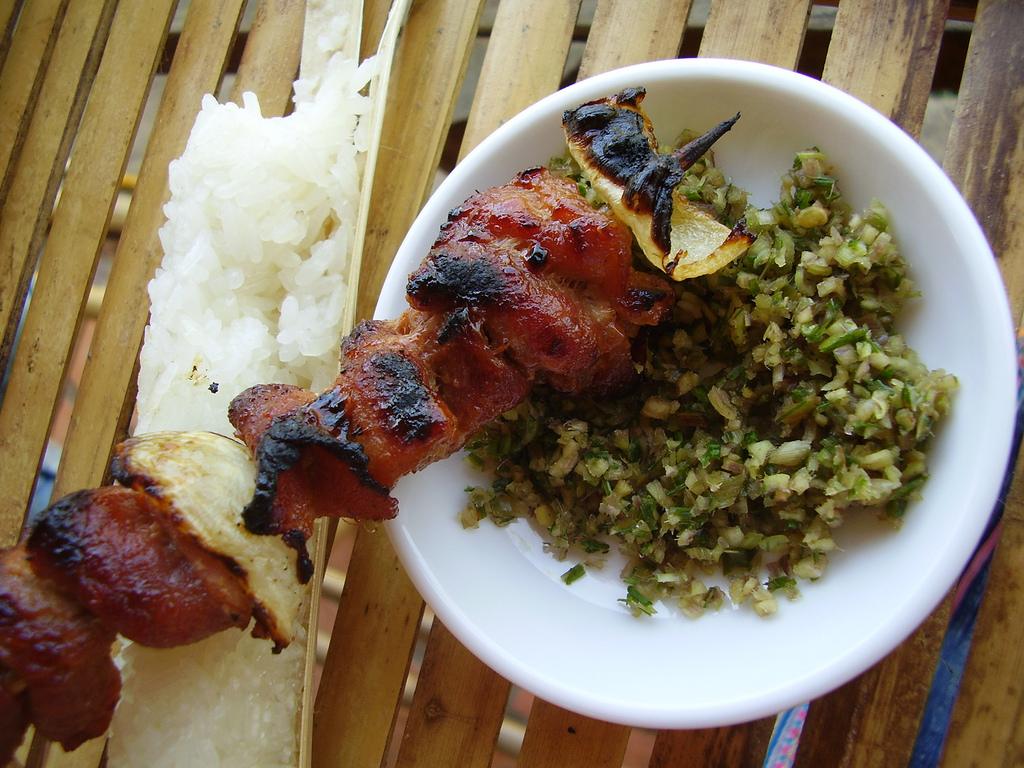
Com lam, sticky rice steamed inside bamboo, served with grilled meat
What Local Dishes Should You Try in Mu Cang Chai?
A handful of dishes show up again and again on homestay tables and at the weekend market, most built around sticky rice, bamboo, and highland herbs rather than the fish sauce and rice noodles more common in lowland Vietnamese cooking.
| Dish | What It Is |
|---|---|
| Com lam | Glutinous rice steamed inside a bamboo tube, which gives it a faint smoky, woody aroma |
| Tu Le sticky rice | A prized local rice variety from nearby Tu Le valley, notably soft and fragrant, often eaten with sesame salt |
| Five-color sticky rice | A festive dish colored naturally with local leaves and herbs, each color carrying symbolic meaning |
| Grilled stream fish | Small fish from mountain streams, marinated with local herbs and grilled over an open flame |
| Smoked buffalo meat | A H’mong specialty, smoked over a fire for several days into a chewy, deeply savory preserved meat |
| Thang co | A traditional H’mong stew of horse or buffalo meat and offal, slow-cooked with cardamom, lemongrass, and ginger |
Is Thang Co Worth Trying?
Thang co is Mu Cang Chai’s most distinctive and most debated dish — a communal stew of horse or buffalo meat, offal, and bones, simmered for hours with mountain herbs and spices. It’s an acquired taste even for many Vietnamese visitors from other regions, with a strong, gamey flavor and organ-meat texture that catches some travelers off guard. If you’re curious but cautious, ask for a small portion at a market stall rather than committing to a full bowl at a homestay dinner.
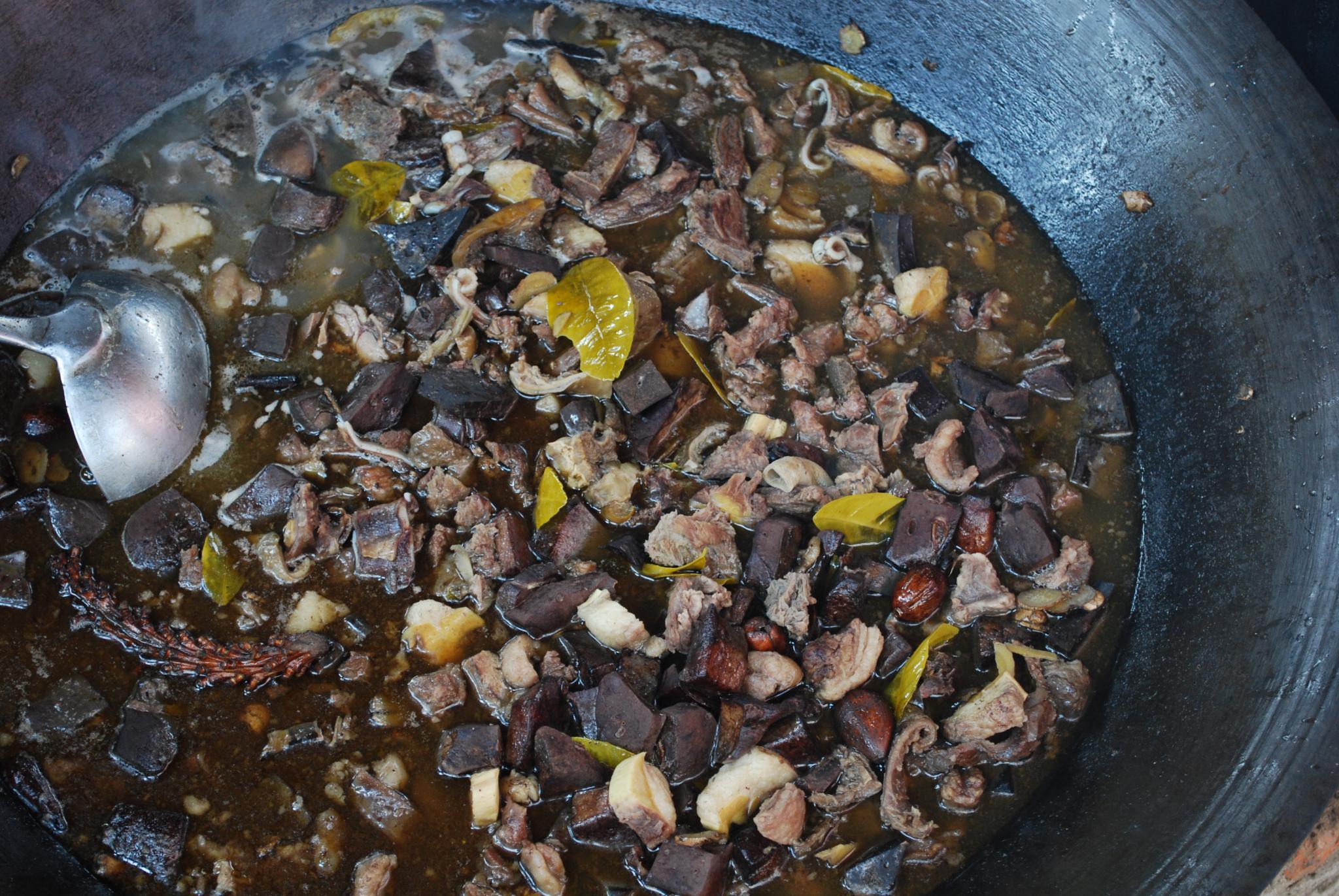
Thang co simmering in a communal pot at a local market stall
Where Do You Actually Eat in Mu Cang Chai?
Most meals here happen at your homestay, where the host family cooks and serves what’s in season, or at one of a handful of small family-run restaurants in Mu Cang Chai town. There is no real independent restaurant scene to speak of — part of the appeal of a homestay stay is that dinner is included and genuinely home-cooked rather than tourist-oriented. Restaurant recommendations change frequently in a district this small, so confirm current options locally rather than relying on any fixed list.
TTC Verdict: Eat at your homestay for the most authentic and reliable meals. Try thang co once if you’re an adventurous eater, but don’t feel obligated — com lam and grilled stream fish are easier entry points into local cooking.
Frequently Asked Questions About Food in Mu Cang Chai
Com lam is glutinous sticky rice steamed inside a fresh bamboo tube over an open fire, which gives the rice a subtle smoky, woody flavor. It’s typically served sliced, alongside grilled meat or a simple sesame-salt dip.
Yes, when prepared by an established homestay or market vendor — it’s a normal part of the local diet. The stronger consideration is taste rather than safety, since the offal-heavy flavor is unfamiliar to many visitors.
Yes, though they are more limited than in larger cities. Sticky rice, vegetable dishes, and tofu are usually available if you tell your homestay about dietary needs in advance.
Homestays often serve locally grown tea, and some H’mong households make their own rice wine (ruou), which is customarily offered to guests as a gesture of hospitality.