Where to Stay in Mai Chau & Pu Luong: Homestays vs. Ecolodges
Where you stay in Mai Chau and Pu Luong comes down to one choice: a traditional stilt-house homestay with a local family, or a boutique ecolodge built for the view. Both are genuinely good options here — this isn’t a case of one being a compromise. Homestays are cheaper, more communal, and closer to how people actually live in the valley; ecolodges trade some of that immersion for a private room, a proper bathroom, and often a pool or deck looking straight out over the terraces.
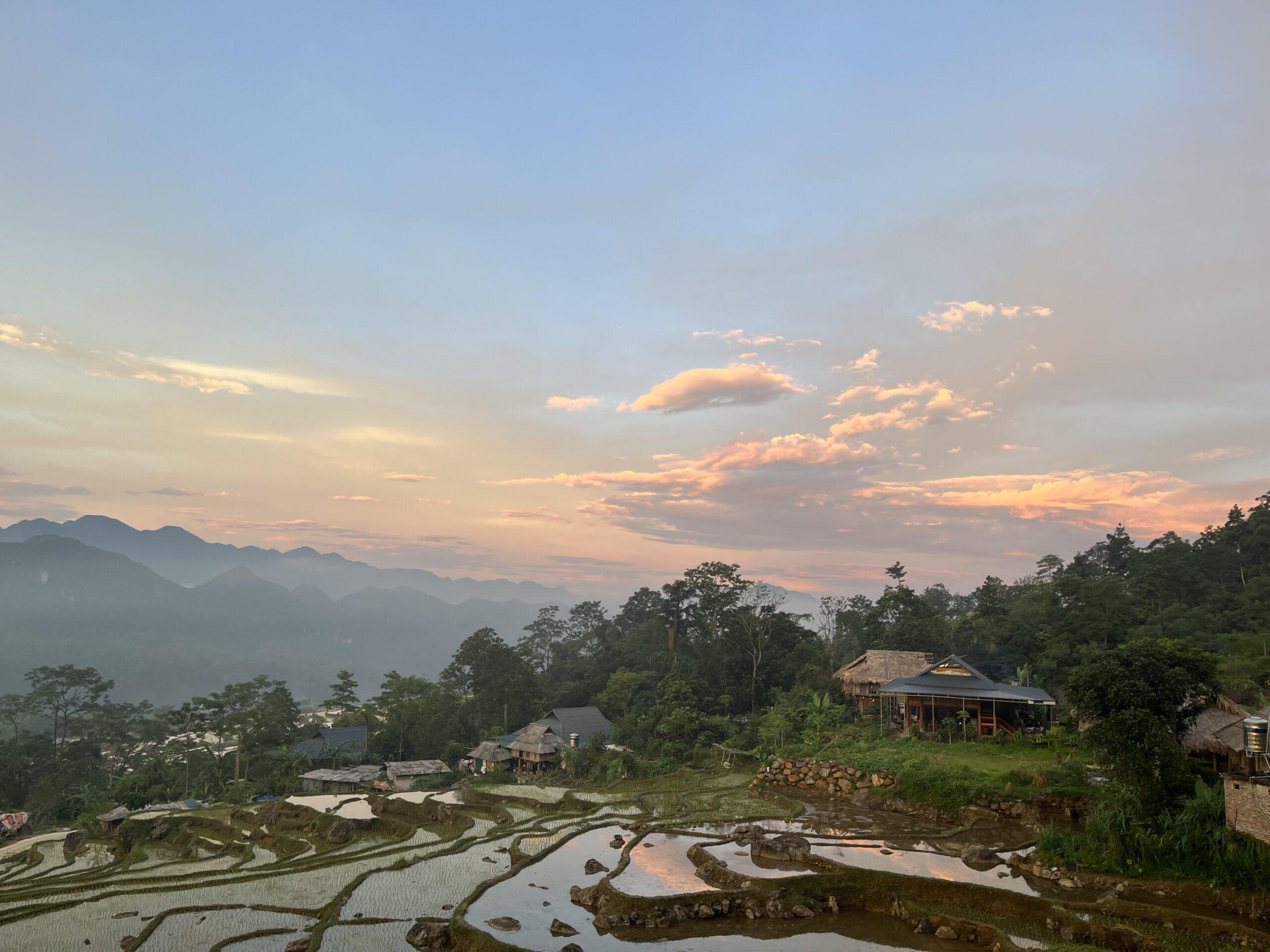
A hillside ecolodge overlooking flooded rice terraces in Pu Luong at sunset
Should You Book a Homestay or an Ecolodge?
Book a homestay if you want the cheapest option and the most direct contact with local family life — expect shared bathrooms, mattresses on the floor of a communal stilt house, and home-cooked meals eaten with the family. Book an ecolodge if you want a private room, a real bed, and reliable hot water, and don’t mind paying several times more for it.
| Property | Location | Style | Best For |
|---|---|---|---|
| Mai Chau Ecolodge | Mai Chau valley | Mid-range bungalows, pool, rice-field views | A comfortable first night without leaving the valley floor |
| Mai Chau Lodge | Mai Chau valley | Established mid-range resort, garden setting | Families wanting a straightforward, resort-style stay |
| Pu Luong Natura Bungalow | Ban Don, Pu Luong | Terrace-view bungalows, boutique feel | Travelers who want the classic Pu Luong terrace view from their room |
| Pu Luong Retreat | Thanh Lam, Pu Luong | Eco-focused lodge geared toward trekking and cycling | Active travelers based here for multi-day trekking |
What’s a Traditional Stilt-House Homestay Actually Like?
In Mai Chau’s Lac and Pom Coong villages, homestays are large wooden stilt houses where you sleep dormitory-style on a shared upper floor, usually with mosquito nets and thin mattresses rather than beds. Bathrooms are typically shared and downstairs. Meals are cooked by the family and often eaten together, sometimes followed by a traditional dance performance and rice wine for larger groups. It’s basic by hotel standards but a genuinely different experience from a resort stay, and it’s the reason many travelers come to this part of Vietnam in the first place.
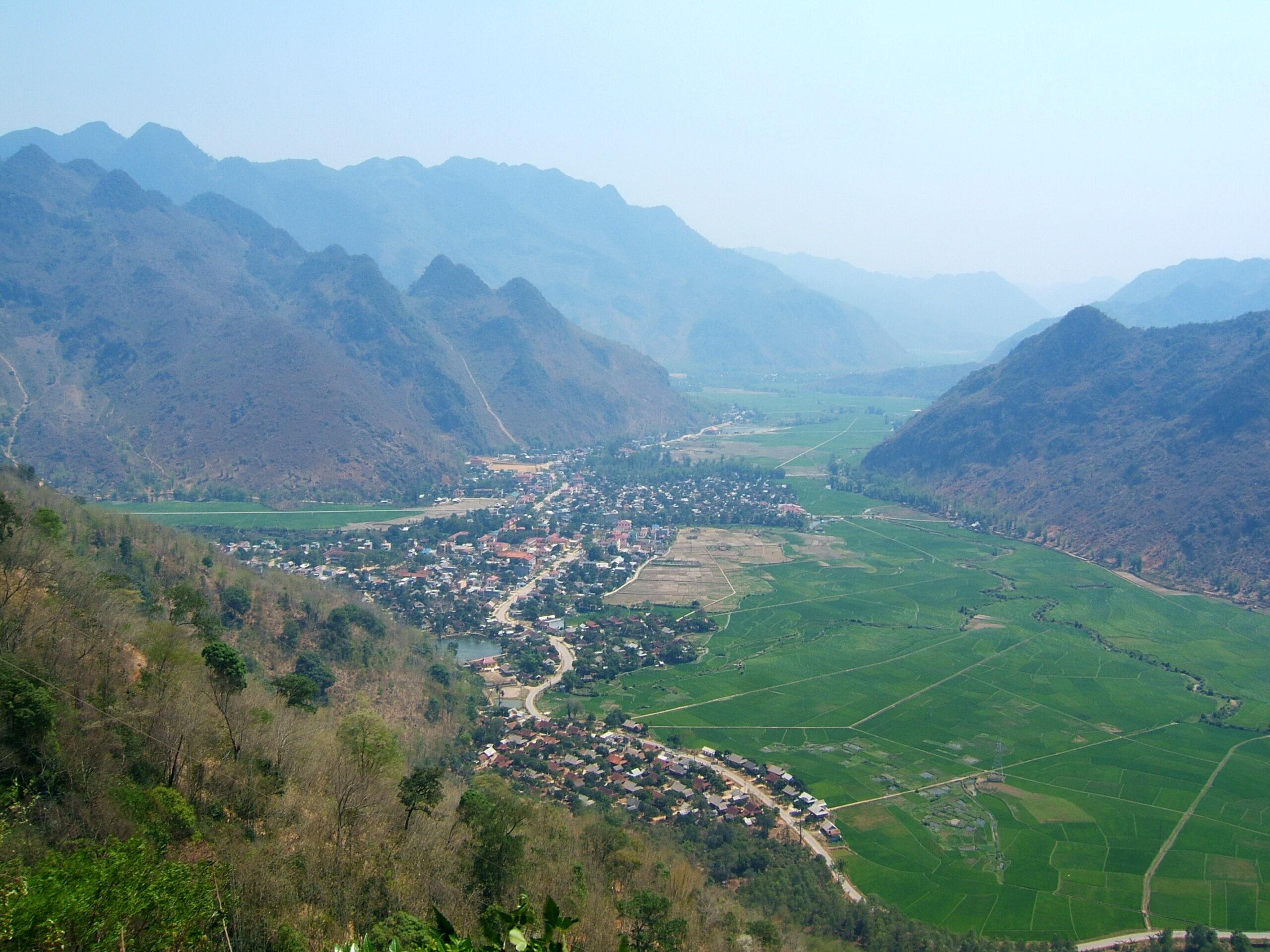
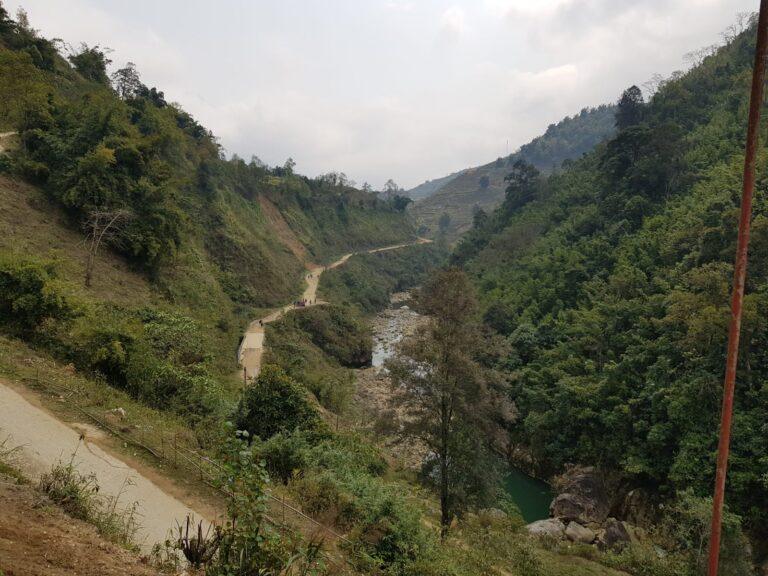
The Mai Chau valley, where stilt-house homestays sit among the rice fields
When Should You Book an Ecolodge Instead?
Choose an ecolodge if you’re only doing one or two nights total and want to arrive relaxed rather than adjusting to a shared floor and cold-water bathroom after a long drive, if you’re traveling as a couple and want privacy, or if you’re combining this trip with more physically demanding trekking in Pu Luong and want a proper bed to recover in. Several of Pu Luong’s ecolodges, including the two listed above, are built specifically for the terrace views and are worth the higher price for photographers.
TTC Verdict: Book a homestay for at least one night if this is your first visit to the region — it’s the more memorable choice. Add an ecolodge night in Pu Luong if you want the terrace-view photos and a proper rest before heading back to Hanoi.
Frequently Asked Questions About Where to Stay in Mai Chau & Pu Luong
Yes, they’re a well-established part of the local tourism economy and are used to hosting foreign guests. Comfort is basic (shared bathrooms, floor mattresses) rather than hotel-standard, but they’re safe and genuinely welcoming.
Most mid-range and boutique ecolodges do, though Wi-Fi can be weak or limited to common areas given the remote location. Confirm with the specific property if connectivity matters for your trip.
Homestays typically run under $10-20 per person per night including meals, while ecolodges range from roughly $40 to over $100 per night depending on the property and season.
Yes — the ecolodges and larger properties listed above are bookable through Agoda. Smaller family homestays are sometimes easier to book by contacting them directly or through your tour operator.