Mi Quang Explained: Vietnam’s Turmeric Noodle Specialty
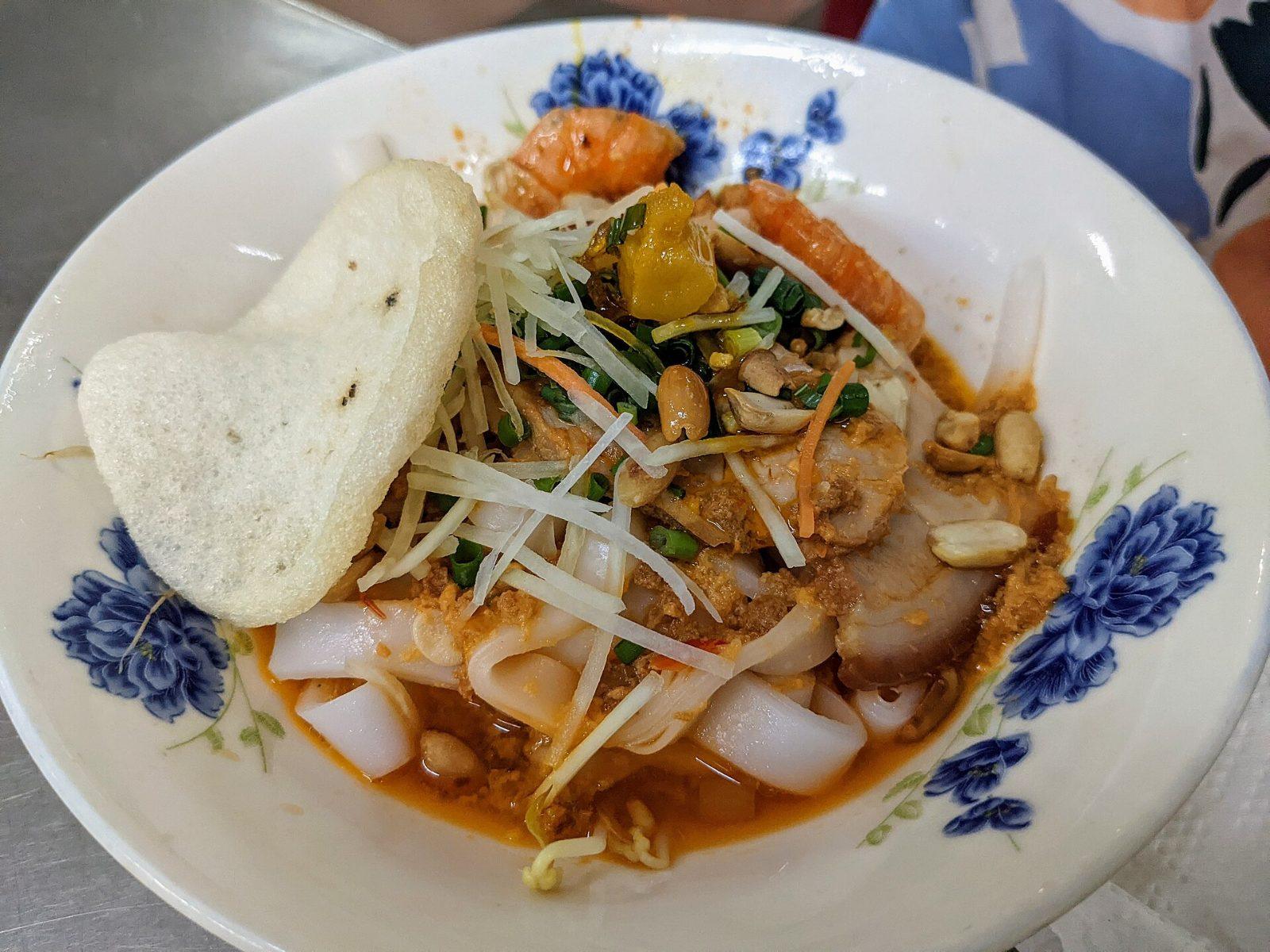
Mi quang is a turmeric-tinted noodle dish from Quang Nam province, the region around Da Nang and Hoi An, and it’s one of the most distinctive bowls of noodles in Vietnam precisely because it isn’t really a soup. Wide rice noodles are tossed in a small pool of intensely flavored broth rather than swimming in it, then piled with shrimp, pork, a quail egg, herbs, peanuts, and a large piece of crispy sesame rice cracker for scooping and crunch. If pho is Vietnam’s noodle soup, mi quang is its noodle salad — and it’s a must-try anywhere in the Da Nang-Hoi An area.
What is mi quang?
Mi quang takes its name from Quang Nam, the central Vietnamese province surrounding Hoi An and bordering Da Nang, where the dish originated. Thick, flat rice noodles — traditionally hand-cut and sometimes dyed a soft yellow with turmeric — are tossed with just enough rich, peanut-and-pork-fat-infused broth to coat them, rather than being ladled into a full bowl of soup. That’s the single biggest thing to understand before ordering: come expecting a noodle salad with a splash of sauce, not another bowl of pho.
How is mi quang different from pho or bun bo hue?
Vietnam’s three most famous noodle dishes each represent a different region and a completely different eating experience, and the amount of broth is the fastest way to tell them apart.
| Dish | Region | Broth style | Signature toppings |
|---|---|---|---|
| Mi Quang | Central (Quang Nam / Da Nang / Hoi An) | Minimal — noodles tossed, not submerged | Shrimp, pork, quail egg, peanuts, rice cracker |
| Pho | North (Hanoi origin, now nationwide) | Full, clear, long-simmered broth | Beef or chicken, herbs, rice noodles |
| Bun Bo Hue | Central (Hue) | Full, spicy, lemongrass-forward broth | Beef, pork, congealed pig’s blood cake [VERIFY regional variation] |
TTC Verdict: If you only try one noodle dish outside of pho on a Vietnam trip, make it mi quang when you’re in the Da Nang or Hoi An area — it tastes like nothing else on the menu and it’s genuinely hard to find well-made versions outside central Vietnam.
What’s in a bowl of mi quang?
A well-made bowl balances texture as much as flavor: soft-but-chewy turmeric rice noodles, a scattering of crushed roasted peanuts for crunch, fresh herbs and banana blossom for brightness, and a large shard of toasted sesame rice cracker (banh da or banh trang nuong) meant to be broken up and used almost like a chip. Protein toppings vary by vendor and region but commonly include shrimp, sliced pork belly or pork shoulder, and half a hard-boiled quail egg — some versions swap in chicken or even eel [VERIFY regional variations]. Everything gets a squeeze of lime and a spoonful of chili right at the table.
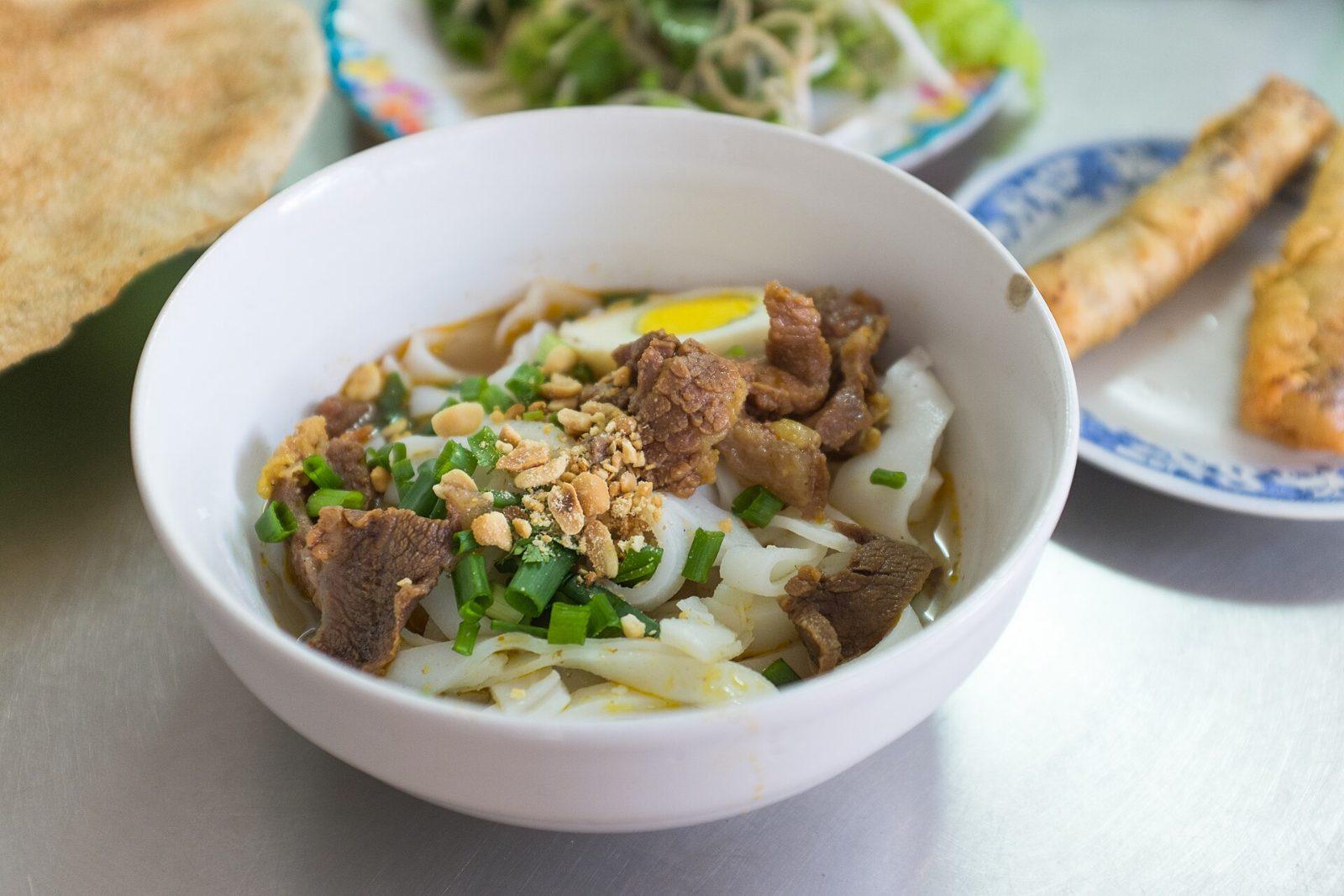
Mi quang: Christopher Crouzet / CC BY-SA 4.0
Where can I try mi quang in Vietnam?
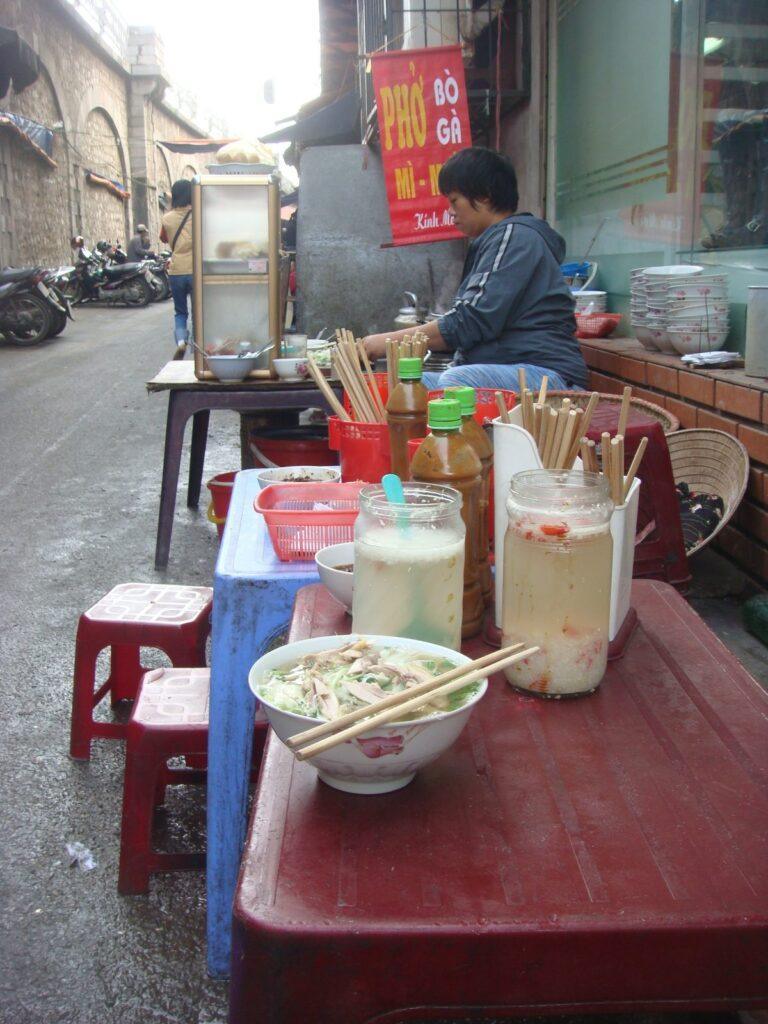
Da Nang and Hoi An are the two best places to eat mi quang, since it’s a genuine regional specialty rather than something adapted for tourists — look for small, plastic-stool street stalls with a big pot of noodles and toppings laid out rather than a full sit-down restaurant, which is usually a good sign of an authentic, well-practiced kitchen. It shows up on some menus in Hanoi and Ho Chi Minh City too, but quality and authenticity vary a lot more outside the central region [VERIFY].
Not really. Wide rice noodles are tossed in just a small amount of rich broth rather than served in a full bowl of soup — it’s closer to a noodle salad than to pho or bun bo hue.
Savory and slightly nutty from the peanut-and-pork-fat broth, with bright, herbal freshness from the garnishes and a satisfying crunch from the rice cracker and peanuts mixed through.
Quang Nam province in central Vietnam, the region surrounding Hoi An and bordering Da Nang — it’s the signature noodle dish of that area.