Pad Thai Explained: Thailand’s Stir-Fried Noodle Icon
Pad thai is a stir-fried rice noodle dish built on a sweet-sour-salty balance of tamarind, fish sauce, and palm sugar, tossed with egg, tofu, bean sprouts, and usually shrimp or chicken, then finished with crushed peanuts and a wedge of lime. It is Thailand’s most internationally recognized dish, but it is younger than most visitors assume: the version eaten today took shape in the mid-20th century, not in some distant culinary past, and its rise was as much a government project as a kitchen invention.
Where Did Pad Thai Actually Come From?
Stir-fried rice noodles arrived in Thailand from southern China generations earlier, brought by Teochew immigrants along with the wok itself, but pad thai as a distinct, named dish is a 20th-century creation. The most commonly told version ties it to the early 1940s, when wartime flooding damaged rice paddies in the Chao Phraya Delta and Prime Minister Plaek Phibunsongkhram’s government promoted noodle dishes as a way to stretch the national rice supply. A regional variant called sen chan pad thai, named for Chanthaburi province, is often cited from this period.
Some food historians push back on parts of this story. Researcher Chatichai Muksong has argued the familiar recipe was only documented later, with the earliest known written reference appearing in a 1962 household manual, and that the dish’s modern national identity was shaped as much by 1960s tourism marketing as by 1940s nationalism. Either way, pad thai’s biggest leap came in 2002, when the Thai government launched the Global Thai initiative, forming the Global Thai Restaurant Company to help open thousands of Thai restaurants abroad and introducing the Thai Select label for restaurants using government-trained chefs and imported Thai ingredients. The Export-Import Bank of Thailand backed the push with loans of up to $3 million for Thai nationals opening restaurants overseas, and pad thai rode along as the dish most foreign menus led with.
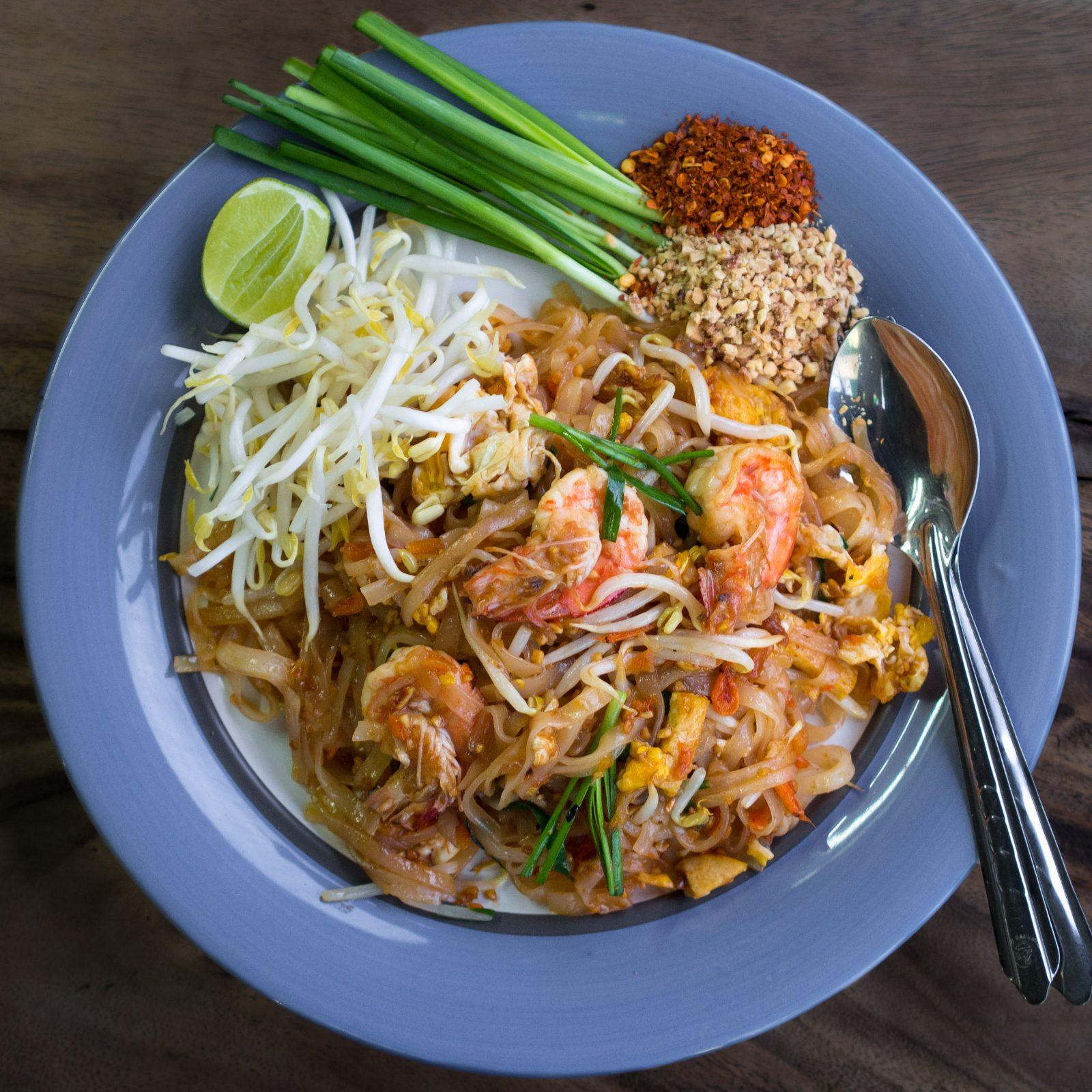
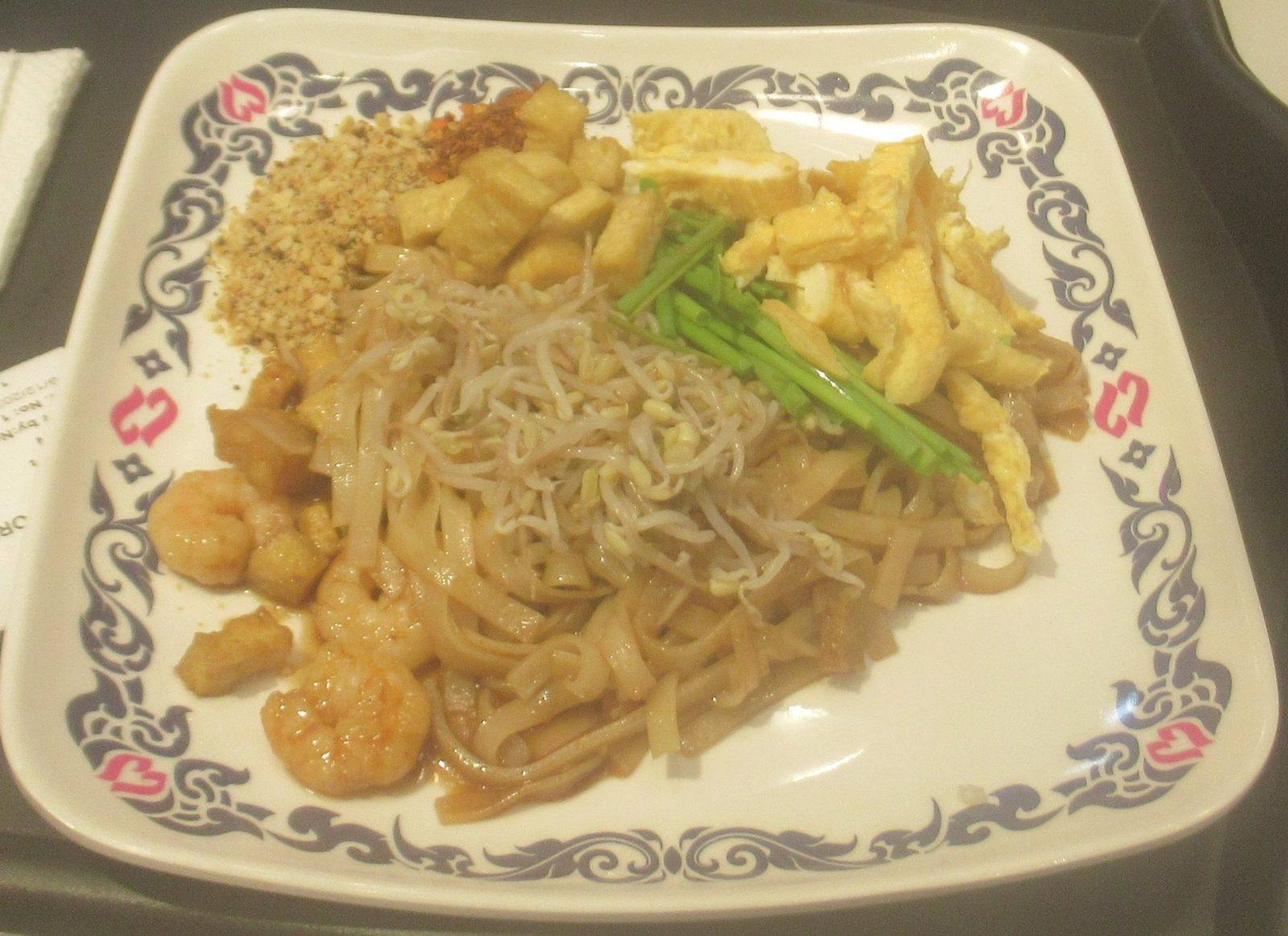
Pad thai with classic garnishes: Takeaway / CC BY-SA 3.0 · Shrimp pad thai variation: P1898 / CC BY 4.0
What Is the Difference Between Street-Cart, Restaurant, and Vegetarian Pad Thai?
The core technique stays the same everywhere, but the protein, garnish, and presentation shift noticeably depending on where you order it. A street cart version is usually the most traditional, while restaurant versions lean sweeter and more elaborately plated for visiting diners.
| Style | What to Expect | Best For |
|---|---|---|
| Street cart | Wok-charred, less sweet, dried shrimp and preserved radish | The most traditional flavor |
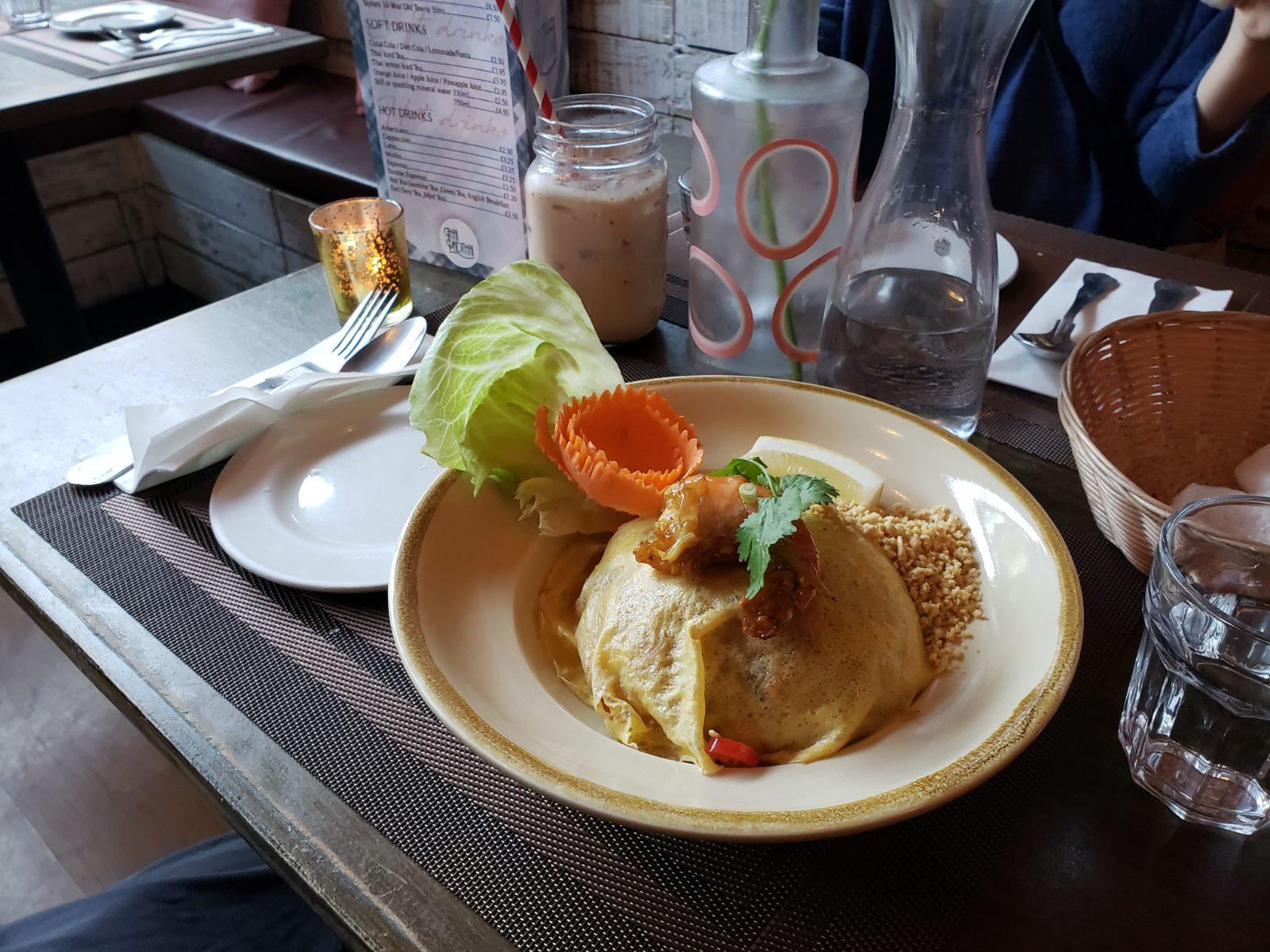
| Sit-down restaurant | Sweeter sauce, often wrapped in a thin egg crepe | A gentler introduction |
| Vegetarian / jay | Soy sauce instead of fish sauce, tofu instead of shrimp | Plant-based diets |
| Seafood pad thai | Shrimp, squid, or crab added alongside the standard mix | Bigger appetites |
TTC Verdict: Order pad thai from a street cart with a line of locals, not an empty one aimed at tourists. Ask for it not sweet (mai wan) if you prefer the more savory, traditional balance. Skip it entirely only if you are avoiding shellfish and gluten-free fish sauce is not available: most versions use wheat-based soy sauce as a substitute ingredient.
Where Should You Eat Pad Thai in Thailand?
Pad thai is sold everywhere in Thailand, from night markets to airport food courts, so the better question is less “where” and more “how to pick a good stall.” Look for a wok that’s actually smoking hot, noodles cooked to order rather than pre-made and reheated, and a cart doing steady turnover. Bangkok’s street food scene and Chiang Mai’s night markets are both reliable places to find it done well as part of a wider meal. Book the Chiang Mai night market food tour on Klook.
It is a Thai dish with clear Chinese-immigrant roots: the stir-fried rice noodle technique and the wok itself came from Teochew Chinese cooking, but the specific sweet-sour-salty flavor profile, built on tamarind and fish sauce, is distinctly Thai.
Not always. Peanuts are a near-universal garnish but can usually be left off on request, and shrimp is common rather than mandatory; tofu-and-vegetable or chicken versions are widely available, including a fully vegetarian “jay” style that swaps fish sauce for soy sauce.
Street carts typically cook over higher heat for a shorter time, achieving a smokier char with a less sweet sauce, while restaurant kitchens often use a sweeter, more consistent sauce and more generous plating aimed at visiting diners.