
Elephant Riding in Thailand: Why It Is Not Ethical (and Where to Go Instead)
Elephant riding is not ethical, and nearly every major conservation and animal-welfare organization now advises against it. The short version: riding requires an elephant to be broken as a calf through a process that relies on fear and physical pain, and an elephant’s spine is not built to carry a rigid saddle and riders. If you want to see or interact with elephants in Thailand, choose an observation-based sanctuary with no riding and no chains — Chiang Mai has the most options of any city in the country.
Why Is Elephant Riding Considered Unethical?
Elephant riding is considered unethical because of both how elephants are prepared for it and the physical harm riding itself causes. Most riding elephants go through “phajaan,” or the crushing — a process that separates a calf from its mother and uses confinement, fear, and pain to break its will so it will accept a rider. Even once trained, an elephant’s spine has sharp, protruding vertebrae with no padding built to bear concentrated weight; a rigid wooden or metal saddle (howdah) plus one or two riders can cause lasting spinal and tissue damage over years of use. Elephants kept for riding are also typically chained when not working and show repetitive stress behaviors — swaying, head-bobbing, pacing — that researchers recognize as signs of psychological distress.
| Venue Type | Riding Offered? | Chains Visible? | What Your Money Supports |
|---|---|---|---|
| Ethical Sanctuary | No | No (or only brief, explained safety tethering) | Rescue, rehabilitation, and retirement of elephants from logging, riding, and begging |
| Riding Camp | Yes | Usually, between rides | Continued breeding and use of elephants for tourist rides |
| Show/Circus Venue | Sometimes | Usually | Performance training that often relies on the same fear-based methods as riding |

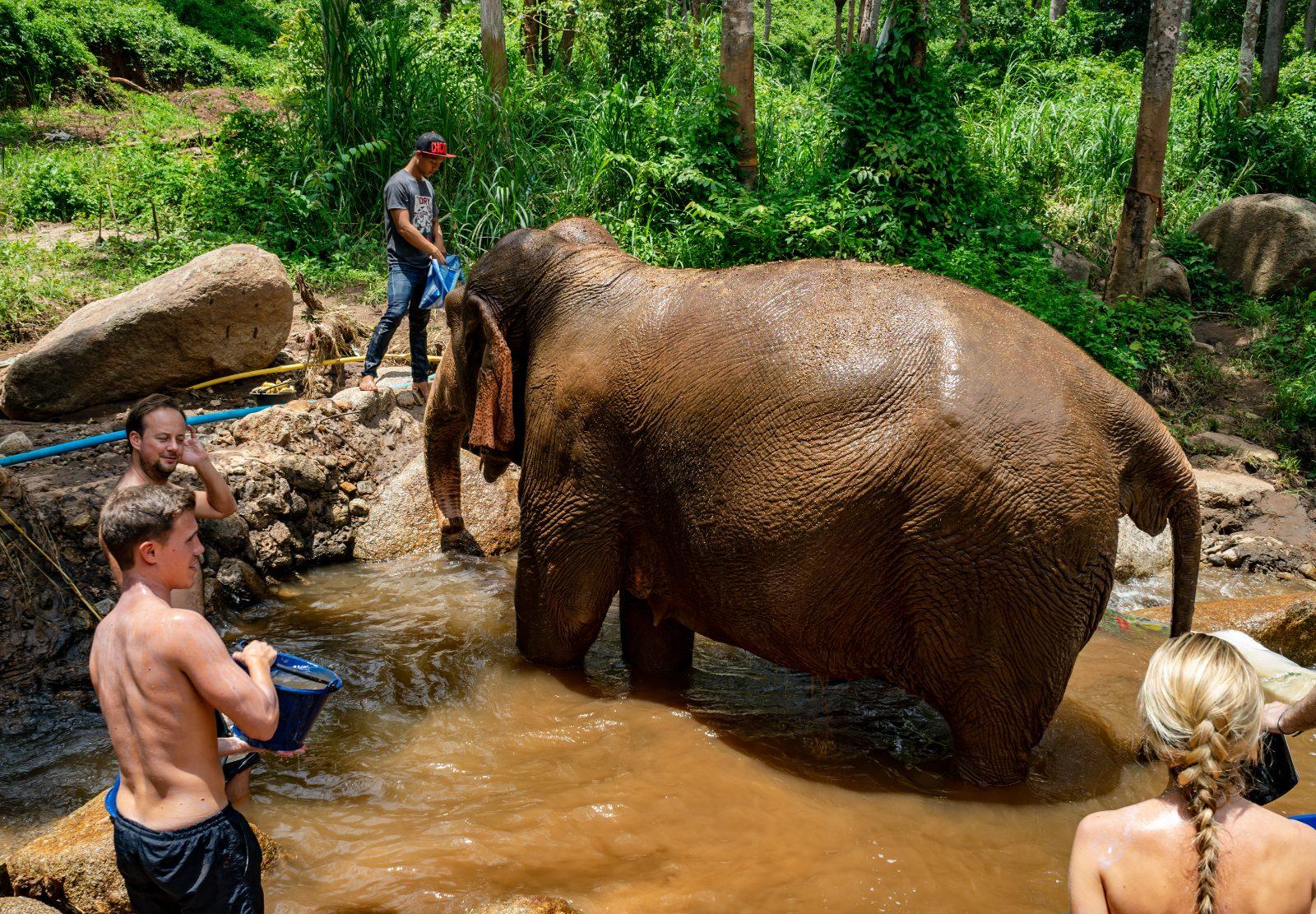
Elephant bathing at a Chiang Mai sanctuary: Nina R from Africa / CC BY 2.0
TTC Verdict: Skip any venue that offers rides, shows, or lets you pay for a close-up photo while an elephant is chained nearby. A real sanctuary lets you observe, feed, and sometimes bathe elephants on their own terms, with no saddle and no forced performance — that distinction matters more than the price or the marketing.
How Do You Tell an Ethical Sanctuary From a Tourist Trap?
Look for three things before booking: no riding offered at any price, no chains visible on elephants that are not actively feeding or being examined, and a guide who talks about individual elephants by name and history rather than treating them as interchangeable attractions. Reputable sanctuaries also cap group sizes and limit contact time, since constant tourist interaction is itself a stressor even without riding.
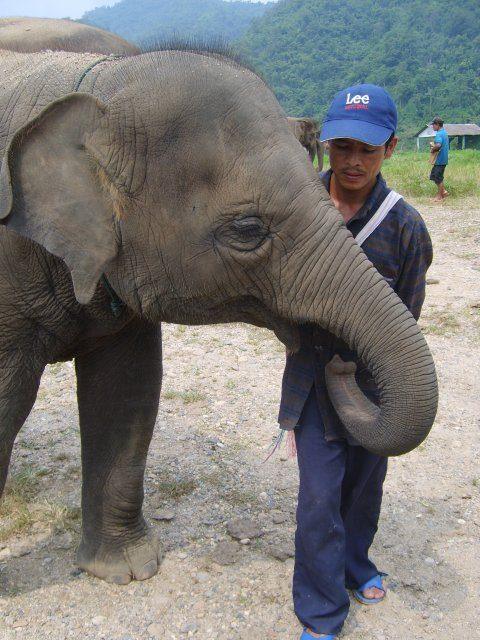
Elephant and mahout, Elephant Nature Park: Joel Wiramu Pauling / CC BY-SA 2.0
Where Can You Ethically See Elephants Near Chiang Mai?
Elephant Nature Park, founded by Lek Chailert outside Chiang Mai, is the best-known rescue and rehabilitation sanctuary in the region and operates on a strict observation-and-feeding model with no riding. Several smaller, community-run alternatives also operate in the hills around Chiang Mai, often through Karen hill-tribe villages that have shifted away from logging and riding work toward hands-off tourism — ask your sanctuary directly how their elephants were acquired and whether riding was ever part of their past use.
Because ethical standards vary widely between operators and marketing claims are not independently verified, booking through a platform that lists traveler reviews for each sanctuary adds a layer of accountability that walking up at the gate does not. Browse reviewed, no-riding elephant sanctuary day trips near Chiang Mai on Klook to compare options before booking.
No reputable conservation or animal-welfare organization currently endorses elephant riding, regardless of how a venue markets itself. The physical strain of carrying a saddle and riders, combined with the training methods used to make elephants accept riders, make it harmful even at well-reviewed camps.
Phajaan, or “the crush,” is a traditional training process used to break a young elephant’s will so it will accept human commands and riders. It typically involves separating the calf from its mother and using confinement, restraint, and pain until the animal submits — it is the primary reason riding is considered unethical regardless of how the elephant is treated afterward.
Pricing varies by sanctuary and whether you book a half-day or full-day visit with transport included.