Bangkok vs. Chiang Mai: Which Should You Visit First?
Bangkok and Chiang Mai are Thailand’s two biggest draws outside the beaches, and nearly every first-time visitor ends up choosing between them or figuring out how to fit both in. The short version: visit Bangkok first regardless, since it is almost certainly where your international flight lands and there is no direct long-haul route into Chiang Mai from the US, Canada, or Australia. From there, choose Chiang Mai if mountains, temples, and a slower pace matter more to you than a 24-hour megacity, or stay longer in Bangkok if that energy is what you came for. Here is the real comparison.
Why Almost Everyone Visits Bangkok First
Bangkok has two airports: Suvarnabhumi (BKK), where nearly every long-haul international flight lands, and Don Mueang (DMK), used mostly by budget and regional carriers. Air Canada runs the only current nonstop North American route, a seasonal Vancouver–Bangkok service, and there are no nonstop US routes at the moment. [VERIFY before booking, since carriers add and drop long-haul routes]. Chiang Mai International Airport (CNX), by contrast, has around 20 direct international routes — but every one of them is regional: China, South Korea, Taiwan, Japan, Vietnam, Myanmar, Laos, Malaysia, Singapore, and Abu Dhabi. There is currently no direct flight into Chiang Mai from the US, Canada, or Australia, which means Western travelers connect through Bangkok (or another Asian hub) no matter which city they ultimately prioritize.
Bangkok vs. Chiang Mai: The Full Comparison
| Category | Bangkok | Chiang Mai |
|---|---|---|
| Flight Access | Main int’l gateway; nearly all long-haul flights land here | No direct US/Canada/Australia flights — connect via Bangkok or another Asian hub |
| City Character | Sprawling 24-hour megacity — markets, temples, nightlife, rooftop bars | Smaller, walkable Old City, mountain scenery, slower pace |
| Signature Sights | Grand Palace, Wat Arun, Wat Pho, Chatuchak Market | Wat Phra That Doi Suthep, Sunday Walking Street, Old City temples |
| Air Quality | Seasonal smog, but no equivalent to Chiang Mai’s burning season | “Burning season” roughly Feb–Apr, worst in March — can be among the world’s worst air quality |
| Elephant Sanctuaries | A handful of options, but not the region’s hub | The established hub for ethical, no-riding sanctuaries (BEES, Elephant Nature Park) |
| Best For | First-timers, nightlife and food-focused travelers, short layovers | Nature, trekking, temples, digital nomads, a slower first trip to Thailand |
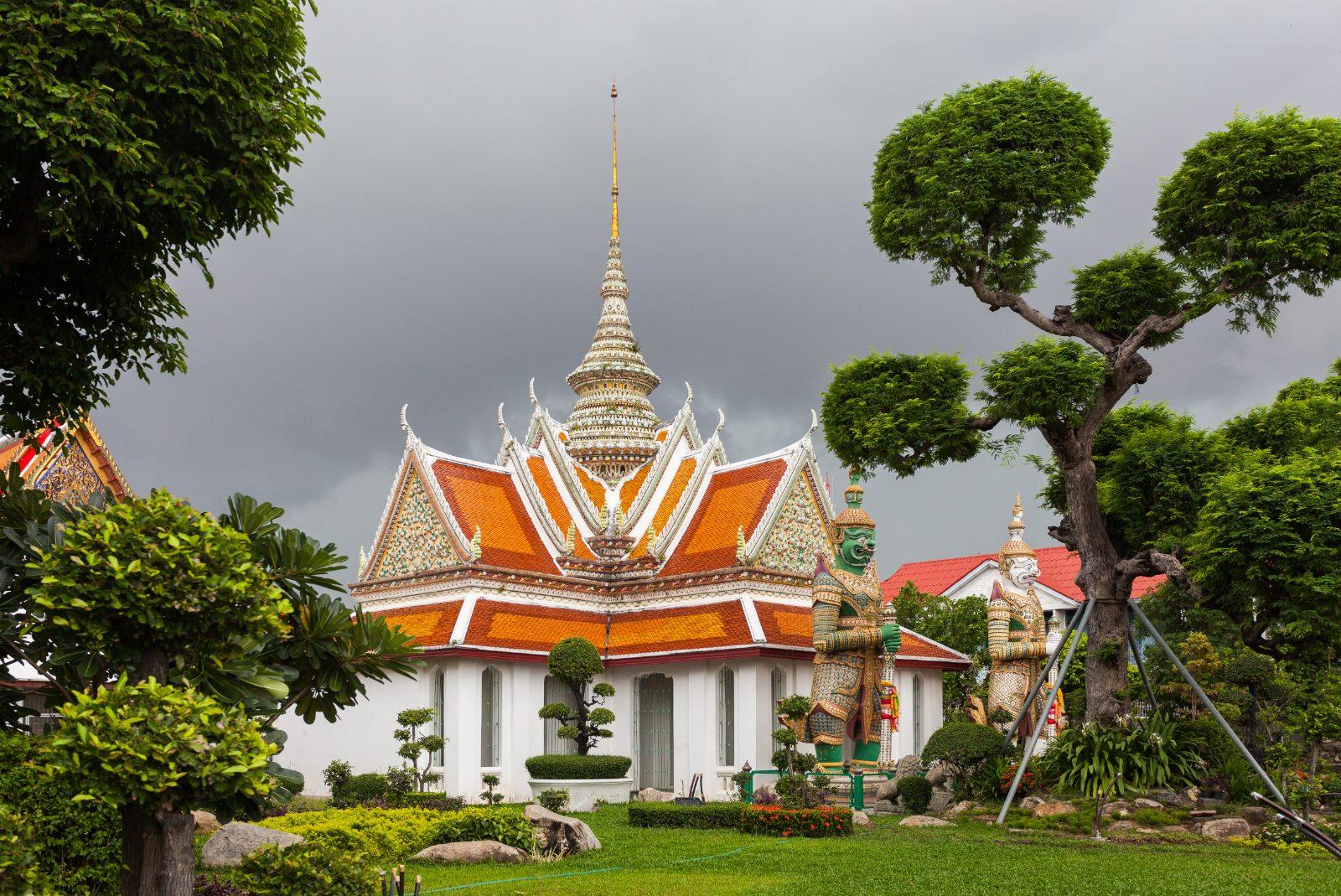
Wat Arun, Bangkok: Diego Delso / CC BY-SA 3.0
What About Chiang Mai’s Burning Season?
This is a real, well-documented problem and worth planning around. Roughly November through April, agricultural and forest burning across northern Thailand and neighboring countries sends smoke and particulate pollution into Chiang Mai’s valley, with the worst air quality typically landing in March. Chiang Mai has ranked among the most polluted cities in the world for stretches during peak burning season in recent years, with particulate levels reported well above WHO guidelines. [VERIFY current-year severity before booking a Feb–Apr trip] — it varies year to year, but if clear mountain views and easy breathing matter to your trip, avoid this window or check real-time air quality indexes before you commit. Bangkok does get its own seasonal smog, but nothing close to Chiang Mai’s burning-season severity.
Which City Is Better for Elephant Sanctuaries, Nature, and Nightlife?
Chiang Mai is the clear hub for ethical, no-riding elephant sanctuary experiences — operators like BEES (Burm and Emily’s Elephant Sanctuary) and Elephant Nature Park, founded by conservationist Lek Chailert, are both based in the region and widely regarded as genuine rescue operations rather than tourist riding camps. It is also the natural base for trekking, waterfalls, and the Old City’s walkable temple circuit. Bangkok counters with scale: Chatuchak Weekend Market, world-class street food, rooftop bars with skyline views, and a nightlife scene — from Khao San Road’s backpacker strip to Sukhumvit’s club district — that Chiang Mai simply does not try to match. Chiang Mai has its own real food and night-market scene (the Sunday Walking Street is a genuine highlight), just at a different scale.
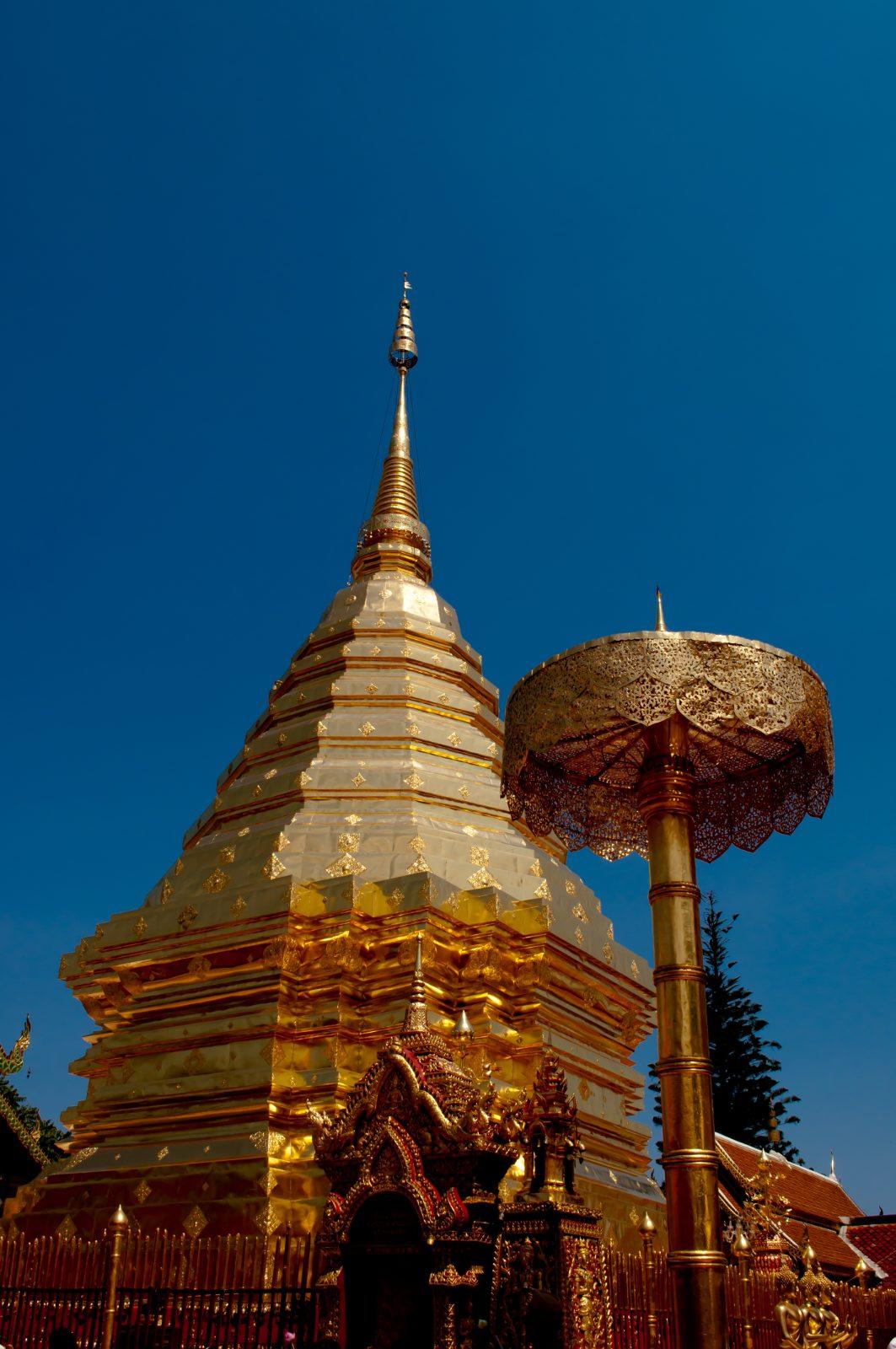
Wat Phra That Doi Suthep, Chiang Mai: Arts of Chet / CC BY-SA 4.0
Visiting Both? Here Is the Connection
The Bangkok–Chiang Mai flight takes about an hour and twenty minutes and is a straightforward add-on if you are already routing through Bangkok — round-trip fares have shown up in the roughly $70 to $120 range on budget and full-service carriers alike. [VERIFY current fares before booking]. An overnight train also runs the route for travelers who want the experience over the speed; budget a long travel day either way and confirm current schedules and pricing before you commit. On cost, sources genuinely disagree about which city runs cheaper day to day — some cost surveys put Bangkok’s budget lodging and street food slightly ahead on value, others favor Chiang Mai — so treat any specific percentage claim with some skepticism and build your own budget from current prices rather than a single blog’s numbers.
Planning Your Time in Each City
In Bangkok, a Grand Palace and Wat Arun tour is the efficient way to cover the signature sights without navigating ticket lines yourself. In Chiang Mai, book an ethical, no-riding elephant sanctuary visit — this is one of the clearest reasons to make time for the north. Check current train and bus schedules on 12Go if you are connecting the two cities overland instead of flying.
TTC Verdict: Start in Bangkok no matter what — it is where your flight lands and there is no way around it for most Western travelers. From there, add Chiang Mai if mountains, temples, elephant sanctuaries, and a slower pace appeal to you, and avoid the February–April window if clear air matters to your trip. If you only have a few days total, Bangkok alone is a complete first trip; if you have a week or more, both cities together is the classic, well-earned itinerary.
Bangkok, almost by default — it is where nearly every long-haul international flight into Thailand lands, since Chiang Mai has no direct routes from the US, Canada, or Australia. Most itineraries start in Bangkok and add Chiang Mai as a domestic flight or train from there.
Roughly November through April, with the worst air quality typically in March, agricultural and forest burning across northern Thailand sends smoke into Chiang Mai’s valley — the city has ranked among the world’s most polluted during peak weeks in recent years. If clear views and easy breathing matter to your trip, check a live air quality index before booking a visit in this window.
Yes — the flight between them takes about an hour and twenty minutes, and it is one of Thailand’s most popular domestic routes with frequent daily departures. An overnight train is also an option if you would rather travel scenically than quickly. [VERIFY current schedules and fares before booking].