Pai Food Guide: What to Eat and Where
Pai’s food scene is a genuine three-way mix: northern Thai (Lanna) staples like khao soi and sai ua, a real Shan and Burmese-influenced streak from the surrounding Mae Hong Son hills, and an unusually dense cluster of vegan, vegetarian, and Western brunch cafes left behind by the town’s long run as a backpacker and digital-nomad hub. The easiest way to eat well here is to graze the nightly Walking Street market for dinner, then build your days around a handful of well-reviewed cafes. Here is what to actually order and where.
What Makes Pai’s Food Scene Different?
Pai sits in Lanna food country, so northern Thai staples like khao soi, sai ua (herb pork sausage), and nam prik chili dips are all genuinely local, not imported for tourists. Mae Hong Son province, which contains Pai, also carries a real Shan and Burmese-linked food influence — dishes like gaeng hung lay (a mild, ginger-and-peanut pork curry) and nam phrik ong (a chili dip made with small sour tomatoes) trace to Shan cooking traditions rather than central Thai ones. Layered on top of that is Pai’s long-running reputation as a hippie and digital-nomad town, which has produced a cluster of vegan cafes, smoothie-bowl spots, and Western brunch menus that is unusually dense for a town this small.
What Should You Eat at the Walking Street Night Market?
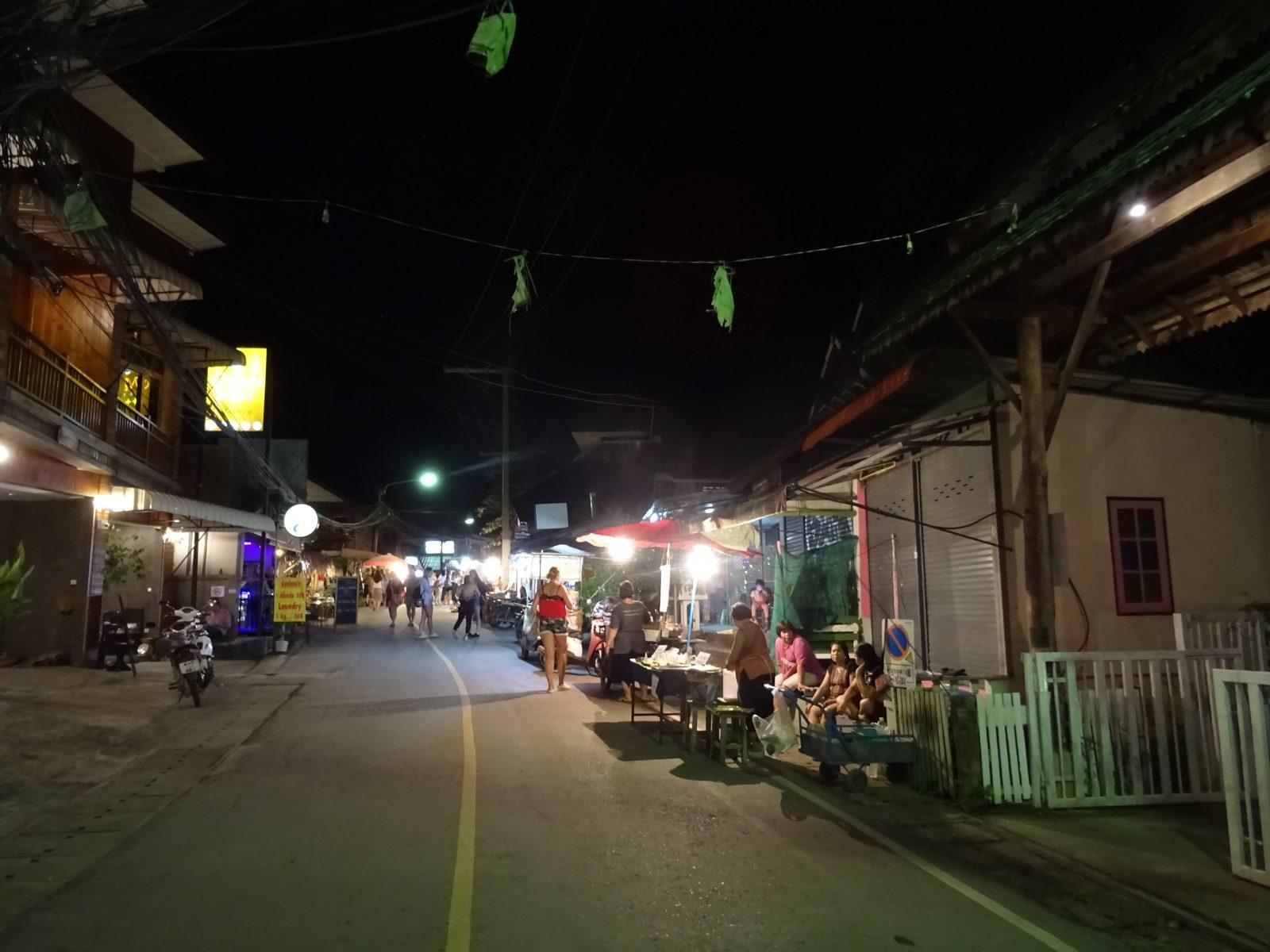
Pai’s Walking Street night market runs every night of the week, not just on specific days, roughly from early evening until the stalls wind down somewhere between 10pm and midnight depending on the night and season. Expect grilled meat skewers, roti with condensed milk, mini pad thai portions, papaya salad, grilled corn, spring rolls, fresh fruit, and a scattering of vegan and gluten-free stalls — most individual items run small, snack-sized portions in the 10–30 THB range, so the market rewards grazing across several stalls rather than one big sit-down order. Bring small cash bills; card payment is not the norm here.
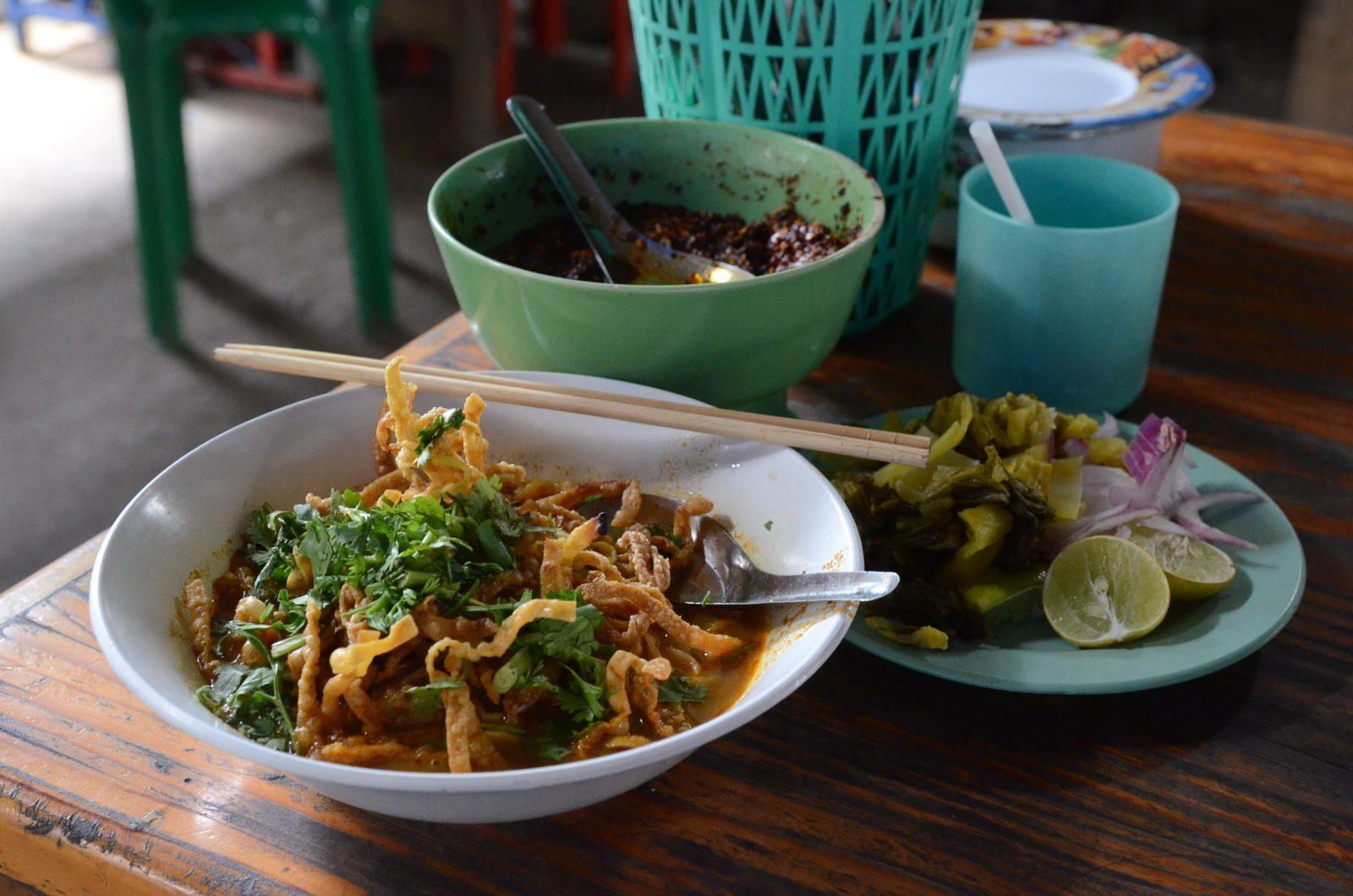
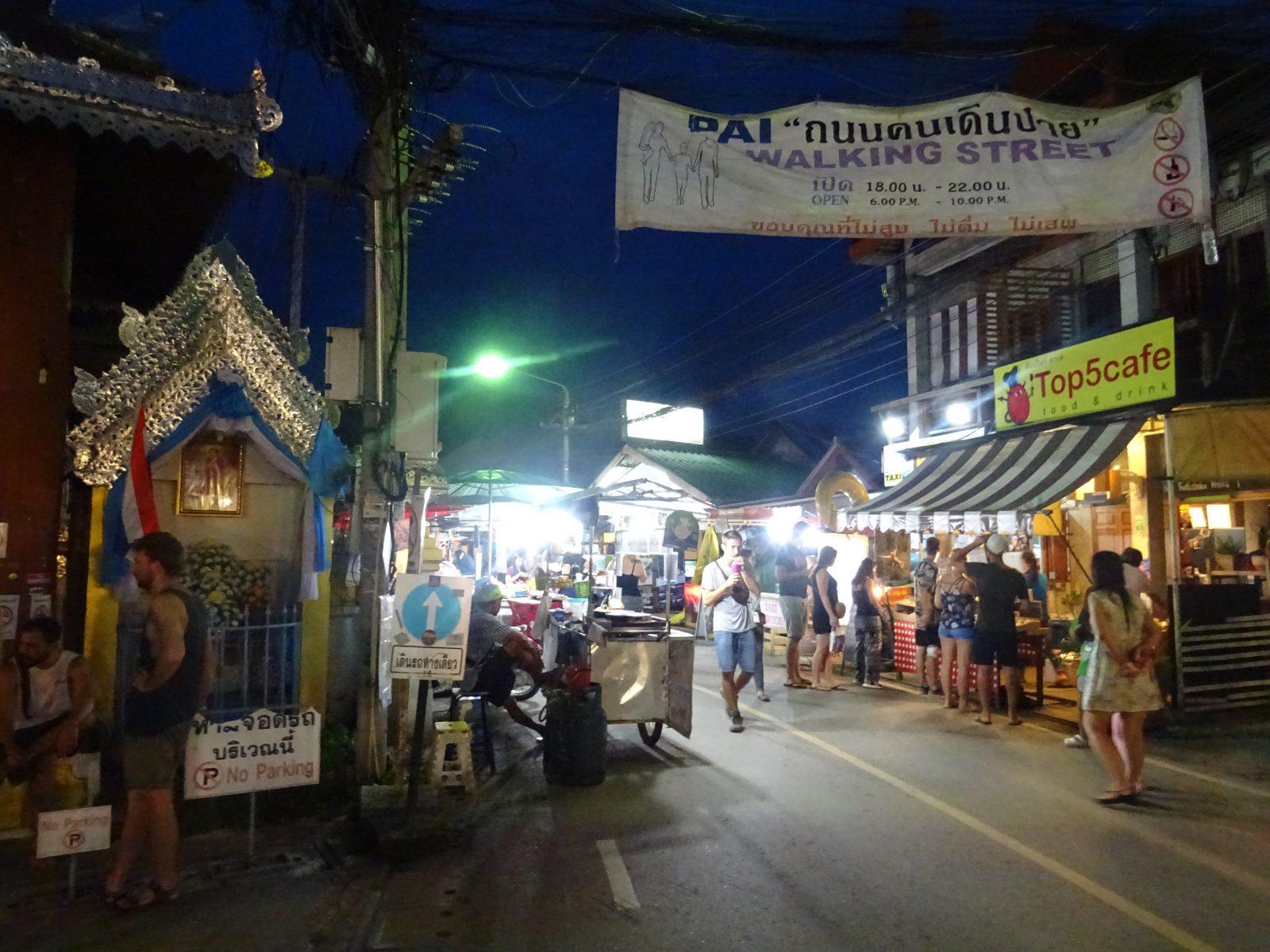
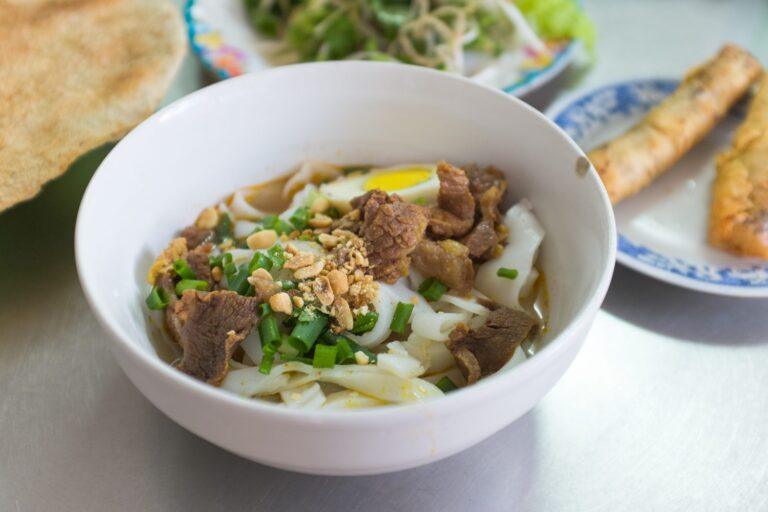
Khao soi: Takeaway / CC BY-SA 3.0 · Pai Walking Street: Christophe95 / CC BY-SA 4.0
What Should You Order at a Sit-Down Restaurant?
For northern Thai cooking specifically, look for khao soi (egg-noodle curry soup, topped with crispy noodles) and sai ua (grilled herb pork sausage, usually served with sticky rice) — both are native to the region, not Chiang Mai exclusives. For the Shan/Burmese side of the region’s food, gaeng hung lay is the dish worth seeking out: a mild, slightly sweet pork curry with ginger, garlic, and peanuts. Thai restaurants around town commonly accommodate vegetarian requests by swapping in tofu, so it is easy to order a meat-free version of most dishes even outside the dedicated vegan cafes.
Where Do Vegans and Vegetarians Eat Well in Pai?
This is one of the most solidly backed reputations in Pai’s food scene, not an exaggeration: the town supports an unusually high number of dedicated vegan and vegetarian cafes for its size, serving everything from Buddha bowls and raw/gluten-free options to Chinese-style plant-based versions of classic dishes. Several cafes also lean into Pai’s digital-nomad crowd with specialty coffee and all-day brunch menus — pour-over coffee, cinnamon porridge, and egg-forward breakfast plates are easy to find well past the usual breakfast hours. Gluten-free options exist at a handful of specific cafes rather than being a town-wide guarantee, so it is worth asking directly if that matters for your trip.
TTC Verdict: Build your days around Pai’s cafe scene — a northern Thai or Shan-influenced curry for a sit-down meal, a vegan bowl or specialty coffee for breakfast — and let the nightly Walking Street market handle dinner. It is the single best way to taste the real range of what this town cooks, from Lanna classics to a seriously good smoothie bowl, without overplanning a single meal.
If you would rather have a local show you around the market and explain what you are eating than guess your way through it, a guided food walk or cooking class is the easiest way to do that in a short visit.
Yes — Pai has an unusually dense cluster of dedicated vegan and vegetarian cafes for a town this size, and most Thai restaurants will happily substitute tofu or vegetables into standard dishes on request.
Graze rather than order one big meal. Market stalls sell small, snack-sized portions of grilled skewers, roti, pad thai, and fresh fruit, usually for 10–30 THB each, so trying several stalls costs about the same as one sit-down dish.
Night market stalls and small family-run shops are overwhelmingly cash-only, so carry small bills for those. Western-facing cafes and larger restaurants more commonly accept cards or QR payment.