
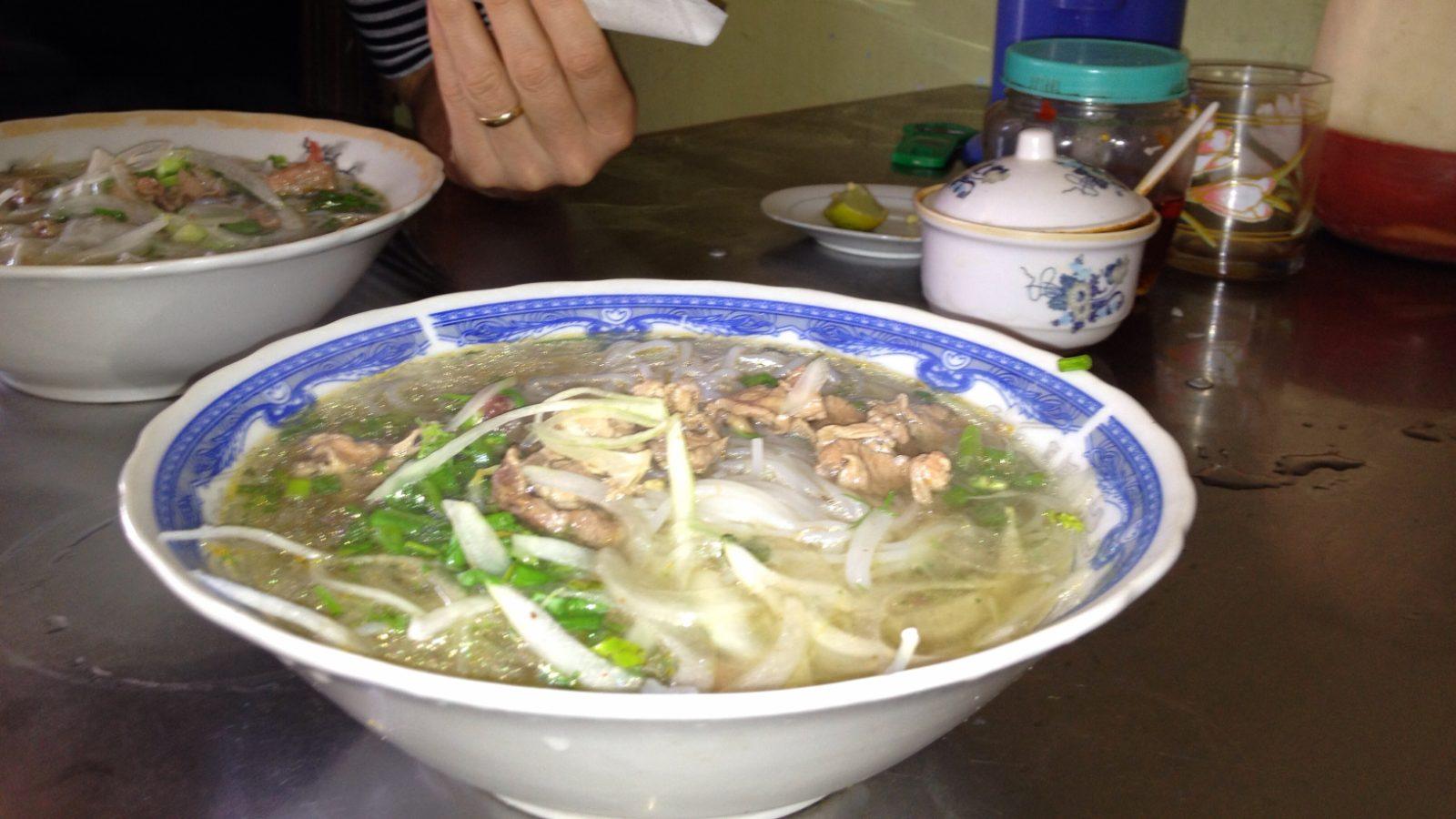
What Is Bun Bo Hue? Vietnam’s Spiciest Noodle Soup, Explained
Bun bo Hue is a spicy, lemongrass-scented beef and pork noodle soup from the former imperial city of Hue, and it is the boldest-flavored bowl in Vietnam’s noodle-soup lineup. Where pho is gentle and clear, bun bo hue is red-orange from chili oil, thick with round rice vermicelli, and built on a broth that is genuinely spicy rather than mild-with-optional-heat.
Where Does Bun Bo Hue Come From?
The dish traces back to village festival traditions in the Hue region, where leftover beef from ceremonial offerings was simmered into a broth and originally served over sticky rice rather than noodles. As rice vermicelli became more widely available, noodles replaced the sticky rice, and the dish evolved into the bowl served today. Van Cu village, just outside Hue, has made the noodles for the dish for more than four centuries — their thicker, springier vermicelli is built specifically to hold up in a heavier broth without going soft, unlike the thinner noodles used in pho.
| Category | Bun Bo Hue | Pho |
|---|---|---|
| Broth | Red-orange, chili-oil forward, built on beef bones and lemongrass | Clear, lighter, built on beef or chicken bones and warm spices |
| Spice level | Genuinely spicy by default | Mild, heat is optional (add your own chili) |
| Noodles | Thick, round rice vermicelli | Flat rice noodles |
| Typical toppings | Pork hock, beef shank, congealed blood jelly, banana blossom | Sliced beef or chicken, herbs, bean sprouts |
| Region most associated with | Hue and central Vietnam | Hanoi (north) and Saigon-style (south) |
TTC Verdict: If you have only had pho, bun bo hue is the next Vietnamese noodle soup to try — it is spicier, richer, and more assertively flavored, and it will change how you think about what a Vietnamese noodle soup can taste like. Order it in Hue itself if your itinerary allows, but it is also widely available in Hanoi and Ho Chi Minh City.
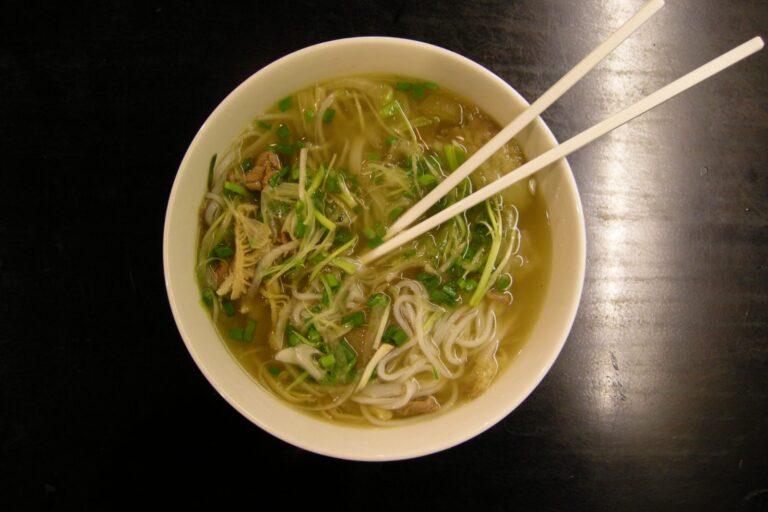
Bun Bo Hue: David McKelvey / CC BY 2.0
What Does Congealed Blood Jelly Taste Like, and Do You Have to Eat It?
Traditional bun bo hue often includes cubes of congealed pork or duck blood, which has a firm, custard-like texture and a mild flavor that mostly absorbs the broth around it — it is not a strong or unusual taste on its own. It is a completely optional component: most restaurants will leave it out on request, and doing so does not meaningfully change the character of the dish, since the broth’s flavor comes from the lemongrass, chili oil, and shrimp paste rather than the blood jelly itself.
No. Both are Vietnamese noodle soups with a beef base, but bun bo hue is spicier, uses thicker round noodles, and gets its red-orange color and bold flavor from chili oil and lemongrass. Pho has a clearer, milder broth and flat noodles, and heat is added at the table rather than built into the base.
Hue itself, the city the dish is named for, is the most authentic place to try it, but it is widely available and well made throughout Vietnam, including in Hanoi and Ho Chi Minh City. Look for stalls or small restaurants that specialize in it specifically rather than a general noodle-soup menu.
Yes, by Vietnamese standards it is one of the spicier common noodle soups, though the exact heat level varies by cook and restaurant. If you are sensitive to spice, ask for it mild (“khong cay”) rather than assuming you can dial it back yourself after it is served.
One Comment
Comments are closed.