
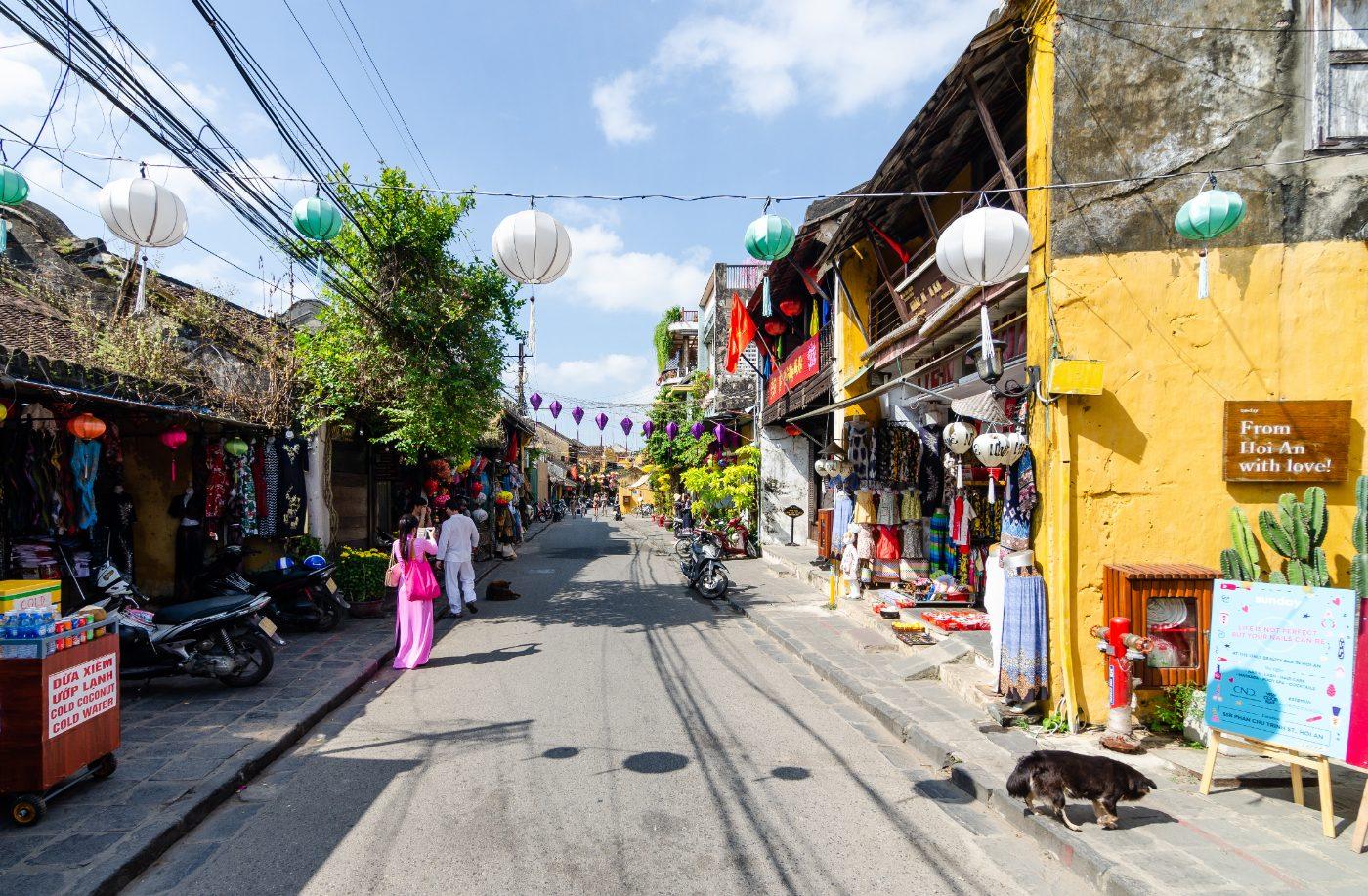
Hoi An Travel Guide: Everything to Know Before Your First Trip
Hoi An is a small, walkable, UNESCO-listed riverside town about 30km south of Da Nang, known for its lantern-lit Ancient Town, tailor shops, and a food scene that punches well above its size. Most visitors base themselves here for 2 to 4 days, splitting time between the historic center, the beach, and a countryside day trip or cooking class. This guide covers how to get here, what the Ancient Town ticket actually includes, when to visit (and when to avoid), and where the rest of our Hoi An coverage picks up.
How Do You Get from Da Nang to Hoi An?
Da Nang International Airport is the closest airport to Hoi An, about 30km and a 30–45 minute drive away, with Grab being the best value at 250,000–350,000 VND (roughly $10–14). A metered taxi runs slightly more at 300,000–400,000 VND, and the public Yellow Bus #1 costs just 30,000 VND but takes 60–90 minutes with multiple stops through Da Nang. Some hotels offer a complimentary shuttle for stays of two nights or more if arranged at booking — worth asking before paying for a transfer.
| Option | Cost | Time | Best For |
|---|---|---|---|
| Grab Car | 250,000–350,000₫ (~$10–14) | 30–45 min | Best value for most travelers |
| Taxi (Mai Linh) | 300,000–400,000₫ (~$12–16) | 30–45 min | Metered, widely available at the airport |
| Yellow Bus #1 | 30,000₫ (~$1.20) | 60–90 min | Budget travelers with flexible time |
| Hotel shuttle | Often free | Varies | Stays of 2+ nights, arranged in advance |
TTC Verdict: Book a Grab in the airport arrivals area for the best balance of cost and convenience — it beats the metered taxi on price and beats the bus on time by a wide margin. Book a Da Nang Airport to Hoi An private transfer on Klook.


Japanese Covered Bridge: Chainwit. / CC BY 4.0 · Lantern boats: Kuroczynski / CC BY-SA 4.0
What Does the Hoi An Ancient Town Entrance Ticket Actually Include?
The 120,000₫ (roughly $5) ticket includes access to 5 of the Ancient Town’s 22 ticketed sites, chosen from categories including ancient houses (Tan Ky House, Tran Family Chapel), assembly halls (Fujian, Cantonese, Chaozhou), museums, and the Japanese Covered Bridge. The ticket comes with 5 tearable coupons, one per site, and stays valid for 24 hours from purchase — ticket inspectors at each site tear off a coupon on entry, so hold onto it until you have used all 5. Children under 1 meter enter free; those 1–1.4m pay a reduced 50,000₫.
When Is the Best Time to Visit Hoi An?
February through April is Hoi An’s sweet spot — dry weather, comfortable temperatures, and manageable crowds, with March widely considered the single best month. Avoid late October through mid-December if possible: this is Hoi An’s flood season, when the Ancient Town’s low elevation and riverside location mean parts of it can genuinely go underwater during heavy rain and high tides.
How Many Days Do You Need in Hoi An?
Two full days covers the Ancient Town, a food crawl, and one evening lantern walk; three to four days adds a beach day at An Bang, a countryside cycling or basket-boat trip, and time for a tailor-made outfit (which typically needs at least one fitting and a follow-up visit). See our full Hoi An itinerary for a day-by-day breakdown, our where-to-stay guide for choosing a base, and our Hoi An After Dark guide for what the town looks like once the lanterns come on.
Frequently Asked Questions
Yes, a 120,000₫ (about $5) ticket is required to enter the ticketed zone of the Ancient Town, which includes access to 5 of its 22 attractions. Simply walking through the streets and browsing shops does not require a ticket, but entering specific historic houses, assembly halls, and museums does.
About 30km, a 30 to 45 minute drive by Grab or taxi under normal traffic. Da Nang International Airport is the nearest airport to Hoi An — there is no airport in Hoi An itself.
Yes — the two are complementary rather than redundant. Da Nang covers beaches, modern city infrastructure, and day-trip attractions like the Marble Mountains, while Hoi An offers a walkable historic town, tailoring, and a different, more intimate food and lantern-lit atmosphere.





6 Comments
Comments are closed.