Temple & Pagoda Etiquette in Vietnam: What Not to Do
Vietnam’s temples and pagodas are active places of worship, not just photo backdrops, and a handful of etiquette mistakes are common enough among visitors that they’re worth knowing before you go. Covering shoulders and knees, removing your shoes where required, and being mindful about photographing people who are praying cover most of it. Here’s what to actually do, and what not to do, at temples and pagodas across the country.
What Should You Wear to a Temple or Pagoda in Vietnam?
Cover your shoulders and knees, and avoid clothing that’s sheer or very tight. Larger, more actively visited sites like Hue’s Thien Mu Pagoda and Hanoi’s central temples tend to be stricter about this than small neighborhood pagodas, and some of the bigger sites keep wraps or sarongs on hand to lend or rent to visitors who show up underdressed, though it’s better not to count on that being available. Packing a light scarf or shawl in your day bag solves this everywhere, regardless of how strictly a given site enforces its dress code.
Do You Need to Remove Your Shoes?
Often, yes, particularly before stepping into the main worship hall or a specific inner sanctuary, even if shoes are fine in the outer courtyard. Look for a shoe rack or a pile of shoes at a doorway as your cue; if you see one, add yours to it before going further in. Socks are fine to keep on, and it’s worth wearing shoes that are easy to slip on and off if you’re visiting several temples in one day.
What Are the Biggest Etiquette Mistakes Visitors Make?
Most etiquette mistakes at Vietnamese temples come from treating the space like a secular tourist site rather than an active place of worship. The most common ones are avoidable once you know to look out for them.
| Mistake | Why It Matters | What to Do Instead |
|---|---|---|
| Pointing your feet toward an altar or statue while sitting | Feet are considered the lowest and least clean part of the body in Buddhist custom | Tuck your feet behind or to the side when sitting on the floor |
| Touching statues, incense burners, or offerings | These objects are considered sacred, and touching them can read as disrespectful | Look without touching, unless a sign explicitly invites it |
| Loud conversations or phone calls inside the main hall | It disrupts people who are actively worshipping | Keep your voice low and silence your phone before entering |
| Close-up photos of monks or worshippers | It’s invasive during what is often a private, personal moment | Photograph from a respectful distance, and ask first for close portraits |
| Walking directly in front of someone who is praying | It interrupts their moment mid-prayer | Walk around them, or wait for a natural pause |
TTC Verdict: The rule underneath all of this is simple: treat a temple or pagoda like an active place of worship, not a museum or a backdrop, because for the people around you, it is one. Dress modestly, keep your voice down, and be more careful with your camera than you would be at a purely secular sight, and you’ll avoid nearly every common etiquette mistake without having to memorize a long list of rules.
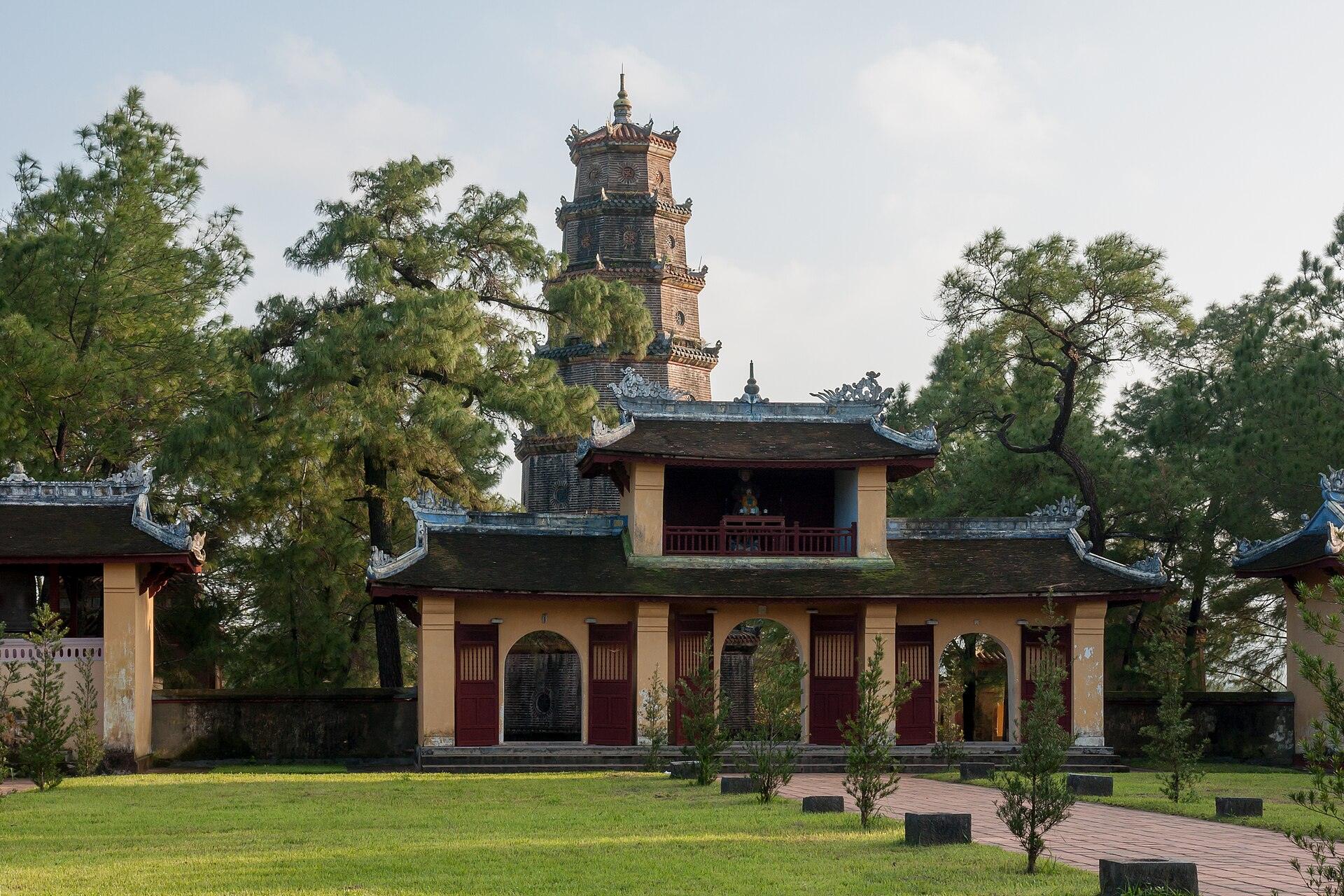
Thien Mu Pagoda, Hue: CEphoto, Uwe Aranas / CC BY-SA 3.0
How Should You Behave Around Monks and Worshippers?
Don’t initiate physical contact with monks, including a handshake, since monastic vows for some monks restrict physical contact with the opposite gender, and this applies most often to women greeting male monks. A polite nod or smile is a safe way to acknowledge a monk without assuming physical contact is welcome. Keep a respectful distance from anyone actively praying or making an offering, and avoid stepping between them and the altar they’re facing.
Is It OK to Take Photos Inside Temples and Pagodas?
Generally yes for the architecture and courtyards, but be more cautious with people-focused shots, especially of someone in the middle of praying. Some inner sanctuaries or specific altars prohibit photography entirely, so look for signage as you move deeper into a site; rules can be enforced more strictly around the main altar than in the outer courtyard of the same temple.
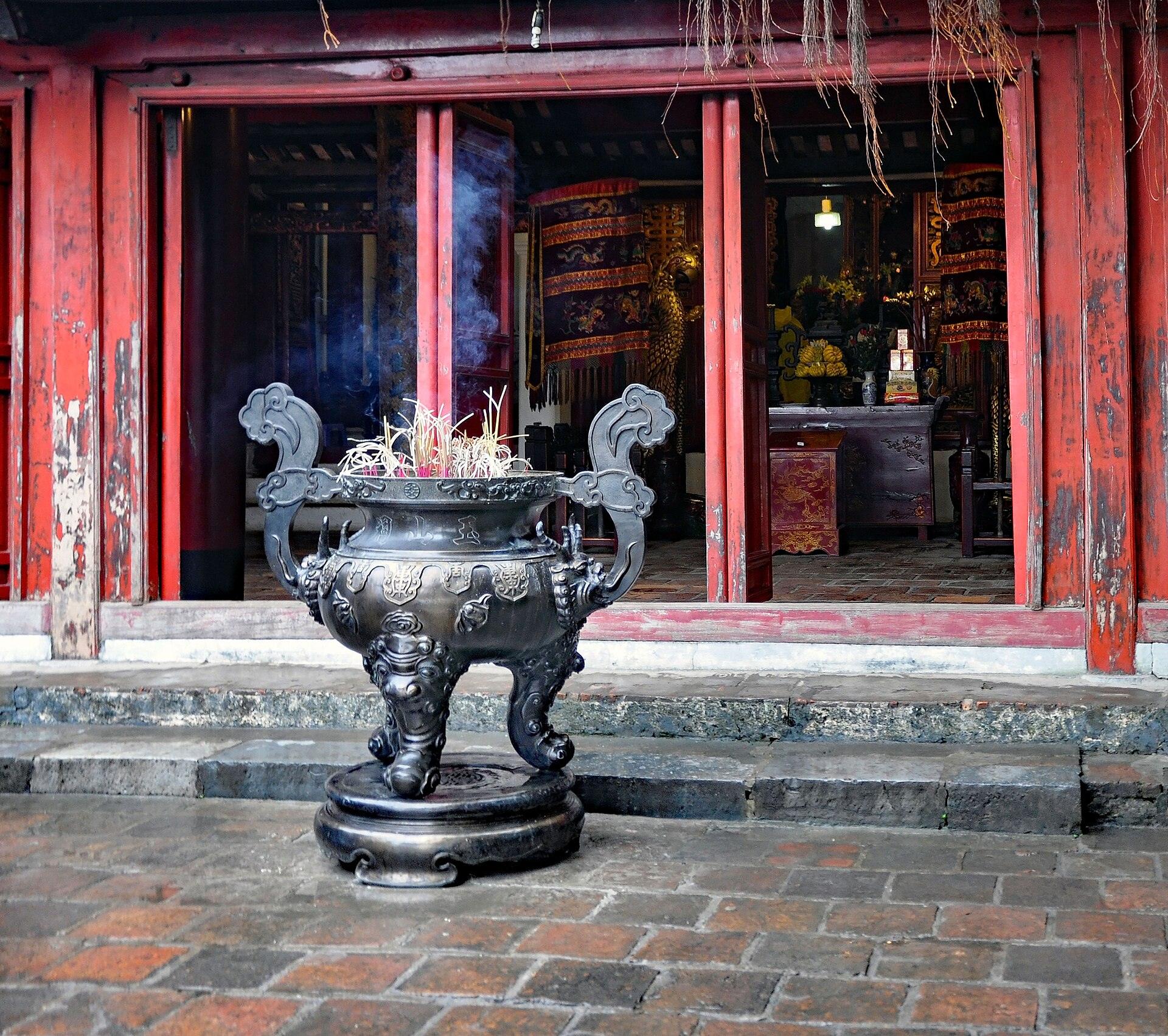
Incense burner, Ngoc Son Temple, Hanoi: P. Hughes / CC BY 4.0
Generally yes. Covering shoulders and knees is expected at most temples and pagodas, and larger, more actively visited sites tend to enforce it more strictly.
Often, yes, especially before entering the main worship hall. Look for a shoe rack or pile of shoes at the entrance as your cue.
Generally yes for the building and courtyards. Be more careful photographing people who are actively praying, and check for signage near inner altars, since some prohibit photos entirely.
Yes. Feet are considered the lowest and least clean part of the body in Buddhist custom, so pointing them at a statue or altar is considered disrespectful.
It’s best to avoid initiating physical contact with monks. Some monastic vows restrict contact with the opposite gender, so a polite nod or smile is a safer greeting.