Banh Xeo Explained: Vietnam’s Crispy Sizzling Pancake
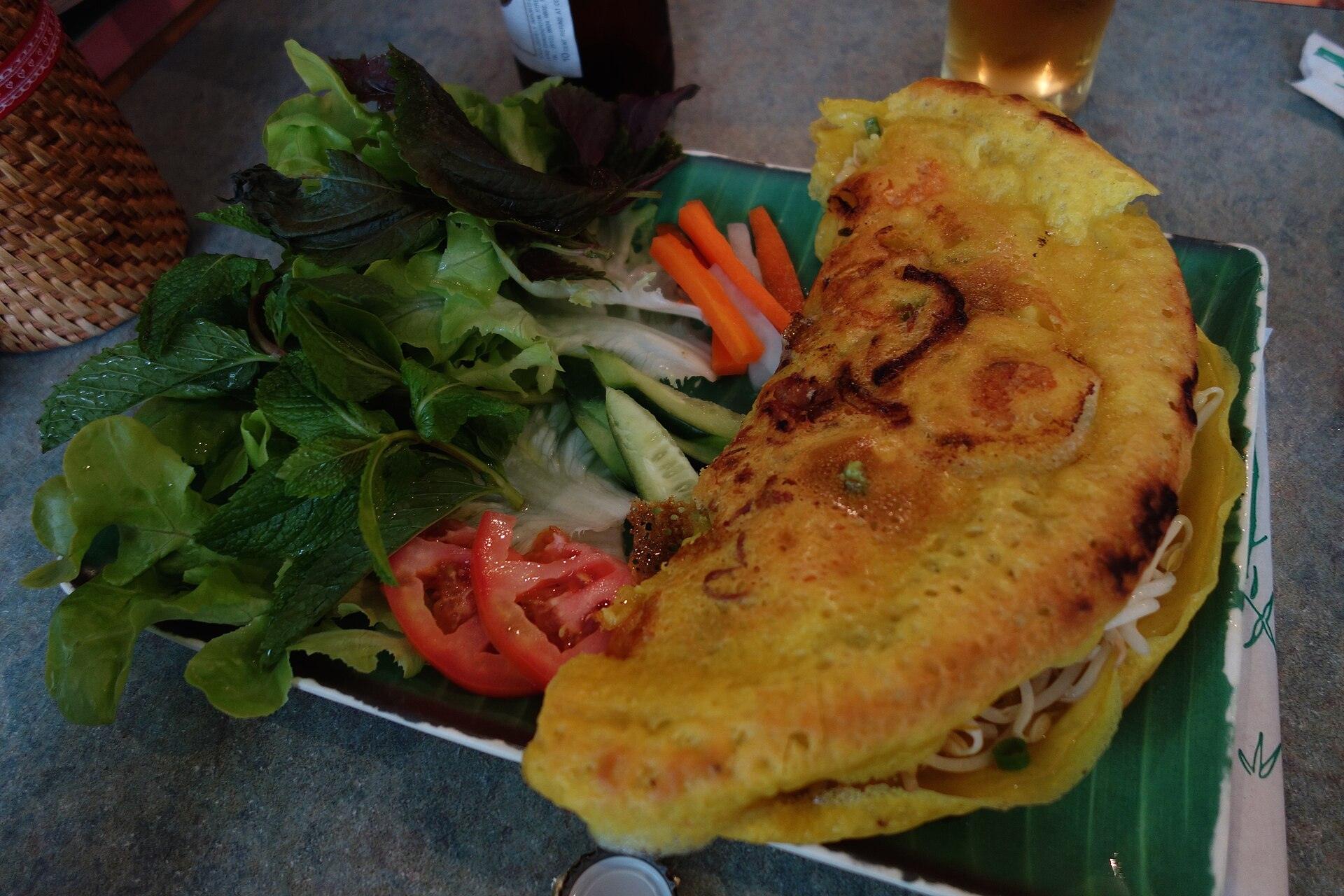
Banh xeo is a crispy, turmeric-yellow rice-flour pancake, folded in half like an omelet and filled with pork, shrimp, and bean sprouts, then wrapped in lettuce and herbs and dipped in a sweet-savory fish sauce dip. Its name literally translates to “sizzling cake,” a reference to the loud sizzle the batter makes hitting a hot pan. Here’s what’s actually in it, how it differs by region, and how to eat it without it falling apart.
What Exactly Is in Banh Xeo?
The batter is rice flour, water, and turmeric for its signature yellow color, often with coconut milk added in the southern version for a richer, more tender edge. It’s poured into a very hot pan, topped with pork, shrimp, and bean sprouts, then folded in half once the edges turn crispy and lightly browned. It’s served whole on a plate alongside a big pile of lettuce and fresh herbs, mint and perilla are common, plus a small bowl of nuoc cham for dipping.
How Does Banh Xeo Differ by Region?
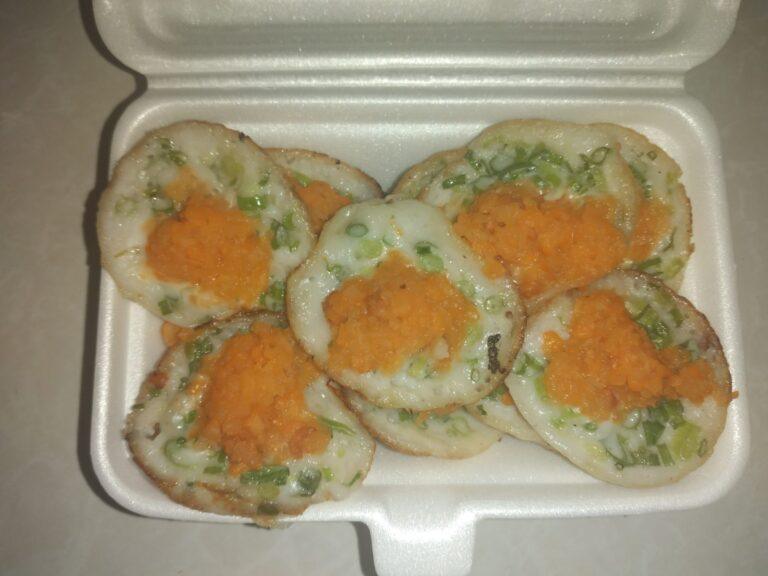
The version most visitors picture, a large, thin, very crispy pancake, is the southern style, common in Ho Chi Minh City and the Mekong Delta, where coconut milk in the batter adds richness. Central Vietnam has its own smaller version, often called banh khoai in Hue, made without coconut milk and cooked as an individual-size portion rather than a large sheet meant for sharing.
| Region | Size | Distinct Trait |
|---|---|---|
| Central (Hue, often called banh khoai) | Small, individual portion | No coconut milk in the batter, notably crispy |
| South (Saigon, Mekong Delta) | Large, meant for sharing | Coconut milk in the batter for a richer, more tender edge |
TTC Verdict: Treat banh xeo like a build-your-own wrap, not a dish you eat straight off the plate with a fork. Tear off a piece, wrap it in lettuce and herbs, dip it, and eat it with your hands; that’s genuinely the intended way to eat it, not a shortcut, and it’s part of why the dish works as well as it does.
Banh xeo: pelican from Tokyo, Japan / CC BY-SA 2.0
How Do You Eat Banh Xeo the Right Way?
- Tear off a piece of the pancake with your chopsticks or hands.
- Wrap it in a piece of lettuce along with a few sprigs of herbs.
- Dip the wrapped piece into the nuoc cham.
- Eat it in one or two bites before it gets soggy from the sauce.
- Repeat, mixing in different herbs as you go.
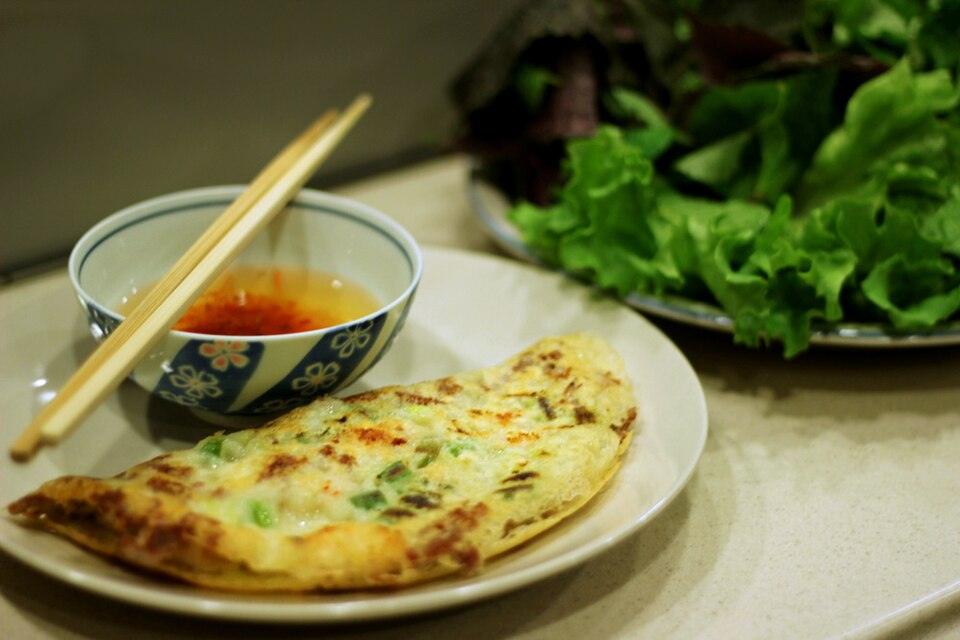
Banh xeo with nuoc mam: Vivian D Nguyen / CC BY-SA 2.0
Crispy and savory on the outside, with a slightly sweet, rich edge in the southern version thanks to coconut milk in the batter, balanced out by the fish-sauce dip and fresh herbs it’s wrapped with.
Some restaurants offer a version with mushrooms or tofu instead of pork and shrimp, but it’s not universal, so it’s worth asking ahead if you need a vegetarian option.
They’re closely related regional variants. Banh khoai is the central Vietnamese, typically Hue-based version, usually smaller and made without coconut milk, while banh xeo more often refers to the larger southern-style pancake.
Not entirely. You typically tear it apart and wrap pieces in lettuce and herbs by hand, then eat the wrapped piece, chopsticks or a fork mainly help with the tearing and wrapping steps.
Its exact origins are debated, but it’s most closely associated with central and southern Vietnam today, with each region having developed its own distinct version over time.