

Hanoi Travel Guide: Everything to Know Before Your First Trip
Hanoi is Vietnam’s capital and, for most first-time visitors, the natural place to start a trip — it pairs a dense, walkable Old Quarter with some of the country’s best street food and a slower, more historic feel than Ho Chi Minh City. This guide covers what to sort out before you land: visas, money, getting from the airport into the city, connectivity, and the basics of getting around once you’re there. For the country-wide version of these basics — visas, money, and transportation across all of Vietnam — see our Vietnam Travel Guide. If you are deciding whether to start your trip here or in the south, see our Hanoi vs. Ho Chi Minh City comparison.
How Many Days Do You Need in Hanoi?
Most travelers are comfortable with 3 to 4 days in Hanoi — enough time to explore the Old Quarter, eat your way through the city’s signature dishes, and take a day or half-day trip to Ha Long Bay or Ninh Binh without feeling rushed. If Hanoi is one stop on a wider Vietnam itinerary, 2 to 3 days covers the essentials.
When Is the Best Time to Visit Hanoi?
Hanoi has genuine seasons, which surprises a lot of visitors expecting year-round tropical heat — that’s Ho Chi Minh City and the south. Autumn (September to November) and spring (April to May) are generally considered the most comfortable months, with mild temperatures and lower rainfall. Winter is cool and can feel damp and chilly without indoor heating; summer is hot, humid, and prone to sudden downpours.
| Season | Months | What to Expect |
|---|---|---|
| Winter | Dec – Feb | Cool and often overcast, roughly 50–68°F (10–20°C). Feels colder than the number suggests since most buildings aren’t heated — pack layers. |
| Spring | Apr – May | Warm, generally clear, occasional light drizzle. One of the more comfortable windows for walking around. |
| Summer | Jun – Aug | Hot and humid, into the 90s°F (30s°C), with regular heavy afternoon downpours. Good for indoor sights and food touring, tougher for long walks. |
| Autumn | Sep – Nov | Cooling down, lower rainfall, often cited as the most pleasant stretch of the year. |
TTC Verdict: Aim for October-November or March-April if your dates are flexible. If you are only free in summer or winter, Hanoi is still very doable, just pack for humidity and rain in summer, and real layers in winter.
Do US, Canadian, or Australian Citizens Need a Visa for Vietnam?
Yes — travelers from the United States, Canada, and Australia all need a visa to enter Vietnam, but the e-visa process is straightforward and doesn’t require a trip to an embassy. As of the most recent policy update, Vietnam’s e-visa is valid for up to 90 days and allows multiple entries, which is a meaningful change from the old 30-day single-entry rule. Apply through Vietnam’s official e-visa portal rather than a third-party site where possible, since agency mark-ups vary.
- Apply online in advance — processing is typically a few business days, with faster paid options available.
- Your passport needs at least 6 months of validity remaining and a couple of blank pages.
- Print a copy of your approved e-visa to carry with you; some border checkpoints still ask for a paper copy.
Visa fees and rules are exactly the kind of thing that changes without much notice, so treat any specific dollar figure as a starting point and confirm the current fee and process on Vietnam’s official immigration site before you apply.
How Do You Get from Noi Bai Airport into Hanoi?
Noi Bai International Airport sits about 30 km (19 miles) north of central Hanoi, and the drive into the Old Quarter takes roughly 30 to 60 minutes depending on traffic. You have three realistic options:
| Option | Approx. Cost (USD) | Approx. Time |
|---|---|---|
| Grab (ride-hailing app) | $10–14 | 30–60 min |
| Metered taxi | $12–16 | 30–60 min |
| Airport shuttle bus (Route 86) | ~$2 | 45–60 min, plus a short walk/taxi from the drop-off point |
Grab is generally the easiest option for first-time visitors — you see the price before you book, and there’s no fare negotiation. If you take a taxi instead, stick to a marked, reputable company and confirm the driver is using the meter.
Pre-booking a private transfer means a driver is waiting with your name at arrivals instead of negotiating with taxi touts after a long flight — compare private transfer options on Klook.
What Currency Does Hanoi Use, and Should You Bring Cash?
Vietnam’s currency is the Vietnamese dong (VND), and yes, you’ll want cash on hand — street food stalls, local markets, taxis, and smaller shops are still largely a cash economy, even as QR-code bank transfers have become common among locals. Cards are widely accepted at hotels, malls, and larger restaurants, sometimes with a small surcharge.
- ATMs are widely available and accept international cards, though most cap withdrawals at a few million VND per transaction and charge a local fee on top of whatever your home bank charges.
- Always choose to be charged in VND at the ATM or card terminal, not your home currency — the “convert to my currency” option almost always gives a worse rate.
- Don’t count on paying in US dollars — by law, everyday purchases are settled in VND, even if a hotel quotes a rate in USD for convenience.
Do You Need an eSIM for Hanoi?
Having data from the moment you land makes everything else on this list easier — booking Grab rides, pulling up maps, translating menus. An eSIM is the simplest way to get connected: order one before you fly (Airalo and Holafly are both popular options) or pick one up at the airport, and you’re online within minutes of activating it.

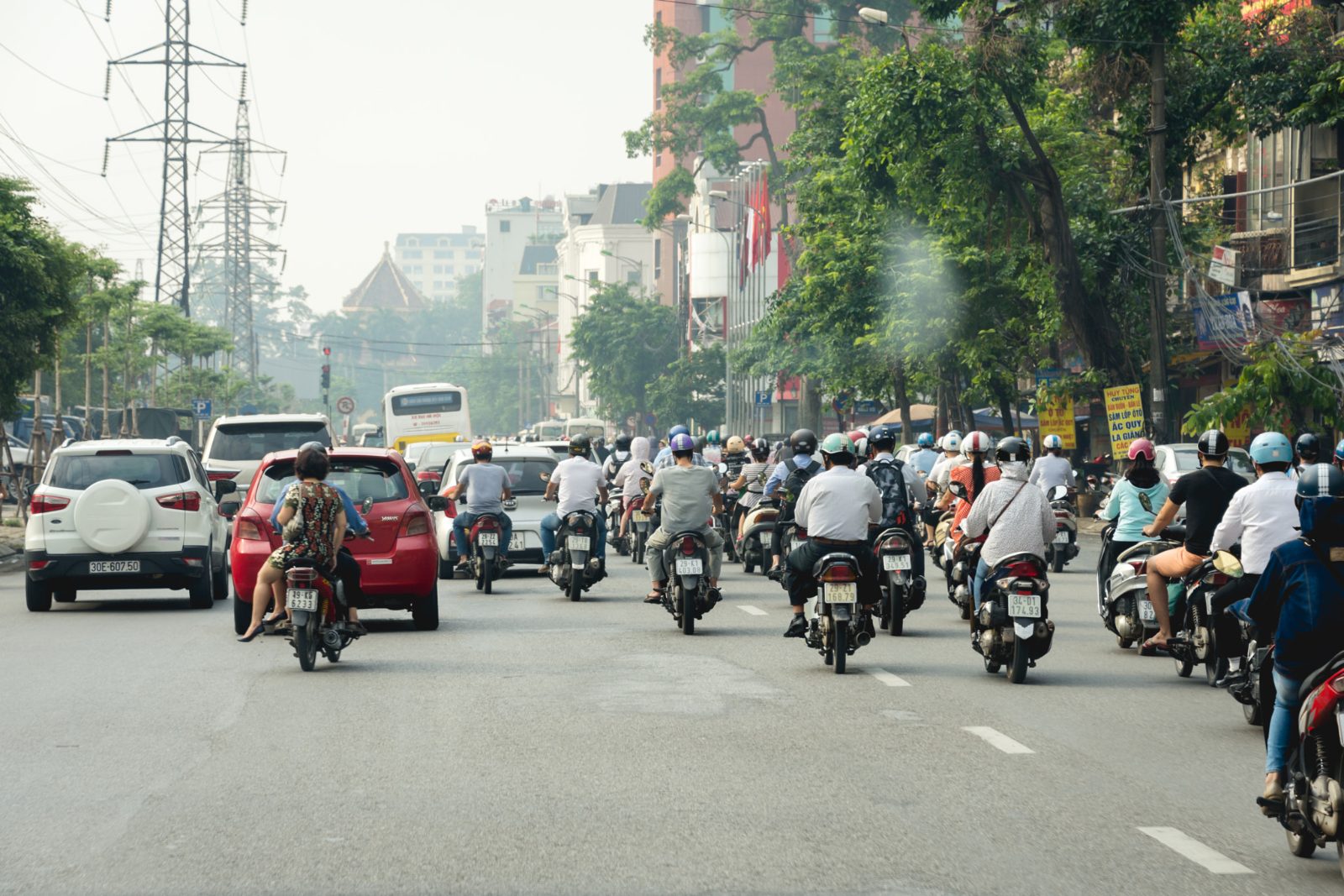
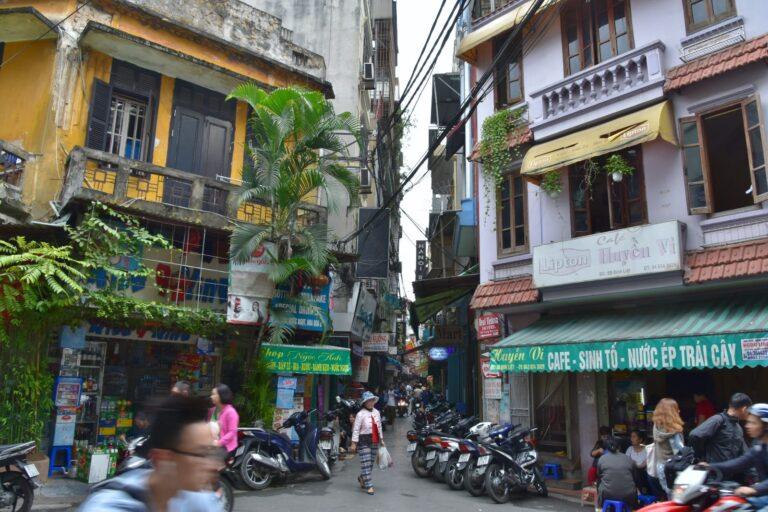
Old Quarter: Richard Mortel / CC BY 2.0 · Traffic: Benjamin Arnold / CC BY 3.0
How Do You Get Around Hanoi Once You’re There?
The Old Quarter itself is compact and very walkable, though sidewalks are often taken up by parked motorbikes and street vendors, so you’ll spend some time walking in the street alongside traffic. For anything beyond walking distance, Grab (both car and motorbike options) is the easiest way to get around — fixed pricing shown up front, no negotiation. If you flag a taxi instead, stick to recognized companies like Mai Linh or Vinasun, and insist the meter is running.
TTC Verdict: Download Grab before you land. It solves airport transfers, city transport, and the language barrier in one app, and it is the single easiest thing you can do to avoid taxi scams.
Is Hanoi Safe for Tourists?
Hanoi is generally considered safe for tourists — violent crime targeting visitors is rare. The realistic risks are the low-grade, opportunistic kind: pickpocketing in crowded areas like Ta Hien Street on a weekend night, taxi meter tampering, and street vendors who quote one price and ask for more after the fact. Agreeing on a price before any transaction, and sticking to Grab or reputable taxi companies, avoids most of it.
Do You Need to Tip in Hanoi?
Tipping isn’t deeply embedded in Vietnamese culture the way it is in the US, and street food vendors generally don’t expect it. In tourist-oriented restaurants, rounding up or adding roughly 10% is appreciated but not obligatory. For private tour guides and drivers, a tip of around 10% is a reasonable and appreciated gesture.
Frequently Asked Questions
Both work well as a first stop — Hanoi leans more historic and compact, Ho Chi Minh City is bigger and more fast-paced. Many itineraries fly into one and out of the other, which avoids backtracking.
Ha Long Bay is roughly 2.5 to 3.5 hours from Hanoi by road, and it’s commonly done as a day trip or, better, an overnight cruise booked through a tour operator.
English is common in hotels, tourist-facing restaurants, and with younger people, but it’s not universal — a translation app is a genuinely useful backup, especially outside the Old Quarter.
Where to Go From Here
Once the logistics are sorted, the real planning starts with where to sleep and what to eat. Our Hanoi neighborhood guide breaks down the Old Quarter, French Quarter, and Tay Ho so you can pick the right base, and our Hanoi food guide covers the dishes worth planning meals around.
From there, our guide to Hanoi’s essential sights covers what’s worth your time (including the current situation with Train Street), if a temple or pagoda like Ngoc Son Temple is on your list, our temple and pagoda etiquette guide is worth a quick read beforehand, Hanoi Nightlife rounds up the best bars and after-dark spots, our guide to water puppet theater covers whether the Thang Long show is worth an evening, and if you’d rather have the whole trip mapped out for you, our 3-day Hanoi itinerary ties everything in this cluster together into a day-by-day plan.
For a deeper dive into the food scene beyond this overview, our guide to Hanoi’s best street food vendors names specific stalls worth seeking out, and three dishes get their own deep dive: egg coffee, bun cha, and how Hanoi-style pho differs from Saigon’s.
Prefer watching to reading? Here’s a cinematic look at Vietnam’s highlights from our YouTube channel — it’s more of a mood-setter for the country as a whole than a detailed Hanoi walkthrough, but it’s a nice way to get a feel for the country before you go.





3 Comments
Comments are closed.